
Your Gutters Are Part of the Roof System – When They Fail, the Whole Thing Suffers
Why Roof Leaks So Often Start at the Handoff
Sharp. Some of the most expensive roof leaks I’ve ever tracked down had nothing wrong with the shingles – and honestly, that’s the part nobody wants to hear. Many leaks blamed on the field of the roof actually begin the moment the gutters stop moving water where the system expects it to go. Think of the roof, flashing, gutters, and downspouts like relay runners making a handoff: if one runner bobbles it at the edge, it doesn’t matter how perfectly the first three ran. My personal opinion? A lot of homeowners treat gutters like accessories – decorative trim that hangs off the house. That framing is costing them thousands in rot, interior staining, and structural damage they never see coming.
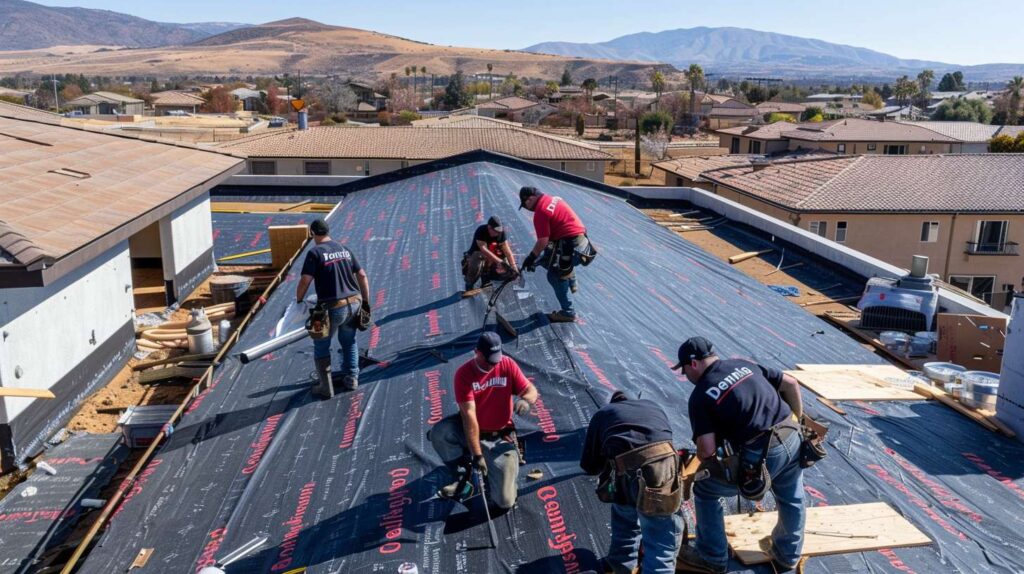
Three feet from the edge, the roof can be perfect and still lose the fight. The shingles shed correctly, the underlayment is solid, the flashing sits tight – and then the whole transfer into the gutter and down the spout goes sideways. That edge assembly failure is where secondary damage starts, and it’s subtle enough that most people point at the wrong thing for months. I’m Danny Kowalski, and I’ve been doing this in Brooklyn for 17 years – but before that I spent four years restoring tin ceilings and cornices on prewar row houses all over the borough, which is exactly where I got obsessive about how water travels around edges, behind trim, and into masonry joints that look fine from the sidewalk.
| Myth | Real Answer |
|---|---|
| “If water shows up near a skylight, the skylight is the cause.” | Water entering behind an overflowing gutter can travel several feet along rafters or the ceiling deck before it drips – the skylight is just where it finally gives up. |
| “One loose bracket is cosmetic.” | A pulled bracket drops the gutter’s pitch. Water pools, ice forms in winter, and that standing water starts pressing back against the fascia and first course of shingles every rain cycle. |
| “Caulk fixes gutter leaks.” | Caulk patches a seam but does nothing if the problem is lost pitch, a choked outlet, or a section pulling away from the fascia. You’re sealing the symptom while the cause keeps running. |
| “Overflow only affects the gutter itself.” | Overflow hits the fascia board, soaks behind it, and can run down the exterior wall to the foundation. It also saturates the first course of shingles and the drip edge – components that protect the entire roof perimeter. |
| “If shingles look fine from the ground, the roof edge is fine.” | The gutter lip blocks your view of the first shingle course from street level. Hidden rot in the fascia and backflow under the drip edge are invisible until you’re on a ladder with something to pry with. |
⚠ What Happens When Eave Overflow Goes Unchecked
Letting overflow repeat at the eave triggers a chain reaction – here’s the sequence:
- Fascia rot – the board behind the gutter absorbs standing water and softens, losing its ability to hold hangers securely.
- Water behind the trim – overflow creeps behind the fascia face and runs down the wall cavity, undetected until staining or mold shows up inside.
- First-course shingle damage – backflow saturates the bottom row of shingles and the drip edge flashing, accelerating granule loss and lifting.
- Interior staining away from the entry point – water follows the path of least resistance along rafters, showing up as ceiling stains several feet from where it actually entered.
Spot the Chain Reaction Before the Roof Edge Gets Soft
Exterior Clues Brooklyn Homeowners Miss from the Sidewalk
Here’s the part homeowners usually don’t love hearing: a small gutter issue rarely stays small once rain repeatedly misses the intended path. I was on a narrow block in Bay Ridge at about 7:10 in the morning after an overnight summer storm – the homeowner kept insisting the leak had to be the skylight because that’s where the drip showed up inside. I stood there with coffee in one hand watching water pour over a gutter packed tight with helicopter seeds from the Norway maples lining his street, running behind the fascia instead of into the downspout. By 7:20, I was pulling back wet trim and showing him that the gutter failure had turned his roof edge into a sponge. That’s a Brooklyn-specific hazard a lot of people underestimate: tight lot lines mean overhanging trees drop debris into troughs constantly, mature street trees shed keys and catkins twice a season, and row-house roof edges with their front cornices and exposed fascia boards are the first thing that suffers when drainage backs up.
Now follow the water: once it jumps the gutter or runs behind it, every layer below starts volunteering for a job it was never meant to do.
If I asked you where the rain goes after it hits your shingles, could you answer without pointing vaguely downward? Rain travels the shingle surface, hits the drip edge, drops into the gutter trough, picks up speed through the outlet, and exits through the downspout – that’s the designed handoff. When that chain breaks, the backup shows up as dark streaks on the brick face, paint peeling off the soffit at the corner, swollen fascia boards that feel soft when you press them, splash marks in the soil right at the foundation line, and drips inside the house that appear two or three feet away from the actual roof edge. Every one of those is the building telling on the weak spot.
| What You Notice | Likely Gutter / Downspout Issue | What Part of the Roof System Is Threatened |
|---|---|---|
| Dark streaks running down the brick below the gutter | Overflow from clogged trough or lost pitch | Fascia board, masonry ledge, and first-course shingles |
| Interior ceiling stain several feet from exterior wall | Water entering behind fascia and traveling along rafter | Roof deck, insulation, interior ceiling assembly |
| Peeling paint on soffit at corner | Repeated overflow or a choked corner outlet | Soffit boards, fascia, and the flashing behind the gutter lip |
| Gutter visibly sagging at mid-span | Failed or pulled hangers, pitch loss, standing water weight | Fascia attachment point, drip edge, first shingle course |
| Winter ice building up at eave | Pitch loss trapping meltwater that then refreezes in trough | Shingle underlayment, ice-and-water shield, and fascia edge |
Sidewalk-Level Signs That Justify Calling for Roof Gutter Repair Services
- ✅ Overflow tide lines on the gutter face – mineral staining or paint erosion showing where water regularly spills over the lip
- ✅ Downspout seam staining – rust-colored or dark streaks along the joints indicating backflow or a blocked elbow
- ✅ Gutter sag between brackets – a visible belly in the trough that pools water instead of routing it to the outlet
- ✅ Vegetation growing in the trough – moss, weeds, or seedlings rooting in debris signal standing water and likely outlet restriction
- ✅ Dark fascia streaks – discoloration on the board directly behind the gutter, pointing to repeated backflow contact
- ✅ Splash erosion at the foundation line – soil or mulch displaced directly below the gutter run, caused by water hitting the ground instead of exiting through the downspout
Repair Paths That Actually Restore the System
When a Cleanup Is Enough
Blunt truth: a gutter problem is rarely staying in the gutter. I remember one freezing January afternoon in Dyker Heights – a two-family on a corner block, wind hard enough to sting your face through two layers – and an older customer telling me, “It’s only one loose gutter bracket.” It wasn’t. The bracket had pulled, the pitch was off, meltwater had frozen in the trough, and that ice dam was already pushing water back under the shingles at the eave. I had to explain, while my gloves were going stiff, that the gutter wasn’t just hanging there for decoration anymore – it had already changed how the whole roof was performing. A proper repair in that case meant resecuring the hangers, resetting the pitch, clearing the frozen debris, resealing the joint at the outlet, and then checking the first roof course and fascia board together before we left, because if the shingles had already lifted even slightly, we’d be back in the spring for a bigger fix.
When Hardware or Pitch Has to Be Corrected
Last Tuesday in Bensonhurst, I saw it again. Homeowner thought a basic cleaning would cover it. But the issue wasn’t just debris – the outlet elbow had shifted, the front corner was pooling on every rain, and the fascia had started to go soft where the bracket was pulling. A proper service visit has to inspect the full handoff: shingles to drip edge to flashing to gutter to downspout, not just the one spot that’s dripping. Here’s an insider tip that comes straight from years on Brooklyn row houses: if the same front corner keeps overflowing no matter how often you clean it, the problem isn’t a dirty section – it’s almost always a restriction at the downspout connection or a subtle pitch failure that sends water toward the outlet faster than it can exit. A cleaning clears the trough; it doesn’t fix the hydraulics.
What a Proper Roof Gutter Repair Service Visit Should Include
Decide Whether This Needs Fast Service or Scheduled Work
A roof without a working gutter is like a sink with no drain – everything backs up where it shouldn’t. A brownstone owner in Park Slope called me close to dusk after a handyman had “sealed everything” with three different caulks that were already peeling at the edges. I climbed up and found the real issue: the downspout connection at the front corner was choking the flow, so every hard rain backed the gutter up to overflowing and sent water straight down the masonry ledge below the cornice. I drew arrows on the back of an estimate sheet right there on the sidewalk and showed her that her roof was doing exactly what it was supposed to do – shedding water cleanly – right into a gutter system that was failing the handoff. The drip she saw on her interior plaster wasn’t the entry point. It was the last stop in a chain that started three feet higher, at an elbow nobody had thought to check.
Before You Call for Roof Gutter Repair Services – Note These 5 Things
- ☑ Where the overflow happens – which corner, which run, which downspout is backing up
- ☑ Whether the leak follows heavy rain or snowmelt – timing narrows down whether it’s volume-driven or ice-related
- ☑ Any visible sagging in the gutter run – even a slight belly between hangers matters for pitch assessment
- ☑ Whether brick, stucco, or trim is stained below the gutter – helps identify how long overflow has been happening
- ☑ Whether a previous repair or caulk attempt was made – knowing what was tried (and failed) saves diagnostic time on-site
Dennis Roofing – Brooklyn Roof Edge Service
Gutter failures that are actively affecting roof edges, fascia boards, shingle courses, and interior leak paths
Row houses, brownstones, two-family homes, and prewar buildings across Brooklyn, NY
Street-tree debris and helicopter seeds, seasonal ice formation, pitch loss at brackets, and outlet/downspout choke points
Restore the full roof-to-gutter-to-downspout handoff before secondary damage works its way into the structure
If water is overflowing, staining brick, or backing up at the roof edge anywhere in Brooklyn, Dennis Roofing will inspect the full handoff – not just the drip you can see. Call us and let’s trace the real path before the next rain makes it worse.