
Brooklyn’s Trusted Residential Metal Roofing Contractor
Can a metal roof really work-and look right-on a Brooklyn home? Most homeowners picture corrugated barn panels, loud drumming during rainstorms, and that industrial warehouse vibe. But modern residential metal roofing has nothing to do with that image. Today’s standing seam systems, steel shingles, and architectural metal panels are engineered specifically for homes-quiet, insulated, available in dozens of colors, and designed to complement everything from Prospect Heights brownstones to Bay Ridge Colonials. The difference between a metal roof that looks out of place and one that elevates your entire block comes down to working with a residential metal roofing contractor who understands design, not just installation.
I’m Hannah, and I’ve been designing and installing residential metal roofs across Brooklyn for twelve years. I came out of architectural school obsessed with standing seam details, apprenticed with a metal crew instead of staying behind a desk, and earned certifications from major manufacturers so I could spec the right system for each home. What I’ve learned is this: the technical performance-50-year warranties, energy savings, fire resistance-is only half the project. The other half is making sure your roof looks beautiful from the sidewalk, doesn’t echo every raindrop into your bedroom, and fits the character of your block. That’s what a true residential metal roofing contractor does differently.
Why Brooklyn Homeowners Choose Metal Roofing
In Brooklyn, the decision to go metal usually starts with one of three things: you’re tired of replacing asphalt shingles every twelve years, you want a roof that’ll outlast your mortgage, or you saw a neighbor’s gorgeous charcoal standing seam roof and realized metal doesn’t have to look industrial. All three are valid. But what seals the decision is understanding what you’re actually getting.
A properly installed residential metal roof lasts 50-70 years with minimal maintenance. No periodic replacement. No granule-streaked gutters. No worrying about wind-lifted shingles after every coastal storm. For a Park Slope brownstone owner I worked with in 2019, the math was straightforward: she’d replaced her asphalt roof twice in 22 years, spending roughly $18,000 total. Her new standing seam aluminum roof cost $32,000-but it’s the last roof she’ll ever buy. Over 50 years, the metal roof costs less per year than continually replacing asphalt, and that’s before factoring in energy savings from the reflective coating.
Energy performance is the second big reason. Metal roofs reflect solar heat instead of absorbing it. In summer, attic temperatures drop 20-30 degrees compared to asphalt, which translates to lower air conditioning costs and a more comfortable top floor. For Brooklyn’s increasingly hot summers, that matters. I installed a Galvalume standing seam roof on a Ditmas Park Victorian last year, and the homeowner reported a 22% drop in cooling costs that first summer-significant in a three-story house with original windows.
Then there’s aesthetics. Modern residential metal roofing comes in profiles that mimic slate, shake, traditional shingles, or clean contemporary lines. Colors range from classic blacks and grays to brick reds, forest greens, and even custom-matched hues. On a Clinton Hill brownstone, we installed a dark bronze standing seam system that complemented the original cornice work beautifully-neighbors assumed it was a high-end slate roof until they got close. That’s the level of finish you should expect from a residential metal roofing contractor who designs around your home’s architecture.
Residential Metal Roofing Systems That Work in Brooklyn
Not all metal roofs are created equal, and not every system suits every home. Here’s what I recommend based on Brooklyn’s building stock, weather patterns, and aesthetic expectations.
Standing seam metal roofing is the most popular system for larger homes, and for good reason. Vertical panels run from ridge to eave with raised seams that interlock and hide all fasteners. The clean lines work beautifully on modern homes, and on traditional homes when you choose the right color and add proper trim details. Standing seam is available in aluminum (lightweight, corrosion-resistant, ideal for coastal Brooklyn), steel (stronger, better for snow loads and walkability), and copper (premium option that develops a patina over decades). Panels are typically 16-18 inches wide, and the concealed fastener system means no exposed screw heads to leak or corrode.
I installed a charcoal-gray aluminum standing seam roof on a Sunset Park two-family last spring. The homeowner wanted durability without changing the neighborhood aesthetic-nothing too flashy, just clean and permanent. We chose a matte finish instead of glossy, detailed the ridges and valleys to match the existing roofline proportions, and made sure the gutter integration was seamless. From the street, it reads as a high-quality traditional roof. Up close, you see the precision and craftsmanship of the panel work.
Metal shingle and shake systems replicate traditional roofing materials but offer metal’s performance. Steel shingles can mimic architectural asphalt shingles or slate tiles, while metal shake panels replicate cedar shake. These systems work well on homes where standing seam would look too contemporary or where historic district guidelines require a traditional appearance. They’re modular, easier to replace if individual panels are damaged, and often less expensive than standing seam.
On a Bay Ridge Cape Cod, we installed steel shingles in a weathered wood finish. The homeowner loved cedar shake but didn’t want the maintenance or fire risk. The metal shake panels gave the texture and shadow lines of real wood with none of the rot, insect, or mildew issues. Cost was $24,000 for a 1,800-square-foot roof-about 15% less than standing seam would have been.
Corrugated and ribbed panels are less common in residential Brooklyn but can work on modern additions, garages, or homes with an intentionally industrial aesthetic. These are the most affordable metal roofing systems, but they require careful design to avoid looking too utilitarian on a residential block.
What It Actually Costs to Install a Metal Roof in Brooklyn
Residential metal roofing in Brooklyn typically runs $15-$35 per square foot installed, depending on material, profile, roof complexity, and access. Here’s how that breaks down for common scenarios:
| Roof Type | Typical Size | Material | Cost Range |
|---|---|---|---|
| Brownstone (3-story) | 2,200 sq ft | Standing seam aluminum | $38,000-$52,000 |
| Two-family row house | 1,600 sq ft | Standing seam steel | $28,000-$40,000 |
| Single-family detached | 1,400 sq ft | Metal shingles | $21,000-$29,000 |
| Victorian with complex roofline | 2,800 sq ft | Standing seam aluminum | $52,000-$72,000 |
| Small cottage/bungalow | 900 sq ft | Corrugated steel | $13,500-$18,000 |
Several factors push costs higher in Brooklyn specifically. Access is often difficult-narrow side yards, no driveway, three-story heights with no convenient staging areas. Material delivery to job sites in dense neighborhoods requires permits and coordination. And if your home is in a historic district, there may be additional review and approval processes that extend timelines.
But here’s the perspective I give homeowners: compare that $35,000 metal roof to three asphalt replacements over the same 50-year period. Asphalt costs $12,000-$18,000 installed in Brooklyn right now. Three replacements equal $36,000-$54,000, and that’s assuming costs don’t increase (they will). Plus you avoid the disruption, permit fees, and disposal costs of multiple tearoffs. The metal roof pays for itself over time, and you get better energy performance and curb appeal immediately.
The Noise Question: Designing Quiet Metal Roofs
Every consultation includes this question: “Won’t it be loud when it rains?” Fair concern-if you’ve ever been inside a metal shed during a downpour, you know what uninsulated metal sounds like. But that’s not how we build residential metal roofs.
A quiet metal roof starts with proper decking. Most Brooklyn homes have solid roof decking (plywood or OSB sheathing), which already provides significant sound dampening. We add a synthetic underlayment-not just for waterproofing, but for additional acoustic insulation. Then the metal panels install over battens or directly to the deck with a slight air gap, which further reduces sound transmission. For homeowners particularly concerned about noise, we can add a layer of sound-dampening insulation board between decking and metal.
On a Crown Heights brownstone where the master bedroom sat directly under the roof, we installed closed-cell spray foam insulation (which the homeowner wanted for energy efficiency anyway) and a premium synthetic underlayment. The result: during rainstorms, the metal roof is quieter than the old asphalt roof had been. The homeowner hears a soft patter, not drumming. That’s because the insulation and underlayment absorb the impact energy before it transmits into the living space.
The profile matters too. Standing seam panels, with their raised interlocking seams, are naturally quieter than flat or corrugated panels because raindrops hit at different angles and the seams break up sound waves. Metal shingle systems, with their textured surfaces and overlapping design, also perform well acoustically.
Color, Style, and Making Metal Look Right on Your Block
This is where being a residential metal roofing contractor differs from just being a metal roofer. I design every roof around the home’s existing architecture, the streetscape, and what the homeowner actually wants to see when they look up.
On a Prospect Heights limestone, the owners wanted standing seam but worried it would look too modern. We chose a dark matte gray that matched the window frames, kept panel widths narrower (16 inches instead of 18), and detailed all the trim-ridge caps, hip lines, valleys-to follow the home’s existing proportions. The result was a roof that felt contemporary without jarring against the 1890s facade. Neighbors complimented it as a “beautiful slate roof” until they were told it was metal.
Color selection is critical. Light colors (whites, light grays, tans) maximize solar reflectance and energy savings but can feel stark on traditional Brooklyn homes. Darker colors (charcoals, deep browns, blacks) blend better with historic architecture but absorb more heat-though with proper venting and insulation, that’s manageable. Medium tones (slate blues, bronze, weathered copper tones) often strike the best balance.
I always bring physical samples to consultations. Photos don’t capture how light plays off matte versus glossy finishes, or how a color that looks brown in a brochure reads as rich bronze in natural light. On a Kensington Tudor Revival, we cycled through six different bronze and copper-tone samples before the homeowner saw the one that matched her vision-a semi-matte weathered copper that would develop character over time without the bright penny-shine of new copper.
For modern homes or contemporary additions, standing seam in bold colors-deep reds, forest greens, even blues-can be striking. I designed a charcoal standing seam roof on a new Park Slope addition that contrasts beautifully with the warm brick of the original house. The key is intention: the metal roof was part of the architectural concept from the start, not an afterthought.
Installation Details That Separate Good from Great
A metal roof’s lifespan and performance depend entirely on installation quality. This is not a system where “close enough” works. Every penetration, transition, and fastener point is a potential failure if not executed correctly.
Underlayment and deck preparation come first. We inspect and repair decking, ensure proper slope (metal roofs need at least 3:12 pitch, though we can work with 2:12 using special seaming techniques), and install a high-quality synthetic underlayment. This layer is your secondary waterproofing-critical during installation and as long-term insurance.
Ventilation design matters more with metal than with asphalt. Metal roofs don’t breathe, so moisture management happens entirely through ridge vents, soffit vents, and proper attic airflow. We calculate required ventilation based on attic volume and design intake/exhaust systems to prevent condensation, ice damming, and premature deck rot. On Brooklyn row houses where one side often has no soffit access, we adapt with alternative intake strategies-through-wall vents, raised panel systems that create airflow channels, or hybrid ventilation designs.
Flashing and trim work is where craftsmanship shows. Every valley, chimney, skylight, and wall intersection needs custom-fabricated metal flashings that shed water, accommodate thermal expansion, and look intentional. Cheap installations use generic flashings or over-rely on sealants (which fail). We fabricate custom flashings on-site using the same material and finish as the roof panels, creating a unified, permanent system.
On a Greenwood Heights brownstone with a complex roofline-three dormers, two chimneys, a mansard front section, and a flat rear extension-the flashing details took as much time as the field panels. But that’s what prevents leaks. Every penetration got custom-cut counterflashing, step flashing, and kick-out flashings at the eave transitions. Five years later, that roof is still perfect-no callbacks, no leaks, no issues.
Thermal expansion is real with metal. A 40-foot panel can expand and contract nearly half an inch between winter and summer. Our fastening systems use clips that allow movement, and we never fix panels rigidly at multiple points. This is basic metal roofing science, but you’d be surprised how many installers miss it-then wonder why panels buckle or fasteners pop after a few seasons.
Working with Dennis Roofing as Your Residential Metal Roofing Contractor
Our process starts with a consultation where I visit your home, look at the existing roof structure, talk about your goals, and sketch initial concepts. I bring material samples so you can see real colors and finishes in your home’s lighting. We discuss budget, timeline, and any concerns-noise, appearance, energy performance. This isn’t a sales pitch; it’s a design conversation.
Next comes the detailed proposal. We specify exact materials (manufacturer, profile, color, finish), outline the installation sequence, explain ventilation and insulation strategies, and provide a transparent cost breakdown. We also handle permits and, if needed, coordinate with landmarks or historic district reviews.
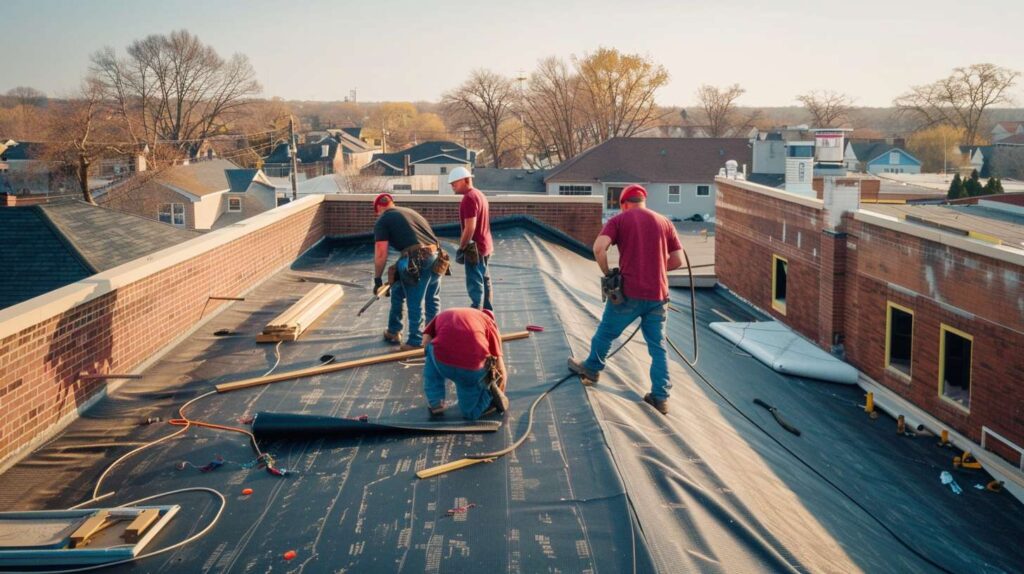
During installation, expect 5-12 days depending on roof size and complexity. Metal roofing is weather-sensitive-we don’t install in high winds or heavy rain-so schedules sometimes adjust. But once we start, the process moves efficiently: deck inspection and repair, underlayment, panel installation, flashing and trim, final cleanup. We protect landscaping, stage materials carefully in tight Brooklyn yards, and work with neighbors to minimize disruption.
After completion, you get manufacturer warranties (typically 30-50 years on materials), our installation warranty (10 years on labor), and a maintenance guide. Metal roofs need minimal upkeep-annual inspections, keeping valleys clear of debris, checking flashing-but those simple tasks ensure decades of performance.
When Metal Roofing Makes Sense (And When It Doesn’t)
Metal roofing is ideal if you’re planning to stay in your home long-term, want to eliminate repetitive roof replacements, value energy efficiency, or simply love the aesthetic. It’s especially smart if you’re already doing major work-adding insulation, replacing HVAC, renovating top floors-because the roof ties into all those systems.
It’s less ideal if you’re flipping a property or selling within a few years, because the upfront cost won’t be fully recouped in resale value (though it does help homes sell faster). And if your roof has very low pitch (under 2:12) or unusual structural issues, metal may not be feasible without significant additional work.
For Brooklyn specifically, metal roofing makes tremendous sense on rowhouses and brownstones where access for future replacements is difficult and expensive. Getting equipment and materials to a third-story roof through a narrow side yard costs money every time-so a roof that lasts 60 years instead of 15 years eliminates those repeated logistics costs.
If you’re considering a residential metal roofing project in Brooklyn and want to see how it could work on your home, let’s talk. I’ll come look at your roof, bring samples, answer every question, and design something that fits your house and your vision-not just a generic metal roof, but the right metal roof. That’s what a true residential metal roofing contractor does.