
Your Home Deserves a Flat Roof Contractor Who Knows What They’re Doing
Most Flat Roof Trouble Starts With the Wrong Diagnosis
I’ll save you the runaround: a lot of flat-roof failures aren’t mysterious-they’re misread. Too many contractors walk onto a Brooklyn roof and treat every leak like it behaves the same way, which means they’re not actually diagnosing your roof. They’re recycling a script. Residential flat roofing contractor services done right start with understanding how water moves through a system, not just where the damage shows up on the surface.
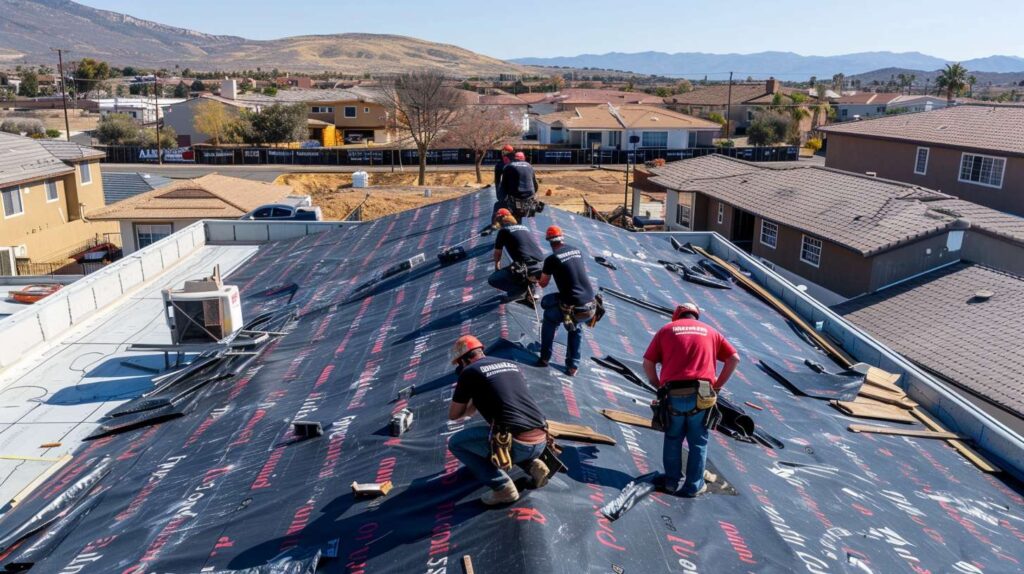
At 6:40 one rainy morning in Bensonhurst, I learned again that a ceiling stain is not a map. The homeowner was certain the leak had to be “right in the middle of the roof” because that’s where the water showed up on his ceiling. I traced the moisture trail, checked the base flashing at the parapet, and found a split in the membrane that only opened when the material cooled overnight in the wind-driven rain. That stain was sitting four feet away from the actual failure point. Here’s the part most homeowners get told backwards: water doesn’t leak straight down-it travels along decking, through insulation, and across membrane layers before it drips into your ceiling. Reading that path is the job. Guessing at it is how you end up paying for the same problem twice.
| Myth | What’s Actually Happening |
|---|---|
| “The stain on my ceiling marks exactly where the roof is leaking.” | Water migrates horizontally through substrate and insulation before it finds a ceiling penetration. The actual entry point can be several feet away from the stain. |
| “Ponding water is just how flat roofs work in Brooklyn.” | Standing water adds structural load and keeps seams under constant moisture stress. Drainage problems shorten roof life and mask developing failures at low spots. |
| “Any roofer can handle a flat roof.” | Flat-roof systems-modified bitumen, TPO, EPDM-each require system-specific detail work at seams, flashings, and edges. A contractor unfamiliar with the system type will create new failure points while fixing old ones. |
| “They put down a new cap sheet, so it’s basically a new roof.” | A new cap layer installed over wet or deteriorated substrate is just a cover-up. The hidden moisture continues to compromise the deck and insulation underneath, and the failure comes back faster than the first time. |
| “The leak stopped on its own-must be fine now.” | Temporary symptom relief happens when temperature or moisture conditions change. The underlying failure-a split seam, failed flashing, or clogged drain-is still there. It’ll show up again, usually worse and at a worse time. |
What a Real Flat-Roof Diagnosis Should Include
Leak path may start far from the stain. Any contractor who points at the ceiling mark and calls it the source without tracing water movement hasn’t done the job yet.
Parapets, drains, and scuppers are where most failures hide. These transition points-not the open field of the membrane-are where shortcuts and aging hit first.
Wet insulation or substrate changes the entire scope. A repair estimate without moisture assessment is just a guess. It may fix the symptom and leave the cause saturating your roof deck.
Photos and moisture findings should come before a quote. If a contractor hands you a price before showing you what they found, they haven’t shown you enough to earn that price.
Brooklyn Roof Details That Change the Answer
Seventeen years in Brooklyn teaches you this fast: the housing stock here isn’t generic, and neither are its roof problems. Brownstones and row houses on blocks from Bay Ridge to Bed-Stuy come with parapet walls that hold water against the membrane, aging masonry that lets moisture wick into flashing seams, and drainage layouts designed decades before the current roofing system was installed. I was finishing a service call in Bed-Stuy just before sunset when a homeowner mentioned that a previous contractor told her ponding water was “normal for Brooklyn roofs.” I pulled out a piece of chalk, circled the low spots near the drain, and showed her how that standing water was sitting directly on a seam already under stress. Tight roof access, short parapets, and scuppers that get blocked every leaf season aren’t quirks to shrug at-they’re the exact conditions that make proper diagnosis on a Brooklyn flat roof different from anywhere else.
That sounds like a detail issue, but here’s what’s actually happening when low bids come in: the substrate never gets checked, the edge metal goes uninspected, and the base flashing gets a brush coat instead of a proper reset. That’s why Ray Okonkwo, after 17 years working Brooklyn roofs and specializing in hard-to-trace flat-roof leaks around parapets and drains, looks at the edges before he trusts the field membrane story-because the field is almost never where the problem actually starts. Skipping that step doesn’t save time. It just moves the failure a season forward.
Parapets, drains, and scuppers are where shortcuts show up
| Roof Detail | What Homeowner Usually Sees | What Contractor Should Investigate | Correct Service Response |
|---|---|---|---|
| Parapet Base Flashing | Staining on interior wall near roofline; bubbling paint at ceiling edge | Membrane separation at parapet base; masonry moisture wicking into flashing bed | Strip and reset base flashing; address masonry condition before re-flashing |
| Inside Corner Seams | Recurring stains in corner rooms; leak appears only during heavy rain | Failed corner stripping; inadequate membrane overlap at 90-degree transitions | Full corner stripping replacement with compatible membrane material; do not coat over open seams |
| Drain Bowls | Slow drainage or ponding near drain; interior leak after any rainfall | Clamping ring condition; membrane seal at drain collar; debris blockage causing backflow | Clean and reset drain collar; replace clamping ring if corroded; resheet membrane at drain field |
| Scuppers | Water staining on exterior wall below scupper; puddles forming on roof surface | Scupper box seal integrity; membrane termination at scupper opening; debris blockage | Reseal or replace scupper box; properly terminate and adhere membrane into scupper throat |
| Rooftop Penetrations | Leak around pipe, vent, or HVAC base; sealant cracking around boot | Pitch pocket condition; flashing collar seal; membrane integration at penetration base | Replace deteriorated pitch pockets and collars; integrate new flashing with existing membrane system-don’t just cap with sealant |
What a Competent Service Visit Should Look Like
If I’m standing in your top-floor hallway, the first question I’m asking is not “where’s the roof hatch?”-it’s “where exactly did you first see this and what were the conditions outside?” That’s interior symptom review, and it shapes everything that follows. A proper visit moves from that interior trace to a full exterior membrane walk, then to drainage and edge detail inspection, then to an honest substrate moisture assessment before anyone puts a number on paper. Ask every contractor to show you where the water enters, where it travels, and which roof detail failed to stop it-if they can’t walk you through all three, keep shopping. That sequence isn’t just how good work gets done. It’s the screen you use to tell a real diagnosis apart from a canned pitch. The steps below are what that process looks like from first call to written recommendation.
Flat-Roof Service Workflow: Leak or Condition Complaint
Before You Call for Flat-Roof Service in Brooklyn – Have This Ready
-
✓
Age of the roof if known – even an approximate year helps narrow down what system and materials are up there -
✓
When the leak appears – every rain, only heavy rain, only wind-driven from the south, only after snow melts; timing is a clue -
✓
Photo of the interior stain or damage – taken during or right after an event, if possible, so the active pattern is visible -
✓
Whether the issue happens specifically in wind-driven rain – this points toward parapet base flashing or scupper details rather than field membrane failure -
✓
Prior repairs – note any patches, coatings, or work done in the last few years, and by whom if you have records -
✓
Access details for your row house or brownstone roof – interior hatch, exterior bulkhead, ladder requirement, or shared-building access restrictions all affect service logistics
Cheap Fixes Usually Cost More on Flat Roofs
One February afternoon in Flatbush, I met a retired couple who had hired the lowest bid they got the previous year for what was described to them as a full flat-roof replacement. When I pulled back one edge near the scupper, I found brand-new cap sheet laid directly over substrate that was already damp-visibly compromised material that never should have been covered. They didn’t buy a new roof. They bought a cosmetic layer that gave the old problem another year to get worse, at full replacement price. That’s not a rare story around here. Surface material gets sold as a solution when the real problem is underneath it, and the homeowner has no way to know the difference until the next leak shows up.
Blunt truth-flat roofs don’t forgive lazy workmanship, and the cheapest flat-roof bid is often just the cheapest way to postpone hearing the truth about what the roof actually needs. Repair is the honest answer when the damage is isolated: a seam split in one area, a flashing failure at a single penetration, localized membrane damage over dry substrate, or a drain issue caught before the surrounding field is compromised. Replacement is the honest answer when moisture is widespread, when the same areas keep failing, when edge details are gone across multiple sections, when the membrane has gone brittle, or when a previous recover was done over material that was already failing. Covering over a bad layer with a new one isn’t “saving money”-it’s financing a larger problem.
Water is always telling the truth, even when the estimate isn’t.
⚠ Red Flags in Flat-Roof Estimates
- No mention of drainage in the estimate – any flat-roof proposal that doesn’t note drain and scupper condition is missing a core part of the system diagnosis.
- Substrate condition never discussed – if the contractor didn’t probe for moisture or note substrate findings before quoting, they don’t know what’s under the membrane they’re proposing to cover.
- Coating quoted over everything – coating is a legitimate tool in specific situations. It’s not a universal fix, and selling it as one over failing or wet material is a red flag, not a solution.
- Full replacement quoted without tearoff detail or moisture findings – a real replacement scope includes which areas get torn off, what happens at the edge metal and flashings, and what the substrate condition revealed. If none of that is in the quote, you’re not looking at a real replacement plan.
If you want residential flat roofing contractor services explained clearly before any money changes hands, call Dennis Roofing. We’ll follow the water path from where it enters to where it shows up in your ceiling, and give you a written recommendation that reflects what’s actually happening on your roof-not what’s easiest to sell.