
Professional Metal Roofing Contractor Services in Brooklyn
Here’s something most Brooklyn homeowners don’t know: a properly installed metal roof can last 40-70 years in our harbor climate, where salt air meets freeze-thaw cycles, and easily outlive 2-4 generations of traditional asphalt systems that struggle to make 20 years. I’ve seen 50-year-old copper roofs on Park Slope brownstones that still shed water perfectly-and 8-year-old standing seam steel on Williamsburg row houses that ripple and leak because the installer treated it like shingle work. That difference? It comes down to choosing the right metal roofing contractor, not just the right metal color or panel profile.
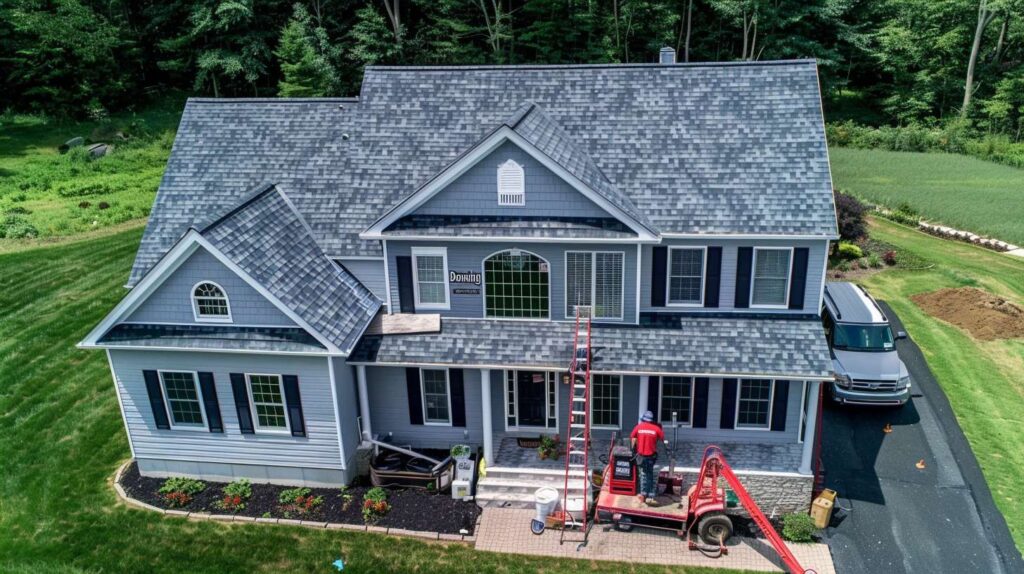
The biggest mistake property owners make is hiring “a roofer who’s done metal flashing” when they actually need a specialist who understands thermal movement, clip-fastened systems, proper underlayment selection, and hand-seaming techniques. Metal roofing isn’t modified-bitumen work scaled up-it’s sheet-metal fabrication installed on a sloped deck. Every panel expands and contracts. Every seam must allow movement. Every penetration needs custom flashing. Get those details wrong and you’ll hear drumming rain, see wavy panels, and chase leaks for years.
What Makes Metal Roofing Different (And Why It Requires Specialized Contractors)
When you install asphalt shingles, you’re nailing down overlapping pieces that stay still. When you install a metal roofing system, you’re managing a field of interlocking panels that move with temperature-sometimes up to 3/8 inch on a 30-foot run between a July afternoon and a January morning. That movement is the whole reason metal roofs last so long; they flex instead of cracking. But it also means every fastener, every clip, every seam must be designed to slide, expand, and lock without binding.
A true metal roofing contractor brings specific skills most general roofers never develop:
- Panel layout and geometry: We measure rake-to-rake, plan seam locations to avoid narrow slivers at edges, and adjust panel widths so standing seams don’t land awkwardly near chimneys or dormers
- Clip-fastened installation: Concealed fastener systems use sliding clips that attach to the deck, not through the metal itself-this lets panels move freely and eliminates exposed screw holes that can leak over time
- Proper underlayment selection: Metal transfers temperature fast, so we use synthetic underlayments rated for metal contact (not felt, which can trap condensation) and vapor-permeable membranes around parapet walls where Brooklyn’s temperature swings cause moisture issues
- Hand-seaming and mechanical seaming: Standing seam roofs require either hand-crimping tools or portable electric seamers that fold two panel edges together into a weathertight 1-inch vertical seam-this isn’t caulk-and-hope; it’s mechanical interlock
- Flashing fabrication: Every valley, rake edge, ridge cap, and wall termination gets custom-bent from coil stock to match panel profile and allow expansion-pre-formed trim rarely fits Brooklyn’s irregular rowhouse rooflines
On a Carroll Gardens townhouse project last spring, the homeowner had hired a crew who specialized in flat roofs but claimed they “did metal too.” They face-screwed panels directly to the deck, used roofing felt underneath, and caulked the seams. Within six months: oil-canning (visible waviness), fastener back-out, and rust streaks at every screw. We stripped it, rebuilt with clip-fastened standing seam over synthetic underlayment, and hand-seamed every joint. That roof will outlast the building.
Types of Metal Roofing Systems We Install in Brooklyn
Not all metal roofs are created equal. The system you choose depends on your building type, budget, aesthetic goals, and whether historic district rules apply. Here’s what we install most often across Brooklyn neighborhoods:
Standing Seam Steel and Aluminum: The workhorse system-vertical panels with concealed fasteners and raised seams. Steel panels (usually galvalume-coated) cost $12-$18 per square foot installed and offer exceptional durability. Aluminum runs $14-$22 per square foot but resists salt corrosion better, making it ideal for properties near the harbor in Red Hook or DUMBO. Panels come 12-24 inches wide, and we seam them on-site with hand tools or portable seamers. Standing seam handles slopes as low as 3:12 (though we prefer 4:12 minimum for Brooklyn’s snow and rain), sheds water fast, and works beautifully on modern rowhouse additions or mixed-use buildings in Williamsburg and Bushwick.
Copper and Zinc: Premium systems for landmark buildings and high-end restorations. Copper starts around $28-$40 per square foot installed and develops a natural green patina over 15-25 years (or we can pre-patina it). Zinc runs $32-$45 per square foot and weathers to soft gray. Both metals last 60+ years with zero maintenance and require specialized soldering skills for seams and flashing-this is where my European sheet-metal training comes in. We’ve re-coppered several Park Slope and Brooklyn Heights landmark townhouses where historical societies mandate traditional materials, and the craftsmanship shows in every hand-soldered seam and custom dormer cap.
Corrugated and Ribbed Panels: Exposed-fastener systems that cost $8-$13 per square foot installed-affordable and fast, but fasteners penetrate the metal and can leak over time if washers deteriorate. We use these on garages, workshops, and portions of commercial buildings where budget matters more than longevity. Corrugated panels work well on steep slopes (6:12 and up) and shed snow aggressively, but they’re noisier in rain and less thermally efficient than standing seam systems.
Flat-Lock and Batten Seam: Traditional systems for complex roofs with multiple planes, dormers, or curved sections. Flat-lock panels interlock in all four directions, creating a quilted look common on older Brooklyn brownstones. We fold edges, solder corners, and use this method around turrets, bay windows, and tight areas where standing seam panels won’t fit. Batten seam uses wood or metal battens over raised seams-beautiful, traditional, and expensive ($22-$35 per square foot), but perfect for historic renovation work.
Key Performance Factors: Noise, Energy, Snow, and Longevity
When homeowners ask about metal roofing, four questions come up every time: Will it be loud? Will it save energy? How does it handle snow? And how long will it really last? Let me break down what actually happens on Brooklyn roofs.
Noise control: A properly installed metal roof over solid sheathing with synthetic underlayment is quieter than most people expect-about the same as architectural shingles. The key is isolating the metal from direct deck contact using underlayment and ensuring the attic or top floor has insulation (which most Brooklyn buildings already have). The drumming-rain-on-a-tin-barn sound happens when you install corrugated panels over open purlins with no underlayment-something we never do on residential projects. On a Cobble Hill townhouse where the owners worried about noise, we added a layer of sound-deadening synthetic underlayment ($1.50/sq ft extra) and they report hearing less rain noise than with their old asphalt roof.
Energy performance and heat reflection: Metal roofs reflect 25-60% of solar heat depending on coating color, which keeps attic spaces and top floors cooler in summer. Light colors (white, tan, light gray) perform best. Dark colors still outperform black asphalt by a wide margin because metal doesn’t absorb and hold heat the way granulated surfaces do. In winter, metal sheds snow fast, reducing ice dam risk-though you’ll want snow guards if your roof drains over walkways. We’ve measured 8-12°F cooler attic temps on Brooklyn row houses after switching from asphalt to light-colored standing seam, which translates to lower AC costs and longer HVAC lifespan.
Snow shedding and ice dams: Metal roofs are slippery when snow starts to melt. Panels shed snow in sheets, which is great for preventing ice dams but means you need to manage where it lands-over gardens, not sidewalks or parked cars. We install S-5 style snow guards (small cleats that hold snow in place until it melts gradually) on most Brooklyn residential projects, spaced based on roof pitch and eave length. On buildings with flat roof sections adjacent to sloped metal, we add extra flashing and heat-trace cables at transitions because meltwater can refreeze on cold flat surfaces and back up under the metal edge.
Realistic lifespan: Galvalume steel lasts 40-50 years in Brooklyn’s climate. Aluminum hits 50-60 years. Copper and zinc go 60-80+ years. The fasteners, underlayment, and flashing are usually the first things to need attention-plan on inspecting and possibly replacing clips or trim at 25-30 years on steel systems. Paint finishes (Kynar 500 / PVDF) hold color for 30-40 years before fading, at which point you can leave the roof as-is (still weathertight) or repaint. Compare that to asphalt shingles that need replacement every 15-22 years in New York, and the math is straightforward: metal costs more up front, far less over 50 years.
Installation Process: What to Expect When Working with Dennis Roofing
Metal roofing installation is methodical and weather-dependent. Here’s how we approach a typical Brooklyn rowhouse or small building project:
Inspection and deck prep (1-2 days): We strip the old roof down to sheathing, inspect decking for rot or damage (common around chimneys and parapets), replace bad boards, and ensure the deck is smooth and flat. Metal panels telegraph every bump and sag, so deck prep matters more than with shingles. We check slopes with a level-standing seam needs 3:12 minimum, ideally 4:12-and discuss drainage with the homeowner if gutters need upsizing (metal roofs shed water faster than asphalt).
Underlayment and starter trim (1 day): We roll out synthetic underlayment (usually a high-temp product like Sharkskin or RhinoRoof rated for metal contact), lap seams 6 inches, and tape or seal edges at hips and ridges. Then we install starter trim at eaves and rake edges-these are custom-bent pieces that provide clean panel termination and drip edges. On historic buildings we often fabricate copper or zinc starter trim even if the field panels are steel, because those edges show and set the aesthetic tone.
Panel installation and seaming (2-5 days depending on complexity): We cut panels to length on-site using electric shears (never grinders, which throw hot sparks that damage coatings). Panels go down from eave to ridge, one at a time, with concealed clips fastened to the deck every 12-18 inches. Each clip has a tab that hooks the panel edge, allowing the metal to expand and contract without binding. We hand-seam or machine-seam adjacent panels as we go, folding edges together into a 1-inch standing seam that locks tight. Around chimneys, vents, and skylights we fabricate custom flashing-usually two-piece systems with base flashing that tucks under panels and counter-flashing that overlaps and sheds water away from penetrations.
Ridge caps, valleys, and final details (1-2 days): Ridges get vented or non-vented caps depending on attic ventilation needs-metal ridge caps are either snap-on systems that clip over standing seams or custom-bent pieces that screw down through the seam tops (less common now, but we still do it on historic work). Valleys get either open-metal liners or closed-cut valleys where panels weave together. We prefer open valleys on Brooklyn roofs because they flush debris and ice better. Final steps include installing snow guards, sealing any exposed fasteners with butyl tape, and cleaning metal shavings and debris off the roof and yard.
On a Prospect Heights mixed-use building last fall, the project ran 9 days start-to-finish: 2 days tearoff and deck repair, 1 day underlayment, 4 days panel install and seaming (the roof had 6 different planes and 3 large skylights), and 2 days flashing and trim. Weather delays added another 3 days-we don’t install metal in rain or high wind because wet underlayment won’t seal and wind lifts panels before they’re clipped. Plan for 1-2 weeks total on most residential projects, longer if we’re fabricating custom copper work or waiting on special-order materials.
Cost Breakdown: What Metal Roofing Actually Costs in Brooklyn
Metal roofing costs more than asphalt and less than slate or tile. Here’s what to budget for a typical Brooklyn project:
| System Type | Material Cost (per sq ft) | Installed Cost (per sq ft) | Typical Lifespan |
|---|---|---|---|
| Standing Seam Steel (Galvalume) | $4.50-$7.00 | $12.00-$18.00 | 40-50 years |
| Standing Seam Aluminum | $5.50-$8.50 | $14.00-$22.00 | 50-60 years |
| Copper (Standing Seam or Flat-Lock) | $12.00-$18.00 | $28.00-$40.00 | 60-80+ years |
| Zinc (Standing Seam) | $14.00-$20.00 | $32.00-$45.00 | 60-80+ years |
| Corrugated/Ribbed (Exposed Fastener) | $2.50-$4.50 | $8.00-$13.00 | 25-35 years |
For a typical 1,200 sq ft Brooklyn rowhouse roof (that’s actual roof area, not building footprint-roofs are always bigger), expect to invest $14,400-$21,600 for quality standing seam steel, $16,800-$26,400 for aluminum, or $33,600-$48,000+ for copper. Tear-off and disposal adds $2-$4 per square foot. Deck repairs run $8-$15 per square foot for rotted sections. Complex roofs with dormers, multiple planes, and intricate flashing push costs toward the high end of each range.
Cost factors that increase price: Steep slopes (7:12 and up require more safety equipment and slower work), historic district requirements (custom fabrication, hand-soldering, premium materials), difficult access (narrow Brooklyn side alleys, no crane access for material lifts), and extensive carpentry repairs (common on older buildings with failing parapets or rotten eaves).
Why metal costs more than asphalt but saves money long-term: Asphalt shingles cost $5-$9 per square foot installed and last 15-22 years in New York. Over 50 years you’ll re-roof 2-3 times at $6,000-$10,800 each time (accounting for inflation), totaling $12,000-$32,400. A metal roof installed once at $14,400-$21,600 costs less overall, requires zero maintenance, and increases resale value. Plus you avoid disruption-no tearing off shingles every 18 years, no dumpsters blocking your street, no risk of damage to interior ceilings or belongings during future reroofs.
Choosing the Right Metal Roofing Contractor: Questions to Ask
Not every contractor who installs metal roofing is qualified to do it right. Here’s what separates true specialists from general roofers dabbling in metal:
Ask about clip-fastened vs. exposed-fastener experience: Any roofer can screw down corrugated panels. Concealed-clip standing seam systems require training, specialized tools (hand seamers or electric seamers cost $1,200-$3,500), and understanding of thermal movement. Ask how many clip-fastened roofs they’ve installed in the past two years and whether they own seaming equipment or rent it (owning means they do this regularly).
Request metal-specific references and photos: Not “roofing references”-metal roofing references from projects similar to yours. A contractor with 20 years of flat-roof experience may have zero standing-seam installs under their belt. Look for photos showing clean seam lines, tight flashing details, and custom trim work. Ask references whether the roof leaks, whether panels wave or oil-can, and whether the contractor explained maintenance and snow shedding before installation.
Discuss underlayment and deck prep: If a contractor says “we use tar paper under metal” or doesn’t mention deck inspection, that’s a red flag. Proper metal roofing requires synthetic underlayment rated for high temps and metal contact, plus thorough deck inspection because metal panels won’t hide defects the way thick asphalt shingles do. We budget 1-2 days for deck work on every Brooklyn project because buildings here are 80-120 years old and there’s always something to fix.
Ask about expansion and contraction details: How do they handle thermal movement? Where do panels terminate at walls and ridges? Do they allow sliding at clips or lock panels down tight? A knowledgeable contractor will sketch details, explain clip placement, and talk about expansion gaps at trim-this shows they understand that metal moves and have a plan to manage it.
Verify insurance and manufacturer training: Metal roofing manufacturers (Englert, ATAS, McElroy, Drexel) offer installer training and certification programs. Ask whether the contractor has completed training for the system you’re considering-certified installers get better warranties (often 30-40 years on materials plus 20-25 years on workmanship) and know the specific installation requirements for each panel profile. Also verify they carry general liability insurance of at least $1 million and workers comp for all crew members-metal roofing requires working at height with heavy coils and sharp edges, and you don’t want liability if someone gets hurt.
On a Bed-Stuy building project two years ago, the property owner interviewed four contractors. Three quoted standing seam but planned to use exposed fasteners “because it’s faster.” Only one (us) specified concealed clips, discussed thermal expansion, and showed photos of hand-seamed ridge details from past projects. The owner chose us based on those details, and the roof has performed flawlessly through two winters and two scorching summers.
Why Dennis Roofing Specializes in Metal Systems
I came to metal roofing through family tradition-my grandfather and father were sheet-metal workers in Europe, fabricating copper roofs, zinc standing seam, and custom flashing for old-world buildings. I apprenticed in that craft, learned to solder, fold, and seam by hand, then brought those skills to Brooklyn 21 years ago and paired them with modern systems, manufacturer training, and code knowledge. We’ve since installed metal roofs on everything from landmark brownstones in Brooklyn Heights to new-construction mixed-use buildings in Bushwick, always focusing on durability, proper design, and understanding how Brooklyn’s climate and building stock require specific solutions.
What sets us apart is combining old-world sheet-metal skills with modern efficiency. We hand-seam when it matters (complex flashing, historic work, tight details) and machine-seam when it’s appropriate (long runs, simple slopes). We fabricate custom trim on-site using portable brakes, so every rake edge, drip cap, and chimney counter-flashing fits precisely-no generic pre-formed pieces that gap or bind. And we design every roof around Brooklyn’s real conditions: salt air from the harbor, freeze-thaw at parapets, tight rowhouse clearances, and the need for roofs that last decades without maintenance.
If you’re considering a metal roofing contractor for your Brooklyn property, start with a clear understanding of what system fits your building, budget, and goals-then choose a contractor who specializes in metal, not someone who “does it sometimes.” The difference shows in every seam, every flashing detail, and every year your roof performs exactly as it should.