
Expert Metal Roof Installers Services in Brooklyn You Can Trust
Professional metal roof installation in Brooklyn typically costs between $14 and $28 per square foot installed, depending on panel type and roof complexity. Here’s what most homeowners don’t realize: metal roofs rarely fail because the material wears out-they fail because installers get the details wrong. Fasteners placed incorrectly, thermal movement not accounted for, seams sealed with caulk instead of proper locking mechanisms, underlayment chosen for asphalt instead of metal-these installation mistakes cause 90% of metal roof problems I see in Brooklyn. That’s why choosing experienced metal roof installers matters more than which color or profile catches your eye at the supplier.
After 23 years fabricating and installing metal roofing systems-from commercial warehouses in Red Hook to Victorian singles in Midwood-I can tell you the difference between a metal roof that performs beautifully for 50 years and one that leaks, pops, and disappoints comes down entirely to installation precision. At Dennis Roofing, we treat every metal roof as an engineered system where expansion joints, clip spacing, seam integrity, and drainage pathways are calculated before the first panel goes up.
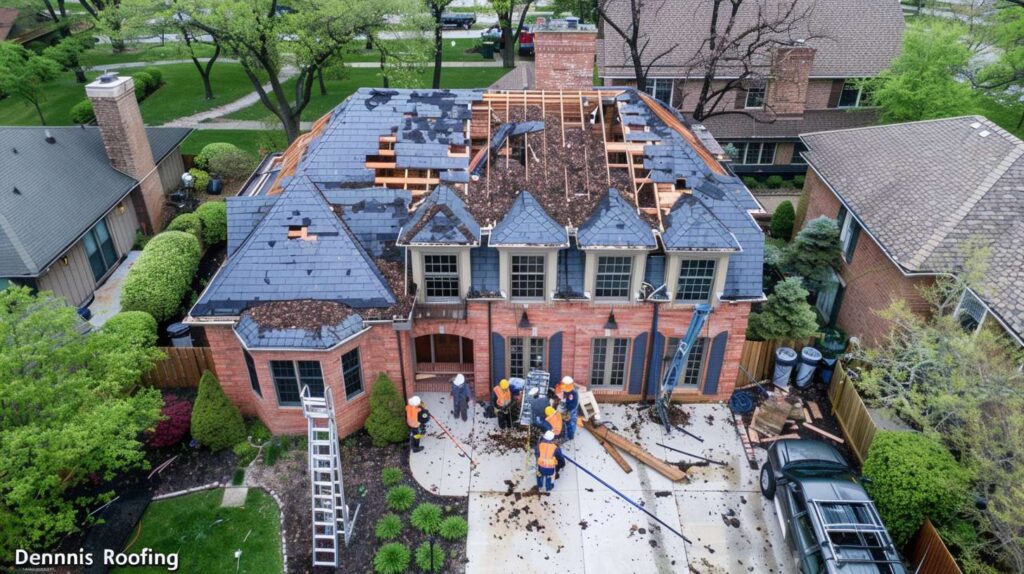
What Separates Professional Metal Roof Installers from General Roofers
Not every roofing contractor can properly install metal. The skill set is completely different from laying asphalt shingles or torching modified bitumen. Professional metal roof installers need specialized equipment-panel brakes, seamers, hemming tools, and nibblers-along with layout skills that account for thermal movement, which can be significant across a 40-foot run in Brooklyn’s temperature swings from 5°F winters to 95°F summers.
Metal expands and contracts. A 30-foot aluminum panel can move nearly half an inch seasonally. If your installer doesn’t understand clip systems that allow movement while maintaining weather-tightness, you’ll hear popping sounds every temperature change and eventually see fasteners back out or panels buckle. I’ve repaired dozens of jobs where contractors familiar only with asphalt shingles tried metal installation-they screwed panels down tight like shingles, used roofing nails instead of proper fasteners with neoprene washers, and created leak points at every penetration.
On a Bay Ridge semi-detached we worked on last spring, the previous contractor had installed corrugated metal panels directly over old shingles using drywall screws. Every screw hole was a future leak because drywall screws rust out in 18 months outdoors, and with no slip sheet between the metal and shingles, condensation was rotting the deck underneath. We stripped everything, installed synthetic underlayment with proper ventilation channels, then reinstalled standing seam panels with concealed fastener clips. The homeowner had paid $8,500 for the failed installation; our proper redo cost $19,200, but now that roof will outlast the building.
Metal Roofing Systems We Install in Brooklyn
Different buildings need different metal roof systems. Here’s what we install most frequently across Brooklyn’s varied housing stock:
Standing Seam Metal Roofing is our most popular residential system. Panels run vertically with raised seams that interlock and hide all fasteners. Clips attach to the deck and hold panel edges, allowing thermal movement while keeping weather out. We typically install 16-inch or 18-inch panel widths in aluminum (.032 or .040 gauge) or steel (24 or 26 gauge). Cost runs $18-$28 per square foot installed depending on roof complexity and material choice. Standing seam works beautifully on Brooklyn’s rowhouses, especially when tying into existing flat roof sections at the rear-we fabricate custom pans and transitions so the metal system integrates seamlessly.
Corrugated and R-Panel Systems cost less-typically $14-$19 per square foot-because installation is faster and materials simpler. These use exposed fasteners with neoprene washers, which means periodic maintenance checking fastener tightness. We install these primarily on garages, sheds, and rear extensions where budget matters more than aesthetics. The key detail most contractors miss: fasteners must go through the raised ribs, never the flat pans, so water flows past rather than pooling at penetrations.
Metal Shingle and Tile Profiles replicate the look of slate, cedar shake, or clay tile while delivering metal’s durability and light weight. These systems cost $22-$34 per square foot because they’re labor-intensive-each piece interlocks with four neighbors and requires precise alignment. We’ve installed aluminum slate profiles on several Victorian homes in Ditmas Park where owners wanted the period appearance without the weight or fragility of real slate. One 1890s home we reroofed had structural concerns about dead load; switching from deteriorating slate (900 pounds per square) to aluminum slate profiles (65 pounds per square) saved the roof framing while maintaining authentic appearance from the street.
Copper Roofing is our most premium service, typically running $35-$55 per square foot for standing seam systems. Copper requires different skills-it’s softer, more malleable, and develops that distinctive patina over time. We install copper primarily on landmark buildings, high-end brownstone restorations, and architectural accent areas like bay windows and turrets. The craftsmanship is old-world: hand-formed seams, soldered joints at complex intersections, and custom fabricated trim pieces that follow ornate cornices.
The Installation Process: How We Work
Proper metal roof installation starts before materials arrive. We measure twice and order exactly what’s needed, plus 8% waste factor for cuts and errors. Panels come in custom lengths to minimize seams-on a typical 30-foot Brooklyn rowhouse, we order full-length panels so there are zero horizontal seams from ridge to gutter.
Deck preparation matters enormously. We inspect and repair any damaged sheathing, ensure proper ventilation pathways exist (intake at soffits, exhaust at ridge), and install synthetic underlayment rated for metal roofing. Regular roofing felt doesn’t work under metal-the temperature differential causes condensation that the felt can’t handle. We use high-temperature synthetic underlayment that also serves as a slip sheet, allowing metal to expand and contract without abrading against rough wood.
For standing seam installation, we start with a straight edge-usually the rake edge-and work across the roof. Each clip is positioned precisely based on engineering specs: typically 12 inches on-center for residential applications, closer spacing on commercial or high-wind exposure. Panels slide into clips and interlock with neighbors. Every seam gets mechanically locked with a power seamer that folds the edges together in a 180-degree hem that’s completely weather-tight without any sealants. Watch out for installers who run a bead of caulk along seams-that’s not proper standing seam, it’s a shortcut that will fail when the caulk dries out or thermal movement pulls it apart.
Trim work separates adequate jobs from excellent ones. We fabricate custom trim for every transition: drip edges, rake trim, ridge caps, valleys, sidewalls, and penetrations. Each piece is hemmed, properly overlapped, and detailed so water flows outward and downward, never backing up or sitting in pockets. On a Sunset Park two-family we completed last fall, the challenge was tying the new metal roof into an existing EPDM flat roof section at the rear. We fabricated a custom reglet and counter-flashing system, then installed a transition pan that channeled water from the metal panels onto the flat section without creating a dam or leak point. That kind of custom fabrication requires sheet metal skills, not just roofing experience.
Brooklyn-Specific Installation Considerations
Installing metal roofs in Brooklyn presents challenges you don’t face in suburban or rural areas. Access is always complicated. Most Brooklyn homes sit close to neighbors with tight side yards or shared driveways. We use specialized equipment-compact brakes and shears that work in confined spaces-and coordinate deliveries carefully because there’s nowhere to stage materials. On rowhouse blocks, we often schedule crane deliveries for early morning when street parking is available, then hand-carry and hoist panels to avoid damaging adjacent properties.
Building codes and permits matter here. Brooklyn falls under NYC Building Code, which requires permits for any roof replacement. We handle all permitting, including DOB filings and required inspections. Metal roofs must meet fire ratings (typically Class A), wind uplift ratings, and impact resistance standards. We provide documentation proving materials and installation meet code, which protects you during future sales or insurance claims.
Noise is a common concern with metal roofs in attached housing. “Will I hear every raindrop?” homeowners ask. Properly installed metal roofs with solid sheathing, underlayment, and insulation are quieter than you’d expect-sound transmission depends more on what’s under the metal than the metal itself. On a Greenpoint townhouse, concerned owners asked us to add extra noise dampening; we installed 1-inch polyiso insulation board over the deck before underlayment, which reduced sound transmission by roughly 40% compared to metal-over-sheathing only. That system costs about $3 extra per square foot but makes interior spaces noticeably quieter during heavy rain.
Snow sliding off metal roofs is another Brooklyn-specific issue, especially on sidewalk-adjacent sections. Metal’s smooth surface sheds snow that would stay on asphalt shingles. We install snow guards-metal cleats that hold snow in place until it melts-on any roof section where sliding snow could hit pedestrians or damage property below. Placement matters: guards go in staggered rows, calculated based on roof pitch, panel type, and typical snow load. Too few and snow overwhelms them; too many and you compromise drainage.
Cost Breakdown: What You’re Paying For
Brooklyn metal roof installation costs break down roughly like this for a typical 1,600 square foot roof:
| Component | Cost Range | Notes |
|---|---|---|
| Materials (panels, trim, fasteners) | $8,500-$14,000 | Varies by metal type and gauge |
| Underlayment & deck prep | $2,200-$3,100 | Includes synthetic underlayment, ventilation |
| Labor (installation) | $9,500-$13,500 | Skilled metal roof installers, 4-6 day job |
| Permits & inspections | $800-$1,200 | NYC DOB fees and filings |
| Tear-off & disposal | $2,400-$3,800 | Removal of existing roof, dumpster |
| Custom trim & flashings | $1,800-$2,900 | Fabricated on-site for exact fit |
| Total Investment | $25,200-$38,500 | $15.75-$24 per square foot |
These numbers reflect standing seam aluminum or steel systems on a moderate-complexity roof-two or three planes, standard pitch (4:12 to 8:12), typical penetrations. Add 15-25% for complex Victorian homes with multiple dormers, turrets, or ornate trim. Copper systems start around $45,000 for that same 1,600 square foot roof.
Why does professional metal roof installation cost more than asphalt shingles? Because you’re paying for specialized skills, equipment, and materials that will last 40-60 years versus 15-20 for shingles. When you amortize costs over the roof’s lifespan, metal often costs less per year than replacing asphalt shingles multiple times. Plus metal roofs increase property values-Brooklyn buyers pay premiums for homes with quality metal roofs because they know major roof replacement is decades away.
Red Flags: How to Spot Poor Metal Roof Installers
Not all metal roof installers deliver quality work. Here’s what to watch for when evaluating contractors:
Exposed fasteners on standing seam systems. Standing seam should have no visible screws on the roof field-fasteners attach clips hidden beneath panel edges. If you see screws through panel faces, that’s not real standing seam, it’s exposed fastener panels sold as standing seam. This shortcut costs installers less but gives you none of standing seam’s advantages: hidden fasteners mean no screw-hole leaks, no maintenance tightening fasteners, and cleaner appearance.
Panels cut with angle grinders. Metal panels should be cut with shears or nibblers that leave clean edges. Angle grinders burn the factory finish, expose bare metal that rusts, and throw sparks that damage surrounding panels. On a Park Slope job we repaired, the previous installer had used a grinder for every cut-five years later, rust was bleeding down from every edge and the warranty was void because grinder damage violated manufacturer specs.
Caulk or sealant at panel seams. Properly installed standing seam roofs need no sealant at longitudinal seams-the mechanical interlock is weathertight. Installers who run caulk beads along seams are covering poor seaming technique. Caulk eventually fails from UV exposure and thermal cycling, then you have leaks where you expected permanent seals.
No slip sheet over old roofing. When installing metal over existing shingles (sometimes done to save tear-off costs), there must be a slip sheet-typically synthetic underlayment-between the metal and old roof. Direct contact causes condensation problems and the rough shingle surface abrades metal panel undersides during thermal movement. We’ve seen metal panels wear through in 8-10 years from this mistake.
Wrong fastener types. Metal roofing requires specific fasteners: pancake-head screws with bonded neoprene washers for exposed fastener systems, stainless clips for standing seam in coastal areas, copper nails for copper roofing. Using wrong fasteners-regular roofing nails, drywall screws, mismatched metals that cause galvanic corrosion-guarantees problems. One Bensonhurst home we inspected had steel screws in an aluminum roof; after three years, galvanic corrosion had eaten holes around every fastener.
Maintenance and Longevity: What to Expect
Properly installed metal roofs in Brooklyn typically last 45-60 years with minimal maintenance. Steel roofs with quality finishes (Kynar 500 or similar) need virtually no attention beyond annual gutter cleaning. Aluminum stays maintenance-free for decades. Copper develops patina over 10-15 years, changing from bright copper to brown to eventual green-no maintenance needed unless you want to preserve the bright copper look with chemical treatments.
Every few years, inspect fasteners on exposed-fastener systems and tighten any that have backed out from thermal cycling. Check sealants at penetrations-vent pipes, chimneys, skylights-and replace any that have cracked or separated. Keep valleys clear of leaves and debris. That’s about it. Compare this to asphalt shingles that need granule loss monitoring, periodic repairs for storm damage, and complete replacement every 15-20 years.
We warranty our installations for 10 years on workmanship-covering any leaks, panel failures, or fastening issues caused by installation errors. Material warranties run 25-40 years depending on manufacturer and finish quality. Keep documentation of your installation: permits, inspections, material receipts, and warranty certificates. Future buyers appreciate this paperwork, and it can be required for insurance coverage or claims.
Why Brooklyn Homeowners Choose Dennis Roofing for Metal Installation
Metal roofing requires precision that goes beyond standard roofing skills. We bring specialized sheet metal expertise-knowing how to read expansion rates in engineering tables, calculate clip spacing for wind loads, fabricate custom trim that follows complex architectural details, and integrate metal systems with existing flat roofs, parapets, and cornices common on Brooklyn buildings.
Every metal roof installation we complete gets documented with photos at each stage: deck condition before installation, underlayment and ventilation details, panel layout and fastening, trim and flashing work, and final inspection. This documentation proves proper installation if questions arise during building sales or insurance claims. We also provide maintenance guidance specific to your roof system-what to watch for, when to call for inspections, how to clean without damaging finishes.
If you’re considering metal roofing for your Brooklyn property-whether it’s a brownstone in Fort Greene, a semi-detached in Bay Ridge, or a Victorian in Flatbush-we’ll walk you through material choices, show you panel samples, sketch details so you understand exactly how we’ll handle the complex transitions your building requires, and provide a detailed proposal that breaks down every cost. Metal roofs are long-term investments. Getting the installation right the first time means decades of weather protection without the recurring expense and disruption of roof replacements. That’s what professional metal roof installers deliver.