
Brooklyn’s Trusted Licensed Commercial Roofing Contractor
In Brooklyn, a commercial roofing job done by an unlicensed contractor can void your insurance coverage and put you on the hook for fines or injury claims-even if the roof itself looks perfect. Most building owners don’t realize this until something goes wrong. Last year, a Williamsburg property manager hired a “contractor” who quoted 30% below everyone else for a flat roof replacement on a four-story mixed-use building. The work looked fine. Six months later, a worker doing HVAC maintenance fell through an improperly reinforced section. When the building owner’s insurance company investigated, they discovered the roofing company had no commercial license, no workers’ compensation insurance, and the job had been done without permits. The insurance claim was denied. The building owner faced a lawsuit, ECB violations, and had to tear out and replace sections of the roof-all because they didn’t verify one document before signing a contract.
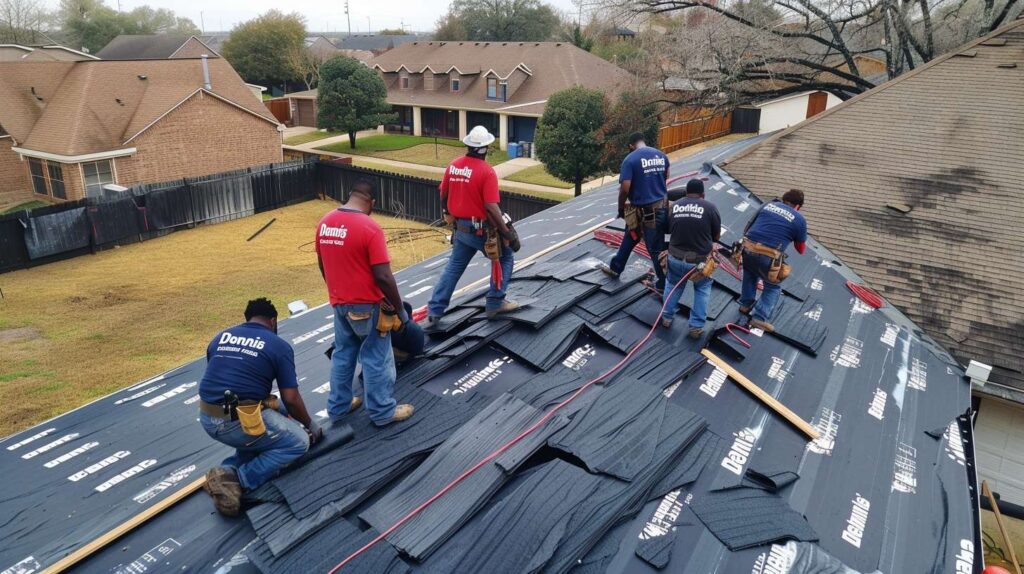
That’s the reality of commercial roofing in New York City. Your contractor’s license isn’t paperwork-it’s your protection against liability, code violations, insurance denials, and financial disaster. At Dennis Roofing, I spend more time explaining licensing, permits, and insurance requirements to Brooklyn building owners than I do talking about roofing materials, because understanding what should be in place before work starts matters more than anything we put on your roof.
What a Licensed Commercial Roofing Contractor Actually Means in NYC
New York City doesn’t have a separate “roofing license” the way some states do. Instead, commercial roofing work requires a combination of specific licenses, registrations, and insurance policies that vary based on the scope of work, building height, and type of system being installed. A legitimate licensed commercial roofing contractor in Brooklyn operates under a Home Improvement Contractor license issued by the NYC Department of Consumer and Worker Protection (DCWP), holds proper insurance coverage including workers’ compensation and general liability, and pulls permits through the Department of Buildings when required.
Here’s what should exist on paper before any work starts on your building:
- NYC Home Improvement Contractor License: Required for any roofing work on buildings with three or more units. This license number should appear on every contract, proposal, and invoice. You can verify it in seconds at nyc.gov/dca.
- Workers’ Compensation Insurance: Mandatory in New York State for any company with employees. If a roofer gets hurt on your property and the contractor doesn’t have this coverage, your building’s insurance may have to cover it-and then drop you.
- General Liability Insurance: Minimum $1 million per occurrence, $2 million aggregate. This protects you if the contractor damages your building, neighboring properties, or causes injury to third parties during work.
- DOB Permits: Required for most commercial roof replacements, structural modifications, or work on buildings over 40 feet tall. Permit numbers should be posted at the job site and visible from the street.
I came into roofing from the compliance side-spent ten years as a DOB expediter and safety officer making sure construction jobs met code before I ever climbed onto a commercial roof. The most common mistake I see building owners make isn’t hiring a bad roofer. It’s hiring someone who does decent work but operates outside the legal framework that protects you. When something goes wrong-a leak, an injury, a code violation-that’s when you discover the contractor who saved you $15,000 just cost you $150,000 in liability exposure.
How to Verify a Contractor’s License and Insurance in Five Minutes
Before you sign anything or hand over a deposit, verify these four things. It takes less time than reading the contract:
Step 1: Check the NYC Home Improvement Contractor License. Go to nyc.gov/dca and search for the company name or license number. The license should be active, not expired, and the business name should match exactly what’s on your contract. If the contractor says they’re “working under” someone else’s license, that’s a red flag-each business entity needs its own license.
Step 2: Request a Certificate of Insurance directly from their insurance company. Don’t accept a photocopy or PDF from the contractor-call the insurance company listed on the certificate and verify the policy is active, covers the dates of your project, and lists your property address as an additional insured. This takes one phone call and eliminates 90% of insurance fraud.
Step 3: Verify workers’ compensation coverage through the New York State Workers’ Compensation Board. The contractor should provide their workers’ comp policy number. You can verify it at wcb.ny.gov. If they claim they don’t need it because they’re “independent contractors” or “just use subcontractors,” that’s not how New York law works-and it’s your problem when someone gets hurt.
Step 4: Check for DOB violations and permits. Search the building’s address at a810-bisweb.nyc.gov to see all permits filed and any open violations. If your contractor pulled permits for previous jobs, those should show up. If they’ve never pulled a permit in their entire history, they’re probably not planning to start with your building.
A Downtown Brooklyn office building owner called me last spring after getting three quotes for a roof replacement on a six-story building. One contractor came in $42,000 lower than the other two. When the owner asked me to review the proposals, I searched the contractor’s license-it had been suspended two years earlier for unpermitted work and unpaid fines. The “company” was operating under a new DBA but same ownership. The owner’s insurance broker confirmed that if they’d hired that contractor and something went wrong, their commercial property policy would have denied coverage because they’d knowingly hired an unlicensed entity. That $42,000 savings could have turned into a seven-figure problem.
When Brooklyn Commercial Roofing Work Requires DOB Permits
Permit requirements in New York City are more complex than most building owners realize, and they’re not optional-they’re tied directly to whether your insurance will cover problems and whether the city will issue violations that can prevent you from selling or refinancing your property.
You need a DOB permit for commercial roofing work in Brooklyn when:
- You’re replacing the entire roof system or more than 50% of the roof surface
- The building is over 40 feet in height
- Work involves structural modifications, including adding or removing roof penetrations, parapets, or load-bearing elements
- You’re changing the roofing system type (for example, from built-up to single-ply membrane)
- Work is part of a larger renovation requiring a general construction permit
- The building is in a historic district and exterior work is visible from the street
Simple repairs-patching leaks, replacing individual sections of membrane, resealing flashings-typically don’t require permits. But here’s the reality: if you’re spending more than $15,000 on your roof, there’s a good chance the work requires a permit. And if your contractor tells you “we don’t need permits for this,” get that in writing and have your insurance broker review it before work starts. Because if they’re wrong, you’re the one who gets the violation notice, not them.
A Sunset Park warehouse owner learned this the expensive way. They hired a contractor to replace the EPDM roof on a 12,000-square-foot building. The contractor said permits weren’t needed because it was “just a re-cover.” Halfway through the project, a DOB inspector doing a random sweep issued a stop-work order and violations totaling $18,000. The work had to be brought into compliance, which meant hiring an architect to file after-the-fact permits, engineering drawings for the new roof load, and paying penalty fees. The project that was supposed to take two weeks stretched to four months, and the warehouse owner couldn’t lease the space until all violations were cleared.
The Real Cost of Cutting Corners on Licensing and Permits
Building owners cut corners on licensing and permits for one reason: to save money. An unlicensed contractor charges less because they’re not paying for insurance, permits, inspections, or compliance with safety regulations. But here’s what that “savings” actually costs you:
Insurance claim denials: If your roof fails prematurely, leaks damage tenant spaces, or someone gets injured during or after the work, your insurance company will investigate whether the work was done by a licensed contractor with proper permits. If the answer is no, your claim gets denied-even if the leak or injury had nothing to do with licensing. Insurance companies don’t pay claims on unpermitted or unlicensed work, period.
Personal injury liability: When a worker gets hurt on your property and the contractor doesn’t have workers’ compensation insurance, that injured worker can sue you directly as the property owner. In New York, premises liability doesn’t care whether you hired the worker-if they were hurt on your property during work you authorized, you’re exposed. A fall from a three-story building can result in medical costs and settlements well into six figures.
ECB violations and fines: The city’s Environmental Control Board issues violations for unpermitted work that start at $2,500 and escalate quickly for repeat violations or if the work created unsafe conditions. These violations attach to the property, not the contractor, and they must be cleared before you can sell or refinance. They also trigger mandatory inspections that often uncover additional violations.
Warranty and liability issues: If your roof fails and you need to make a warranty claim against the contractor, having proper permits and a licensed contractor matters enormously. An unlicensed contractor has no legal standing to pull permits for repair work, and manufacturer warranties often require installation by licensed, insured contractors. You end up paying twice-once for the bad roof, once for the replacement.
| Compliance Element | What It Protects You From | Cost If Missing |
|---|---|---|
| NYC Home Improvement License | Contractor fraud, abandoned jobs, insurance claim denials | $50,000-$500,000+ in liability exposure |
| Workers’ Compensation Insurance | Personal injury lawsuits from injured workers | $100,000-$1,000,000+ per injury claim |
| General Liability Insurance | Property damage to your building or adjacent properties | $25,000-$250,000+ per incident |
| DOB Permits | ECB violations, stop-work orders, code compliance issues | $5,000-$50,000+ in fines, delays, and remediation |
| Certificate of Completion | Future insurance claims, resale complications, financing issues | $10,000-$100,000+ in after-the-fact permitting and corrections |
What Happens During a Licensed Commercial Roofing Project in Brooklyn
When you hire a properly licensed commercial roofing contractor in Brooklyn, here’s what should happen from contract signing to final inspection-and what documents you should receive at each stage:
Pre-construction: Before work starts, you should receive copies of the contractor’s license, current insurance certificates listing your property as additional insured, and if permits are required, copies of filed DOB applications with application numbers. The contractor should conduct a pre-construction meeting to review the scope of work, site safety plan, and schedule. If the building is occupied, tenants should receive written notice of work dates, noise expectations, and emergency contact information.
Permit filing: For jobs requiring permits, the contractor coordinates with their architect or engineer to prepare construction drawings and submits them to DOB. In Brooklyn, permit approval typically takes 4-8 weeks depending on the complexity and building type. Work cannot legally start until permits are approved and the permit is posted at the job site. Many contractors will do “prep work” while waiting for permits, but actual roof removal or replacement must wait until permits are in hand.
During construction: A licensed contractor maintains an active job site safety plan, posts all required permits and certificates where they’re visible from the street, and follows OSHA fall protection requirements. For buildings over three stories, that means edge protection, personal fall arrest systems for workers, and daily safety briefings. The contractor should provide weekly progress updates and document any field conditions that differ from original plans-these become change orders and may require permit amendments.
Final inspection: After work is complete, the contractor requests a DOB final inspection. The inspector verifies that work matches approved plans, all safety railings and guards are in place, and the installation meets code requirements. If the inspection passes, DOB issues a Certificate of Completion. This document is critical-it’s proof that your roof was legally installed and inspected, and it’s what future insurance companies and buyers will ask to see.
A Bed-Stuy mixed-use building went through this exact process two years ago. Four-story building, full TPO roof replacement, required permits because of the height and scope. The contractor pulled permits in January, got approval in March, started work in April. During installation, they discovered the existing roof deck had water damage in two sections not visible during initial inspection. They documented it with photos, prepared a change order, filed an amendment with DOB, and replaced those sections with proper engineering specs. The final inspection in June included verification of the deck repairs. Total project timeline: five months from permit filing to Certificate of Completion. The building owner refinanced eight months later-the bank required proof of a code-compliant roof replacement, and having that Certificate of Completion ready saved weeks in the closing process.
Why Brooklyn Commercial Buildings Need Specialized Roofing Expertise
Brooklyn commercial roofing isn’t the same as Queens, Manhattan, or suburban work-the building stock, code requirements, and site conditions create specific challenges that require local expertise and proper licensing.
Most commercial buildings in Brooklyn are older-pre-war structures with mixed-use configurations, brick facades, and roofs that have been patched and re-covered multiple times over decades. When you open up one of these roofs, you often find three or four layers of different roofing systems installed over the original tar and gravel. Some of those layers were permitted, some weren’t. Some were installed correctly, some are just waiting to fail.
This matters because when you’re dealing with a building that has unpermitted modifications from the 1970s, you can’t just slap on another roof layer and call it done. A licensed contractor knows how to evaluate existing conditions, determine what needs to be removed to meet current code, and file the proper permits that document what’s being corrected. An unlicensed contractor just adds another layer and hopes nobody notices-until the next person opens up the roof and finds a disaster.
Brooklyn also has significant historic districts-Brooklyn Heights, Park Slope, Fort Greene, Carroll Gardens, Cobble Hill, Williamsburg-where exterior work may require Landmarks Preservation Commission approval even if the roof isn’t visible from the street. A licensed contractor working in these areas knows to check LPC requirements before filing DOB permits, because getting it wrong means project delays, rejected permits, and expensive redesigns.
Site logistics are another Brooklyn-specific challenge. Many commercial buildings sit on narrow streets with no staging area, limited parking, and immediate neighbors who will absolutely call 311 if your dumpster blocks their driveway or your crew starts work at 6:30 AM. A licensed contractor factors these constraints into their project plan and schedule because they know one noise violation or improper street closure can shut down the entire job.
Questions to Ask Before Hiring a Commercial Roofing Contractor
When you’re evaluating contractors for your Brooklyn commercial building, here are the specific questions that separate licensed, legitimate professionals from everyone else:
“What’s your NYC Home Improvement Contractor license number?” If they hesitate, give you a business license number instead, or say they don’t need one, end the conversation. Every legitimate commercial roofing contractor in Brooklyn has this license-it’s not optional.
“Will you pull permits for this work, and what’s the estimated timeline for permit approval?” If they say permits aren’t needed when you know the work requires them, that’s a massive red flag. If they say permits will take “a couple weeks” for a major commercial roof replacement, they’ve never actually pulled permits in New York City.
“Can you provide a Certificate of Insurance directly from your insurance company listing my property as additional insured?” The key words are “directly from your insurance company”-not from them, not from their agent. You want the insurance company to send you verification that covers your project dates and property address.
“What happens if you find structural issues or code violations once the roof is opened up?” The answer should include documented change orders, amended permits if needed, and a clear process for getting your approval before proceeding with additional work. If they say “we’ll handle it, don’t worry about it,” worry about it.
“Who will be the site supervisor, and how do I reach them during the project?” You should have direct contact information for the person managing your job-not a general office number, not “just call the main line.” When you have a leak, a tenant complaint, or a question about schedule, you need to reach someone immediately.
“What warranty do you provide, and is it insured?” Many contractors offer 10 or 15-year workmanship warranties. Ask if that warranty is backed by insurance or just the company’s promise. Because if they go out of business in year three, an uninsured warranty is worthless.
Why Dennis Roofing’s Commercial Division Focuses on Compliance First
At Dennis Roofing, we treat licensing, permits, and insurance as non-negotiable requirements-not because we like paperwork, but because cutting corners on compliance is the single biggest risk factor for Brooklyn building owners. Over 23 years of commercial roofing work in Brooklyn, we’ve seen what happens when contractors skip permits, underinsure their work, or operate outside the legal framework. We’ve been called in to fix those problems, and they’re always more expensive and complicated than doing it right the first time.
Every commercial project we take on includes a compliance review before we even quote the work. We verify permit requirements with DOB, check for landmarks district restrictions, review the building’s existing violations, and make sure our scope of work aligns with what’s legally allowed and properly insurable. That process sometimes adds time to the proposal stage, but it eliminates surprises during construction and protects our clients from liability they didn’t know existed.
We maintain active licenses, insurance coverage that exceeds industry minimums, and relationships with DOB inspectors, engineers, and expeditors who know Brooklyn buildings. When we say we’re a licensed commercial roofing contractor, that means something specific: we pull permits when required, we document everything, and we give you the paper trail you need to prove your roof was installed correctly if you ever need to make an insurance claim, sell your building, or defend against a liability lawsuit.
If you own or manage a commercial building in Brooklyn and you need roofing work done right-licensed, permitted, insured, and compliant with every applicable code-that’s what we do. Call Dennis Roofing at (718) 555-0100 or visit dennisroofing.com. We’ll review your building, explain what permits and documentation you need, and give you a detailed proposal that includes every compliance requirement upfront. Because the cheapest quote isn’t worth anything if it puts your building and your business at risk.