
What’s the Gutter Replacement Cost Average in Brooklyn?
Most Brooklyn homeowners pay $1,280 to $3,850 for full gutter replacement, with the typical project landing around $2,100. That covers new seamless aluminum gutters with downspouts on a two-story rowhouse or small frame home, standard installation labor, and basic cleanup. Here’s what that includes, what it doesn’t include, and what makes your house land at the low or high end of that range.
The average gutter replacement cost in Brooklyn breaks into four clear buckets: materials, labor, access and setup, and extras like leaf guards or fascia repair. When I walk through a job in Park Slope or Bushwick, I’m measuring linear footage, counting corners and downspouts, checking fascia condition, and noting roof height-all before anyone talks price. Those details are what separate a $1,400 estimate from a $3,200 one on houses that look similar from the curb.
Breaking Down the Average Gutter Replacement Cost
Let me unpack the four cost drivers I see on every Brooklyn gutter job, using real numbers from projects we’ve priced in the last eighteen months.
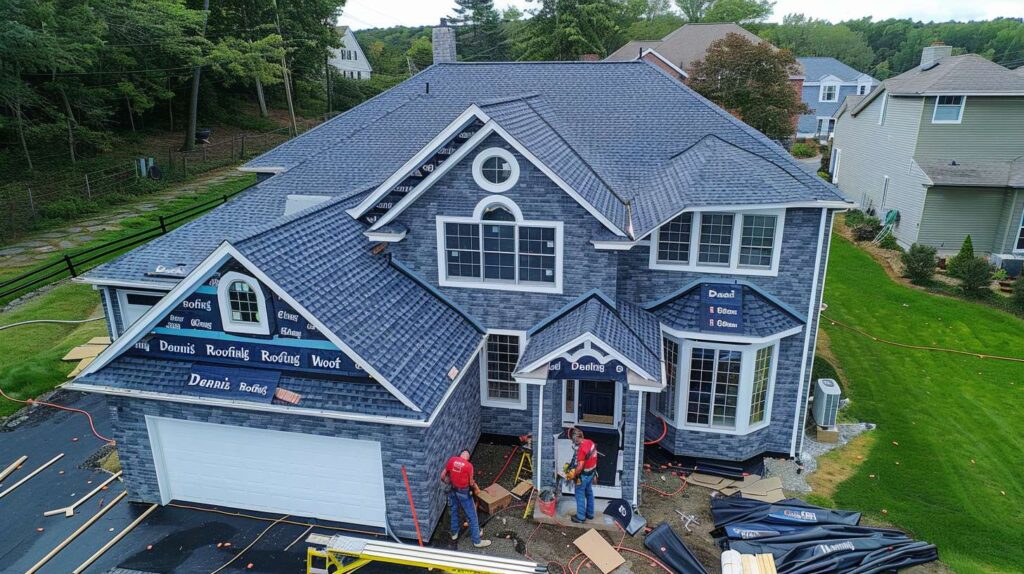
Materials typically run $3.50 to $9.00 per linear foot, depending on what you choose. Standard .027-gauge seamless aluminum in white or brown costs $3.50 to $5.00 per foot-that’s what most Bay Ridge and Bensonhurst homeowners install. Heavier .032-gauge aluminum adds about $1.00 per foot but holds up better on buildings with no overhang or lots of ice. Copper gutters jump to $18 to $28 per foot, which I see mostly on Clinton Hill and Fort Greene brownstones where owners want the authentic patina look. “Seamless” means the gutter is formed on-site from coil stock-no joints except at corners-so you eliminate 90% of potential leak points compared to sectional gutters that snap together every ten feet.
Labor accounts for $4.00 to $7.50 per linear foot installed. A crew pulls your old gutters, hauls debris, installs new hangers every 24 inches into solid fascia, seals all miters and end caps, attaches downspouts with straps, and tests water flow. Brooklyn labor rates run higher than national averages because skilled installers command $28 to $42 per hour here, and union shops (common in Sunset Park and Canarsie) add another 15 to 20 percent. A “miter” is the corner joint where two gutter sections meet at an angle-brownstones with bay windows might have six or eight miters on one facade, and each adds ten minutes of cutting and sealing time.
Access and setup adds $150 to $650 depending on building type and street access. Standard two-story homes with open driveways cost less-crew parks the truck, sets up ladders or pump jacks, and works efficiently. Attached rowhouses on narrow streets (common in Bedford-Stuyvesant and Crown Heights) require sidewalk permits, traffic cones, and sometimes scaffolding if neighboring buildings crowd the work zone. Four-story buildings always need staging or lifts, which triple setup time and cost.
Extras vary widely but show up on about 60% of Brooklyn jobs. Fascia board replacement runs $6 to $12 per linear foot when rot or carpenter ant damage makes it unsafe to hang new gutters-I’d say one in three older frame homes in Flatbush and East New York needs at least partial fascia work. Gutter guards or screens add $4 to $10 per foot installed, which makes sense on tree-lined blocks in Windsor Terrace or Ditmas Park where you’re cleaning clogs three times a year otherwise. Decorative elements like copper or bronze downspout bands, leader heads, or custom color-matching add $200 to $800 but elevate curb appeal on landmark properties.
How Many Linear Feet Does Your Brooklyn House Need?
Average gutter replacement cost hinges entirely on “linear foot”-the measurement of how much gutter your roofline requires. A linear foot is exactly what it sounds like: one foot of gutter channel measured horizontally along the roof edge, plus downspouts measured vertically from gutter to ground. Most Brooklyn housing stock falls into predictable ranges.
Typical two-story rowhouses (20 feet wide, front and rear gutters only) need 80 to 120 linear feet including downspouts. Three-story rowhouses with side returns add 140 to 180 feet. Detached frame homes in Marine Park or Gerritsen Beach average 140 to 200 feet because all four sides need coverage. When I measure, I’m walking the perimeter with a laser measure, marking every roof edge, valley, and overhang, then adding downspout runs-usually one downspout per 35 to 40 feet of gutter, placed to drain water away from foundations.
Here’s a real example from a job last spring in Carroll Gardens: three-story brick rowhouse, 18 feet wide, with a one-story rear extension. Front facade needed 42 feet of gutter with two downspouts (32 feet vertical). Side return added 38 feet with one downspout (26 feet). Rear extension took 24 feet with one downspout (12 feet). Total: 104 linear feet of gutter channel, 70 feet of downspout, 174 feet billed. At $8.50 per foot all-in for .032 aluminum with leaf guards, that homeowner paid $1,479 for materials and labor combined. No fascia repair needed, standard setup from the backyard.
Material Choices That Move the Average
The gap between budget and premium materials explains why Brooklyn’s average gutter replacement cost has such a wide range. Here’s what I walk homeowners through when they ask “what should I get?”
Seamless aluminum dominates Brooklyn installations-probably 75% of what we hang. It doesn’t rust, weighs little (easier on older fascia), comes in 25+ colors, and costs less than steel or copper. Standard .027-gauge handles most applications fine. I recommend .032-gauge (about 18% thicker) if your house sits on a windy corner, gets heavy snow loads, or has wide unsupported spans over bay windows. The upgrade costs $120 to $180 more on a typical rowhouse but prevents sagging and denting.
Copper gutters cost three to five times more but last 70+ years and age into that green patina you see on landmark buildings in Brooklyn Heights and Cobble Hill. New copper is bright orange-brown, which some homeowners dislike initially. If your block has Landmarks Preservation Commission restrictions or you’re restoring a Queen Anne Victorian in Prospect Lefferts Gardens, copper might be required or expected. I priced a copper job on a Park Slope limestone last year-86 linear feet, simple roofline-and materials alone hit $2,150 versus $430 for equivalent aluminum.
Galvanized steel shows up occasionally on commercial buildings or older industrial conversions in Williamsburg and DUMBO. It’s strong, handles abuse, but rusts through in 12 to 18 years in Brooklyn’s humid, salty air (we’re five miles from the ocean at most points). Not worth it for residential unless you’re matching existing historic fabric.
Vinyl gutters cost least-$2.50 to $4.00 per foot installed-but crack in cold, warp in sun, and look cheap. I don’t recommend them for Brooklyn’s freeze-thaw cycles. They fail within eight years here, while aluminum routinely makes 25 to 30 years.
Labor and Installation Variables
Installation labor is where “simple” jobs stay near the average gutter replacement cost and “complicated” ones climb. Brooklyn’s housing density and building styles create challenges that suburban installers never see.
A straightforward two-story detached home with clear ground access, no landscaping obstacles, and wood fascia in good condition takes a two-person crew about five to six hours. That’s $550 to $720 in labor at prevailing Brooklyn rates. Now add rowhouse constraints: neighboring buildings eighteen inches away on both sides, wrought-iron fencing, concrete sidewalks where we can’t drive stakes, mature street trees blocking ladder placement, and you’ve added two hours and $200 to $300 in labor just managing the site.
Brick and limestone facades-common in Sunset Park, Windsor Terrace, and Brooklyn Heights-often have no wood fascia. The gutter mounts directly to masonry using expansion anchors or through-bolts into the cornice. That’s slower, requires different fasteners ($40 to $80 more in hardware), and demands precision so you don’t crack decorative stonework. I budget an extra $1.50 per linear foot for masonry mounting.
Buildings over three stories require staging, lifts, or suspended scaffolding. A typical four-story rowhouse gutter job that would cost $1,800 on a two-story home jumps to $3,200 to $3,600 once you factor equipment rental, additional setup days, and specialized rigging labor. If your building is part of a co-op or condo in Kensington or Midwood, you might also need insurance certificates, after-hours work permits, and coordination with a building super-all administrative costs that add $150 to $400 depending on the property manager’s requirements.
Common Extras That Affect Your Final Number
Most Brooklyn gutter replacements include at least one “extra” beyond basic channel and downspouts. Here’s what drives costs up-and when each one makes sense.
Fascia board repair or replacement is the single most common add-on. The fascia is the horizontal board-usually 1×6 or 1×8 pine or cedar-that runs along your roof edge and supports the gutter. Decades of overflowing gutters, ice dams, and trapped moisture rot fascia from behind. When I pull old gutters off a Flatbush frame home built in the 1940s, I find soft, spongy wood or carpenter ant galleries about 40% of the time. You can’t hang new gutters on rotten fascia-they’ll sag or pull free within a year. Replacement involves cutting out bad sections, sistering in new boards, priming, and painting to match. Figure $8 to $12 per linear foot, and on a typical job that might mean replacing 30 to 50 feet of the total 120-foot run. That adds $240 to $600.
Gutter guards cost $4.50 to $10.00 per linear foot installed, depending on type. Simple aluminum mesh screens that snap into the gutter lip run cheapest-$4.50 to $6.00 per foot-and block leaves while letting water through. They work well on blocks with maples, oaks, or sycamores (common in Prospect Park South and Bay Ridge). Higher-end micro-mesh systems with surgical-grade stainless steel cost $8 to $10 per foot but also stop roof grit, pine needles, and even asphalt shingle granules. If your house sits under dense tree canopy and you’re tired of cleaning gutters four times a year, guards pay back their cost in eliminated service calls within three to four years. I installed micro-mesh on my own rowhouse in Greenpoint after clearing clogs every October and April for a decade. Haven’t climbed a ladder to clean gutters since 2019.
Downspout relocation or burial comes up when existing drains dump water against your foundation or flood your basement. Extending downspouts to discharge ten feet from the house costs $85 to $140 per downspout-just adding elbows, extensions, and splash blocks. Burying downspouts and running underground drains to the curb or a drywell costs $350 to $750 per downspout depending on distance, digging conditions (concrete? tree roots? utilities?), and whether you need a sump connection. This makes sense if you’re already replacing gutters and fighting chronic basement moisture. We did this on a Gravesend home two years ago-three downspouts buried, 40 feet of 4-inch perforated pipe to a backyard drywell-and the homeowner stopped needing a dehumidifier in the cellar.
Custom color matching adds $100 to $250 when you need gutters to match trim color exactly. Standard coil stock comes in whites, browns, bronze, gray, and black. If you’ve got a historic paint scheme-sage green, burgundy, cream-you’ll order custom-color coil from the manufacturer. Minimum orders and special runs drive up cost, and you’ll wait two to four weeks for delivery versus next-day for stock colors.
Real Brooklyn Projects: What Neighbors Actually Paid
I keep a running log of completed jobs by neighborhood because “average” doesn’t mean much without context. Here are five recent projects that show how variables stack up in real life.
| Neighborhood | Building Type | Linear Feet | Material | Extras | Total Cost |
|---|---|---|---|---|---|
| Bay Ridge | 2-story detached frame | 148 ft | .027 aluminum, white | None | $1,330 |
| Bed-Stuy | 3-story brick rowhouse | 162 ft | .032 aluminum, bronze | Fascia repair (32 ft), mesh guards | $2,780 |
| Cobble Hill | 3-story limestone | 94 ft | Copper, half-round profile | Custom leader heads, masonry mounting | $4,620 |
| Canarsie | 2-story attached rowhouse | 118 ft | .027 aluminum, brown | Micro-mesh guards, one buried downspout | $2,190 |
| Windsor Terrace | 2.5-story frame, corner lot | 186 ft | .032 aluminum, gray | Fascia replacement (44 ft), mesh guards | $3,340 |
The Bay Ridge job represents the low end-straightforward install, no complications, homeowner chose economy options. The Cobble Hill copper project sits at the premium end but reflects what landmark-district properties require. Most Brooklyn homeowners land somewhere in the middle, like the Bed-Stuy or Canarsie examples, where you’re addressing real maintenance needs (rotten fascia, clogged gutters) while replacing the system.
How to Lower Your Average Gutter Replacement Cost
I’ve seen homeowners trim $300 to $800 off their final bill by making smart choices and timing the work strategically. Here’s what actually works in Brooklyn’s market.
Replace only problem sections if your system is relatively young and only one or two runs are failing. A rear gutter that’s sagging and leaking at seams might cost $420 to replace (35 feet), versus $1,900 to do the whole house when the front and sides are fine. I evaluate every job to see if partial replacement makes sense-about 20% of the time it does. This works best when your existing gutters are less than 15 years old and you’re addressing isolated damage from a fallen branch or ice dam.
Schedule during off-peak season-late winter (February through early March) or early summer (June into early July). Gutter replacement demand spikes in April-May when spring rains expose problems, and again in October-November before winter. Some Brooklyn contractors discount 10 to 15 percent during slow periods because crews need steady work. We’ve offered February pricing $180 to $250 below peak-season rates on identical jobs just to keep installers busy between snow removal and spring roofing season.
Choose standard colors and profiles to avoid custom ordering. White, brown, bronze, and gray ship next-day from suppliers in Queens and New Jersey. Custom sage green or burgundy takes three weeks and adds special-order fees. Similarly, K-style (the common rectangular profile) costs less than half-round or decorative ogee profiles because it’s stocked everywhere.
Bundle with other exterior work when possible. If you’re replacing your roof, painting trim, or having siding installed, coordinate gutter replacement during the same mobilization. Scaffolding or staging is already up, the crew is already on-site, and you eliminate duplicate setup charges. I’ve saved homeowners $400 to $600 in access costs by scheduling gutter replacement during a roof tear-off in Gravesend, where we shared the dumpster and scaffolding rental.
Handle small prep work yourself if you’re handy-trim back branches that overhang the roofline, clear ground obstacles like firewood or patio furniture, and remove old window boxes or hanging planters from the fascia. Every hour the crew doesn’t spend on site prep is an hour they’re installing gutters instead. On a typical two-person crew billing $85 per hour, saving ninety minutes of prep time cuts $127.50 from your invoice.
When to Replace Versus Repair Brooklyn Gutters
Not every gutter problem requires full replacement. I walk homeowners through repair-versus-replace decisions on about half my estimates, and the answer depends on age, material condition, and how widespread the issues are.
Repair makes sense when gutters are less than twelve years old, only one or two sections are leaking, and the fascia is solid. A separated seam at a miter joint costs $75 to $140 to re-seal properly with commercial gutter sealant and pop rivets. A single sagging span between hangers gets $95 to $160 in new hidden hangers and leveling. A crushed section from a fallen branch might need a ten-foot patch splice at $180 to $240 installed. If your total repair estimate is under 30 percent of full replacement cost and the existing system has ten-plus years of life left, repair first.
Replace when gutters are 20+ years old, multiple sections are failing, you’re seeing rust-through or splitting, hangers are pulling out of rotten fascia, or you’ve repaired the same spots twice already. Patchwork on failing gutters becomes a cycle-you spend $400 in repairs this year, $350 the next, then the whole back run fails and you’re replacing it anyway while the front gutters you repaired earlier start leaking again. I had a client in Dyker Heights spend $1,140 over three years on band-aid fixes before finally replacing the whole system for $2,100. Should have replaced in year one.
Seamless aluminum gutters last 25 to 30 years in Brooklyn with reasonable maintenance. Copper lasts 60 to 80 years. Galvanized steel makes 12 to 18 years here. If you’re near the end of expected lifespan and seeing multiple problems-chronic clogs, persistent leaks, visible corrosion-replacement costs less in the long run than ongoing repairs.
Getting Accurate Brooklyn Gutter Estimates
Here’s how to ensure you’re comparing apples-to-apples when you get three quotes, which is what I recommend for any project over $1,500.
Ask each contractor to provide linear footage measured-not just “your house needs gutters.” You want to see front, rear, sides, and downspouts listed separately with measurements. If Contractor A says 140 feet and Contractor B says 180 feet for the same house, someone measured wrong or one is including sections you don’t need. I’ve seen competitors inflate measurements by 20 to 30 feet to pad bills, and I’ve also seen inexperienced estimators miss entire sections like side returns or shed roofs.
Confirm material gauge and profile in writing. “.027-gauge K-style aluminum” is not the same as “.032-gauge,” and half-round copper costs more than K-style copper for the same linear footage. Make sure quotes specify gauge thickness, profile type (K-style, half-round, ogee), and whether it’s seamless or sectional.
Clarify what’s included in labor-removal and disposal of old gutters, new hanger installation, downspout straps, sealing all joints, cleanup, and haul-away. Some low quotes exclude disposal (you’ll pay $120 to $180 extra) or don’t include downspout extensions (add $35 to $60 each). Get everything itemized.
Understand access and setup charges upfront. If your rowhouse needs sidewalk permits, scaffolding, or traffic control, those costs should appear as separate line items or rolled into the per-foot price. Don’t accept vague “additional charges may apply” language-pin down the number before signing.
The average gutter replacement cost in Brooklyn-that $1,280 to $3,850 range-covers the spectrum from basic aluminum on simple homes to premium materials on complicated buildings with extras. Where you land depends on your house’s specific measurements, the materials you choose, condition of the fascia, and how accessible your roofline is. When you’re comparing estimates, focus on linear footage accuracy, material specs, and what’s included in labor, and you’ll know exactly what you’re paying for and why.