
Flat Roof Repair – Here’s an Honest Breakdown of What the Work Will Cost
The numbers people hear first vs the bills they actually get
Visible doesn’t mean obvious. Flat roof repair pricing in Brooklyn runs roughly $650 to $3,500 or more, and an isolated minor patch can land near the low end-but the moment moisture has traveled, details have failed, or the damage sits near a drain or parapet, that number climbs fast. Sentence two of your search result is rarely the sentence on your invoice.
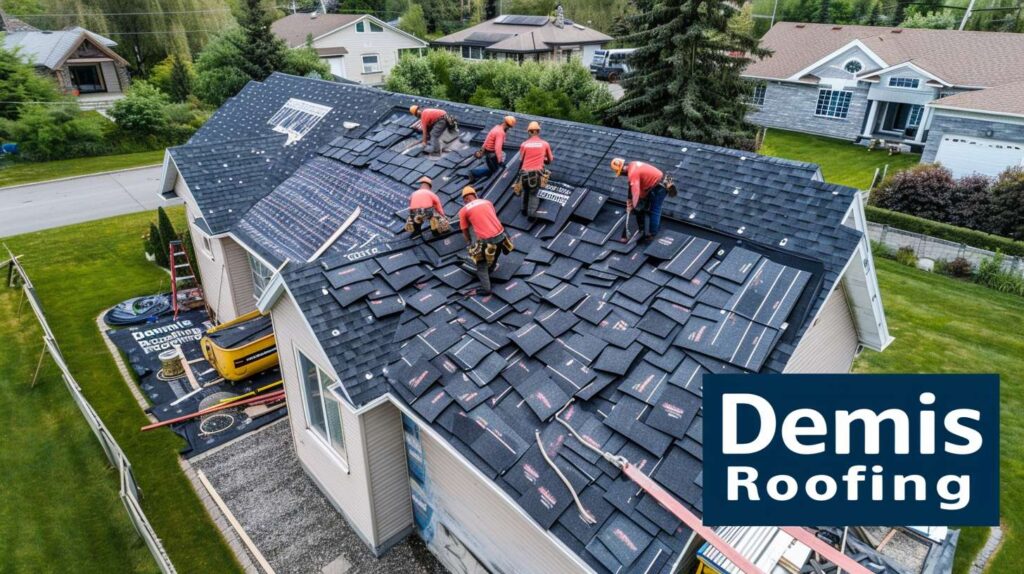
$650 sounds reasonable until we talk about what that number leaves out. Here’s the thing: a flat roof repair bill isn’t just one cost-I break it into ladder money (access, setup, time to get a two-person crew on a tight Brooklyn row house roof safely), labor money (opening the area, pulling damaged material, drying substrate, and actually sealing it correctly for your roof system), and surprise money (the wet insulation, the failed flashing tie-in, the old patch from 2009 that nobody told you about). A Sunset Park customer once called me at 6:40 on a sticky July morning convinced she had “just a little bubble.” By noon, that bubble had turned into trapped moisture spreading under more membrane than anyone could see from the ladder. What you’re paying for is never just the visible damage-it’s the diagnosis, the opening, the correction, and the match to whatever system is already up there.
| Scenario | What the crew is actually paying for | Typical Brooklyn Price Range |
|---|---|---|
| Small membrane patch away from penetrations | Surface prep, material match, clean seal on a stable substrate | $650 – $950 |
| Blister/bubble opening and localized re-seal | Cutting open membrane, checking for wet insulation below, re-bonding and sealing | $800 – $1,300 |
| Drain-area repair with old patch removal | Stripping layered patchwork, clearing drain collar, rebuilding proper tie-in | $1,100 – $2,000 |
| Flashing repair at parapet or curb | Pulling failed counterflashing, resetting reglet or cap, re-sealing termination edge | $950 – $1,800 |
| Multi-spot leak with wet insulation/substrate discovery | Opening multiple zones, removing and replacing saturated insulation, correcting all failed details | $2,200 – $3,500+ |
These are repair ranges, not replacement pricing. Final cost depends on what’s found once the area is opened.
Why one stain indoors can turn into a bigger roof ticket
Drain edges, seams, and old patches are where the math changes
On a Brooklyn row house, the drain area tells on everybody. As Latasha Monroe, who has spent 17 years translating Brooklyn roof repair problems into plain English for homeowners at Dennis Roofing, I can tell you that tight row house access alone changes the setup cost-but what really moves the number is what you find when you get there: ponding near clogged drains along Atlantic Avenue row house blocks, failed flashing at parapet wall transitions, compromised seals around rooftop deck penetrations, and layers of modified bitumen that have been patched at least twice before anyone called us. Two neighbors on the same block can have wildly different bills because their drainage history and repair decisions went in completely different directions the moment their first leak showed up.
What did the last guy patch, and did he fix the cause or just the symptom? I had a Bed-Stuy landlord call me during a cold November drizzle, genuinely convinced we were inflating a flat roof repair price because his tenant reported only one interior stain. Once the technician opened the area near an old patch around the drain, we found three different repair attempts from three different eras-layered like bad decisions in a lasagna pan. Each one had addressed the surface. Not one of them had corrected the drain collar or the membrane termination behind it. The final price made complete sense once we walked him through what we were actually fixing: not one leak, but everybody else’s shortcuts too.
| Condition found on inspection | Why it affects cost | Likely price impact |
|---|---|---|
| Wet or saturated insulation beneath membrane | Wet material has to come out before any new membrane goes down-it can’t be sealed over | Moderate to significant increase |
| Layered patch history from previous contractors | Old patches must be stripped before a new repair can bond and seal correctly | Adds demo labor and disposal |
| Drain collar failure or clogged drain pan | Ponding water means the drain area is already the weakest point-fixing the membrane without fixing the drain just delays the next call | Adds drain work and tie-in cost |
| Failed parapet or curb flashing | Water enters at terminations, not always at the obvious spot-flashing detail work is slower, more material-intensive | Adds flashing labor and material |
| Difficult rooftop access (tight alley, no parapet ladder, equipment on roof) | Setup takes longer; crew sometimes needs additional equipment to reach the work area safely | Increases ladder money and setup |
| Damage spread beyond visible stain area | Water travels under membrane before it shows up inside-actual repair zone is almost always larger than the ceiling stain suggests | Increases square footage repaired |
| Myth | Real answer |
|---|---|
| One leak spot means one repair spot | Water enters at one point but travels horizontally under the membrane before showing up inside. The repair zone is typically larger than the visible entry point. |
| Interior stain size equals roof damage size | A 12-inch ceiling stain can mean a 4-foot radius of wet insulation above it. Moisture migrates-what you see inside is rarely what’s sitting on your substrate. |
| A fresh patch always lowers today’s bill | If the patch covers wet material or was applied over a failed surface, it didn’t fix anything-it just pushed the repair cost into next year with added demo work on top. |
| Two neighboring roofs should cost about the same | Same street, different repair histories. One roof may have had one clean correction; the other may have five layers of conflicting patch attempts, a different drainage setup, and failed flashing at a rooftop addition. The bills reflect what’s actually up there. |
How to tell whether you need a stopgap or a repair that will hold up
I’ve had this conversation in light rain more times than I can count. One Saturday before a holiday weekend, I was coordinating a repair for a row house in Borough Park where the owner wanted a quick patch and a small invoice-totally reasonable. The crew found that a rooftop deck fastener had punctured the membrane in more than one spot, and every decision from that point on came down to a single question: did he want the cheap stopgap, or the repair that would still make sense six months from now? I told him honestly, “I can sell you a low number or an honest number, but they are not the same number.” I’d rather give someone a complete picture upfront than have them call back in March with the same leak plus the damage that happened while the bandage was holding. Are you trying to buy time, or are you trying to stop paying twice?
- Skipped moisture check means wet insulation gets sealed over – it doesn’t dry out, it deteriorates the substrate below it
- Layered patches left in place create stress points where new material can’t bond flat or flex correctly
- Drain slope issues ignored means water still ponds in the same spot the next time it rains
- Repair not tied into surrounding membrane leaves an unaddressed seam right at the edge of the “finished” patch
- No warranty language means if it fails in 60 days, you’re starting a new conversation from scratch
Before you approve the work, pin down these cost-moving details
Questions that keep surprise money from getting out of hand
This is the part most people skip and then regret.
Here’s the blunt truth: a cheap flat roof repair can be expensive by next season. Before you approve any estimate, you’ll want to run through a short checklist-not to be difficult, but because the gaps in most low quotes live in the things nobody mentioned. Ask whether opening the area and replacing any wet material is included; and honestly, if that answer is vague, the number isn’t complete. Confirm the material match to your existing roof system, ask whether drain and flashing tie-ins are in scope, clarify whether the repair is temporary or permanent, and don’t skip the warranty language. A number without those details is a starting price, not a real quote.
A roof bill is a little like a car repair bill-you’re not paying for the squeak, you’re paying for what the squeak is warning you about. Before you say yes to a number, confirm that the estimate covers scope, photos of the damage area, material specification, wet insulation removal if needed, drain and detail work, and what happens post-repair. If the crew is good, none of these questions will bother them. If any of these questions get a brush-off, that’s the answer you actually needed.
-
1
Leak location clearly noted on the estimate – not just “roof area” -
2
Age and type of roof known if possible – modified bitumen, TPO, built-up, and coated systems all behave differently -
3
Photos of top-side damage requested before and after – protects both parties if questions come up later -
4
Estimate explicitly states whether wet material removal and substrate drying are included in the price -
5
Drain and flashing tie-ins specified – not assumed to be “included” if they’re not written down -
6
Temporary vs. permanent repair clarified – you should know which one you’re buying before you write the check -
7
Cleanup and warranty terms listed – including what happens if the repair fails within the warranty period
If you want a flat roof repair quote that explains the real cost drivers instead of hiding them, call Dennis Roofing for a straightforward assessment. We’ll tell you what’s up there, what it actually needs, and what it will actually cost – before the work starts, not after.
– Latasha Monroe, Customer Service Coordinator, Dennis Roofing · Brooklyn, NY