
A Flat Roof That Gets Regular Attention Lasts Much Longer – Here’s What We Do
Why the patch gets blamed when the rest of the roof is off-beat
You’re second-guessing the last repair. That instinct makes sense on the surface – the leak came back, the repair cost real money, and now you’re wondering if the contractor cut corners. But here’s what I see again and again on Brooklyn flat roofs: the patch itself often held just fine. What didn’t hold was everything around it – the drain nobody cleared, the seam that was already opening three feet away, the ponding water that found a new path the moment the easy one got blocked. Blaming the repair is like blaming the one guy who showed up when the rest of the crew didn’t.
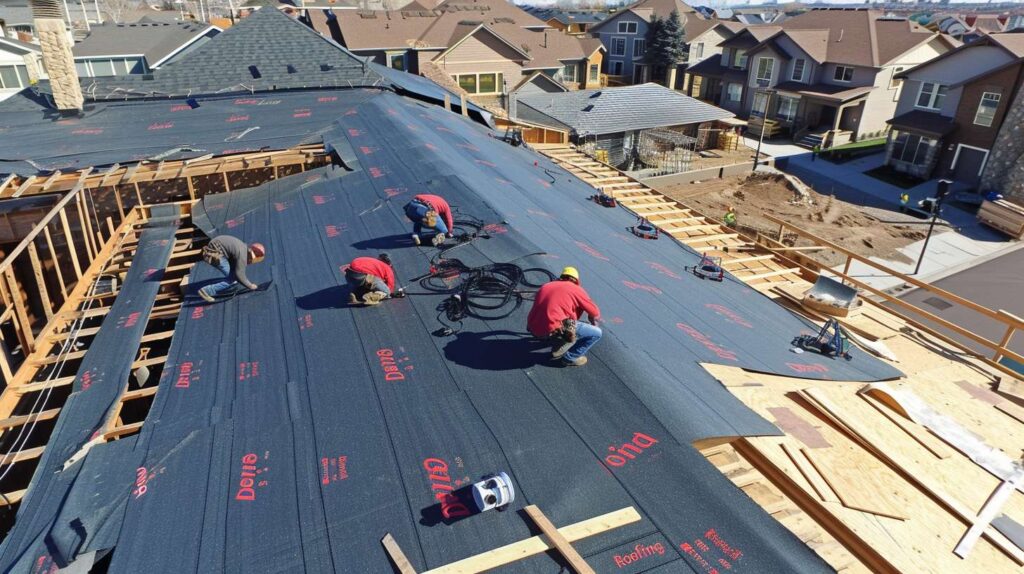
Seven a.m. tells me more about a flat roof than noon ever will. Early morning is when the roof shows you its honest state – ponding residue left in low spots after last night’s rain, debris lines tracking exactly where water moved and stopped, drains that look open but have a dark, wet ring around them that tells a different story. That’s when you see the missed beats: the slow drain that’s been a quarter-step behind for months, the seam edge that’s lifted just enough to let water rehearse getting underneath. Noon, everything’s dried up and the roof looks fine. The song sounds okay if you only catch the chorus.
| Myth | What actually happens on the roof |
|---|---|
| If a leak came back, the patch failed | Most recurring leaks re-enter through ignored seams, blocked drainage, or flashing gaps within a few feet of the original repair – not through the patched material itself. |
| Standing water only matters if it’s deep | Even a shallow half-inch of ponding puts constant pressure on seams and membrane edges, accelerating breakdown and forcing water to probe every small opening – depth isn’t the issue, duration is. |
| If the membrane looks fine from the hatch, the roof is fine | Perimeter edge metal, scuppers, pitch pockets, and low-field seams are rarely visible from a rooftop hatch. Hidden infiltration at the edges can saturate insulation well before anything shows up inside. |
| One emergency repair resets the roof’s condition | A patch addresses one failure point. Surrounding seam stress, clogged drainage, and debris buildup continue exactly where they left off the moment the crew leaves. |
| Maintenance is optional if the roof is under 10 years old | Newer flat roofs still accumulate debris, develop early seam movement, and collect standing water in low spots. Skipping maintenance on a young roof is how a 20-year system becomes a 12-year problem. |
What Regular Flat Roof Maintenance Is Meant to Catch
Drainage Watch
Clogged interior drains, slow scupper flow, and low-spot pooling that signals a blocked or undersized outlet
Surface Watch
Opening seams, membrane blisters, punctures from foot traffic or debris, and surface cracking on aging systems
Perimeter Watch
Edge metal pulling away, flashing separation at parapet walls, loose coping, and pitch-pocket deterioration
Timing
Best checked after major storms, at seasonal transitions, and within 30 days of any repair – before small issues find bigger ambitions
Where routine attention saves you from the expensive callback
Drains, scuppers, and low spots
Here’s my blunt opinion: a quiet roof is usually the one somebody’s been checking. I was on a six-family building in Bensonhurst at about 7:10 in the morning – coffee still too hot to drink – and the owner was convinced the problem had to be from the last snowstorm. Got up there and found it in five minutes: two roof drains buried under soggy maple leaves and a plastic takeout lid that had blown up from the alley. That roof didn’t need another repair; it needed somebody paying attention to it before water started finding new routes. I’m Joe Santangelo, and after 19 years on Brooklyn roofs specifically tracking drainage and seam problems on flat systems, I can tell you that leaf buildup from row-building tree cover, wind-blown trash funneling into low corners, and shared-drainage setups where two buildings shed water into one scupper – these aren’t edge cases. That’s a Tuesday in Bensonhurst, Bay Ridge, or anywhere along Flatbush Avenue.
I remember one drain in Bay Ridge that looked harmless until I nudged it with my boot. The strainer was sitting there clean on top, but underneath, a mat of felted debris and street-grit sludge had cut the flow to almost nothing. Water wasn’t standing there by accident – the drain had been losing the rhythm for months, just slowly enough that nobody noticed until the low spot started holding six hours of ponding after every storm. That sustained weight and moisture is exactly what forces seam edges open from the underside, where you can’t see it happening.
If I asked you when somebody last cleared the scuppers on your building, would you know or would you guess? Most of the time it’s a guess, and that gap is where the callbacks come from. Perimeter drainage is the part of flat roof maintenance services that gets skipped most often because scuppers don’t announce themselves – they just quietly fill up with grit, leaf paste, and the occasional pigeon situation. Meanwhile, edge metal gaps widen under thermal movement, flashing separates at parapet walls, and pitch pockets dry out and crack. Water doesn’t care where the last repair was. It travels to the next easiest opening, and if that’s the edge metal ten feet away, that’s where it’s going.
Seams, flashings, and perimeter metal
| Checkpoint | What the crew looks for | Problem it prevents | Typical urgency |
|---|---|---|---|
| Interior drains | Debris mats, slow flow rate, sludge buildup under strainers | Ponding-related seam stress, membrane saturation | High – address immediately |
| Scuppers and overflow outlets | Blockage, improper pitch toward outlet, corrosion | Overflow onto façade, parapet wall saturation | High – seasonal clearing required |
| Field membrane and seams | Open lap seams, blisters, surface cracking, punctures | Active infiltration, insulation damage below membrane | Moderate – flag for repair follow-up |
| Flashing at penetrations and walls | Separation at base, lifting edges, dried or cracked sealant | Water tracking behind flashing into wall or deck assembly | High if separated – address quickly |
| Perimeter edge metal and coping | Pulled joints, lifted sections, gaps at corners and seams | Edge infiltration traveling laterally under membrane | Moderate to high – monitor closely |
| Pitch pockets and pipe boots | Cracked fill material, standing water in pocket, shifted boot seal | Slow drip infiltration at mechanical penetrations | Moderate – schedule before winter |
What a Flat Roof Maintenance Visit Should Cover
- ✔ Drain clearing – strainer removal, debris extraction, and flow-rate check on every interior drain
- ✔ Debris removal – sweeping the full field membrane, clearing scupper mouths and perimeter gutters
- ✔ Seam inspection – walking all lap seams and probing for lifting edges, bubbling, or adhesive failure
- ✔ Flashing review – checking all base flashings, wall terminations, and pipe boots for separation or sealant failure
- ✔ Edge metal review – inspecting coping, gravel stops, and perimeter fascia metal for lifted joints and corner gaps
- ✔ Ponding assessment – mapping low spots, measuring residue patterns, and flagging drainage inadequacy
- ✔ Photo documentation – timestamped images of every flagged item so you have a real baseline for the next visit
- ✔ Repair recommendations – clear, written list separating what can wait from what shouldn’t, with no pressure to bundle everything
How we inspect a Brooklyn flat roof before small issues learn bad habits
Flat roofs don’t usually betray you all at once – they rehearse it first. A seam starts lifting at the edge. A drain slows by 30%. A blister forms and nobody notices because the interior is still dry. The inspection sequence matters: we start at the access point, photograph the overall surface, then walk defined traffic lanes across the field membrane so we’re not just eyeballing from one corner. Drain paths get traced physically, not assumed. Every penetration gets a close look. Then the perimeter, which is where the most expensive surprises tend to be hiding. One August afternoon on a Flatbush roof, the surface was so hot my tape measure smelled like burnt metal, and a landlord kept pointing at a patched blister like that was the whole conversation. I crouched down and counted three older seam repairs around it – each one done like a separate emergency, none of them connected to any maintenance plan. The roof wasn’t failing in one spot. It was performing a slow, multi-part collapse that nobody had been keeping time on.
A patch without follow-up is like replacing one drumhead on a kit you keep leaving out in the rain. The repair holds, technically, but the kit’s still getting soaked. The smarter question is never “Did the patch hold?” – it’s “What around it is still steering water the wrong way?” Recurring leaks on flat roofs almost always have a geography to them: water enters at the weakest perimeter point, travels laterally under the membrane or through insulation, and exits somewhere that has nothing to do with where it got in. Maintenance intervals are what break that pattern before it becomes a structural problem.
The Exact Order of a Maintenance Inspection Visit
⚠ Don’t Wait for an Interior Leak
By the time water shows up on a ceiling or wall inside the building, the roof has usually been working on the problem for a while. Hidden insulation saturation, repeated seam stress that’s cycled through multiple freeze-thaw events, and edge infiltration that’s traveled several feet from the actual entry point – none of that announces itself. An interior drip is the last symptom, not the first sign. Maintenance catches the first sign.
When maintenance is enough and when the roof is asking for more
That sounds right, but here’s where it goes sideways: not every wet spot means “replace the roof,” and not every dry-looking roof is buying you time.
I got called to a row building near Sunset Park right after a Sunday thunderstorm – maybe 8:30 at night, tenant on the top floor with a stockpot catching drips in the hallway. The previous repair was only four months old, and the patched spot was fine. Technically fine. What wasn’t fine was the edge metal about ten feet away: it had been separating slowly for two seasons, nobody had checked it, and that storm gave it exactly the water volume it needed to finish the job. Maintenance and repair aren’t competing ideas – they’re the same job split across time. You don’t skip the tune-up and then blame the engine.
Signs you can schedule service
Signs you should move fast
| 📞 Call Quickly | 📅 Schedule Soon |
|---|---|
| Active interior leaking – water reaching ceilings or walls | Light debris buildup after a wind event or heavy leaf drop |
| Drain or scupper overflow observed during rainfall | Routine seasonal inspection – spring or fall |
| Visibly separated or lifted flashing at parapet walls | Minor surface wear with no current leak reported |
| Loose or rattling edge metal – especially after wind storms | Documentation check within 30-60 days of a recent repair |
| Widespread ponding still present 72 hours after a storm |
Questions Brooklyn Property Owners Ask About Flat Roof Maintenance
The maintenance rhythm that usually buys a flat roof more years
Roofs that last – and not just technically last, but stay dry and out of your budget – are almost always roofs that somebody’s been keeping time on. Drains get cleared before they back up. Seam edges get caught before they open. Edge metal gets reset before it invites a season’s worth of water under the membrane. That’s not a complicated system; it’s just consistent attention applied before the small stuff learns bad habits. If you’ve got a flat roof in Brooklyn and you’re not sure when it was last properly checked, that’s the right time to call. Dennis Roofing provides flat roof maintenance services across Brooklyn – give us a call and let’s get eyes on it before the next storm makes the decision for you.
| Time of Year | What Gets Checked | Why It Matters |
|---|---|---|
| Early Spring | Debris and drain review; check for membrane movement after freeze-thaw cycling | Winter expansion and contraction shifts seams and edge metal – catching it early prevents spring rain from exploiting the movement |
| Early Summer | Seam and flashing review; assess UV wear on exposed membrane areas | Summer heat accelerates adhesive and sealant breakdown; catching seam lift before thunderstorm season is better timing |
| Post-Thunderstorm | Spot check of drains, ponding areas, and any flagged perimeter points | Heavy rain is the stress test the roof can’t opt out of – a quick post-storm check confirms whether drainage kept pace |
| Fall | Leaf and debris clearing; scupper cleaning; drain flow confirmation before the first freeze | Blocked drainage going into winter means ice buildup and added membrane stress – fall clearing is the most time-sensitive visit of the year |
| Post-Winter | Full inspection for membrane movement, moisture signs, and seam or flashing separation | Reveals anything that shifted, opened, or saturated during the cold season – and sets the baseline for spring repairs before the next rain cycle begins |
Before You Call – Note These Six Things
- □Last leak location – which room, which wall, how close to an exterior edge or penetration
- □Last service date – even an approximate year helps set the baseline for how much catching up is needed
- □Visible ponding after rain – does it clear within 48 hours or does it sit longer?
- □Any recent patch work – when it was done, who did it, and whether it was followed up
- □Drain and scupper locations – interior roof drains, exterior scuppers, or both, and roughly where they sit
- □Tenant moisture reports – top-floor complaints about dampness, staining, or musty air that may predate an obvious drip