
Professional Flat Roof Construction Services in Brooklyn, NY
Here’s a detail most people don’t know: a properly constructed flat roof in Brooklyn isn’t actually flat. Under NYC Building Code, every flat roof requires a minimum slope of 1/4 inch per foot-that’s roughly 2%-to direct water toward drains and prevent ponding. But that subtle pitch is just the beginning. Professional flat roof construction involves layering structural decking, vapor control, insulation (often tapered to create additional slope), and multiple waterproofing membranes, all engineered to handle Brooklyn’s freeze-thaw cycles, snow loads, and the unique thermal demands of attached row houses and multi-family buildings. When flat roof construction is done right from the structural deck up, you get a roof that sheds water efficiently, insulates properly, and lasts 25-30 years or more. When it’s rushed or simplified, you fight leaks, ponding, and ice dams from day one.
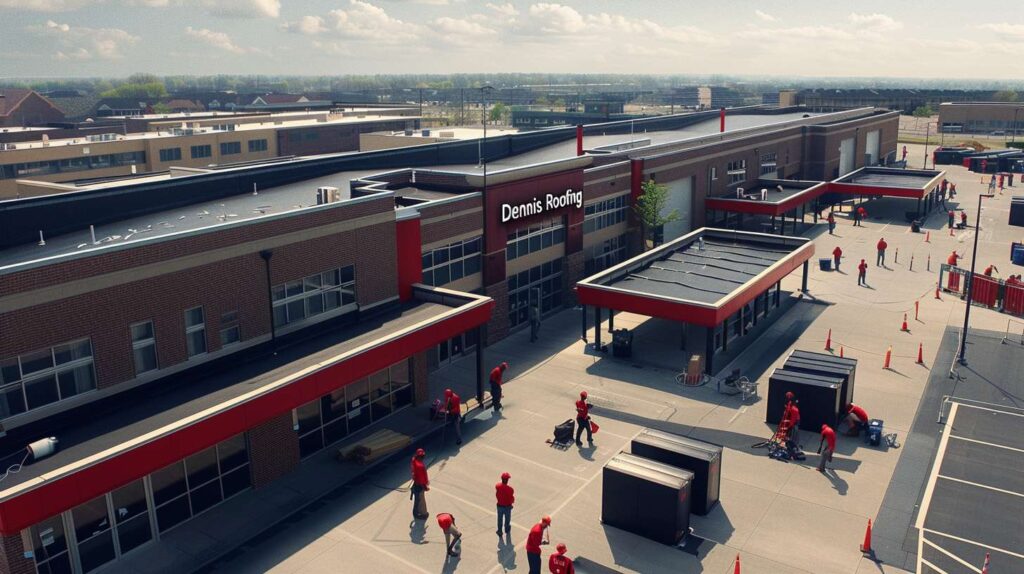
I’m Marisol Vega, design-build coordinator at Dennis Roofing. I’ve spent thirteen years translating architectural drawings into real, watertight flat roofs across Brooklyn-from Bed-Stuy row houses to Sunset Park mixed-use buildings. What I’ve learned is that flat roof construction isn’t just roofing work; it’s structural engineering, thermal design, and drainage planning wrapped into one job. Every decision-deck type, insulation thickness, membrane choice, edge detailing-affects how that roof performs for decades.
Why Flat Roof Construction Starts with Code and Climate
New York City Building Code drives flat roof construction decisions more than most homeowners realize. The key requirements that shape every Dennis Roofing flat roof project include:
- Snow load capacity: Brooklyn roofs must support 30 pounds per square foot (psf) for snow, plus the roof assembly’s dead load. That determines structural deck type and joist spacing.
- Insulation R-value: NYC Energy Conservation Code requires R-30 minimum for residential flat roofs. That translates to roughly 5-6 inches of polyiso insulation in most assemblies.
- Drainage slope: Minimum 1/4 inch per foot to primary drains, plus secondary (overflow) drains positioned 2 inches above the primary drain invert.
- Fire rating: Class A fire-rated membrane and insulation required for most residential and all commercial flat roofs in Brooklyn.
- Parapet height: When required, parapets must extend at least 30 inches above the finished roof surface or to the average roof height, whichever is lower.
These aren’t arbitrary rules. Each one addresses a real failure mode I’ve seen on improperly constructed flat roofs: structural sag from undersized framing, ice damming from insufficient insulation, ponding water from inadequate slope, interior flooding when primary drains clog, and fire spread between attached buildings without proper parapets.
Brooklyn’s climate adds another layer of complexity. We see temperature swings from single digits in January to 95°F summer rooftops. Freeze-thaw cycles split poorly detailed flashing. Thermal expansion and contraction stress membrane seams. Snow melt refreezes at roof edges, creating ice dams that back water under membranes. Professional flat roof construction accounts for all of this through proper material selection, installation sequencing, and detailing.
The Anatomy of a Properly Built Flat Roof
Flat roof construction builds from the structural deck upward in a specific sequence. Each layer serves a distinct purpose, and skipping or cheapening any layer compromises the entire assembly. Here’s the proper buildup we use at Dennis Roofing:
Structural deck: This is your base-the platform everything else sits on. In Brooklyn, we typically see three deck types: plywood/OSB over wood joists (most common in residential), lightweight concrete over steel deck (commercial and multi-family), or rigid insulation over existing concrete decks (renovation projects). The deck must be structurally sound, properly fastened, and sloped to drains. On new construction, we often build in structural slope by setting joists or steel beams at varying heights-much more reliable than relying solely on tapered insulation later.
Air and vapor control: A self-adhered vapor barrier goes down next, especially critical in Brooklyn’s cold-climate zone. This layer prevents warm, moist interior air from migrating up into the insulation layers, where it can condense into liquid water when it hits the cold roof deck. I’ve opened up failed flat roofs where insulation was completely saturated-not from leaks, but from vapor drive-because this layer was skipped or improperly detailed.
Insulation layers: Modern flat roof construction typically uses rigid polyisocyanurate (polyiso) insulation boards in two layers, with seams staggered. The bottom layer is flat, fastened mechanically to the deck. The top layer is often tapered insulation-factory-cut panels that create additional slope (usually 1/4 to 1/2 inch per foot) directing water toward drains and eliminating potential ponding areas. Getting to R-30 usually means 5-6 inches total thickness, depending on the specific polyiso product’s R-value per inch (typically R-5.5 to R-6.5).
Cover board: A thin, high-density cover board (typically 1/4 to 1/2 inch gypsum or cement board) goes over the insulation to protect it from punctures and provide a smooth, stable substrate for the waterproofing membrane. This layer also adds thermal mass and fire resistance.
Waterproofing membrane: This is what most people think of as “the roof”-the waterproof layer. In Brooklyn flat roof construction, we primarily use three membrane types: modified bitumen (torch-applied or self-adhered), single-ply membranes (TPO, PVC, or EPDM), or built-up roofing (BUR) with multiple plies of felt and hot asphalt. Each has trade-offs in cost, lifespan, walkability, and maintenance requirements.
Flashing and edge metal: Every penetration (drains, vents, parapets, roof hatches) requires custom flashing integrated into the membrane. Perimeter edges get metal coping or gravel stops that protect roof edges and create a finished appearance. This detailing work separates professional flat roof construction from amateur installations-it’s where most leaks originate when done incorrectly.
Choosing the Right Membrane for Brooklyn Flat Roofs
The waterproofing membrane choice significantly impacts flat roof construction cost, performance, and longevity. Here’s what we see working well in Brooklyn:
Modified bitumen: This is rubberized asphalt reinforced with polyester or fiberglass. It’s torch-applied (heated with a propane torch during installation) or self-adhered. Modified bitumen handles Brooklyn’s temperature extremes well, self-seals minor punctures, and is easily repairable. Typical lifespan is 20-25 years. It’s particularly good for roofs with mechanical equipment or regular foot traffic. The downsides: torch application requires careful fire safety protocols (major concern in attached row houses), and dark surfaces absorb heat, increasing cooling costs unless you choose a reflective cap sheet.
TPO (Thermoplastic Polyolefin): This white, heat-welded single-ply membrane has become the most popular choice for new flat roof construction in Brooklyn over the past decade. TPO reflects sunlight (reducing cooling costs), is relatively affordable, and heat-welded seams create strong, monolithic waterproofing. Expected lifespan is 20-30 years with proper installation. The key is professional heat welding-poor seam welding is the primary TPO failure mode. Dennis Roofing uses digital seam testing to verify every TPO seam.
PVC (Polyvinyl Chloride): Similar to TPO but more chemically resistant and slightly more flexible in cold weather. PVC costs 10-15% more than TPO but is ideal for roofs exposed to grease, oils, or chemicals (restaurants, certain industrial uses). It heat-welds like TPO and typically lasts 25-30 years. The white surface provides excellent solar reflectance.
EPDM (Ethylene Propylene Diene Monomer): This black rubber membrane was the single-ply standard for decades. It’s very durable, handles extreme cold well, and is less expensive than TPO or PVC. But seams are glued (not welded), making them the weak point, and black surfaces absorb heat. EPDM still makes sense for certain Brooklyn flat roof construction projects-particularly covered roof areas, small residential roofs, or budget-conscious projects where longevity matters more than energy efficiency.
Built-up roofing (BUR): Multiple layers of felt saturated in hot asphalt, topped with gravel. This is old-school technology but still occasionally used for heavy-duty commercial applications or when matching existing roofs. BUR is extremely durable (30+ years), highly puncture-resistant, and the gravel surface protects the membrane from UV and provides ballast. The downsides: heavy (requires strong structural support), messy installation, and difficult to locate leaks when they occur.
| Membrane Type | Expected Lifespan | Relative Cost | Best For | Key Advantage |
|---|---|---|---|---|
| Modified Bitumen | 20-25 years | $$ | Foot traffic, equipment | Self-healing, durable |
| TPO | 20-30 years | $$ | Most residential/commercial | Energy efficiency, cost-effective |
| PVC | 25-30 years | $$$ | Chemical exposure, premium projects | Chemical resistance, flexibility |
| EPDM | 20-30 years | $ | Budget projects, cold climates | Cold-weather performance, low cost |
| Built-Up (BUR) | 30+ years | $$$ | Heavy-duty commercial | Extreme durability, puncture resistance |
Drainage Design: The Most Critical Flat Roof Construction Element
I’ll say it plainly: drainage determines whether flat roof construction succeeds or fails. More flat roof problems trace back to poor drainage design than membrane failures, bad insulation, or structural issues combined. Here’s what proper drainage requires:
Primary drains: NYC code requires at least two roof drains on every flat roof (one drain per 10,000 square feet maximum). Drains must be positioned at the lowest points of the roof surface and protected with domes or strainers to prevent clogging. In flat roof construction, we position primary drains based on the tapered insulation layout-the insulation creates “valleys” that direct all water toward drain locations.
Secondary (overflow) drains: Required by code and absolutely critical in Brooklyn, where autumn leaves can clog primary drains. Secondary drains are positioned 2 inches above the primary drain inlet. If the primary drain clogs and water rises 2 inches, the overflow drain activates, preventing further ponding. We typically route overflow drains through separate pipes that discharge in highly visible locations (not into the same interior leader) so building occupants immediately know there’s a drainage problem.
Tapered insulation systems: The most reliable way to ensure positive drainage is designing a tapered insulation layout during flat roof construction. We work with insulation manufacturers to create custom cricket and valley layouts that direct water toward drains at consistent 1/4 to 1/2 inch per foot slopes. This eliminates the ponding areas where water sits for days after rain-which is where most membrane degradation and leak problems begin.
Scuppers: For roofs with parapets, through-wall scuppers provide additional drainage and emergency overflow capacity. A properly sized scupper (typically 4×6 inches minimum) allows water to drain through the parapet wall onto a lower roof level or into a conductor head. We typically install scuppers with their inlet 1-2 inches above the roof surface, functioning as secondary drainage.
On a Crown Heights brownstone project two years ago, we removed a failing 15-year-old flat roof that had constant leak issues. The problem wasn’t the membrane-it was drainage. The roof had structural slope (joists were sloped), but someone had installed flat insulation over it, creating multiple low spots where water ponded for weeks after every rainstorm. That standing water degraded the membrane through constant UV exposure and freeze-thaw cycles. The new construction included custom tapered insulation creating positive slope to drains, plus overflow scuppers. The owner hasn’t had a single leak since.
Insulation Strategy for Brooklyn’s Climate
Insulation in flat roof construction serves three purposes: energy efficiency (reducing heating and cooling costs), condensation control (keeping the underside of the roof deck above the dew point), and thermal mass (moderating temperature swings). Getting it right requires understanding Brooklyn’s specific climate challenges.
The R-30 minimum code requirement exists because Brooklyn sits in Climate Zone 4A-cold winters, warm summers. Undersized insulation creates two problems. First, excessive heat loss in winter means higher heating bills. Second, and less obvious, insufficient insulation allows the roof deck to stay cold enough that interior moisture condenses on its underside, leading to wet insulation, mold, and structural decay.
We typically use polyisocyanurate (polyiso) rigid insulation because it provides the highest R-value per inch (R-5.5 to R-6.5), keeping the overall roof assembly thickness manageable. Five to six inches of polyiso gets you to R-30 or above. The insulation goes down in two layers with staggered seams-the first layer mechanically fastened to the deck, the second layer (often tapered) adhered to the first. This two-layer approach eliminates thermal bridging at seams and creates a more continuous insulation barrier.
For attached row houses, which make up much of Brooklyn’s housing stock, insulation strategy gets more complex. The adjoining party walls create thermal bridging-heat flows laterally through the walls, cooling the roof perimeter and creating conditions for ice dams. We address this by increasing insulation thickness at roof edges (often R-40 or higher in a 3-foot band) and ensuring airtight details where the roof membrane ties into the parapet or adjoining wall.
Parapet Walls and Edge Details in Brooklyn Flat Roof Construction
Parapets-those short walls that extend above the roof surface-are ubiquitous in Brooklyn flat roof construction, especially on row houses and older multi-family buildings. They serve several purposes: fire protection between attached buildings, fall protection, architectural continuity, and a secure termination point for roof membranes. But parapets are also a major source of roof leaks when not properly detailed during construction.
The critical detail is the cant strip and base flashing. The roof membrane can’t simply turn 90 degrees up the parapet wall-that creates stress points where the membrane will eventually tear. Instead, we install a triangular wood or foam cant strip at the roof-to-wall junction, creating a gradual transition. The membrane then extends up the parapet wall at least 8 inches above the roof surface (code minimum), covered by a termination bar mechanically fastened to the wall. Counter-flashing over the termination bar sheds water away from the seal.
Parapet caps-the top surface of the parapet wall-must shed water quickly or masonry deterioration begins. We typically install metal coping with drip edges that direct water away from both faces of the parapet. The coping must be fastened securely (Brooklyn wind uplift is significant on exposed roofs) but also allow for thermal expansion-metal coping expands and contracts considerably with temperature swings.
On a Williamsburg three-story mixed-use building we completed last year, the existing parapet walls were intact but the caps were deteriorated terra cotta that was shedding pieces onto the roof. We removed the old caps, repaired the top course of brick, and installed new copper-clad coping with concealed fasteners and expansion joints every 12 feet. That coping will outlast the roof membrane by decades and protect the masonry from freeze-thaw damage.
New Construction vs. Renovation Flat Roof Projects
Flat roof construction approaches differ significantly between new buildings and renovations of existing structures. Each presents unique challenges and opportunities.
New construction advantages: When building from scratch, we can engineer the entire roof assembly for optimal performance. The structural framing can be sloped to create drainage (much better than relying solely on tapered insulation). Drain locations can be positioned ideally and coordinated with interior plumbing stacks. Parapets can be built to code height with proper flashing receivers cast into the masonry. Edge details can be planned for clean membrane terminations. The result is a roof system where everything works together.
Renovation challenges: Existing flat roofs in Brooklyn often present complications. Structural decks may have sag or deflection requiring reinforcement. Existing drain positions may be suboptimal but can’t be moved without major plumbing work. Parapets may be too low (requiring building up) or deteriorated (requiring repair before roofing can proceed). And you’re often working on an occupied building where interior water intrusion must be avoided throughout construction.
The key decision in renovation flat roof construction is whether to tear off to the deck or install a new roof over the old one. Full tear-off allows inspection of the structural deck, ensuring it’s sound before investing in a new roof system. It also resets the roof thickness-if the existing roof has been overlaid multiple times, tear-off prevents the assembly from becoming excessively thick and heavy. But tear-off exposes the building interior to weather during construction (major concern in Brooklyn, where sudden rainstorms are common May through September), creates disposal costs, and adds labor time.
Roof-over construction leaves the old roof in place as a substrate for the new assembly. This is faster, creates no weather vulnerability, and sometimes provides additional insulation value if the existing roof includes insulation layers. But you can’t inspect the deck condition, and you’re adding weight to the structure. We typically recommend roof-over only when: the existing roof has minimal damage, the deck is known to be sound (from recent interior inspections), and the structure can handle the additional dead load without reinforcement.
Flat Roof Construction Costs in Brooklyn
Professional flat roof construction costs in Brooklyn typically range from $12 to $22 per square foot, depending on membrane type, insulation thickness, existing conditions, and project complexity. Here’s how costs break down:
Membrane and insulation material costs: This is roughly 35-40% of total project cost. TPO membrane with R-30 insulation runs $4.50-$6.00 per square foot in materials. Modified bitumen is similar. PVC adds $0.75-$1.50 per square foot. EPDM is slightly less expensive. Built-up roofing material costs are higher due to multiple plies and asphalt.
Labor and installation: This is 40-50% of total cost and varies significantly based on roof access, project size, and detail complexity. A straightforward 1,500-square-foot flat roof with good access might see $5-$7 per square foot in labor. A small, hard-to-access roof with multiple penetrations, complex parapets, and tight working conditions might hit $10-$12 per square foot in labor.
Tear-off and disposal: Full tear-off to the deck adds $2.50-$4.00 per square foot, depending on the number of existing roof layers and disposal logistics. Brooklyn disposal costs are high due to transfer station fees and limited truck access in many neighborhoods.
Additional work: Budget another 10-20% for items that often come up during flat roof construction: deck repairs or reinforcement, new drain installations, parapet repairs, coping replacement, or roof hatch upgrades. These aren’t optional-they’re necessary to ensure the new roof performs properly.
For a typical 1,200-square-foot Brooklyn row house flat roof, expect a professional construction project to run $16,000-$24,000 including tear-off, new TPO membrane, R-30 insulation, edge metal, and detail work. A similar-sized commercial roof might run $18,000-$28,000 due to additional code requirements and more complex details.
Why Dennis Roofing’s Approach to Flat Roof Construction Works
Flat roof construction requires coordination between structural engineering, building science, waterproofing, and field craftsmanship. At Dennis Roofing, we approach every project as a complete system, not just a membrane installation.
We start with site evaluation and code review. What are the existing structural conditions? What does NYC DOB require for this specific building type and occupancy? What are the drainage challenges? How will this roof be used-purely protective, or will it support mechanical equipment, serve as amenity space, or eventually become a roof deck?
From there, we develop a construction plan that addresses structure, thermal performance, drainage, and longevity simultaneously. That means properly sized and sloped structural framing, continuous insulation with thermal bridging minimized, tapered insulation creating positive drainage to multiple drains, and membrane selection matched to the building’s use and budget.
During construction, we follow manufacturer specifications exactly-proper fastener spacing, seam welding procedures, flashing details, and quality control testing. We don’t cut corners because we know that a flat roof either works or it doesn’t. There’s no middle ground.
After thirteen years of flat roof construction across Brooklyn-from small Park Slope row houses to large Bushwick commercial buildings-I’ve learned that the projects that last are the ones where every layer was installed correctly, drainage was designed properly from the start, and details were executed precisely. That’s what we deliver at Dennis Roofing, and it’s why our flat roofs are still protecting Brooklyn buildings decades after installation.