
Expert Fixing Leaking Tin Roof Services in Brooklyn
Here’s the mistake I see every few weeks: a homeowner finds a wet spot on their ceiling, climbs into the attic, and spreads roofing cement over the underside of their tin roof where it’s damp. A week later, the same spot-or a new one two feet away-is dripping again. That’s because coating the inside doesn’t address what’s happening on top of the metal, and tin roofs leak at seams, fasteners, and rust-throughs that need proper flashing and repair, not bandages on the symptom. If you’re searching for how to fix a leaking tin roof, the first thing you need to understand is that water travels-sometimes 10 or 15 feet under the tin panels before it finally drips through-so finding the actual entry point is half the battle.
Professional tin roof leak repair in Brooklyn typically costs between $425 and $1,850 depending on whether you’re sealing a few fasteners or replacing corroded sections and reflashing an entire seam run. Small pinhole repairs and resealing around chimneys sit at the lower end; major seam reconstruction with new cleats and solder work pushes toward the higher range. The real question isn’t just cost-it’s whether you’re fixing the source or chasing shadows.
Why Tin Roofs Leak (And Why the Drip Isn’t Where You Think)
Last spring I got called to a two-story rowhouse in Sunset Park where the owner had been patching the same bedroom ceiling for three years. Every heavy rain brought a new drip, always within two feet of the old one. When I got on the roof, the “leak” turned out to be a lifted cleat 18 feet upslope-water was running under the tin panel, following the decking seam, and only dropping through where an old nail had backed out near the cornice. That’s tin roofing in a nutshell: the entry point and the exit point are rarely neighbors.
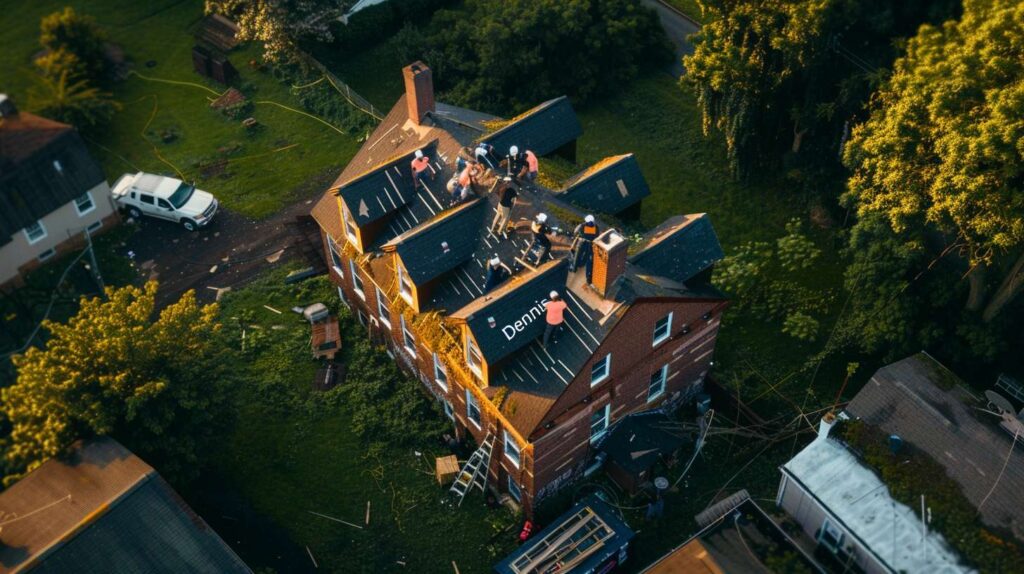
Tin roofs leak for a few specific reasons. Fasteners back out over decades of thermal expansion and contraction, leaving nail holes that funnel water straight to the decking. Standing seams lose their crimp or develop gaps where cleats have rusted through. Soldered flat seams crack as the metal flexes. Rust eats pinholes through the tin itself, especially along edges and in valleys where moisture sits. And-this is huge in Brooklyn-flashing around chimneys, skylights, and parapet walls fails because someone used tar instead of proper counterflashing years ago.
The diagnostic process starts on the inside. I mark every water stain, measure its distance from walls and corners, then photograph the pattern. On the roof, I use those measurements to map upslope-always upslope-looking for lifted panels, compromised seams, or rust spots that align with the interior damage. I check every fastener within a six-foot radius because one loose nail can cause a drip three feet away.
The Inspection Process: Finding the Real Source
You can’t fix a tin roof leak without finding it first, and that means a methodical roof inspection, not a quick glance during a sunny afternoon. I start by walking the entire roof, looking for obvious problems: standing water in valleys, lifted seam edges, missing or cracked solder, rusty patches, and gaps around penetrations. Then I get close-hands and knees close-checking each seam for gaps you can slide a business card into, testing fasteners for movement, and looking for the telltale orange staining that signals an active rust leak.
Here’s where most DIY attempts break down: people see a rust spot and coat it, never realizing the rust is a symptom of a failed seam six inches away that’s letting water underneath the panel. I follow the water’s path. If I find moisture under a lifted edge, I trace that seam all the way to the ridge or the next proper termination point, because if it’s failed in one spot, it’s likely compromised along the entire run.
I also look at what’s under the tin. Brooklyn’s older buildings often have original board decking-sometimes in rough shape-and the decking conditions tell you whether a simple seam repair will hold or whether you’re looking at a bigger conversation about substrate before you even touch the metal. Soft, punky boards won’t hold new fasteners; you’ll just create new holes.
For penetrations-chimneys, vent pipes, skylights-I check the counterflashing integration. Is it stepped and soldered into the tin? Is it just caulked? Is there even counterflashing, or did someone just run the tin up to the brick and call it good? That last scenario is common in older Brooklyn installs, and it’s a guaranteed leak once the sealant dries out.
How to Fix a Leaking Tin Roof: Step-by-Step Repair Methods
Once you’ve found the leak-the real leak-the repair method depends on what’s failed. I’m going to walk through the most common scenarios, explain what the proper fix looks like, and be very clear about where a homeowner’s ability ends and where you need someone with tin-snips and soldering experience.
Resealing Loose Fasteners and Nail Holes
Backed-out nails and screws are the easiest tin roof leaks to fix, but there’s a right way and a wrong way. The wrong way: hammer the nail back down, dab some tar over it, walk away. That nail will back out again in six months because the hole is now oversized and the decking is compressed.
The right way: remove the old fastener completely, clean the hole, and install a new screw with a neoprene washer one inch away from the original hole into solid wood. Use stainless or hot-dipped galvanized screws-never bare steel on tin-because dissimilar metals corrode fast in Brooklyn’s humid summers. Seal the old hole with butyl or polyurethane sealant (not asphalt tar, which dries brittle and cracks), then apply a dab over the new fastener head. If you’re dealing with more than a dozen loose fasteners, you’re looking at a bigger problem-the entire roof may be under-fastened or the decking may be failing.
This is a repair a careful homeowner can attempt if the roof is low-slope and safely accessible. If you’re on a steep pitch or more than one story up, let Dennis Roofing handle it-falls from tin roofs are common because the metal is slippery, especially when damp.
Fixing Failed Standing Seams
Standing seams-those raised ribs running up the roof slope-are formed by folding two panel edges together and crimping them, often with cleats underneath for attachment. When they leak, it’s usually because the crimp has opened, a cleat has rusted through, or thermal movement has worked the fold loose.
A proper standing seam repair means opening the seam carefully with a seam bender or hand tools, inspecting the cleats (and replacing any that are corroded), refolding the seam tightly, and then running a bead of high-quality butyl sealant along the interior fold before making the final crimp. Some old-timers solder standing seams for extra insurance; I do this on low-slope roofs where water can sit against the seam during heavy rain.
This is not a DIY repair. If you don’t know how to open and close a standing seam without tearing the thin tin, you’ll make the leak worse. I’ve repaired more homeowner-damaged seams than original factory failures. A professional tin roofer has the hand seamers, the experience to work the metal without cracking it, and the understanding of how much pressure a 100-year-old tin panel can take before it splits.
Patching Rust Holes and Pinholes
Pinholes in tin are inevitable after 60 or 70 years, especially in valleys, behind chimneys, and anywhere water or debris accumulates. A single pinhole can be sealed with a proper patch; widespread rust means panel replacement.
The correct patch process: wire-brush the rust down to shiny metal (or as close as you can get), clean with denatured alcohol, cut a patch from matching tin or copper that overlaps the hole by at least two inches in all directions, apply butyl sealant to the patch perimeter, and either solder the patch edges (best) or screw it down with sealed fasteners (acceptable). Then coat the entire patch and surrounding area with a high-quality elastomeric or aluminum roof coating-not asphalt tar, which accelerates rust by trapping moisture.
I’ve seen homeowners use duct tape, aluminum foil, even cut-up soda cans as “patches.” These last about three rainstorms. If you’re going to patch, use real materials and real technique, or it’s wasted effort. For anything larger than a fist-sized hole or more than four or five pinholes, you’re better off replacing the entire panel because the surrounding metal is likely compromised too.
Reflashing Chimneys and Penetrations
Chimney and penetration leaks are the most common calls I get for tin roofs, and they’re almost always flashing failures, not tin panel problems. Proper chimney flashing has two parts: base flashing (which integrates with the tin roofing) and counterflashing (which embeds into the chimney mortar joints and laps over the base flashing). When these separate, water runs straight down the chimney exterior and under your roof.
Fixing chimney flashing on a tin roof means removing the surrounding tin panels far enough to access the base flashing, installing new step flashing that’s soldered or sealed to the tin, cutting or grinding out the mortar joints on the chimney, installing new counterflashing with a proper hem, and repointing the joints. Then you reinstall or replace the tin panels with sealed seams.
This is advanced work requiring masonry and metal skills. A homeowner attempting this usually ends up with worse leaks and damaged tin. On a rowhouse chimney in Park Slope last year, I found seven layers of “flashing”-each contractor had just added another layer of bent aluminum and tar over the previous failure. We stripped it all back to the brick and the decking and started from scratch. It’s been dry ever since.
For vent pipes and other small penetrations, the fix is usually a new boot or flange, properly sealed and fastened, with the tin panels cut and folded to shed water away from the opening. Again, this requires metal-working skills and the right tools.
Coating and Sealing: What Works and What Doesn’t
After you’ve made the structural repairs-resealed fasteners, fixed seams, patched rust-you can consider a protective coating. Notice I said “after.” Coating over unrepaired seams and holes is like painting a rusted-out car and expecting it to pass inspection. You’re just hiding problems.
Elastomeric and aluminum-pigmented roof coatings can extend a tin roof’s life by sealing minor surface imperfections and reflecting heat. I use these on roofs where the tin is still structurally sound but showing early surface rust or minor seam weeping. The surface needs to be bone-dry, clean (power-washed and wire-brushed), and primed if the manufacturer requires it. Most quality coatings need two coats applied in opposite directions for full coverage, especially over lapped seams.
What I don’t use: asphalt-based “silver” coatings on tin. They trap moisture, they crack in cold weather, and they make future repairs nearly impossible because you can’t solder through them. I also avoid most “rubberized” products sold at big-box stores-they’re designed for asphalt roofs, not metal, and they don’t flex properly with tin’s thermal movement.
| Repair Type | DIY Feasible? | Typical Cost (Professional) | Key Materials |
|---|---|---|---|
| Loose fastener resealing (5-10 screws) | Yes, if safe access | $280-$425 | Stainless screws, butyl sealant, washers |
| Standing seam repair (10-15 linear feet) | No | $650-$950 | Cleats, butyl, solder, seaming tools |
| Pinhole patching (3-5 holes) | Possible, with skill | $475-$720 | Tin patches, solder/screws, coating |
| Chimney reflashing (full perimeter) | No | $1,250-$2,400 | Step flashing, counterflashing, solder, mortar |
| Valley repair/replacement | No | $850-$1,650 | Valley tin, cleats, solder, underlayment |
| Full roof coating (after repairs) | Possible, but labor-intensive | $2.20-$3.80 per sq ft | Elastomeric coating, primer, brushes/rollers |
Safety and When to Call Dennis Roofing
I’ve worked on tin roofs since I was 16, and I still treat every roof like it’s trying to kill me. Tin is slippery-especially older tin with a smooth, weathered surface-and it’s often on steep pitches that were designed when builders didn’t worry much about code-required slopes. Add morning dew, a little moss, or a fine layer of soot from Brooklyn’s air, and you’ve got an ice rink at a 6/12 pitch.
If your roof is steeper than about 4/12 (four inches of rise for every 12 inches of run), more than one story high, or if you’re not 100% comfortable with heights and don’t own proper fall protection equipment, don’t attempt repairs yourself. The cost of a professional repair is a fraction of a hospital bill or worse.
Beyond safety, there’s the question of whether the repair will actually work. I can usually tell in the first five minutes on a roof whether a homeowner’s attempted fix has any chance of lasting. The telltale signs of amateur work: roofing cement spread with a trowel in thick, uneven layers; duct-tape “patches”; screws driven through seams instead of into proper cleats; and my personal favorite, spray foam used as flashing around a chimney. These don’t work, they make the roof harder to repair correctly later, and they waste money.
Call a professional tin roofer when you’re dealing with seam failures, flashing work around penetrations, rust damage that’s spread across multiple panels, or any situation where you’re not certain about the leak source. Dennis Roofing has been handling Brooklyn’s tin roofs for years, and we treat diagnosis as seriously as the repair itself-because fixing the wrong spot just means you’ll be calling us back in a month when the real leak shows up during the next storm.
Maintaining Your Tin Roof After Repair
Once your tin roof is sealed and tight, a little maintenance goes a long way. I tell customers to clear debris from valleys and behind chimneys twice a year-spring and fall. Wet leaves and trapped dirt hold moisture against the metal and accelerate rust. Check fasteners annually and reseal any that look raised or have cracked sealant around them. Inspect flashing during your fall maintenance, before winter weather hits.
If you’ve had the roof coated, expect to recoat every 8-12 years depending on the product and exposure. A well-maintained tin roof with good substrate can last 80-100 years in Brooklyn’s climate-I’ve worked on original 1920s tin that’s still serviceable. But “well-maintained” means catching small problems before they become big ones, and that means actually getting up there (or hiring someone to) and looking.
The worst tin roofs I see aren’t old-they’re neglected. A 50-year-old roof that’s been inspected and repaired as needed will outlast a 20-year-old roof that’s been ignored and band-aided with cheap fixes. Your roof is a system, not a surface, and it needs attention.
If you’re dealing with a leaking tin roof in Brooklyn-whether it’s a single drip or a pattern of problems-the right approach is the same: find the real source, make proper repairs with compatible materials, and maintain what you’ve fixed. Shortcuts and guesswork just mean you’ll be chasing leaks for years. Dennis Roofing handles tin roof repairs throughout Brooklyn with the kind of old-school metalworking skill these roofs were built with, because that’s what it takes to make them stop leaking for good.