
Commercial Roof Replacement Costs Real Money – Here’s What You’re Actually Paying For
Brooklyn Price Reality Before Anybody Starts Selling You
Was the last contractor honest with you? In Brooklyn, commercial roof replacement runs anywhere from $12 to $32 per square foot installed-and that range isn’t vague because nobody knows the answer. It’s vague because the same number can be honest, incomplete, or deliberately misleading depending on what got quietly left out of the scope.
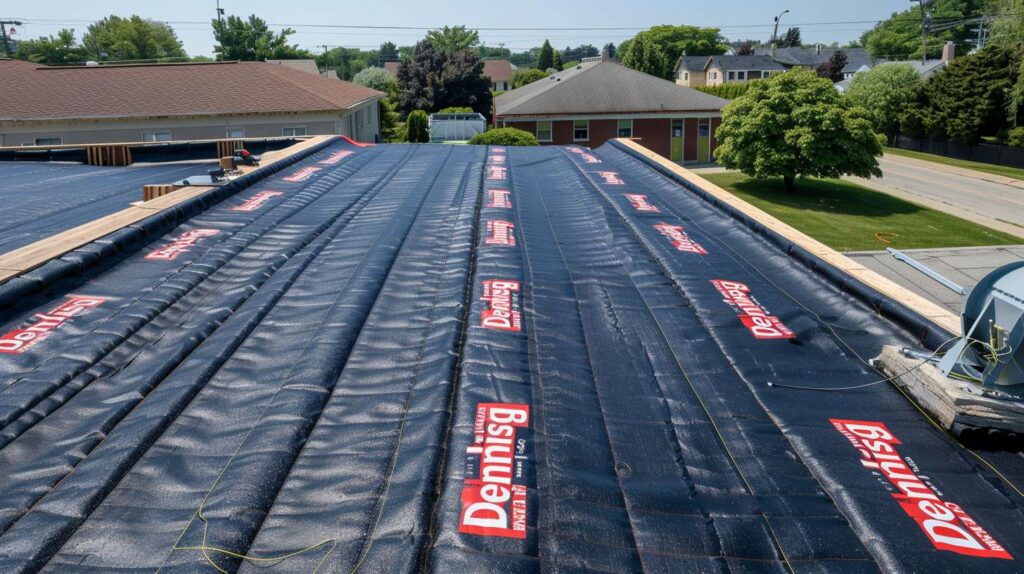
$12 a square foot sounds clean until you ask what got left out. That number can exclude tear-off depth, saturated insulation, edge metal, permit and admin costs, deck repairs, staging, and any protection required for occupied spaces underneath. I’m Tyrone Hicks, and after 17 years in commercial roofing, specifically focused on spotting hidden replacement cost drivers on flat and low-slope buildings across Brooklyn, I can tell you that a low quote isn’t always a lie-sometimes it’s just a very quiet assumption set. Think of it like a loading dock schedule: if someone tells you every truck is on time but skips three entries, the day doesn’t run smooth-it just looks that way until the backup hits. Every estimate has two buckets: what keeps the building open and what keeps you from paying twice. When one bucket gets ignored, you pay for it later, usually at a worse time and a higher rate.
Where The Invoice Splits: Open-Building Costs vs Double-Payment Costs
What keeps the building open
Here’s the part owners don’t love hearing: the roof you see is only half the invoice. There’s the membrane you’re replacing, and then there’s everything that had to happen before and around it to keep operations running and keep the job from making someone’s business week a disaster. I remember being on a flat commercial roof off Flushing Avenue at 6:10 in the morning, steam rising off the membrane because the night had been cold and the bakery two floors below had already fired up the ovens. The owner thought the quote was high until I showed him three layers of old roofing and wet insulation that squished under my boot like a soaked sponge. That morning I had to explain that he wasn’t paying for a roof only-he was paying to remove twenty years of deferred decisions, each one buried under the next like a stack of someone else’s problems. The removal cost more than the membrane. And not by a little.
What keeps you from paying twice
Brooklyn operating realities don’t make any of this cheaper. Tight streets off Atlantic Avenue, occupied warehouses with active loading docks, retail below, schools mid-semester, noise windows that lock you into early starts and hard stops, debris that can’t just pile on a sidewalk-all of it adds labor and logistics cost that doesn’t show up when someone’s pricing from a satellite view. A crew working a dense Bushwick block spends more time on material handling and protection alone than a suburban crew spends on the same square footage. That’s not an excuse. That’s the job.
The second bucket-keeping you from paying twice-is where the real protection lives. Cover board. Tapered insulation to actually correct drainage instead of just covering the old problem. Edge metal that meets current wind uplift requirements. Drain modifications that move water off the roof before the next tenant complains. Flashing transitions replaced instead of coated over. And honestly, shopping by membrane brand alone is how owners end up writing the same check twice. The brand doesn’t save you if the insulation underneath is wet, the edge is pulling away, and the drains still run slow. The system has to work together, or the warranty paper is just paper.
| Cost Driver | Low-Impact Condition | High-Impact Condition | Budget Effect |
|---|---|---|---|
| Tear-off layer count | Single layer, dry and intact | 2-3 layers accumulated over decades | +$2-$5/sq ft per added layer |
| Wet insulation percentage | Dry throughout, core cuts confirm | 30-60%+ saturation requiring full replacement | Significant – disposal + new insulation cost |
| Deck repair allowance | Steel deck sound, no corrosion | Wood deck rot or steel deck rust requiring panel replacement | Unpredictable without allowance line in contract |
| Edge metal replacement | Existing edge compliant and secure | Corroded, pulling away, or non-code compliant | Often $3,000-$8,000+ depending on perimeter |
| Drain modifications | Existing drains properly sized and located | Ponding pattern requires repositioning or adding drains | Per drain modification plus tapered insulation cost |
| Parapet / flashing complexity | Low parapet, minimal curbs and penetrations | Tall parapets, multiple HVAC curbs, complex transitions | High – detail labor is slow and skilled work |
| Material hoist / crane | Ground-level staging, open lot access | Dense block, no laydown area, crane or hoist required | +$1,500-$5,000+ per mobilization depending on setup |
| Permit and safety compliance | Straightforward permit, no variances needed | DOB filings, sidewalk bridging, special inspections | Varies – often $1,500-$6,000+ in NYC |
| Occupied building protection | Vacant building, no tenant coordination needed | Active retail, school, or food production below | Adds labor hours, sequencing, and protection materials |
When Tear-Off Starts, The Roof Finally Stops Lying
What happens when we peel back the first section? That’s where real cost starts talking. One August afternoon in Red Hook, right before a thunderstorm rolled in off the harbor with the sky turning that greenish color that tells you to move fast, a property manager asked me why the replacement price had jumped after we started tear-off. We pulled the edge metal and found the wood nailer underneath crumbling like stale cornbread-soft, dark, falling apart in chunks. It had been failing for years under there, completely invisible until someone actually opened it up. I turned to him and said, “This is exactly why cheap numbers stay cheap only until someone starts pulling things apart.” A low estimate doesn’t have magic in it. It just has quieter assumptions. That nailer had to be replaced before anything else could be properly secured to the edge. No nailer, no warranty. No warranty, no protection. The price didn’t jump because something went wrong-it jumped because something was finally honest.
And here’s the insider tip worth more than any brochure: before you sign anything, ask every bidder to put in writing exactly what happens when hidden conditions show up. Not a vague “we’ll discuss it”-actual unit pricing. If wet insulation is found beyond the assumed percentage, what’s the per-square-foot cost to remove and replace it? If a nailer is shot, what’s the per-linear-foot repair rate? Who gets notified, who approves the additional scope, and is there photo documentation before the work continues? That approval process protects you as much as it protects the contractor. Think of it like a blocked dock lane: the backup was always there, the tear-off just finally showed you where it started. The difference between a manageable surprise and a financial gut-punch is whether you agreed to the rules before the lane opened.
If the bid never explains the ugly stuff, what exactly are you agreeing to?
Estimates without written contingency allowances or defined change-order rules can get expensive fast once tear-off starts exposing what was underneath. Watch for these three specific red flags before you sign:
- “Deck repair as needed” – with no unit price attached. “As needed” without a rate is a blank check you’re signing for someone else.
- No mention of wet insulation disposal. Saturated insulation is classified waste in NYC. Disposal has a cost. If it’s not in the estimate, someone’s assuming it won’t be there-or assuming you won’t ask.
- No edge metal or nailer language. If the scope says nothing about what happens when the edge is opened and the blocking is rotted, there’s no plan-just hope.
Because the roof was hiding something the original estimate assumed wasn’t there-or hoped wouldn’t be. Wet insulation, rotted nailers, or deck damage can’t be confirmed from the surface. A responsible contractor will have contingency pricing ready. A less responsible one will hand you a change order with no context and expect you to sign it on the spot.
No-not if you want a manufacturer warranty and a roof that doesn’t fail in the same spot again. Saturated insulation traps moisture against the deck, accelerates corrosion or rot, and provides no real R-value. Leaving it in place to save money on the front end is exactly how owners end up paying for the same roof twice.
That depends on what’s in the contract. If there’s a written deck repair allowance with a unit price, you pay only for what’s actually repaired, with documentation. If the contract has no allowance and no unit pricing, you’re in negotiation territory mid-job-which is the worst time to have that conversation. Get the unit price in writing before work starts.
Sometimes, yes-core cuts and infrared or nuclear moisture scans can identify wet insulation zones before a single fastener comes out. Not every contractor does this as part of their estimating process, which is worth asking about. What can’t always be known is the deck condition under wet insulation or the nailer condition behind edge metal. That’s why written contingency pricing exists.
Cheap Quotes Usually Skip The Worst Conversation
Questions to force a real scope
Blunt truth: if the number looks too comfortable, somebody probably skipped a painful line item. I was on a school building in East New York during a windy Saturday shutdown, crew working hard, and the client kept comparing our proposal to another contractor who was several thousand dollars lower. By lunchtime, we found abandoned duct supports buried under the old system-steel brackets punching stress into the roof deck at six or seven points nobody had mapped. That lower number wasn’t smarter buying. It was just a quieter set of assumptions, the kind that stay quiet right up until someone pulls up a membrane section and the real picture comes out. Before you sign anything, the checklist below is the conversation you want to have-not after the crane is on the roof, but before the contract gets a signature.
The Estimate Should Read Like An Operations Plan, Not A Guess
A commercial roof estimate is a lot like a loading dock schedule-if one piece is missing, the whole day backs up. The best estimate isn’t the prettiest one or the lowest one. It’s the one that shows sequence, risk handling, and a clear split between what costs belong to keeping operations running and what costs belong to preventing a repeat bill two years from now. In Brooklyn, that means accounting for narrow streets like those around the Gowanus Canal corridor where staging a dumpster takes a permit before a single shovel moves, active tenants who don’t care what your install window is, weather coming in off the harbor that can close your work window faster than any schedule accounts for, and material handling in dense blocks where a crane move eats half a morning. None of that is a surprise if you’ve worked here. It’s just the job. If you want Dennis Roofing to review the scope and tell you what keeps the building open and what keeps you from paying twice, call and get the real number-not the comfortable one.
Physical inspection, layer count, drain review, parapet condition, penetration inventory, and any available repair history – not a satellite measurement and a call-back.
Confirm insulation condition before pricing. Core cuts cost almost nothing relative to what wet insulation surprises cost mid-job. This step defines what gets assumed in the estimate versus what gets a contingency line.
Each cost item gets assigned to one of the two buckets. This lets the owner understand what they’re paying to keep the building running during replacement versus what they’re paying to not be back here in three years.
Unit prices for wet insulation removal, deck repairs, nailer replacement, and any scope additions that could appear after tear-off starts. Pre-agreed rates, documented approval process, and photo requirements before extra work proceeds.
How materials get to the roof, how debris gets off the building and out of a tight block, what the noise and disruption windows are for active tenants, and what weather or harbor-driven scheduling risks look like for this specific building’s location.
| Myth | Fact |
|---|---|
| “All flat roofs price about the same.” | Square footage is just the starting point. Layer count, insulation condition, edge detail complexity, deck status, and access logistics can swing the final number by 50-100% on the same size building. |
| “A lower bid means smarter buying.” | A lower bid usually means a quieter assumption set. What isn’t priced isn’t gone – it’s just deferred to a change order, a warranty dispute, or your next replacement cycle. |
| “The membrane brand determines cost.” | Membrane is one line item. The real cost is driven by tear-off depth, insulation replacement, edge metal, deck repairs, and logistics. Two roofs with the same membrane brand can differ by $10+/sq ft based on everything else. |
| “Tear-off surprises are always contractor games.” | Some surprises are genuinely impossible to price before tear-off. The difference between a legitimate discovery and a contractor game is whether the contingency pricing and approval process were agreed to in writing before work started. |
| “A roof can be priced accurately from satellite images.” | Square footage, maybe. Actual cost drivers – layer count, insulation condition, deck status, edge detail, access constraints – require a physical site walk, and often core cuts. Satellite pricing is a starting number, not a real scope. |