
Brooklyn Commercial Roofing Replacement Contractor You Can Trust
If you had to replace your commercial roof in Brooklyn this year, would you trust your contractor to keep your tenants open and your budget under control? The honest answer for most building owners is no-because they’re choosing based on price quotes instead of looking at who’s actually qualified to manage logistics, safety, and occupied-building risk during a full tear-off and replacement. A commercial roof replacement isn’t a materials problem. It’s a management problem. And in Brooklyn, where you’re dealing with tight staging access, strict building codes, occupied ground floors, and a roof that can’t just “shut down” for three weeks, the contractor you pick determines whether this project stays on schedule and budget or becomes a nightmare of complaints, delays, and code violations.
I’ve managed commercial roof replacements across Brooklyn for twenty-six years-Red Hook warehouses, Flatbush mixed-use buildings, Sunset Park manufacturing facilities, and Downtown Brooklyn office properties-and the pattern is always the same: the owners who treat replacement like a construction project instead of an emergency scramble end up with better roofs, lower total cost, and zero disruption stories. The ones who wait until water’s dripping into their second-floor tenant space and then hire the first contractor who shows up? They overpay, under-spec, and deal with problems for years.
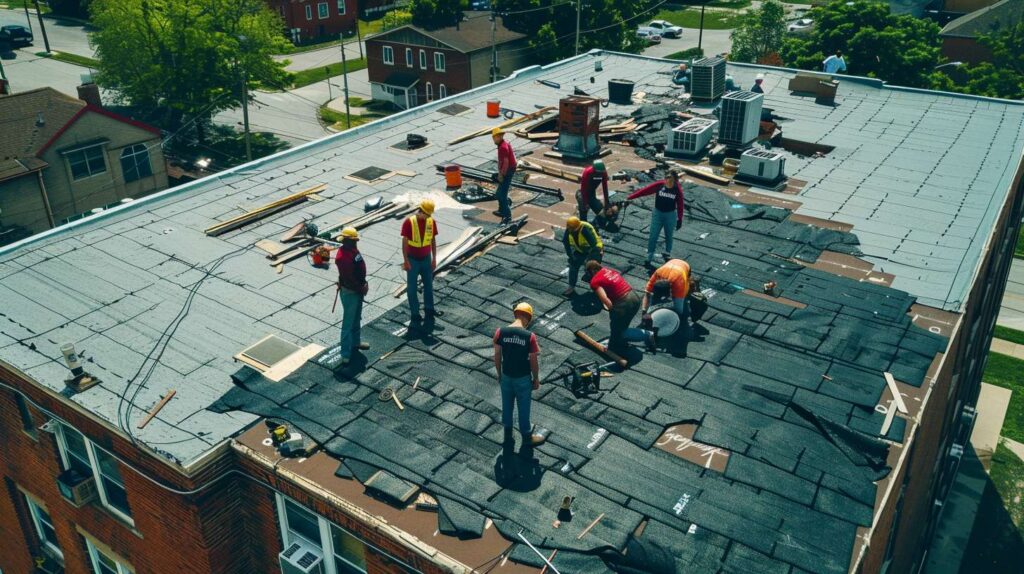
Here’s how to make sure you’re working with a Brooklyn commercial roofing replacement contractor you can actually trust-and how to structure the decision so it’s based on process, not promises.
Why Most Brooklyn Commercial Roof Replacements Start Wrong
Three years ago, I got called to a five-story mixed-use building in Flatbush. Two restaurants on the ground floor, offices above. The owner had ignored leak reports for eighteen months, patched twice, and finally the third-floor tenant threatened to break their lease because water was pooling in their conference room every time it rained. Now it was May, peak construction season, and the owner needed a replacement “immediately.” He took three bids, went with the lowest one-$47,000 for a full TPO replacement-and the contractor started work two weeks later.
By week two, the restaurants were complaining about noise during lunch service. By week three, the contractor hit a code issue with the parapet flashing and had to stop for a revised permit. The timeline stretched from three weeks to seven. One restaurant lost weekend brunch revenue because of construction debris and noise. The total project cost ended up at $63,000 after change orders, and the owner spent another $8,000 in tenant concessions.
That’s the standard Brooklyn commercial roof replacement story when you start in crisis mode. You compress the decision timeline, skip the assessment phase, hire on price, and hope it works out. It rarely does.
The right way to approach commercial roof replacement is to plan it before you need it. Most commercial roofs in Brooklyn have a 20- to 25-year lifespan depending on system and maintenance. If your roof is 18 years old and you’re starting to see membrane cracking, ponding water, or multiple patch repairs per year, that’s when you start the replacement conversation-not when you have an active leak and tenants threatening legal action.
The Five-Phase Framework for Commercial Roof Replacement
Trust starts with process. Here’s how a real commercial roofing replacement contractor in Brooklyn structures the project from assessment to final inspection.
Phase One: Full Roof Assessment and Core Sampling
Before anyone talks price, you need to know what you’re replacing. That means a proper roof inspection with core samples-not a guy walking around with a clipboard. I pull at least four cores on any commercial roof over 5,000 square feet to check what’s under the membrane: insulation condition, deck integrity, moisture intrusion, and whether there’s any structural damage that’ll need addressing during replacement.
On a Sunset Park warehouse replacement two years ago, we found the original 1980s built-up roof had been overlaid twice-once in the 90s, again in 2007. The owner thought he had one roof system. He actually had three, plus a rotted plywood deck in two corners where downspouts had been clogged for years. That changed the scope from a straightforward TPO overlay ($38 per square foot) to a full tear-off with deck repair ($52 per square foot). But we caught it in assessment, not mid-project, so there were no surprise change orders and the budget was accurate from day one.
Any contractor who gives you a firm replacement quote without pulling cores is guessing. And guesses turn into change orders.
Phase Two: System Selection Based on Building Use and Budget
You’ve got three main options for commercial roof replacement in Brooklyn: TPO (thermoplastic polyolefin), EPDM (rubber membrane), or modified bitumen. Each has a place depending on your building type, budget, and how long you plan to hold the property.
| Roof System | Cost per Sq Ft (Installed) | Lifespan | Best For |
|---|---|---|---|
| TPO (White Membrane) | $8.50-$12.00 | 20-25 years | Flat commercial roofs, energy efficiency priority, buildings with HVAC loads |
| EPDM (Rubber) | $7.00-$10.50 | 18-23 years | Low-slope roofs, budget-conscious projects, minimal foot traffic |
| Modified Bitumen | $6.50-$9.00 | 15-20 years | High-traffic roofs, buildings with rooftop equipment access, torch-down preferred |
For most Brooklyn commercial buildings-especially mixed-use or multi-tenant properties-I recommend TPO. It’s heat-reflective (which matters when you’ve got tenants running AC six months a year), it’s code-compliant for NYC energy requirements, and it handles Brooklyn’s freeze-thaw cycles better than EPDM. The seams are heat-welded, so you don’t get the long-term seam failures you see with glued or taped systems.
EPDM makes sense if you’re working with a tight budget and the roof has minimal equipment or foot traffic. It’s less expensive upfront, but you’ll spend more on maintenance over the lifespan because the seams are tape-bonded and vulnerable to New York weather.
Modified bitumen is the choice for high-use roofs-buildings where maintenance staff or contractors are up there regularly servicing HVAC, or properties with rooftop equipment that needs frequent access. It’s tougher under foot traffic, but the installation process (torch-down) requires more safety planning on an occupied building.
Phase Three: Phasing Plan and Tenant Impact Management
This is where most low-bid contractors fail. They show up, tear off the roof in sections, and deal with complaints as they come. A real commercial roofing replacement contractor in Brooklyn builds a phasing plan before the first piece of membrane gets removed.
On a Bed-Stuy school building replacement, we had to work around class schedules, recess, and a strict noise ordinance that kicked in at 3 p.m. We phased the project into six sections, staged materials on weekends, and did all tear-off and heavy equipment work between 7 a.m. and 2 p.m. when students were in class and noise was expected. The noisy work-mechanical fastening, compressor operation-happened in short bursts so teachers could plan around it. We finished the 12,000-square-foot roof in five weeks with zero school closures and one noise complaint (resolved same day).
For mixed-use buildings with ground-floor retail, the phasing plan addresses:
- Staging and dumpster placement so you’re not blocking delivery access or customer entrances
- Noise schedules coordinated with tenant operating hours (no tear-off during restaurant lunch rush, no compressor noise during office Zoom calls)
- Dust and debris containment with tarps, temporary barriers, and daily cleanup so nothing drifts into HVAC intakes or open windows
- Emergency weatherproofing if rain hits mid-project-every section gets a temporary watertight cover at the end of each day
The phasing plan also determines your project timeline. A straightforward 8,000-square-foot warehouse roof with clear staging access and no occupied space below? Three weeks, maybe four if weather’s bad. A 6,000-square-foot mixed-use building in Downtown Brooklyn with tight street access, occupied apartments, and a ground-floor business that can’t close? Five to six weeks, phased in smaller sections to minimize impact.
Phase Four: Permitting, Code Compliance, and Inspection Coordination
Brooklyn operates under New York City building codes, which means your commercial roof replacement needs an approved work permit, and the project has to pass DOB inspections at tear-off and final installation. A contractor who tells you “we’ll handle the permits” and then shows up without one is setting you up for a stop-work order, fines, and a project delay that can stretch weeks.
I file permit applications four to six weeks before the scheduled start date. The application includes structural drawings (if we’re adding insulation or changing roof load), a site safety plan, and proof of contractor insurance. Once the permit is approved, we schedule the DOB rough inspection for after tear-off but before membrane installation. If the deck needs repair, the inspector signs off on that work before we proceed. Final inspection happens after the roof is fully installed and flashed.
This process adds time to the front end, but it eliminates the risk of a mid-project shutdown. I’ve seen contractors start tear-offs without permits, get hit with a stop-work order, and leave a building sitting with an exposed deck for two weeks in April while they scramble to file retroactive paperwork. That’s not a budget problem or a scheduling problem-that’s a judgment problem, and it tells you everything you need to know about whether you can trust that contractor.
Phase Five: Warranty, Maintenance Plan, and Long-Term Performance
The roof replacement isn’t finished when the last piece of membrane goes down. It’s finished when you have a manufacturer warranty, a contractor workmanship warranty, and a maintenance plan that protects your investment for the next 20 years.
Most TPO and EPDM manufacturers offer 15- to 20-year material warranties if the roof is installed by a certified contractor and inspected by a manufacturer rep during installation. That certification matters. If you hire a non-certified contractor, you void the manufacturer warranty and you’re relying entirely on the contractor’s workmanship guarantee-which is only as good as the contractor’s ability to stay in business and honor callbacks.
Dennis Roofing is a certified installer for the major commercial membrane manufacturers, which means every replacement we do qualifies for the full manufacturer warranty. We also provide a 10-year workmanship warranty that covers installation defects, flashing failures, and seam issues that result from our work.
But the warranty only holds up if you maintain the roof. That means twice-yearly inspections, drain and gutter cleaning, and immediate repair of any punctures or seam damage. We set up a maintenance schedule at project completion-spring and fall inspections, with a written report after each visit documenting roof condition, any minor repairs performed, and projected lifespan based on current wear patterns. It costs $400 to $600 per visit depending on roof size, and it’s the difference between a roof that makes it to 25 years and one that fails at 18 because a clogged drain caused ponding water that degraded the membrane.
What “Trust” Actually Means in a Commercial Roofing Replacement Contractor
You’re not trusting someone to install a product. You’re trusting them to manage a multi-week construction project on top of an occupied building, coordinate with city inspectors, keep tenants happy, stay on budget, and deliver a roof system that performs for two decades. That trust is built on three things: transparency, accountability, and local experience.
Transparency means you get a detailed scope of work before the contract is signed-not a one-page estimate with a lump-sum number. You should see line items for tear-off, disposal, deck repair (if needed), insulation, membrane, flashing, and all the ancillary work like parapet capping, pipe boots, and HVAC curb replacement. If the estimate says “full roof replacement: $60,000,” that’s a red flag. You have no way to track cost or hold the contractor accountable for scope creep.
Accountability means the contractor gives you a project schedule with milestones, communicates changes in real time, and shows up when they say they will. On a Red Hook warehouse replacement, we had a three-day weather delay in week two. I called the owner the morning of day one, explained the delay, and gave him a revised completion date. The project finished two days later than originally scheduled, and the owner knew why before it became a problem. That’s accountability. A contractor who goes silent when problems arise, or shows up sporadically without explanation, is not someone you can trust to finish the job correctly.
Local experience means the contractor has worked on Brooklyn commercial buildings before-not just residential properties or jobs in New Jersey or Long Island. Brooklyn has specific challenges: tight street access in neighborhoods like Carroll Gardens and Cobble Hill, occupied mixed-use buildings where you can’t shut down the ground floor, building stock that ranges from 1920s warehouses to modern steel-frame offices, and a DOB inspection process that doesn’t tolerate shortcuts. A contractor who’s done 50 residential roofs in Staten Island is not automatically qualified to manage a commercial replacement on a live building in Williamsburg.
The Cost Reality of Commercial Roof Replacement in Brooklyn
Let’s talk numbers. A full commercial roof replacement in Brooklyn typically runs between $45,000 and $120,000 depending on building size, system choice, and complexity. Here’s how that breaks down for a standard 7,500-square-foot flat commercial roof on a mixed-use building:
- Tear-off and disposal: $8,000-$11,000 (includes dumpster, labor, and dump fees)
- Deck inspection and repair: $3,000-$8,000 (depends on findings; if the deck is solid, this is minimal)
- Insulation (if required by code or for energy upgrade): $7,500-$12,000
- TPO membrane installation: $28,000-$38,000 (60-mil TPO, mechanically fastened, heat-welded seams)
- Flashing, parapet caps, and penetration details: $6,000-$9,000
- Permits and inspection fees: $1,200-$2,000
- Project management and site safety: $4,000-$6,500
Total project cost: $57,700-$86,500 for a standard replacement with no major structural issues. If you need significant deck repair, that number climbs. If you’re doing a simple overlay on a sound existing roof with good insulation, it drops.
The contractors who come in at $40,000 for that same job are either skipping steps (no permit, no manufacturer certification, no proper flashing details) or planning to hit you with change orders once the tear-off reveals problems they “didn’t expect.” Neither scenario ends well.
How to Vet a Commercial Roofing Replacement Contractor Before You Hire
Ask these five questions before you sign a contract:
1. Are you certified by the membrane manufacturer, and will this roof qualify for the manufacturer warranty? If the answer is anything other than “yes, here’s our certification and here’s the warranty you’ll receive,” walk away.
2. What’s your phasing plan for this building, and how will you manage tenant impact? If they don’t have a specific answer-days of the week, hours of operation, noise mitigation, staging plan-they haven’t thought it through.
3. How do you handle unexpected conditions like deck rot or code upgrades discovered during tear-off? The right answer is “we document it, give you a cost for the repair, get your approval before proceeding, and adjust the timeline if needed.” The wrong answer is “we’ll deal with it” or “that’s included in the base price.”
4. Who pulls the permit, and when will it be filed? The contractor should pull the permit, and it should be filed and approved before work starts-not “we’ll get it after we begin.”
5. Can you provide references from other Brooklyn commercial projects in the last two years? Not just any roofing jobs-commercial jobs, on occupied buildings, in Brooklyn. Call those references and ask how the project went, whether it finished on time and on budget, and if they’d hire the contractor again.
Why Dennis Roofing for Your Brooklyn Commercial Roof Replacement
We’ve managed commercial roof replacements across Brooklyn for over two decades-warehouses in Sunset Park and Red Hook, mixed-use buildings in Flatbush and Bed-Stuy, office properties in Downtown Brooklyn, and school facilities in Brownsville. Every project starts with a proper assessment, moves through a structured phasing plan, stays on budget, and ends with a roof system that’s code-compliant, manufacturer-warrantied, and built to last 20-plus years.
We’re certified installers for all major commercial membrane systems. We manage permits, inspections, and tenant coordination. And we build every project around the same principle: your building doesn’t stop operating just because the roof is being replaced, so neither do we.
If your Brooklyn commercial roof is reaching end-of-life and you’re trying to figure out who to trust with a replacement, let’s start with an assessment. We’ll pull cores, give you an honest evaluation of what’s needed, walk you through system options and costs, and show you exactly how we’d phase the work to keep your tenants happy and your building watertight. Call Dennis Roofing at [phone number] or request a consultation online. This is too big a project to leave to chance.