
Brooklyn’s Trusted Commercial Roofing Contractor Services
If your roof failed over a weekend storm in Brooklyn, who would you call-and would they already know your building? That question sounds dramatic until you’re standing in a third-floor office at 7 AM Monday watching water drip onto computer equipment while your emergency “roofer” is still two hours away and has no idea where your building even stores tarps. The difference between chaos and a controlled response isn’t luck-it’s having an ongoing relationship with a trusted commercial roofing contractor who understands your building, your operations, and your risk profile before the emergency ever happens.
Here’s what most property managers and building owners learn the hard way: finding someone to patch a leak costs $300. Finding someone who can act as a long-term partner-someone who understands NYC permitting, coordinates around your tenants, plans capital improvements that preserve cash flow, and answers their phone at 6 AM when a seam opens up during a Nor’easter-that’s a different search entirely. After 25 years running commercial roofing projects across Brooklyn, from tiny corner groceries in Bensonhurst to six-building warehouse complexes in East New York, I can tell you that commercial roofing services aren’t just about installing membrane and collecting a check. They’re about risk management, schedule coordination, warranty protection, and total cost of ownership measured across decades, not installation cycles.
What Separates a Commercial Roofing Contractor from Someone Who Just Does Commercial Roofs
Let me explain the distinction using a real scenario: we were hired to replace the roof on a mixed-use building in Flatbush-retail on the ground floor, eight residential units above. The previous contractor had quoted $47,000 for a straight TPO tearoff and replacement, start to finish in five days. Sounds efficient. Here’s what that quote didn’t include: coordination with the residential tenants (who work nights), noise restrictions after 5 PM per the lease agreements, a phased installation to keep at least half the roof watertight at all times, DOB permits and inspections, temporary protection for the HVAC units serving the retail tenant, and a plan for what happens if it rains mid-install. When we walked the project, we immediately saw that this wasn’t a roofing job-it was an operations and logistics challenge that happened to involve roofing.
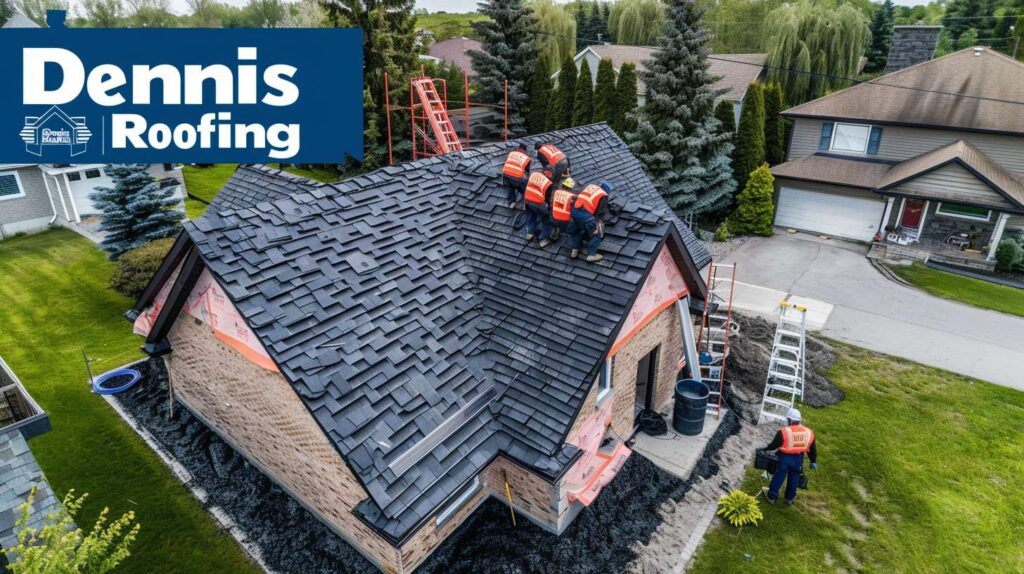
Our final scope came in at $52,800, and included all of the above plus a written coordination plan we shared with every tenant two weeks before we touched a torch. We worked in two phases over eight days, scheduled around tenant needs, pulled all permits before arrival, and finished with zero complaints and a ten-year NDL warranty that actually means something because we’re a established commercial roofing contractor, not a crew that moves from borough to borough. That $5,800 difference bought the building owner something priceless: zero operational disruption, zero tenant complaints, zero permit violations, and a roof system installed correctly the first time.
That’s the distinction. A commercial roofing contractor doesn’t just install roofing systems-they manage projects that happen to live on top of active businesses, occupied buildings, and complex mechanical systems. They understand that your roof isn’t an isolated asset; it’s the lid on a box full of operations, tenants, inventory, and revenue streams that can’t afford to stop.
Core Commercial Roofing Systems We Install Across Brooklyn
Brooklyn’s commercial building stock is wildly diverse-you’ve got 1920s warehouses in Sunset Park with original built-up roofs, 1970s mixed-use buildings in Crown Heights with deteriorating EPDM, and modern industrial builds in East New York that need high-performance single-ply systems. Here’s what we install and when each system makes sense:
TPO (Thermoplastic Polyolefin) is our most common recommendation for flat commercial roofs in Brooklyn, particularly on buildings where energy efficiency matters and you want a white reflective surface that holds up to foot traffic. We installed fully-adhered 60-mil TPO on a 14,000-square-foot creative office building in Williamsburg two years ago-the owner wanted something that would last 20+ years, meet energy code requirements, and handle regular HVAC maintenance foot traffic without constant patching. TPO delivered on all three. Cost typically runs $8.50-$12.00 per square foot installed, depending on insulation requirements, edge details, and penetration complexity. It heat-welds at the seams, which creates a monolithic waterproof membrane when installed correctly, and the white surface reflects heat, reducing cooling loads in summer.
EPDM (Ethylene Propylene Diene Monomer) remains the workhorse rubber membrane for budget-conscious projects where reflectivity isn’t a priority. We see it most often on older commercial buildings where the existing system is EPDM and a straight replacement makes sense. A 7,500-square-foot warehouse roof in Canarsie that we re-roofed last year went with 45-mil mechanically-attached EPDM at $7.25 per square foot-the owner needed a 15-year solution that wouldn’t break the bank, and EPDM delivered exactly that. It’s proven, it’s flexible, it handles thermal movement well, and every commercial roofer in Brooklyn knows how to repair it. The seams are tape or liquid-applied rather than heat-welded, which makes field modifications easier but requires more rigorous QC during installation.
Modified bitumen still has a place, particularly on older buildings with parapet conditions that favor a torch-applied or self-adhering multi-ply system. We torch-applied a two-ply modified bitumen system on a Bedford-Stuyvesant school building three years ago-the roof had complex penetrations, multiple level changes, and the building manager wanted a system they could easily patch themselves if needed. Modified bitumen gave them that flexibility. Cost ranges $6.50-$9.00 per square foot depending on the number of plies and application method. It’s heavy, it’s durable, and it handles ponding water better than most single-ply systems, but it requires experienced crews and careful flame management, which matters when you’re working above occupied spaces.
Roof coatings-silicone, acrylic, or urethane-are our go-to recommendation when a building owner needs to extend roof life by 8-12 years without the cost and disruption of a full replacement. We coated a 22,000-square-foot warehouse roof in Sunset Park last spring: the existing modified bitumen system still had good adhesion and structure, but the granules were wearing thin and small leaks were starting. A silicone coating system cost $4.25 per square foot installed-roughly one-third the cost of replacement-and bought the owner a dozen more years while they planned for a capital replacement down the road. Coatings work beautifully when applied to the right substrate at the right time. Apply them too late, and you’re just sealing in problems.
| Roofing System | Typical Cost per Sq Ft | Expected Lifespan | Best Applications |
|---|---|---|---|
| TPO (60-mil) | $8.50-$12.00 | 20-25 years | Energy-efficient commercial buildings, high foot traffic, modern construction |
| EPDM (45-mil) | $7.25-$10.00 | 15-20 years | Budget-conscious projects, warehouses, buildings without reflectivity requirements |
| Modified Bitumen (2-ply) | $6.50-$9.00 | 15-20 years | Complex roof layouts, older buildings, parapet-heavy designs |
| Silicone Coating | $4.00-$5.50 | 10-15 years | Roof restoration, life extension, ponding water areas |
Emergency Repairs vs. Planned Replacements: The Economics of Timing
Here’s a number that changes how smart building owners think about commercial roofing: emergency repairs cost 3-4 times more per square foot than planned work, and they never happen at convenient times. I took a call at 6:15 AM last November from a property manager in Downtown Brooklyn-a seam had opened during an overnight storm, water was pouring into a law office, and they needed someone on-site immediately. We had a crew there by 8:30 AM with tarps, tools, and temporary patching materials. The emergency patch cost $1,850 for roughly 40 square feet of work, plus another $950 two weeks later for a permanent repair once conditions dried out. That’s $70 per square foot all-in for work that, if planned during a scheduled maintenance visit, would have cost $18-$22 per square foot.
The lesson isn’t that emergencies are avoidable-they’re not. The lesson is that buildings with regular roof inspections and planned maintenance cycles catch problems when they’re $400 fixes, not $2,800 emergencies. We recommend twice-annual inspections for commercial buildings over 15 years old: once in spring after winter freeze-thaw cycles, once in fall before snow season. Those inspections cost $350-$500 depending on building size and typically catch 4-6 small issues per visit-loose flashing, clogged drains, small punctures, deteriorating sealant-that can be addressed for $1,200-$2,000 total before they become crises.
When it comes to full replacements, timing is everything. A proactive replacement planned 18 months in advance allows you to bid competitively, schedule around operations, plan capital funding, and choose optimal weather windows. A reactive replacement after catastrophic failure forces you to accept whatever price and schedule the available contractor offers, often during peak season when labor costs are highest. I’ve seen that timing difference represent $15,000-$25,000 on a typical 10,000-square-foot commercial roof project.
Navigating NYC Permitting and Code Requirements
This is where inexperienced commercial roofing contractors flame out: New York City’s Department of Buildings doesn’t treat roof replacements casually, and the permit process isn’t optional. Any roof replacement, re-covering, or structural work requires a permit, filed plans, and inspections. For commercial buildings, that usually means hiring an architect or engineer to prepare drawings, submitting to DOB, waiting for approval (typically 4-8 weeks), and scheduling inspections during and after installation. Contractors who skip this process expose building owners to violations, stop-work orders, insurance complications, and liability that can dwarf the cost of the roof itself.
We handle permitting as part of every commercial project-it’s built into our process and our pricing. For a typical commercial roof replacement in Brooklyn, permit and filing costs run $2,500-$4,500 depending on building size and complexity. That includes architectural drawings, DOB filing fees, and inspection coordination. Yes, it adds cost and time. It also ensures that your roof is installed to code, passes inspection, and doesn’t create a ticking liability bomb that detonates when you try to sell the building or file an insurance claim.
Energy code compliance is another layer: NYC requires commercial roofs to meet minimum R-values (insulation ratings), and those requirements have gotten stricter over the past decade. Most commercial re-roofing projects now require at least R-20 insulation, which typically means 3-4 inches of polyiso insulation under the membrane. We factor that into every estimate automatically, because finding out mid-project that your roof doesn’t meet code is an expensive surprise nobody wants.
Working Around Tenants, Operations, and Occupied Buildings
Roofing work is loud, disruptive, and happens directly above people’s heads. For residential buildings, that means coordinating with tenants who work nights, have young children, or can’t tolerate construction noise during certain hours. For commercial buildings, it means understanding that the restaurant below can’t have torch work happening during lunch service, the medical office needs advance notice for patient scheduling, and the retail tenant on the ground floor will lose their mind if debris falls past their windows during business hours.
This is where a commercial roofing contractor earns their fee. We did a project on a mixed-use building in Williamsburg last year-restaurant on the ground floor, creative offices on two and three, residential units on four and five. Our coordination plan included: no torch work between 11 AM and 3 PM (restaurant service), no deliveries before 9 AM (residential), all debris lowered via crane rather than dropped down the side of the building (offices), and daily sweep-and-clean of the sidewalk and entrance (everyone). The project took three days longer than it would have with no restrictions, but we finished with zero complaints and a thank-you email from the restaurant owner, which is how you build long-term client relationships.
For industrial and warehouse buildings, the concerns shift to operational downtime and loading dock access. We worked on a distribution warehouse in East New York where roof work couldn’t interfere with truck access between 6 AM and 6 PM. We scheduled all material deliveries and crane work for early mornings and weekends, which meant premium labor rates but allowed the client’s operations to continue uninterrupted. That flexibility-understanding that your schedule is secondary to the client’s operations-separates contractors who get repeat work from contractors who get one project and never hear from the client again.
Long-Term Roof Planning: Multi-Year Capital Strategies
Smart building owners don’t think in terms of “replacing the roof”-they think in terms of roof management across 10-20 year horizons. That means understanding which buildings need replacement now, which can be extended with coatings or targeted repairs, and which are fine but need monitoring. For property managers overseeing multiple buildings, this becomes a capital planning exercise: how do you keep everything watertight without blowing up the budget in a single year?
We help clients build phased roof plans all the time. A client with four commercial buildings in Brooklyn came to us two years ago with a problem: all four roofs were 18-22 years old, all were showing wear, but they didn’t have $300,000+ to replace everything at once. We walked all four buildings, ranked them by condition and risk, and built a four-year plan: Building A (highest risk) got a full replacement in Year 1 ($87,000), Building C got a coating system in Year 2 to buy time ($31,000), Building D got targeted repairs and monitoring in Year 3 ($8,500), and Building B got a full replacement in Year 4 ($92,000). Total spend was essentially the same, but spread across four years and prioritized by actual risk rather than arbitrary scheduling.
That kind of planning requires a commercial roofing contractor who understands asset management, not just roofing installation. You need someone who can honestly tell you “this roof has three more years if you address these four areas” versus “this roof could fail any winter and you need to replace it now.” Most contractors are incentivized to sell you a new roof regardless of condition. We’re incentivized to build long-term client relationships, which means honest assessments and capital planning that aligns with your actual budget and risk tolerance.
Warranty Coverage and What It Actually Means
Every commercial roofing contractor offers warranties. Very few building owners understand what those warranties actually cover-and more importantly, what they don’t. There are typically three types of warranties on commercial roofing projects: manufacturer material warranties (10-30 years), contractor workmanship warranties (2-10 years), and optional NDL (No Dollar Limit) system warranties that cover both materials and labor.
Standard material warranties are nearly worthless on their own. If your TPO membrane fails due to a manufacturing defect in Year 8, the manufacturer will replace the membrane material but won’t cover the $40,000 in labor costs to remove the old membrane and install the new one. You’re on the hook for labor unless you have a system warranty that covers both materials and labor.
Workmanship warranties cover installation errors-seams that weren’t properly welded, flashing that wasn’t detailed correctly, fasteners that weren’t installed per spec. These matter enormously because most roof failures in the first 5-10 years are installation errors, not material failures. We offer a standard five-year workmanship warranty on all commercial projects, covering any leaks or failures related to installation quality. That warranty is only as good as the contractor standing behind it, which is why working with an established local commercial roofing contractor matters-we’ll still be answering our phones in five years.
NDL system warranties are the gold standard but they’re expensive and not always necessary. They typically add 8-12% to project cost and provide comprehensive coverage for 10-20 years: materials, labor, and often even tear-off costs if the system fails. We recommend them for high-value buildings, buildings where operational disruption from a roof failure would be catastrophic, and buildings where the owner plans to hold long-term. For a warehouse you’re planning to sell in three years? Probably not worth the premium. For a medical building where a roof failure would shut down operations? Absolutely worth it.
Why Local Brooklyn Experience Matters
Brooklyn isn’t a single market-it’s a dozen microclimates, building types, and regulatory environments packed into 69 square miles. What works on a warehouse in East New York doesn’t necessarily translate to a mixed-use building in Park Slope. You need a commercial roofing contractor who understands the difference, knows the local building department inspectors, has relationships with suppliers for fast material delivery, and can navigate the operational realities of working in one of the densest, most complex urban environments in the country.
We’ve been working in Brooklyn for over two decades. We know which DOB inspectors are sticklers for edge metal details and which ones focus on insulation R-values. We know that projects in Williamsburg often require evening and weekend work due to daytime traffic restrictions, while projects in Canarsie can usually run straight through standard hours. We know which supply houses stock the specific fasteners and adhesives we need for emergency repairs, and we know them well enough to get same-day delivery when a project goes sideways. That local knowledge doesn’t show up on a quote, but it shows up in execution speed, problem-solving ability, and the difference between a project that finishes on schedule and one that drags on for weeks.
When you work with Dennis Roofing, you’re working with a team that has repaired, restored, and replaced commercial roofs on hundreds of Brooklyn buildings-from small retail spaces to multi-building industrial complexes. We understand your building, your operational constraints, and your budget realities because we’ve solved these exact problems dozens of times before, right here in Brooklyn. That’s not something you get from a contractor bidding projects across three states who treats Brooklyn like anywhere else. This borough is different, and working here requires local expertise that only comes from years of actual project experience.