
Brooklyn’s Trusted Commercial Roof Installation Services
On a commercial building, more than half of roof problems come from how it was installed, not from the materials themselves. A manufacturer’s 20-year warranty means nothing if the crew didn’t nail the fastening pattern, slope the drains correctly, or build proper transitions around mechanical curbs. That’s why choosing the right team for commercial roof installation in Brooklyn matters more than picking a brand name off a brochure. At Dennis Roofing, we’ve been running complex Brooklyn commercial installs for over two decades-and what we’ve learned is that the difference between a roof that leaks in year three and one that performs for 25 years comes down to the planning, staging, and technical execution during those first critical weeks of installation.
Commercial roof installation in Brooklyn typically costs $8-$16 per square foot for complete tear-off and replacement, depending on the system (TPO, EPDM, modified bitumen, or built-up), building access, required structural upgrades, and rooftop equipment complexity. A 10,000-square-foot warehouse might run $95,000-$140,000, while a multi-tenant mixed-use building with parapets, skylights, and HVAC units can easily reach $180,000-$220,000 for full replacement. But those numbers only matter if the contractor has a real installation plan-one that addresses Brooklyn’s unique challenges: tight urban access, occupied buildings, wind exposure near the waterfront, strict DOB inspection schedules, and flat roofs that pond water after every heavy rain.
What a Proper Commercial Roof Installation Process Actually Looks Like
Most building owners get sold on membrane specs and warranties without anyone explaining what happens between signing a contract and having a finished roof overhead. Here’s the reality: a professional commercial roof installation runs through six distinct phases, and shortcuts in any one phase create problems that show up years later when it’s too late to fix them affordably.
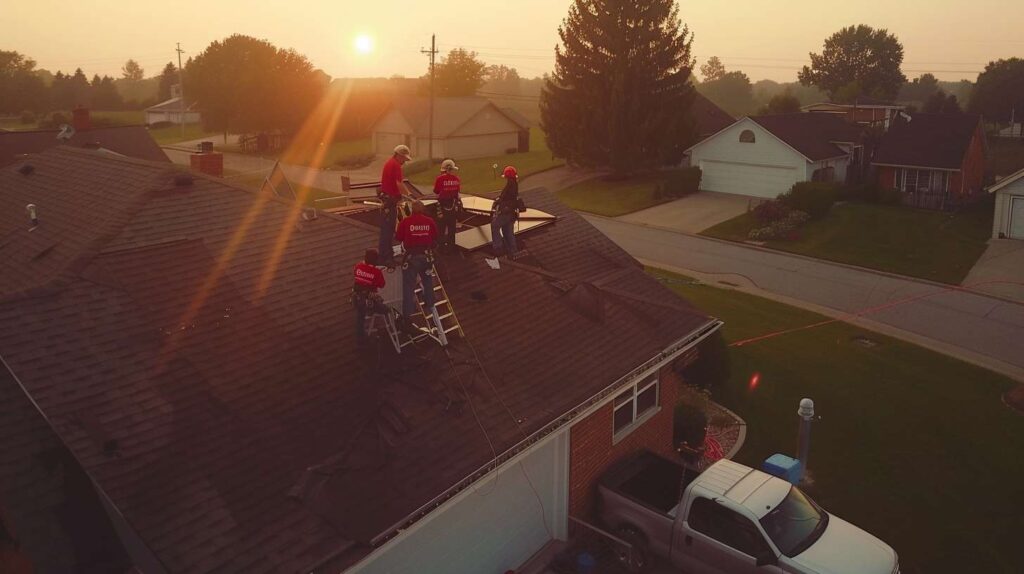
Phase one is assessment and engineering. Before we price a job, we’re on your roof with moisture meters, core samples, and a full structural evaluation. We’re checking deck condition, insulation moisture content, fastener pull-out resistance, and drainage flow patterns. On a Sunset Park warehouse we replaced last year, the existing insulation was 60% saturated-invisible from below, catastrophic if we’d installed new membrane over it. We pulled everything down to the metal deck, which added cost but prevented a warranty-voiding disaster. We also run load calculations for new insulation and membrane assemblies to confirm your structure can handle the added weight, especially critical in older Brooklyn industrial conversions.
Phase two is system design and specification. This is where we match roof assembly to building use, exposure, and budget. A single-story distribution center needs different wind uplift resistance than a six-story mixed-use building in Downtown Brooklyn. We’re calculating fastener spacing based on field-of-roof versus perimeter zones, specifying tapered insulation layouts to eliminate ponding (Brooklyn’s flat roofs are notorious for standing water), and designing proper flashing details at parapets, penthouses, and equipment curbs. Every detail gets drawn and spec’d before installation starts, because trying to figure out transitions on the fly is how you end up with leaks at every pipe penetration.
Phase three is staging and access planning. This is the phase most contractors ignore until the first day of work, and it’s where Brooklyn projects get complicated fast. We need crane access for material lifts, dumpster placement that doesn’t block sidewalks or loading docks, protection plans for occupied spaces below, and noise mitigation schedules if you’ve got tenants or neighboring buildings. On a Bushwick loft conversion we did two years ago, crane access was impossible-building was mid-block, surrounded by four-story walk-ups. We hand-carried everything up interior stairs in phases, scheduled around tenant move-outs, and completed the job in sections over eight weeks instead of three. It cost more and took longer, but the building stayed occupied and functional the entire time.
Why Brooklyn Commercial Roof Installation Is Different
Brooklyn isn’t New Jersey. It’s not Long Island. And it’s definitely not some suburban office park where you can park a crane, stage materials in an empty lot, and work without anyone noticing. Brooklyn commercial roof installation comes with urban constraints that demand experience and planning:
Access is almost always complicated. Multi-tenant buildings mean coordinating with retail on the ground floor, offices on two and three, and residential above. Equipment has to come up through narrow stairwells or exterior hoists because there’s no loading dock. Street closures require permits and coordination with NYPD and DOT. Material deliveries have to hit 90-minute windows between street cleaning and tenant deliveries. I’ve run jobs where we could only crane materials on Sunday mornings between 6 and 10 AM-four lifts over four weekends-because that was the only time we could legally close the street and not disrupt the bagel shop, dry cleaner, and yoga studio below.
Wind exposure near the waterfront is serious. Buildings in Red Hook, DUMBO, Greenpoint, and Sunset Park face direct wind off the harbor with minimal protection. That drives fastener density and edge detailing requirements way up. FM Global wind uplift ratings matter here-we’re typically designing for 1-90 or 1-120 ratings in perimeter zones, which means fastener spacing every 6-8 inches instead of 12. Miss those specs and you’re looking at membrane blow-offs during the next nor’easter.
Ponding is the silent killer of Brooklyn flat roofs. Most commercial buildings here have structural decks that deflect over time, creating low spots where water sits for days after rain. Insurance companies are now requiring positive drainage-no standing water beyond 48 hours-which means we’re installing tapered insulation systems on almost every project. A proper tapered layout isn’t just sloping to drains; it’s mapping existing low spots, calculating cricket placements around rooftop units, and designing valley flow paths that move water efficiently even when drains get partially clogged (which they always do). We’ve replaced roofs that were only eight years old because the original contractor installed flat insulation over a deflected deck, water ponded constantly, and the membrane degraded in half its expected lifespan.
Commercial Roofing Systems We Install and When Each Makes Sense
There’s no universal “best” commercial roofing system. The right choice depends on building use, budget, equipment loads, maintenance capacity, and expected lifespan. Here’s how we match systems to Brooklyn commercial buildings:
| Roofing System | Best For | Installed Cost per SF | Expected Lifespan | Key Advantages |
|---|---|---|---|---|
| TPO (white membrane) | Warehouses, distribution, single-story commercial | $8-$12 | 15-25 years | Energy-efficient, heat-welded seams, good wind resistance, lower cost |
| EPDM (black rubber) | Budget-conscious projects, minimal foot traffic | $7-$11 | 15-20 years | Proven durability, easier repairs, works in cold weather installs |
| Modified Bitumen | Buildings with heavy equipment, high foot traffic | $9-$14 | 20-25 years | Puncture-resistant, self-healing in heat, excellent for mechanical loads |
| Built-Up (BUR) | Industrial, heavy equipment, maximum durability needs | $10-$16 | 25-30 years | Multiple ply redundancy, fire-resistant, handles extreme loads |
TPO is our most common recommendation for Brooklyn commercial buildings because of its balance of cost, performance, and energy savings. The white reflective surface cuts cooling costs significantly-important for warehouse and retail spaces with minimal insulation. Heat-welded seams create permanent watertight bonds (unlike adhesive or tape), and modern formulations have solved the early-generation cracking problems TPO had fifteen years ago. We install it on everything from auto shops in East New York to office buildings in Brooklyn Heights.
Modified bitumen gets spec’d when there’s serious rooftop equipment or regular maintenance traffic. If you’ve got HVAC techs up there monthly, or multiple condensing units and exhaust fans, modified’s puncture resistance matters. The material self-heals minor damage from foot traffic and tool drops-something single-ply membranes can’t do. We torch-apply or use cold adhesive depending on fire code restrictions and building occupancy.
EPDM still makes sense for straightforward, low-budget projects where energy efficiency isn’t a priority and the roof has minimal penetrations. It’s also faster to install in cold weather since rubber membrane stays flexible below freezing, while TPO gets brittle and harder to weld properly. For a simple warehouse replacement where the owner plans to sell in 5-7 years, EPDM offers solid performance at the lowest installed cost.
Installation Details That Separate Quality Work from Future Problems
The membrane brand matters far less than how it gets installed. Here’s what we focus on during actual installation-the details that determine whether your roof performs for two decades or starts leaking in year five:
Fastening patterns follow engineered specifications, not installer convenience. Every commercial roof system has approved fastener layouts based on wind zone, building height, and roof zone (field, perimeter, or corner). Corner zones see the highest wind uplift and require the tightest fastener spacing-often 6 inches on center in a 4-foot border. We map these zones during design, mark them during installation, and inspect every section before membrane goes down. On a Red Hook industrial building we completed last spring, corner zone fastening required 3,200 screws in areas where a generic “12-inch grid” approach would have used maybe 800. That’s the difference between a roof that stays on during a hurricane and one that ends up in the street.
Insulation gets mechanically fastened and adhesive-set in layers. We’re not just laying rigid insulation boards like tiles. Bottom layer gets mechanically fastened to deck with proper density and pattern. Top layer gets adhered with offset joints so seams don’t align-creates a continuous thermal barrier and prevents air infiltration. Tapered insulation gets laid out according to engineered flow diagrams we create during design, with valley cricket assemblies around every rooftop unit and gradual slopes (minimum ¼-inch per foot) toward all drains. This isn’t something you figure out while standing on the roof-it requires planning and precision layout.
Flashing and termination details are where most leaks start. Parapets, equipment curbs, pipe penetrations, expansion joints, and roof edges require custom-fabricated flashing that ties the membrane to vertical surfaces properly. We’re not using generic boots and mastic. Every penetration gets a mechanically fastened base flashing, sealed overlap joints, and proper height requirements (8 inches minimum for most details, 12+ inches at parapets). Corners get reinforced with additional plies. On complex Brooklyn mixed-use buildings with penthouse structures, skylights, and rooftop mechanicals, flashing details can represent 30% of the total installation labor-but that’s where the waterproofing actually happens.
Drainage components get inspected, cleaned, and upgraded if needed. Old drains with corroded strainers or undersized outlets cause ponding and membrane failure. We evaluate every drain during tear-off, confirm proper slope, and install new strainers and dome assemblies rated for the roof system. On larger roofs, we’re adding overflow scuppers as secondary drainage-required by code and critical insurance protection if a primary drain clogs during a heavy storm.
Keeping Your Building Open and Operational During Installation
Commercial roof replacement doesn’t mean you need to shut down operations or relocate tenants. It does mean you need a contractor who understands phasing, protection, and coordination. Here’s how we keep Brooklyn businesses running during installation:
Phased installation schedules. We section large roofs into zones and complete one zone before opening the next. Each zone gets torn off, insulated, and membraned in rapid sequence-usually 2-5 days depending on size-so no area sits exposed overnight or through weather events. Phasing also allows occupied buildings to maintain some rooftop access, limits dust and noise exposure, and spreads disruption across weeks instead of concentrating it into one chaotic period.
Protection protocols for occupied spaces below. Before we start demo, we’re installing ceiling protection in any space with drop ceilings, sealing HVAC intakes, scheduling around business hours when possible, and setting up dust barriers at stairwell entries. For retail or office tenants, we coordinate noisy work (tear-off and mechanical fastening) during specific hours and save quieter tasks (insulation and membrane placement) for times when they’re open. A Downtown Brooklyn office building we reroofed two years ago required all noisy work between 6 PM and 8 AM weekdays-we ran night crews for five weeks to meet that requirement because the alternative was having their call center operations disrupted daily.
Safety and sidewalk protection are non-negotiable. Pedestrian scaffolding or sidewalk sheds go up before any material comes off the roof. Material hoists and crane operations get planned with OSHA fall protection and public safety zones. Dumpsters and material staging get coordinated with neighboring businesses so we’re not blocking access or creating hazards. On tight Brooklyn streets, this often means paying for traffic control and working during off-peak hours just to get materials to the site safely.
Inspections, Code Compliance, and Manufacturer Warranties
A commercial roof installation isn’t finished until it passes inspection and warranty documentation is filed. We handle the entire compliance process because cutting corners here voids warranties and creates liability exposure:
NYC Department of Buildings permits and inspections. All commercial roof work in New York City requires filing and permits. We handle applications, provide engineered drawings when required, coordinate with building inspectors, and manage any corrections or supplemental documentation. Special inspections are required for certain systems and building types-we arrange those with approved third-party agencies and ensure they’re completed before final sign-off.
Manufacturer inspections for warranty activation. Most commercial roofing manufacturers offer extended warranties (15-25 years) that require a factory-certified installer and a manufacturer’s inspection at completion. We’re certified installers for all major brands-GAF, Firestone, Carlisle, Johns Manville-and we arrange manufacturer inspections as part of every project. That inspection confirms proper material use, installation technique, and detail work, and it triggers the full warranty coverage. Without it, you’ve got a “material-only” warranty that covers manufacturing defects but not installation failures-which means you’re on your own if something goes wrong.
Dennis Roofing’s workmanship warranty runs 10 years on labor and installation separate from manufacturer material coverage. If a leak develops from improper flashing, inadequate fastening, or any installation error, we’re back to fix it at no cost. That’s our guarantee that the technical work was done right the first time.
Why Brooklyn Commercial Roof Installation Takes Longer (and Costs More) Than You’d Expect
Owners comparing bids often see big price differences and wonder why. The answer usually comes down to what’s included in scope and whether the contractor actually understands Brooklyn project requirements:
Low bids typically exclude tapered insulation (just flat replacement), skip upgraded fastening for wind zones, use basic flashing instead of custom fabrication, and don’t account for realistic Brooklyn access and staging costs. That $7-per-square-foot number looks great until you realize it leaves you with ponding water, membrane blow-offs in year three, and no valid warranty because required inspections weren’t arranged.
Realistic commercial roof installation in Brooklyn takes 3-8 weeks for most projects, depending on size, complexity, weather delays, and coordination requirements. A simple 8,000-square-foot warehouse with crane access might finish in two weeks. A 15,000-square-foot mixed-use building with limited access, occupied tenants, rooftop mechanicals, and parapet details can easily run six weeks when you factor in staging, phasing, inspections, and required coordination.
We’re transparent about these timelines upfront because the last thing any building owner needs is a contractor who promises three weeks and then drags the job out for three months while your building sits exposed or partially protected. Our project schedules include weather contingency days, inspection hold points, and coordination buffers-so when we say six weeks, we mean six weeks with a finished, inspected, warranted roof at the end.
How to Choose a Commercial Roof Installation Contractor in Brooklyn
Don’t hire based on the lowest bid. Don’t hire based on who answers the phone first. Hire based on who demonstrates they actually understand commercial roof installation process, Brooklyn building requirements, and long-term performance engineering. Here’s what to verify:
Ask for engineered drawings and specifications before signing anything. A real commercial roof contractor provides detailed scope documents showing membrane type, insulation R-value and taper layout, fastener patterns by roof zone, flashing details at all penetrations and edges, and drainage component specifications. If you’re getting a one-page proposal with a square-foot price and a brand name, you’re not getting a real installation plan.
Verify NYC licensing, insurance, and manufacturer certifications. Commercial roofing in New York City requires proper licensing and workers’ comp coverage. Manufacturer certifications prove the crew has been trained on proper installation techniques and is eligible to offer extended warranties. Ask to see current certificates for all three before any deposit gets paid.
Check references from similar Brooklyn projects. A contractor who does suburban warehouses in Nassau County may struggle with urban access, occupied buildings, and tight coordination requirements in Brooklyn. Ask for references from multi-tenant buildings, mixed-use properties, or industrial conversions similar to yours, and actually call them. Ask how the contractor handled disruptions, whether they stayed on schedule, and if any leaks or issues developed after completion.
Understand what’s included in warranty coverage and who handles claims. Get both the manufacturer’s material warranty and the contractor’s workmanship warranty in writing, with clear terms about what’s covered, claim procedures, and how long coverage runs. The difference between 15-year and 25-year coverage is often just a manufacturer inspection-make sure that’s included in your contract.
Your Brooklyn Commercial Roof Installation Starts with a Real Assessment
Every reliable commercial roof installation begins the same way: with someone who knows what they’re looking at actually getting on your roof, evaluating existing conditions, identifying the constraints and requirements specific to your building, and developing a real plan before any pricing gets discussed. At Dennis Roofing, that’s how we’ve been approaching Brooklyn commercial projects for more than 20 years-because we learned early that accurate assessment and proper planning prevent the costly surprises, warranty disputes, and premature failures that happen when contractors guess instead of engineer.
If your Brooklyn commercial building needs roof replacement, start with a thorough evaluation from a contractor who understands urban installation complexity, can provide engineered solutions for drainage and wind resistance, and has the experience to keep your building operational throughout the process. That’s what separates a roof that performs reliably for decades from one that becomes a recurring maintenance problem within a few years-and it’s exactly what you should expect from your commercial roof installation partner.