
Brooklyn’s Trusted Commercial Flat Roofing Contractor
How much revenue would you lose if your roof failed during the next nor’easter? For a retail strip in Flatbush, one client calculated $18,000 per day in lost sales plus emergency repairs. For a Bay Ridge multi-tenant office building, the number included tenant lease penalties and damaged HVAC equipment totaling $34,000. Choosing the right commercial flat roofing contractor in Brooklyn isn’t about finding the cheapest bid-it’s about risk management, business continuity, and total cost of ownership over 15-25 years. When you’re evaluating contractors, you’re really asking: who can minimize downtime, engineer a system that matches your building’s use, and deliver warranties that actually protect you when something goes wrong?
I’m Victor Han, and I’ve managed commercial flat roofing projects across Brooklyn for 19 years-warehouses in East New York, mixed-use buildings in Park Slope, schools in Sunset Park, and everything between. Before I became a project manager, I worked in CAD for an engineering firm, which taught me that every roof decision cascades into structural load, drainage, HVAC coordination, and code compliance. What makes our approach different is that we build every project plan around business continuity first: phasing work to keep your building operational, coordinating with tenants, managing noise and access, and staging materials so your parking lot doesn’t become a staging yard for three weeks.
What You’re Really Buying When You Hire a Commercial Flat Roofing Contractor
Most property managers approach this backwards. They collect three bids, compare price per square foot, and pick somewhere in the middle. But commercial flat roofing isn’t a commodity-the system, installation quality, project planning, and warranty structure determine whether you get 15 trouble-free years or start patching leaks in year seven. When you hire Dennis Roofing as your commercial flat roofing contractor in Brooklyn, here’s what you’re actually purchasing:
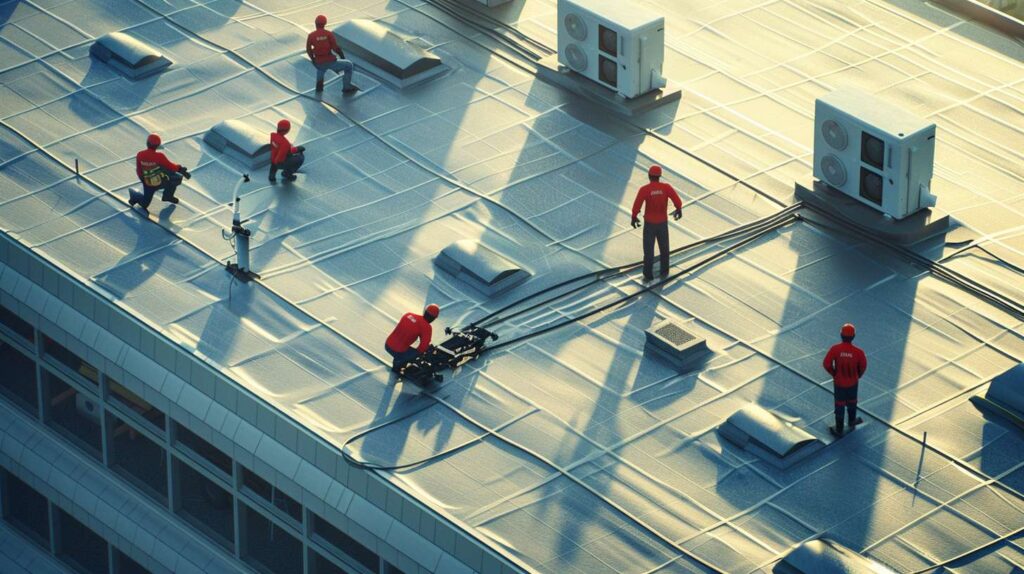
A system engineered for your building’s use case. A warehouse with forklift traffic on the roof deck needs a different membrane than a retail building with frequent HVAC service visits. TPO performs differently than EPDM in high-ponding areas. Modified bitumen handles foot traffic better but costs more to maintain. We don’t sell you our favorite system-we match the roof to your operations, budget, and expected lifespan. On a 28,000 sq. ft. manufacturing facility in Brownsville, the client wanted TPO for cost, but the building had four large HVAC units replaced every 8-10 years. We recommended reinforced EPDM with walkway pads and got them a better warranty because the manufacturer knew the system could handle the service traffic.
A phasing plan that keeps your business running. Most flat roof projects take 2-6 weeks depending on size and complexity. For occupied buildings, that means coordinating with tenants, scheduling noisy work outside business hours, protecting HVAC intakes from dust, and staging sections so the building stays watertight every night. I’ve seen contractors tear off an entire 15,000 sq. ft. roof on a school without coordinating with the principal-then scramble when a surprise storm rolled in at 4 PM. Our project plans include daily weather monitoring, tarp and temporary sealing protocols, and section-by-section sign-off so you’re never exposed overnight.
Manufacturer warranties that actually transfer. Here’s something most contractors won’t tell you: a 20-year “warranty” means nothing if it doesn’t transfer to the next owner and the manufacturer isn’t financially stable. We only install systems from GAF, Carlisle, Firestone, and Johns Manville-companies with 50+ years of history and balance sheets that guarantee they’ll be around in 2045. And we structure warranties to include labor, not just materials. A material-only warranty sounds great until you’re paying $12,000 in labor to replace a defective seam that cost $400 in materials.
How Commercial Flat Roofing Systems Actually Perform in Brooklyn
Brooklyn’s climate beats up flat roofs. We get temperature swings from 5°F to 95°F, 45 inches of annual precipitation, coastal wind loads, and UV exposure that degrades membranes faster than you’d see in Pittsburgh or Chicago. The right system depends on your building’s specific conditions-drainage slope, roof deck type, existing insulation, and how often people access the roof.
| Membrane System | Cost per Sq. Ft. (Installed) | Expected Lifespan | Best Applications | Brooklyn Performance Notes |
|---|---|---|---|---|
| TPO (White, 60-mil) | $8.50-$11.75 | 15-20 years | Warehouses, light commercial, budget-focused projects | Excellent heat reflection; seams can fail in ponding water without proper drainage |
| EPDM (Rubber, 60-mil) | $7.25-$10.00 | 18-25 years | Multi-tenant, high foot traffic, frequent HVAC service | Handles temperature cycling well; black membrane absorbs heat, raising cooling costs |
| Modified Bitumen (2-ply) | $9.00-$13.50 | 12-18 years | Roofs with regular access, equipment-heavy buildings | Tough against punctures; requires torch application (fire risk) or cold adhesive (slower install) |
| PVC (50-mil) | $10.50-$14.25 | 20-30 years | Restaurants, chemical exposure, premium buildings | Chemical-resistant; higher upfront cost but longest lifespan; welded seams hold in high wind |
| Liquid-Applied (Silicone/Acrylic) | $5.00-$8.50 (restoration) | 10-15 years | Roof restoration over existing membranes | Extends life of failing systems; must be recoated every 7-10 years; ponding water degrades coating |
Every system has trade-offs. TPO is popular because it’s white (reduces cooling costs by 15-20% in Brooklyn summers) and meets or exceeds NYC energy code requirements without added insulation. But TPO seams depend on perfect heat-welding during installation-if your contractor rushes the seams or installs in cold weather without proper equipment, you’ll have leaks in 3-5 years instead of 15. I’ve restored four TPO roofs in Williamsburg installed by low-bid contractors who didn’t invest in quality welding equipment. The seams looked fine at final inspection but delaminated after two freeze-thaw cycles.
EPDM is bulletproof if installed correctly. It’s flexible, handles Brooklyn’s temperature swings without cracking, and repairs are straightforward. The downside? Black EPDM can hit 170°F in July, radiating heat into your top floor and raising HVAC costs. For owner-occupied buildings where you’re paying the utility bills, white TPO or PVC makes more financial sense. For landlords where tenants pay electric, EPDM’s lower upfront cost and easier maintenance often wins.
Modified bitumen is what I recommend for roofs that see regular foot traffic-building engineers accessing HVAC units, window washers, or equipment maintenance. It’s basically asphalt reinforced with fiberglass or polyester, installed in two or more layers. It’s tough. A 12,000 sq. ft. mixed-use building in Greenpoint had HVAC contractors on the roof twice a month. We installed SBS modified bitumen with granulated cap sheet and walkway pads. Seven years later, zero service calls. The membrane can take the abuse. The catch? Installation requires either torch application (open flame-insurance and permit headaches) or cold adhesive (weather-dependent, longer cure times).
Why Project Planning Matters More Than the Membrane You Choose
I’ve repaired million-dollar roofs that failed because of poor planning, and I’ve seen budget TPO systems last 22 years because the contractor got the details right. Here’s what separates a reliable commercial flat roofing contractor from the guys who disappear after collecting the final check:
Drainage analysis before design. Flat roofs aren’t actually flat-they need 1/4 inch per foot minimum slope to move water to drains and scuppers. But half the commercial buildings in Brooklyn have settled unevenly over 60-100 years. The original slope is gone. Water ponds in low spots, sits for days after rain, and degrades even premium membranes. Before we bid a project, we do a drainage survey with a laser level. If the roof deck has negative slope or extensive ponding, we design tapered insulation to create positive drainage. It adds $1.50-$2.75 per square foot, but it doubles membrane life. On a 16,000 sq. ft. warehouse in East New York, the existing BUR roof was failing after nine years. The owner blamed the membrane, but the real problem was three large ponding areas where water sat 72+ hours after every rain. We designed a tapered insulation system with cricket and saddles around drains, eliminated the ponding, and the new TPO is going on year 11 with zero leaks.
Safety and occupied-building protocols. Commercial roofing is one of the most dangerous construction trades. OSHA requires fall protection for any work above six feet, but enforcement is inconsistent and some contractors cut corners to save time. We don’t. Every project gets perimeter guardrails or personal fall arrest systems, safety monitors, and daily toolbox talks. For occupied buildings-schools, medical offices, retail-we add protocols for dust control, noise restrictions, and pedestrian protection. That 20,000 sq. ft. manufacturing roof I mentioned earlier? The client ran two shifts and couldn’t shut down production. We phased the work in four sections, coordinated with the plant manager to schedule noisy tearoff during their lunch break, and used dust barriers so their clean room stayed uncontaminated. The project took an extra week, but they never stopped production and we avoided $50,000 in shutdown costs.
Warranty structuring that protects you long-term. Manufacturer warranties are marketing tools unless you read the fine print. Most exclude “ponding water” (defined as water standing more than 48 hours after rain), penetrations, and any damage from “lack of maintenance.” Which means if you don’t have the roof inspected twice a year and documented, your 20-year warranty is void. We help clients set up maintenance agreements that satisfy warranty requirements and actually catch problems early-clogged drains, damaged flashing, loose seams-before they become $15,000 emergency repairs. And we only offer warranties that include our labor. If a seam fails in year eight, you’re not paying our crew $8,000 to come back and fix a manufacturer defect.
What a Realistic Commercial Flat Roofing Project Timeline Looks Like
Property managers always ask: “How long will this take?” The honest answer depends on size, complexity, weather, and building occupancy. Here’s what to expect for a typical 10,000-15,000 sq. ft. commercial flat roof replacement in Brooklyn:
Pre-construction (2-4 weeks): Permits, DOB filings, insurance certificates, material ordering, and site logistics. If your building needs a sidewalk shed or scaffolding for facade protection, add another week. For landmark buildings in Brooklyn Heights or Park Slope, add 3-6 weeks for Landmarks Preservation Commission review.
Tearoff and deck prep (3-7 days): Removing old membrane, insulation, and flashings. Inspecting and repairing the roof deck (wood, concrete, or metal). If we find structural damage-rotted wood decking, rusted metal panels, or concrete spalling-this phase extends. Budget 10-15% contingency for deck repairs you won’t discover until tearoff.
Insulation and membrane installation (5-10 days): Installing new insulation (polyiso, EPS, or spray foam), vapor barrier, and roofing membrane. Weather is the biggest variable here. TPO and PVC require dry conditions and temperatures above 40°F for proper seam welding. EPDM is more forgiving but adhesive curing times triple in cold weather. Modified bitumen torch application is impossible in wind above 15 mph or rain.
Flashing, penetrations, and details (2-4 days): Sealing roof drains, HVAC curbs, vents, parapets, and edges. This is where most leaks originate, so we don’t rush. Every penetration gets custom fabricated flashing, not generic boots that crack in three years.
Final inspection and cleanup (1-2 days): DOB final inspection, manufacturer warranty registration, and site restoration. We document everything with photos and thermal imaging to verify insulation continuity and seam integrity.
Total timeline for a straightforward project: 3-5 weeks. For occupied buildings with phasing requirements, double it. For projects that discover structural issues, add 2-4 weeks and 15-30% to the budget. This is why experienced commercial flat roofing contractors build contingencies into schedules and budgets-not because we’re padding the price, but because 80-year-old buildings always surprise you.
Cost Factors You Need to Plan For (Beyond the Bid)
The installed cost I showed in that table-$7.25-$14.25 per square foot-covers membrane, insulation, labor, and basic flashing. But real projects include costs most contractors bury or ignore until mid-project. Here’s the full picture for a 12,000 sq. ft. commercial roof replacement in Brooklyn:
Base roofing system: $90,000-$165,000 depending on membrane choice and insulation R-value. This includes tearoff, deck prep, new insulation, membrane, and standard flashing.
Permits and fees: $2,500-$4,500 for NYC DOB permits, expediting fees, and inspection scheduling. Landmark buildings add another $1,500-$3,000.
Deck repairs: $8,000-$18,000 average. You won’t know the extent until tearoff, but assume 10-20% of the deck needs work. Wood decking runs $12-$18 per square foot to replace. Concrete spall repair is $25-$45 per square foot.
Drainage improvements: $6,000-$15,000 if you need tapered insulation, additional drains, or scupper modifications. Fixing drainage adds cost upfront but prevents 90% of future leak calls.
Parapet and flashing upgrades: $3,500-$9,000. If your parapet walls are crumbling brick or the existing coping is rusted through, you’ll need masonry repair and new metal coping before we can install flashing.
Access and protection: $4,000-$12,000 for sidewalk sheds, scaffolding, or crane lifts if we can’t access the roof from inside your building or use exterior ladders safely.
Realistic all-in budget for that 12,000 sq. ft. roof: $115,000-$215,000 depending on system choice and existing conditions. The contractors who bid $75,000 are either planning to cut corners (thin insulation, skip drainage fixes, use generic flashing) or they’ll hit you with change orders once work starts. A reliable commercial flat roofing contractor provides a transparent bid that includes likely contingencies, not a lowball number engineered to win the job.
How to Evaluate Commercial Flat Roofing Contractors (What I’d Look for If I Were Hiring)
If I were a property manager hiring a contractor instead of being one, here’s exactly what I’d verify before signing a contract:
NYC DOB license and insurance specifics. General contractor license isn’t enough-verify they’re licensed for roofing specifically. Ask for certificates of liability insurance ($2 million minimum) and workers’ comp that list your building address as additionally insured. Call the insurance company to confirm coverage is active. I’ve seen contractors bid jobs with expired policies, then restore coverage only after they’re caught.
Manufacturer certifications and relationships. If they’re installing GAF, are they a Master Elite or Certified contractor? For Carlisle, are they a Perfection Award winner? These aren’t participation trophies-they require volume, training, and warranty claim history. Certified contractors get better pricing, priority technical support, and longer warranties. On a 22,000 sq. ft. mixed-use building in Cobble Hill, we secured a 25-year NDL (No Dollar Limit) warranty because of our Carlisle Perfection Award status. A non-certified contractor could only offer 15 years with a prorated payout.
Project management and communication structure. Who’s your daily contact during the project? Is it the owner, a dedicated project manager, or the crew foreman who’s too busy to answer calls? We assign every project a dedicated PM (that’s my role) who does daily progress updates, photo documentation, and coordinates with your tenants or facility team. You get my cell number and can reach me 7 AM – 7 PM any day of the week. When problems arise-weather delays, unexpected deck damage, neighbor complaints about noise-you need someone empowered to make decisions, not a forwarding chain to someone who “might call you back tomorrow.”
References from similar building types. A contractor who does great work on 80,000 sq. ft. warehouse roofs might be terrible at managing occupied retail with tenants. Ask for three references from projects similar to yours-size, building use, and occupancy situation. Then call those references and ask specific questions: Did they finish on schedule? Were there surprise costs? How did they handle problems? Would you hire them again?
When Restoration Makes More Sense Than Replacement
Not every aging roof needs a full tearoff and replacement. If your membrane is 10-15 years old, showing wear but not actively leaking, and the insulation and deck are sound, restoration can buy you another 8-12 years at 40-60% of replacement cost. We use liquid-applied silicone or acrylic coatings that seal the existing membrane, stop leaks, and restore reflectivity.
Restoration works best when: the existing membrane is TPO, EPDM, or modified bitumen in decent condition; you have minimal ponding water (coatings fail in standing water); and you’re planning to sell or refinance within 10 years and need to extend roof life without a major capital expense. A 14,000 sq. ft. office building in Bay Ridge had a 13-year-old EPDM roof with surface cracking and minor leaks. Full replacement would have cost $145,000. We recommended silicone restoration for $67,000, which sealed the leaks, added 60-mil of waterproofing, and included a 10-year warranty. The owner refinanced 18 months later and sold two years after that-got full roof life credit from the buyer’s inspector without spending replacement money.
Restoration doesn’t work when: the deck is damaged or sagging; insulation is wet or compressed; you have major ponding areas; or the existing membrane is fully adhered BUR (built-up roof) or metal. In those cases, you’re just postponing inevitable replacement and wasting money on a system that will fail in 3-5 years anyway.
Why Brooklyn Buildings Need a Different Approach Than Suburban Commercial Properties
Brooklyn commercial roofing comes with challenges you don’t face in suburban office parks or industrial areas. Building access is tight-no sprawling parking lots for staging. You’ve got neighbors 15 feet away who will call 311 if your crew starts making noise at 7 AM. Permit timelines are longer because DOB is backlogged. And 60-80% of Brooklyn commercial buildings were built before 1960, which means structural surprises, outdated drainage, and roof decks that don’t meet current code.
We plan for these realities from day one. Material deliveries are scheduled for off-peak hours and hand-carried to the roof because crane access blocks traffic. We coordinate with community boards for projects in residential areas. We build scaffold or sidewalk sheds not just for safety but because DOB requires them for occupied buildings. And we assume every building built before 1970 will have some level of deck repair needed-it’s in the budget and schedule, not a surprise.
The other Brooklyn-specific issue? Building codes changed dramatically after Hurricane Sandy. Any roof replacement now must meet current energy code (minimum R-30 insulation for commercial buildings) and updated wind load requirements (110 mph in coastal exposure zones). If your building is in Zone A flood areas-Coney Island, parts of Red Hook, sections of Canarsie-you may need additional fastening and wind uplift ratings. A contractor who doesn’t factor this into design and cost isn’t preparing you for what DOB will require at permit review.
Choosing a commercial flat roofing contractor in Brooklyn means finding someone who understands not just roofing systems, but the specific challenges of urban commercial buildings: access, occupancy, code compliance, and project coordination that keeps your tenants happy and your business running. The cheapest bid rarely delivers that. The contractor who asks detailed questions about your operations, schedules a thorough site inspection, and builds a project plan around minimizing disruption-that’s who you want installing a system that protects your building for the next two decades.