
Bitumen Roofing Has Been Reliable for Decades – Here’s Why It’s Still the Right Call
Even one season of delay can move this into a more expensive category. Bitumen’s biggest strength has never been that it sounds impressive at a property owner’s meeting – it’s that a well-built bitumen system quietly keeps costing less drama over long stretches of time, which is the only scorecard that actually matters for Brooklyn commercial roofs.
Why Bitumen Keeps Winning the Long Game in Brooklyn
On a Brooklyn ledger, the roof that behaves is the roof that wins. Bitumen isn’t flashy – it’s never going to be the product someone brags about at a building association dinner – but that’s exactly why it earns its keep. The question I always bring back to owners is a simple one: what kind of bill do you want to live with month to month? A system that costs more upfront but behaves predictably, or a cheaper-sounding shortcut that turns into a recurring line item every time the weather turns? That framing changes the conversation fast.
Here’s the part owners usually don’t love hearing. Delayed replacement doesn’t just add one more repair invoice – it stacks them. Interior cleanup, emergency patching, insulation replacement, tenant disruption, ceiling work. By the time you tally the consequence of waiting, you’ve often paid for half the replacement you were trying to avoid. And honestly, the best roof isn’t the one with the slickest pitch. It’s the one that creates the fewest repeat invoices across a ten-year window.
| Ownership Factor | Why It Matters in Brooklyn | Bitumen Advantage | Bill It Helps Reduce |
|---|---|---|---|
| Drainage reliability | Flat roofs pond fast after heavy Brooklyn rain events | Multi-layer construction resists standing water infiltration longer than single-ply | Interior water damage and insulation replacement costs |
| Temperature cycling | Freeze-thaw swings crack and split lighter membrane systems | Bitumen flexes and self-seals around minor movement without failing seams | Seasonal emergency call-outs and seam repair labor |
| Rooftop service traffic | HVAC, telecom, and utility crews walk commercial roofs year-round | Puncture resistance is built into layered bitumen systems by design | Traffic-related puncture repairs and membrane replacements |
| Repair predictability | Brooklyn owners need repair costs they can plan around, not surprises | Bitumen repairs follow well-established methods – no proprietary tools or mystery pricing | Diagnostic guesswork, specialty contractor markups, and repeat call-backs |
Where Cheap-Looking Savings Usually Turn Into Repeat Invoices
Repair History Tells the Truth Faster Than a Sales Brochure
Back in that Borough Park file room mess, I learned this early. I was reviewing a stack of service tickets before a billing meeting – it was maybe 7:10 on a February morning, still dark – and I noticed the same warehouse had paid for interior water cleanup three winters in a row without ever authorizing a roof replacement. It wasn’t one catastrophic failure. It was the repetition that killed them financially. As Annette Russo, with 17 years in Brooklyn billing and repair-history review, has seen more times than I can count: postponing replacement doesn’t freeze the cost, it multiplies it across seasons.
If I asked you where your last three leak dollars went, could you answer me? Most owners can name the big invoice, but not the rest. Emergency patching on a Saturday. Insulation that got saturated and had to come out. Drop ceiling tiles in the office below. The cleanup crew after a bad storm. The tenant who docked rent. Every one of those is a hidden category that shows up on the books with a different label – but they all trace back to the same failing roof that didn’t get replaced when the window was open.
One more season is often the most expensive season you’ll pay for.
| Scenario | Typical Short-Term Spend | Likely Hidden Follow-Up Spend | Monthly Pain |
|---|---|---|---|
| Keep patching minor leaks | Low per visit – looks manageable | Insulation saturation, accelerating deck damage, interior finishes | Slow bleed – feels fine until it isn’t |
| Seasonal recurring leak calls | Moderate – 2 to 4 service visits per year | Labor, tenant disruption, ceiling and wall repairs compounding | Predictable annoyance that escalates quietly |
| Interior damage after storm | High – emergency call-out plus cleanup crew | Structural moisture, mold risk, tenant disputes, potential rent abatement | Brutal – the bill you were avoiding shows up anyway, plus interest |
| Planned sectional bitumen repair program | Moderate – scheduled, no emergency markup | Low – proactive repairs prevent cascade damage | Controlled and budgetable – the good kind of boring |
| Full commercial bitumen roof replacement | Higher upfront – one planned investment | Minimal for 15-25 years when properly installed and maintained | The lowest monthly pain over time – especially when delay has been costly |
- Brooklyn freeze-thaw cycles are punishing. Water enters small cracks in late fall, freezes and expands through winter, and opens larger pathways every single time. By spring, what looked like a minor issue has become structural.
- Saturated insulation hides beneath the surface. It doesn’t announce itself – it just keeps adding weight to your deck and moisture to your interior air until a ceiling tile finally gives you the news.
- A roof that looks fine from the ladder is not a safe roof. Surface appearance tells you almost nothing about what’s happening in the layers below. That comfort is false, and it’s expensive to learn the hard way.
How Bitumen Holds Up When Brooklyn Weather and Traffic Get Rude
Bluntly, a roof does not get points for sounding modern. I remember a July heatwave call on a mixed-use building near Flatbush Avenue – the owner was frustrated because the roof looked “fine from the ladder.” By noon that surface was radiating heat like a griddle left on by accident. When the crew opened a section, trapped moisture and years of layered patchwork told a completely different story than the visual inspection had. That day stuck with me because it’s the perfect example of how Brooklyn’s commercial roof stressors – the brutal summer heat, the freeze-thaw cycling through November to March, wind-driven rain that finds any seam gap, and HVAC crews walking the surface every few weeks – combine into a punishment that light systems quietly fail to handle over time.
A bitumen system is a lot like the cast-iron radiator in an old brownstone – heavy, unglamorous, and still doing its job while everything around it gets renovated. The layered construction means redundancy is built in: if one layer takes damage, the system as a whole doesn’t fail at that moment. Repairs follow methods that skilled crews already know cold, so there’s no mystery markup when something needs attention. And on commercial properties with regular rooftop service traffic, the puncture resistance of a properly built bitumen system is genuinely hard to match without paying significantly more for alternatives that carry their own limitations.
| Pros | Cons |
|---|---|
| ✔ Strong puncture resistance – holds up under regular foot traffic from service crews | ✘ Installation adds weight – not every deck can accept it without structural review first |
| ✔ Multi-layer protection means the system doesn’t fail the moment one layer takes damage | ✘ Skilled application is non-negotiable – a poorly installed bitumen roof underperforms badly |
| ✔ Repair methods are well-established – no proprietary systems or mystery pricing | ✘ Not the most visually striking option – owners who want to talk up their roof at meetings may be underwhelmed |
| ✔ Solid long-term lifecycle value – lower total cost of ownership over 15-25 years | |
| ✔ Handles Brooklyn’s freeze-thaw and ponding water conditions reliably | |
| ✔ Familiar to local crews – faster diagnosis, faster repair, no learning curve surcharges |
| Myth | Fact |
|---|---|
| “Bitumen is outdated technology.” | Decades of refinement have produced modified bitumen systems that outperform plenty of newer options in real-world commercial conditions. Age of a method and quality of a method are not the same number. |
| “All flat roofs fail early.” | Low-slope roofs fail early when they’re poorly installed, poorly maintained, or pushed past their service life. A properly installed bitumen system on a Brooklyn commercial building regularly reaches 20+ years. |
| “If it sounds newer, it performs better.” | Marketing language and field performance are two separate conversations. Newer-sounding products can carry higher installation cost, fewer trained local applicators, and shorter real-world track records in harsh urban conditions. |
| “Patches solve the problem.” | Patches address the symptom. If the underlying system has failed – saturated insulation, compromised seams, degraded base layers – the patch is buying time, not buying a solution. |
| “A visual check from the ladder is enough.” | Surface appearance tells you almost nothing about subsurface moisture, seam integrity, or insulation condition. That Flatbush Avenue roof I mentioned looked fine until it didn’t. A proper inspection goes deeper – literally. |
When Commercial Bitumen Roofing Services Are the Smarter Call Than Chasing Trends
What a Practical Recommendation Actually Looks Like
And that’s where the bill changes. A property manager in Red Hook once asked me, during a windy Saturday estimate after a night of hard rain, why we were recommending commercial bitumen roofing services over the newer-sounding products filling his inbox. I pulled his repair file before I answered. The honest truth, looking at what those buildings had cost him over time, was that the ones giving him the least grief were the ones built for abuse tolerance – not for a brochure. He laughed and said that was the most Brooklyn explanation he’d heard all month. He signed on Monday. The least painful buildings over time aren’t the ones with the most impressive product names – they’re the ones where the system was matched to what the property actually endures.
Before accepting or rejecting bitumen for your building, you’ll want to look at things that don’t appear on a spec sheet. Ask for the repair history – not the last visit, the last five years. Get the drain notes. Have someone check seam condition at penetrations and edges, not just the field. Ask about insulation moisture findings, because saturated insulation is one of the most expensive hidden costs in Brooklyn commercial roofing and it’s almost never visible from a ladder. And think about rooftop traffic patterns – how often crews walk that surface, where, and how heavy the equipment gets. That information tells you more about which system fits than any product comparison chart ever will.
Questions Owners Ask Right Before They Decide
What kind of bill do you want to live with next year? That’s the question that usually cuts through the noise when an owner is sitting on a decision. Most of the final hesitation I see comes down to four things: expected service life, how disruptive the work will be, whether repairs are realistic before full replacement, and how to time the budget. The answers below cover the ground most owners cover in the last conversation before they commit.
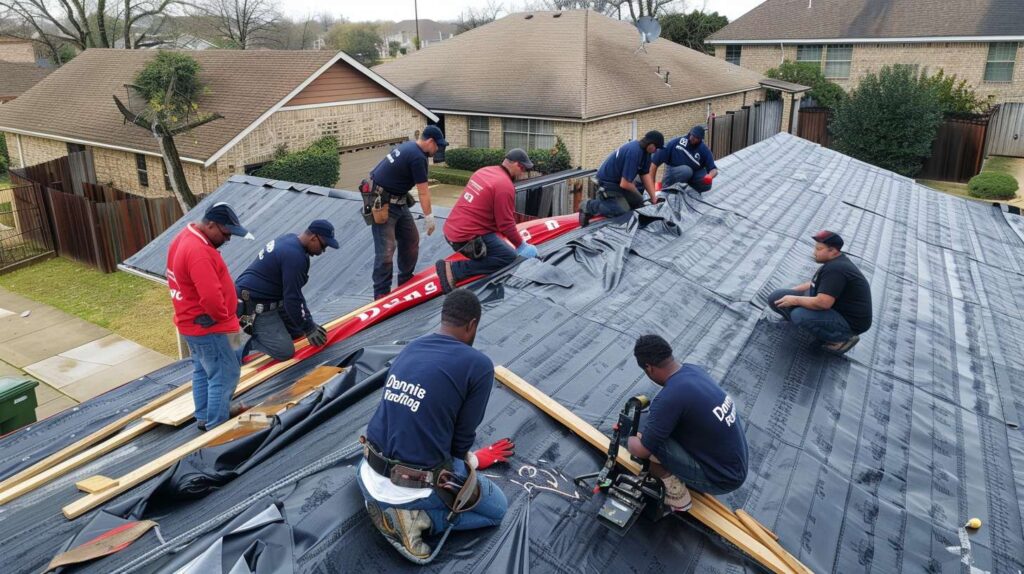
If you want a practical read on whether commercial bitumen roofing services make sense for your Brooklyn property, call Dennis Roofing for an inspection grounded in repair history, actual roof condition, and real cost exposure – not a product pitch. We’re here to tell you what the building actually needs, and sometimes that answer is more useful than any brochure you’ll find in your inbox.