
Professional Commercial Bitumen Roofing Services in Brooklyn
What happens to your Brooklyn business if your flat roof fails in the middle of a busy week? Tenant complaints, emergency tarps, displaced inventory, and the kind of stress that keeps property managers up at night. That’s why so many warehouse owners, mixed-use building operators, and retail landlords across Brooklyn still spec bitumen roofing for their commercial flat roofs-it’s a proven system that balances upfront cost, long-term durability, and installation flexibility in ways that make sense when you’re managing tenants, budgets, and code requirements all at once.
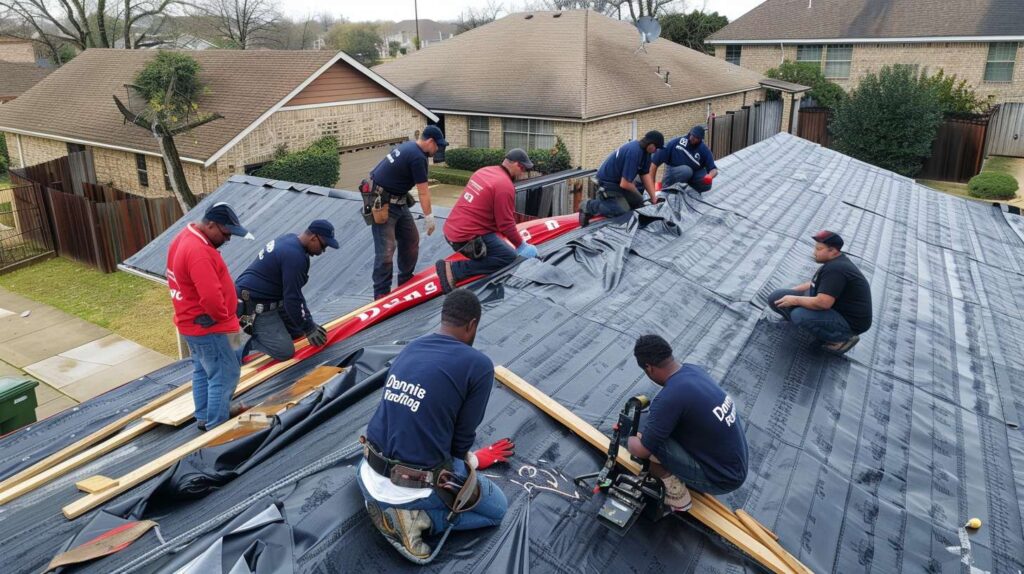
Dennis Roofing has installed, recovered, and maintained commercial bitumen roofing systems on everything from Sunset Park warehouses to Flatbush retail strips to Gowanus light industrial buildings. After twenty-seven years on Brooklyn flat roofs, I can tell you that bitumen-whether modified bitumen, built-up roofing, or hybrid systems-remains one of the most cost-effective, dependable options for commercial property owners who need performance without breaking their capital budgets.
Why Commercial Property Owners in Brooklyn Choose Bitumen Roofing
Bitumen roofing systems have been protecting commercial buildings for over a century because they deliver three things that matter to building owners: durability, repairability, and predictable lifecycle costs. Unlike single-ply membranes that can puncture or seams that can fail, bitumen roofs use multiple plies of reinforced material bonded together with hot asphalt or torch-applied modified bitumen, creating a monolithic barrier that holds up to Brooklyn’s freeze-thaw cycles, urban wind loads, and the constant rooftop traffic that comes with HVAC maintenance, satellite installs, and equipment upgrades.
I rebuilt the roof on a three-story mixed-use building in Flatbush two winters ago-the owner had a single-ply TPO roof that was only twelve years old but had fourteen separate leaks from HVAC contractors walking the roof, condensate line replacements, and one satellite dish install that went sideways. We tore it off and installed a two-ply modified bitumen system with a granulated cap sheet. The material cost was about the same, but the owner’s insurance broker actually reduced his premium slightly because bitumen has better fire ratings and a longer track record in this climate. That’s the kind of real-world cost impact that matters when you’re managing a commercial property.
Bitumen roofing also gives you flexibility in how you stage and phase projects. On low-slope commercial roofs with occupied spaces below, we can section the roof into zones and complete one area at a time, keeping tenants open and minimizing disruption. That’s harder to do with some single-ply systems that require large uninterrupted membrane sheets and controlled indoor temps during installation.
Understanding Commercial Bitumen Roofing Systems
Commercial bitumen roofing breaks down into two main categories: built-up roofing (BUR) and modified bitumen. Both use asphalt-based materials, but they’re installed differently and perform slightly differently depending on your building’s specific needs.
Built-Up Roofing (BUR) is the traditional hot-mop system-alternating layers of roofing felt and hot asphalt, usually finished with a gravel or mineral cap. BUR systems are incredibly durable, highly fire-resistant, and one of the most cost-effective options per square foot for large commercial roofs. The downside is the hot asphalt kettles, the smell during installation, and the need for experienced crew members who understand proper ply layering and temperature control. On a 15,000-square-foot warehouse roof in Sunset Park, we installed a four-ply BUR system with a gravel finish that’s been leak-free for nine years. The owner chose BUR specifically because the building has no air conditioning-the reflective gravel surface and thick bitumen layers provide excellent thermal mass and keep interior temps stable even in July.
Modified Bitumen uses polymer-modified asphalt sheets (either APP or SBS modified) that are torch-applied, cold-adhered, or heat-welded to the substrate. Modified bitumen offers more flexibility than traditional BUR, better elongation properties (which matters in freeze-thaw climates), and faster installation. The cap sheets come in granulated finishes (for UV protection and fire ratings) or smooth finishes (which can be coated). Most of the commercial bitumen work we do in Brooklyn today is modified bitumen because it gives us more control over staging, better warranties from manufacturers, and cleaner installation conditions when you’re working next to occupied offices or retail spaces.
A two-ply modified bitumen system typically includes a base ply (usually a fiberglass-reinforced SBS sheet) and a cap sheet (granulated, often with reflective granules for energy performance). On smaller commercial buildings-think 3,000 to 8,000 square feet-we often recommend a single-ply modified bitumen system installed over rigid insulation and a mechanically attached cover board. It’s faster, costs less, and still gives you fifteen to twenty years of service life if the roof is maintained properly.
Commercial Bitumen Roofing Costs in Brooklyn
Commercial bitumen roofing in Brooklyn typically runs between $6.50 and $11.00 per square foot installed, depending on the system type, insulation requirements, existing roof condition, and access challenges. Here’s how that breaks down:
| System Type | Cost Per Sq Ft | Typical Lifespan | Best Application |
|---|---|---|---|
| 3-Ply BUR (gravel finish) | $6.50-$8.25 | 20-25 years | Large warehouses, industrial buildings |
| 2-Ply Modified Bitumen (granulated cap) | $7.00-$9.50 | 15-20 years | Mixed-use buildings, retail strips |
| Single-Ply Modified Bitumen (torch-down) | $6.75-$8.00 | 12-18 years | Smaller commercial roofs, recover projects |
| Hybrid Bitumen + Single-Ply | $8.50-$11.00 | 20-25 years | High-performance applications, green roof substrates |
Those numbers include tear-off of one existing roof layer, new insulation (usually polyiso or rigid foam), tapered insulation for positive drainage if needed, and all flashings and penetration details. They don’t include structural repairs, parapet rebuilds, or extensive cant strip replacement-those are add-ons that vary wildly depending on the building’s condition.
The biggest cost variables are insulation thickness and roof access. If your building needs to meet current energy code (usually R-25 to R-30 in Brooklyn commercial buildings), you’re adding insulation layers that increase both material and labor costs. And if we’re working on a narrow Gowanus side street where we can’t crane materials to the roof and have to hand-carry everything up interior stairs, labor costs can jump twenty to thirty percent.
One cost factor that surprises building owners: the existing roof. If you have two layers of old roofing already in place, code usually requires full tear-off to the deck before we can install new bitumen. That adds dumpster costs, labor hours, and sometimes deck repairs when we find rotted plywood or rusted steel. On a 6,000-square-foot mixed-use building in Park Slope last year, the owner budgeted for a straightforward recover-until we pulled back a test section and found three layers of old roofing and wet insulation. The project went from $48,000 to $67,000 once we scoped the full tear-off and deck repairs.
Installation Process and Tenant Impact
One of the biggest advantages of commercial bitumen roofing is how we can control the installation schedule to minimize tenant disruption. Unlike some roofing systems that require large continuous areas to be completed in one shot, bitumen systems can be staged by zone, by building section, or even by tenant space if needed.
On a three-building retail complex in Flatbush, we phased a modified bitumen replacement over four weeks-completing one building per week so the owner never had more than one tenant dealing with roof noise at a time. We started each section on Tuesday morning, had the roof watertight by Thursday afternoon, and finished all the detail work and cleanup by Saturday. The tenants stayed open, the owner collected rent without interruption, and we delivered a twenty-year roof system that’s been leak-free through three winters.
The installation itself depends on the system type. For torch-applied modified bitumen, we’re using propane torches to heat the underside of each roll as we unroll it onto the substrate-the modified asphalt melts and bonds to the layer below, creating a waterproof seal. It’s fast, effective, and doesn’t require hot asphalt kettles, but it does require experienced torch-men who understand proper torch angle, overlap details, and how to work around penetrations without creating weak points.
For hot-applied BUR systems, we’re running a kettle on the roof (or on the ground with hoses pumping hot asphalt to the roof), mopping hot asphalt between each ply of roofing felt. It’s messier, requires more ventilation planning, and takes longer-but it creates one of the most durable, monolithic roof systems available. On large warehouse roofs where you need maximum durability and aren’t concerned about a few days of asphalt smell, BUR is hard to beat.
Cold-applied modified bitumen systems use adhesives instead of torches or hot asphalt. They’re cleaner, safer around certain building types (like those with oxygen systems or sensitive manufacturing), and easier to install in winter conditions when torch work becomes difficult. The trade-off is slightly higher material costs and sometimes longer cure times before the roof reaches full bond strength.
Bitumen Roofing for Specific Brooklyn Commercial Applications
Warehouses and Distribution Centers: These buildings need roofs that can handle constant rooftop traffic, heavy HVAC equipment, and long-term exposure without frequent maintenance. A three-ply or four-ply BUR system with gravel ballast is often the most cost-effective choice. The thick bitumen layers provide excellent puncture resistance, the gravel protects against UV degradation, and the system is fully repairable-if you get a leak ten years in, we can cut out the damaged section and torch in a patch without replacing the entire roof.
Mixed-Use Buildings: When you have retail on the first floor, offices above, and maybe residential on top, you need a roof system that installs cleanly, meets fire codes, and provides good energy performance. A two-ply modified bitumen system with a white granulated cap sheet checks all those boxes. The granulated surface meets Class A fire ratings, the reflective granules reduce cooling loads, and the installation is fast enough that tenants aren’t dealing with weeks of disruption.
Low-Rise Retail Strips: These buildings often have tight budgets and don’t need premium roofing systems-but they do need reliability because most of them don’t have maintenance staff. A single-ply modified bitumen system over rigid insulation gives you fifteen years of service life at a cost that makes sense for buildings in the $8 to $15 per square foot market. We installed exactly this system on a six-unit retail strip in Bensonhurst three years ago-total cost was $38,000 for 4,800 square feet, and the owner hasn’t called once for a leak.
Light Industrial Buildings: Manufacturing spaces, auto shops, equipment yards-these buildings beat up their roofs. You’ve got rooftop cranes, frequent access, chemical exposures, and owners who can’t afford downtime. Modified bitumen with a smooth cap sheet (that can be coated every five to seven years) gives you the durability to handle abuse, the repairability to fix problems quickly, and the flexibility to add coatings or additional layers down the road without starting over.
Maintenance and Lifecycle Management
Here’s something most commercial property owners don’t think about until it’s too late: a bitumen roof’s lifespan depends more on maintenance than on the system you choose. A well-maintained two-ply modified bitumen roof can outlast a neglected four-ply BUR system by five to ten years.
Commercial bitumen roofs need three things: regular drainage inspections, timely repairs, and periodic coating or surface protection. The drainage piece is critical in Brooklyn because most commercial flat roofs aren’t truly flat-they’re low-slope systems that rely on scuppers, drains, and tapered insulation to move water off the roof. When drains clog with leaves, gravel, or debris, water ponds on the roof, UV exposure accelerates, and the bitumen starts to crack and blister. We see this constantly on buildings that don’t have maintenance agreements-the roof is fine structurally, but ten years of ponding water has destroyed the top ply.
Timely repairs mean fixing small problems before they become big ones. A cracked flashing, a loose seam around a vent pipe, or a small blister in the membrane-these are $200 repairs if you catch them early. If you ignore them for two years, that $200 repair becomes a $4,000 tear-off and replacement because water has migrated under the membrane and soaked the insulation.
Coating extends the life of bitumen roofs significantly. Once a modified bitumen roof hits the twelve to fifteen-year mark, the granules on the cap sheet start to wear off and the asphalt begins to weather. A reflective coating-either acrylic or silicone-restores UV protection, improves energy performance, and can add another five to eight years of service life for about $2.00 to $3.50 per square foot. On a 10,000-square-foot building, that’s a $25,000 to $35,000 investment that delays a $90,000 roof replacement.
At Dennis Roofing, we offer preventative maintenance agreements for commercial bitumen roofs: twice-yearly inspections, drain cleaning, minor repairs, and detailed reporting so property managers know exactly what’s happening with their roof and can plan capital expenses accordingly. For building owners managing multiple properties or dealing with lenders who require roof condition reports, these agreements take the guesswork out of roof management and prevent the emergency calls that always seem to happen during nor’easters.
When Bitumen Roofing Is the Right Choice
Bitumen isn’t the right answer for every commercial roof, but it’s the right answer for more Brooklyn commercial buildings than most contractors will admit. If you’re managing a building where cost matters, where you need proven long-term performance, where you have rooftop traffic or equipment that would damage thinner membranes, or where you need flexibility in how the project is staged and phased-bitumen systems should be at the top of your spec list.
The buildings where we don’t recommend bitumen: extremely large roofs (over 40,000 square feet) where single-ply systems become more cost-effective, buildings with complex architectural details where fluid-applied systems make more sense, or properties where the owner specifically wants a white reflective roof for maximum energy performance and is willing to pay a premium for TPO or PVC.
For everything else-the 3,000 to 20,000-square-foot commercial buildings that make up most of Brooklyn’s commercial real estate-bitumen roofing delivers the performance, durability, and lifecycle value that smart property owners need. It’s not flashy, it’s not the newest technology, but it works. And when you’re managing commercial property in Brooklyn, “it works” is exactly what you need from a roof system.