
Cedar Shingle Roof Pricing Guide for Brooklyn Homeowners
In Brooklyn, a cedar shingle roof for a typical home usually runs between $25,000 and $60,000+-and here’s exactly what pushes you toward the low end or the high end of that range. After estimating cedar roofs across hundreds of Brooklyn properties over the past sixteen years, I can tell you that three factors drive about 80% of the price variation: your roof’s square footage, the cedar grade you select, and how much structural wood repair we find once the old roof comes off.
Let me break down what you’re actually paying for, using real project examples from the blocks I work every season.
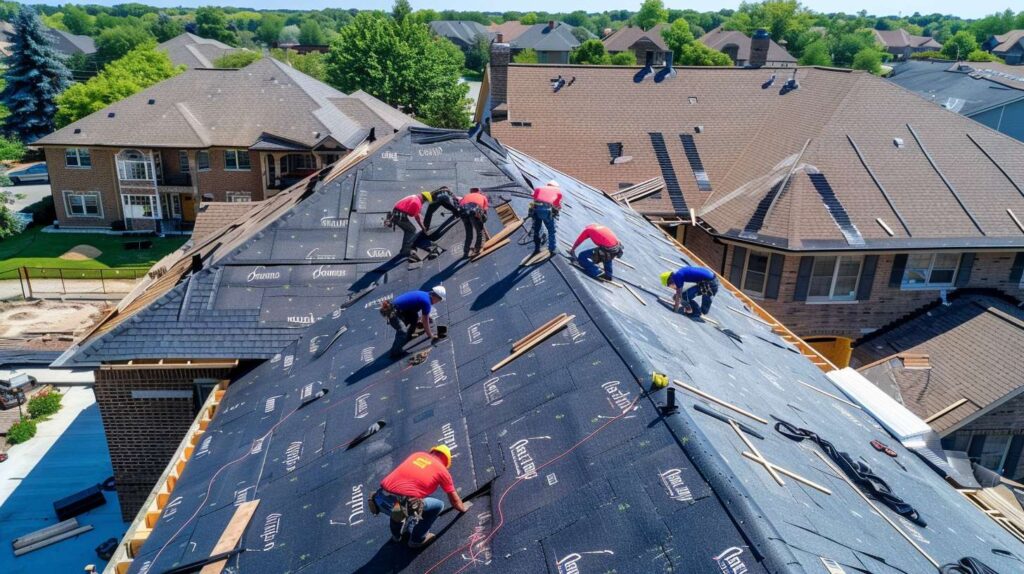
Where Your Cedar Shingle Roof Money Actually Goes
A typical 1,800-square-foot cedar shingle roof on a Park Slope brownstone we completed last fall came to $42,600. That homeowner called asking simply about “cedar shingle roof cost,” but what they really needed was a line-item understanding of where each dollar went. Here’s that breakdown:
| Cost Category | Amount | Percentage of Total |
|---|---|---|
| Cedar shingles (materials) | $9,800 | 23% |
| Labor and installation | $18,500 | 43% |
| Tear-off and disposal | $3,400 | 8% |
| Roof deck repairs | $4,200 | 10% |
| Underlayment, flashing, ventilation | $4,900 | 11% |
| Permits, scaffolding, protection | $1,800 | 5% |
This distribution is fairly consistent across Brooklyn cedar roof projects, though the actual dollar amounts scale up or down based on roof size and complexity. The labor percentage might climb to 48% on a steeply pitched Victorian in Ditmas Park, or drop to 38% on a simple low-slope roof in Bensonhurst.
Cedar Shingle Material Costs: What Grade Actually Means
Cedar shingles come in three main grades, and the difference isn’t just aesthetic-it’s structural and financial over the life of your roof.
Number 1 Grade (Blue Label): These are cut from heartwood, 100% edge grain, completely clear. In Brooklyn, expect to pay $425-$520 per square (100 square feet) for materials alone. A 2,200-square-foot roof needs 22 squares, so you’re looking at $9,350-$11,440 just for the shingles. I spec these for clients who plan to stay in their home 20+ years and want maximum durability. The tight grain resists cupping and rot significantly better than lower grades.
Number 2 Grade (Red Label): Mixed heartwood and sapwood, allows some flat grain and limited knots. Costs run $285-$365 per square in our market. Same 22-square roof drops to $6,270-$8,030 for materials. This is the middle ground-still a solid cedar roof that’ll give you 20-25 years with proper maintenance, but you’ll see more variation in how individual shingles age and weather.
Number 3 Grade (Black Label): Contains sapwood, knots, and mixed grain. Runs $195-$265 per square, putting that 22-square roof at $4,290-$5,830 for shingles. Here’s where I get honest with homeowners: I rarely recommend 3 grade for primary roofs in Brooklyn. The cost savings disappear when you factor in earlier replacement and higher maintenance. I’ve seen 3 grade roofs start failing at the 12-15 year mark, especially on south and west exposures that take heavy sun.
On a narrow three-story townhouse in Carroll Gardens last spring, the homeowner initially wanted 3 grade to save money. The roof was only 1,400 square feet, so the material difference between 3 and 1 was about $3,200. I showed them the math: if 3 grade lasted 15 years and 1 lasted 30 years, they’d pay for two complete roof replacements with 3 grade-somewhere around $70,000 total-versus one roof at roughly $38,000 with 1 grade. They went with 1. That’s the kind of long-term calculation that makes sense when you’re sitting at the kitchen table with real numbers.
Labor Costs and Why Brooklyn Cedar Installation Isn’t Cheap
Cedar shingle installation runs $450-$650 per square for labor in Brooklyn, which puts it at the higher end compared to asphalt ($275-$375 per square) or even architectural shingles ($350-$475 per square). There’s a reason for that premium.
Cedar shingles must be hand-nailed. Each individual shingle requires two nails positioned properly-not too high, not at the edges where they’ll split the wood. Exposure needs to be precise, typically 5 inches for standard shingles. Overlaps must stagger properly. Hip and ridge details require custom cutting. A crew that can tear off and replace an asphalt roof in two days will need four to six days for the same square footage in cedar, and that’s with experienced installers who know the material.
I’ve worked with the same three installation crews for the past decade at Dennis Roofing, and they all started as general carpenters before specializing in cedar work. That specialization matters. A Bay Ridge semi-detached home we did two summers ago had a relatively simple 1,600-square-foot gable roof. The crew chief estimated four days. An inexperienced roofer might have promised three days to win the bid, but would’ve ended up with wavy shingle lines, inconsistent exposure, and nail pops within the first year.
Pitch matters enormously for labor cost. A roof with 8/12 pitch or steeper requires additional staging, slower work pace, and safety equipment that adds $75-$125 per square to labor costs. That ornate Victorian in Ditmas Park I mentioned earlier-with a 10/12 main pitch and multiple dormers? Labor jumped to $725 per square for the steep sections.
Tear-Off, Disposal, and What We Find Underneath
Removing your old roof and hauling it away typically runs $140-$190 per square in Brooklyn. For that 22-square roof, budget $3,080-$4,180. This includes the dumpster rental, labor to strip everything down to the deck, and disposal fees.
But here’s what keeps me honest during estimates: I can’t see your roof deck until the old shingles come off. About 60% of the time, we find wood that needs replacing-either localized soft spots from old leak damage, or larger sections where the decking has degraded. Roof deck repair adds $8-$14 per square foot of affected area, including new plywood or board sheathing and labor.
On a Clinton Hill brownstone last fall, I estimated two sheets of plywood replacement based on visible interior staining-about $425. We ended up replacing seven sheets across different sections where water had tracked sideways under the old roof for years. That turned into $1,890 in additional deck work. I always include a contingency line for this in my estimates, typically $2,500-$5,000 depending on the home’s age and maintenance history. It’s not padding-it’s reality. A 1920s row house that’s had the same roof for 30+ years will almost certainly need wood work.
The Hidden Systems: Underlayment, Flashing, and Ventilation
These components account for $4,200-$6,800 on most Brooklyn cedar roof projects, and they’re where inexperienced contractors cut corners that’ll cost you later.
Underlayment: Cedar shingles need to breathe, so we don’t use synthetic underlayments that trap moisture. Proper installation uses 30 felt paper, which runs $85-$110 per square installed. Some contractors use 15 felt to save money. Don’t let them. The weight difference matters for durability and secondary water protection.
Flashing: Every valley, chimney, skylight, and wall intersection needs proper flashing. I use copper flashing on cedar roofs-it lasts as long as the shingles themselves and develops a patina that actually looks better over time. Copper valley flashing runs $38-$52 per linear foot installed. Aluminum is cheaper at $18-$26 per foot, but I’ve replaced too many aluminum flashings at the 12-15 year mark when they corrode through. For a roof you’re expecting to last 25-30 years, copper flashing is the only choice that makes financial sense.
Ventilation: Brooklyn row houses often have minimal attic ventilation, and that’s a problem for cedar roofs. Without proper airflow underneath, cedar shingles cup, curl, and rot from the back side. Ridge vents, soffit vents, or a combination of both add $1,200-$2,400 to a project, but they can extend your roof life by 5-8 years. On that Park Slope brownstone, we added continuous ridge venting and eight soffit vents. The attic temperature dropped 15-20 degrees that first summer, which means less heat stress on the shingles.
Real Project Examples: Low End, Middle, and High End
Let me show you three actual Brooklyn cedar shingle roof costs from the past eighteen months to illustrate how these factors combine.
Project One-Bay Ridge Semi-Detached, $26,800: Simple gable roof, 1,450 square feet, moderate 6/12 pitch. Homeowner chose 2 grade cedar shingles, minimal flashing work (no valleys, one simple chimney), deck was in surprisingly good shape so we only replaced three sheets of plywood. Standard 30 felt underlayment, aluminum flashing, basic ridge vent. Crew knocked it out in four days. This is about as inexpensive as cedar gets in Brooklyn while still doing it properly.
Project Two-Park Slope Brownstone, $42,600: The one I showed you in the table earlier. 1,800 square feet, two valleys, moderate pitch with one steeper section over a bay window. 1 grade cedar, copper valley flashing, substantial deck repairs where an old skylight had leaked for years, upgraded ventilation system. Six-day installation. This represents a typical mid-range cedar roof for a well-maintained Brooklyn row house.
Project Three-Ditmas Park Victorian, $67,200: Complex roof with 2,650 square feet, steep pitch (9/12 and 10/12 sections), multiple valleys, three chimneys, several dormers, decorative fish-scale shingles on the turret section. All 1 grade cedar, full copper flashing throughout, needed significant deck repairs under the valleys and one rebuilt dormer frame. We added intake and exhaust ventilation to an attic that had never been properly vented. Eight-day installation with extensive staging. This is the high end-not because anyone’s getting rich, but because the complexity and quality level drive real costs.
Timing, Permits, and Scaffolding in Brooklyn
Brooklyn building codes require permits for roof replacement, running $250-$450 depending on the scope of work and your building’s classification. The permit process takes 10-14 business days typically, so factor that into your timeline.
Scaffolding or extensive staging for multi-story homes adds $1,800-$4,500 depending on building height and street access. Those tight Park Slope blocks where we can’t use a boom truck? Scaffolding becomes mandatory for three-story buildings, and you’re looking at $3,200-$4,200 for rental and setup. Row houses with party walls require protection on both sides, which adds cost.
Seasonality affects both scheduling and sometimes pricing. We install cedar roofs year-round in Brooklyn, but spring and fall are peak seasons when labor costs can edge 10-15% higher due to demand. Winter installations (December through February) often give you better pricing and faster scheduling, though we need dry days above 40 degrees for proper installation. Summer work is fine, but expect longer lead times in June and July when everyone wants their roof done before vacation season ends.
The Choices That Save Money Versus the Ones That Cost You Later
After sixteen years of sitting at kitchen tables explaining cedar shingle roof cost, I’ve learned which questions reveal homeowners who understand long-term value versus short-term savings.
Smart savings: Choosing 2 grade over 1 grade on a home you plan to sell within 10-15 years. Scheduling your project in late November or February when we have capacity. Doing minimal deck repairs if your roof is newer and we only find a couple bad spots. Using aluminum instead of copper flashing on a garage or shed roof. These are legitimate ways to trim $4,000-$8,000 from a project without compromising the fundamental quality.
False economy: Skipping proper underlayment. Using 3 grade shingles on your primary home. Declining necessary ventilation work. Choosing the cheapest contractor who’s never installed cedar before. Skipping permit applications to save the fee. I’ve re-roofed over dozens of “budget” cedar installations where homeowners saved $6,000-$10,000 upfront and needed a complete re-roof eight to twelve years later instead of getting 25-30 years from a properly installed system.
One Carroll Gardens homeowner told me last spring that another contractor had bid their 1,900-square-foot roof at $31,500 using 2 cedar with aluminum flashing and 15 felt. My bid came in at $44,800 with 1 cedar, copper flashing, and 30 felt with upgraded ventilation. The homeowner asked me to match the lower bid. I walked them through the differences-not just materials, but the experience level of the crew, the warranty coverage, and the realistic lifespan. They went with my bid. Why? Because I showed them that the cheaper option would need replacement around year 18-20, while the quality installation would still be solid at year 30. The annual cost over thirty years made the better installation actually cheaper.
What Your Cedar Shingle Roof Cost Should Include
When you’re comparing estimates from different contractors, make sure you’re comparing equivalent scopes. Every legitimate cedar roof estimate for Brooklyn should spell out:
- Cedar grade and square footage of shingles
- Complete tear-off and disposal of existing roof
- Deck inspection with a specified contingency amount for repairs
- Underlayment type and weight ( 30 felt minimum)
- Flashing material and locations (valleys, chimneys, walls, penetrations)
- Ventilation plan and components
- Permit costs and applications
- Protection requirements (tarps, ground protection, scaffolding if needed)
- Installation timeline and crew size
- Warranty terms on both materials and labor
If an estimate just says “cedar shingle roof installation” with a single number, you’re not getting enough information to make a smart decision. The lowest number often leaves out half these items, and you’ll pay for them anyway-either as surprise add-ons mid-project or as early failure and replacement.
I’ve worked on enough Brooklyn cedar roofs to know that the real question isn’t just “what does it cost?” but “what am I getting for that cost, and how long will it last?” A $28,000 roof that needs replacement in fifteen years costs you $1,867 per year. A $46,000 roof that lasts thirty years costs you $1,533 per year. Sometimes the higher number is actually the bargain.
When you’re ready for a detailed estimate on your Brooklyn home-one that breaks down every cost factor and gives you options at different price points-call Dennis Roofing. I’ll come out, measure your roof properly, look at your deck condition from the attic if possible, and give you real numbers you can plan around. No pressure, no generic pricing, just honest conversation about what your specific roof needs and what it’ll cost to do it right.