
Your Cedar Roof Has Weathered Enough – Here’s How We Replace It Without Compromise
Wait on it and the cost doubles. If your cedar roof is splitting, curling, and shedding in multiple areas right now, the conversation shouldn’t be about patching – it should be about replacement, and it should be happening before the next hard rain. This article walks you through exactly how that replacement gets handled: what we remove, what we verify, and what we rebuild, without cutting corners on any of those three.
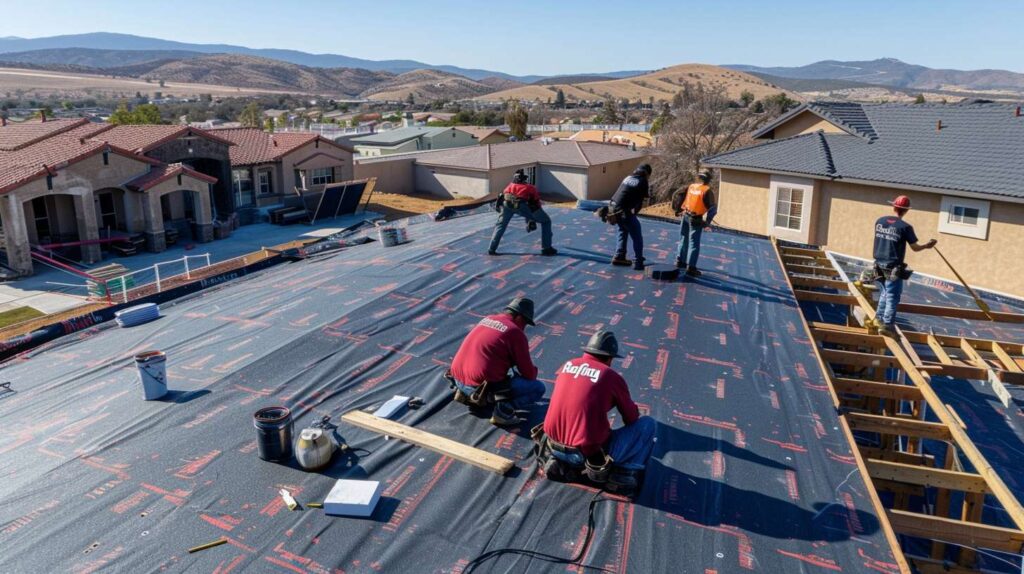
Patching Stops Making Sense Sooner Than Most Owners Think
Wait on it and the cost doubles. Widespread splitting, curling, and shedding isn’t a collection of isolated problems – it’s the roof telling you the same thing in several places at once. When you’re seeing failure patterns across multiple slopes, the patch conversation is already behind the curve. The smarter move is talking about full replacement now, before one more slow leak turns into a damaged ceiling, a soft deck, and a project that got harder to control.
On a Brooklyn row house, the first thing I look at isn’t the prettiest slope – it’s the one taking the worst weather. And honestly, as Carla Ndukwe, after 17 years handling roof failures and replacement planning across Brooklyn cedar systems, has learned, a cedar roof that looks decent from Flatbush Avenue can be quietly failing from three feet away. The south slope might be gray and splitting while the street-facing side still has some color left in it. My opinion on this has never changed: once multiple slopes are showing failure patterns, judging that roof by curb charm is how owners end up paying twice.
📋 Repair vs. Full Cedar Replacement – Decision Aid
⚠️ The Hidden Cost of Repeated Patching on Brittle Cedar
Patching isolated symptoms on a roof with field-wide brittleness doesn’t fix the system – it masks it. Soft decking can develop underneath while the surface looks addressed, runoff can redirect into new zones, and the next storm finds the next weak point. Emergency access, interior protection, and rushed material coordination almost always cost more than a planned, properly scoped replacement would have.
What We Remove, What We Verify, What We Rebuild
Removal means exposing the truth, not just stripping shingles
Here’s the blunt version: cedar does not negotiate once it has dried out past recovery. When a shake field has lost its flexibility, you’re not dealing with a material that can be coaxed back into performance with a few new pieces alongside it. The whole job breaks into three parts – remove, verify, rebuild – and each one depends on the one before it. Skip verification after removal, and you’re rebuilding over a problem you just paid to uncover.
I remember a windy Tuesday just after 7 a.m. in Ditmas Park, when a homeowner met me outside in slippers holding a cedar shake she’d found in her hydrangeas. By the time I got up there, I could see the issue wasn’t one missing piece – it was a field of brittle shakes with fastener fatigue spread all across the south slope. That’s system failure, not spot damage. The fasteners had worked loose across an entire face of the roof because the wood around them had shrunk and dried over many seasons. That morning was one of those times you have to tell somebody, calmly, that another repair would buy her maybe one season, and that matters because one season in Brooklyn weather is not a margin worth betting on.
Verification protects you from rebuilding over hidden damage
After tear-off, before a single new shake goes down, we document what’s underneath. Decking boards get checked for soft spots, staining, and delamination. Moisture evidence tells us whether water has been sitting somewhere it shouldn’t, or tracking in a direction the original installer didn’t plan for. Flashing transitions get examined at every edge – chimneys, dormers, skylights, roof-to-wall connections. Ventilation paths get traced so the new system breathes correctly from day one. Brooklyn row houses, detached homes near tree canopy along streets like Ocean Avenue, salt-influenced cedar closer to the shore neighborhoods, wind-exposed slopes at open intersections – each of those conditions leaves a signature in how the decking and underlayment wear, and that matters because the replacement system has to be built for what’s actually there, not for what the original installer assumed.
Our Cedar Roof Replacement Workflow – Step by Step
-
1
Protect the property first. Landscaping, entry paths, and any walk areas get covered and staged before a single tool goes up.
-
2
Full cedar tear-off with continuous debris collection. Old shakes, underlayment, and compromised materials come off completely. Debris is managed as we go – not piled and dealt with later.
-
3
Inspect and document decking and moisture conditions. Every board gets checked. Every damp zone gets noted before we move forward.
-
4
Replace compromised wood and correct underlayment and flashing details. Bad boards come out. Flashing transitions get rebuilt correctly. Underlayment goes down for the conditions of this specific roof.
-
5
Install the new cedar system correctly. Proper spacing, correct fasteners, and full attention to ridge and valley treatment – because those are where failures start if the installation is rushed.
-
6
Magnetic cleanup, final walk-through, and maintenance briefing. The site gets swept for fasteners. The finished roof gets a documented walk-through. You leave with a clear understanding of how to maintain what was just installed.
Sidewalk Appearance vs. Up-Close Cedar Reality
| What the homeowner sees from the street | What the roofer finds up close | Why replacement may be the right move |
|---|---|---|
| Roof looks like it has some life left – color is uneven but present | Shakes are brittle, splitting end-to-end, and fasteners are backing out | Brittle field-wide failure means no patch will hold long; the system needs rebuilding |
| No obvious missing shakes from ground level | Multiple shakes are lifting or have gaps at the butt edge, letting water travel sideways | Gaps that redirect water can saturate underlayment and reach decking before they’re visible inside |
| A couple of dark patches that look like moss or aging | Moisture is trapped in shaded zones; decking beneath those areas may already be soft | Soft decking under cedar can’t anchor fasteners correctly – replacement means fixing the foundation, not just the surface |
| Previously patched areas blend in and look addressed | Patch edges are lifting, sealants are cracking, and water is tracking around the repair zone | Repeated patching on a failing field delays replacement costs without stopping them |
| Flashing looks intact – no obvious gaps visible at the chimney or edges | Flashing has shifted, sealant has failed at step-flash transitions, and runoff is pooling at the base of vertical surfaces | Flashing failures connected to a worn cedar system usually require full re-flashing during replacement – not a standalone fix |
Brooklyn Trouble Spots That Push Cedar Past Recovery
Three places usually give it away: valleys, shadowed sections, and any area that’s been repaired more than once. One gray November afternoon in Bay Ridge, I walked a property with a customer who kept saying, “But it still looks charming from the street.” Then I pressed my boot near a valley and felt that soft give you never want under cedar. We opened a small section and found that trapped moisture had already been working the decking for a while. That roof was photogenic right up until the moment it had to tell the truth. Valleys collect and concentrate runoff; shaded sections under tree canopy stay damp long enough to rot the wood beneath the shake layer; and repeatedly patched areas almost always have redirected water sitting somewhere it was never meant to go.
🏠 Cedar Failure Patterns Worth Recognizing
- 🔻 Valley softness – Any give or flex underfoot near a valley intersection is a sign moisture has already reached the deck
- 🔺 Mushroomed or lifted shakes – Shakes that have swelled, popped at the butt, or raised at edges are no longer shedding water the way they’re supposed to
- 🪣 Repeated patch lines – Visible rows of newer shakes surrounded by older, drier ones signal a roof that’s been managed rather than fixed
- 🌿 Moss or dark damp bands in shaded zones – Persistent organic growth means the cedar is staying wet long enough for biological buildup, which accelerates decay underneath
- 🔩 Exposed or fatigued fasteners – Nail heads showing above the shake surface, or fasteners that have backed out, indicate the wood around them has shrunk past holding point
- 💧 Runoff staining below transitions – Streaking or staining on siding, trim, or exterior walls below flashing joints often means water is leaving the roof plane at the wrong place
May Still Be Repairable
- One isolated limb-strike affecting a small section
- Localized flashing defect with otherwise intact shakes
- Limited damage on a roof with still-flexible cedar in good overall condition
- Single valley requiring re-flashing where surrounding deck is solid
Replacement Is the Practical Call
- Widespread curling or splitting across multiple slopes
- Brittle, dried-out shakes across the entire field
- Recurring leaks returning after prior repairs
- Moisture evidence in the decking after tear-off of any section
Price Works Better As Scenarios Than As One Big Number
Why access, deck repairs, and roof geometry change the quote
I’ve stood on roofs at 8 in the morning that looked respectable from the sidewalk and exhausted from six feet away – and the same gap between appearance and reality shows up in pricing. Two cedar replacements that look similar from the street can price out very differently once you factor in access conditions, slope complexity, what the tear-off reveals, and how much hidden wood replacement ends up being necessary. I had a call from a homeowner near Prospect Park after a summer downpour, and she was convinced the leak started at her skylight. It didn’t. The cedar above it had weathered unevenly, runoff had been misdirecting for a while, and the flashing was taking the blame for a roof system that was simply at the end of its useful life. That scope – cedar replacement, underlayment, re-flashing of the skylight curb and surrounding transitions, plus deck board replacements in two sections – was a genuinely different project from what it looked like on first inspection.
A cedar roof can stay picturesque one month and become expensive the month after.
Brooklyn Cedar Roof Replacement – Pricing Scenarios
| Scenario | What is included | Estimated price range |
|---|---|---|
| Small row house, straightforward access | Full cedar tear-off, new cedar system, standard underlayment, basic flashing, cleanup | $9,000 – $14,000 |
| Medium home, moderate slope complexity | Full tear-off, new cedar, updated underlayment, flashing corrections, standard cleanup | $14,000 – $21,000 |
| Larger home with multiple valleys and dormers | Full tear-off, cedar system, complex valley and dormer flashing, full underlayment, cleanup | $21,000 – $34,000 |
| Cedar replacement with partial deck board replacement | Includes all above plus replacement of compromised decking sections identified after tear-off | Adds $1,500 – $5,000 to base scope |
| Premium-access challenge with detailed flashing work | Limited staging area, rear-yard or narrow-alley entry, skylight or chimney re-flashing, full cedar system | $28,000 – $45,000+ |
📌 These ranges reflect common Brooklyn scenarios and project scopes. Exact pricing is determined at on-site inspection – no two properties are identical.
Here’s an insider tip worth using when you’re collecting proposals: ask each contractor whether the quote breaks out tear-off costs, a deck replacement allowance, flashing corrections, and cleanup separately. When everything is bundled into one number, it’s nearly impossible to compare bids honestly. Contractors who handle access-challenged Brooklyn properties – narrow lots, shared driveways, rear entries off alley paths – carry different actual costs than those working open suburban lots, and a line-item quote makes that visible instead of hiding it in a lump sum.
What Usually Changes a Cedar Replacement Quote
🚧 Access
Brooklyn lots with shared driveways, rear-yard-only entry, or tight alley clearance add real staging and handling time to any job.
🪵 Deck Condition
Soft or rotted decking boards discovered at tear-off require immediate replacement – that scope can’t be confirmed until the old cedar is off.
🔧 Flashing Complexity
Chimneys, dormers, skylights, and parapet walls each require careful flashing detail work – more transitions mean more labor and material cost.
🧹 Debris Handling
Dense urban properties with limited dumpster placement or neighbor-adjacent yards require planned debris containment and more careful daily cleanup.
Questions Worth Asking Before You Book The Crew
If you were standing next to me, I’d ask you this: are you trying to preserve the roof, or preserve the idea of it? Because if the answer is the roof – the actual weatherproofed, properly draining, structurally sound system underneath all that cedar – then the replacement conversation is the right one. The questions below are the ones I’d want answered before committing to any crew. A good replacement addresses the whole system: decking, underlayment, flashing, ventilation, and the cedar layer itself. A crew that can walk you through all five of those, clearly and without hedging, is the one worth booking.
✅ Before You Call for a Cedar Replacement Estimate
- ☐ Approximate age of the roof (or the year of last replacement if known)
- ☐ Leak locations or any interior staining you’ve noticed (ceiling, walls, attic)
- ☐ Any known past repairs – what was done and roughly when
- ☐ Ground-level photos of any trouble spots you can see safely – valleys, edges, shaded sections
- ☐ Any access constraints – shared driveway, rear-yard-only entry, neighbor proximity, or parking restrictions
If your cedar roof is past the point where another patch is going to hold, Dennis Roofing can inspect it, explain the full scope in plain terms, and put together a replacement plan that’s built for actual Brooklyn conditions – not a generic estimate that ignores access, deck reality, or the complexity of your specific roof. Call us and let’s take a real look at it.