
Best Flat Roof Repair Materials: 5 Options Brooklyn Trusts
Here’s something most Brooklyn building owners don’t realize until it’s too late: there is no single “best flat roof repair material” that works for every situation. I’ve seen three-family brownstone owners slap generic asphalt cement on an EPDM rubber roof and actually create more leaks because the petroleum in that cement breaks down the rubber membrane. The leak expands. Water finds new paths. And two months later, we’re stripping off the failed patch and starting from scratch.
The best flat roof repair material depends entirely on what your roof is made of, what’s actually failing, and how much movement or ponding water that spot sees. After thirteen years at Dennis Roofing-testing, installing, and watching these products survive (or fail) through Brooklyn’s freeze-thaw cycles-I’ve learned that matching the right material to your specific problem is everything.
In Brooklyn, typical flat roof repair costs range from $385-$720 for minor patching with quality materials to $1,850-$4,200 for comprehensive coating systems that address multiple problem areas. The price gap exists because different materials solve different problems-and using the cheap option in the wrong situation usually means paying twice.
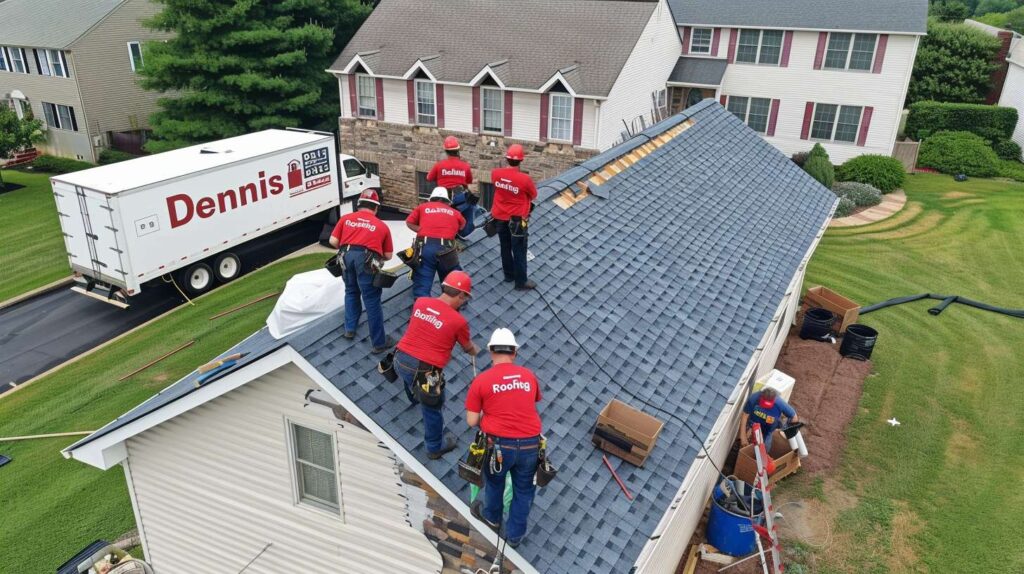
How to Choose the Right Flat Roof Repair Material
Before you grab a tube of anything at the hardware store, understand that flat roof failures fall into distinct categories: seam separation, punctures or tears, fastener back-out, ponding erosion, and flashing gaps. Each needs a different fix. An elastomeric coating-that’s a rubber-like liquid that stays flexible after it cures-works beautifully over ponding areas because it can stretch and contract with temperature swings. But that same coating won’t bond properly to a dusty, chalked-out modified bitumen surface unless you prime it first.
The framework I use at Dennis Roofing splits materials into five categories based on what they do best: permanent membrane patches for tears, liquid-applied sealants for seams and detail work, reinforced fabric systems for large damaged areas, peel-and-stick solutions for quick emergency repairs, and full-surface coatings for extending roof life. Let’s break down each one with the exact products that hold up in Brooklyn weather.
1. EPDM Rubber Patches and Primers (Best for Rubber Membrane Repairs)
If your flat roof is black rubber-technically called EPDM, which stands for ethylene propylene diene terpolymer-you need EPDM repair materials. Period. I keep rolls of QuickSeam tape and EPDM patch material on every truck because about 40% of Brooklyn’s flat roofs are rubber, and the repairs are straightforward if you use compatible products.
Here’s the process: clean the damaged area with EPDM primer (a solvent-based cleaner that also slightly softens the old rubber so the new patch can fuse), let it flash off for 5-10 minutes until it’s tacky but not wet, then apply either a peel-and-stick EPDM patch or a liquid adhesive with a cut piece of EPDM membrane. The patch literally becomes part of the original roof. I repaired a Sunset Park two-family last spring where a fallen branch tore an 8-inch gash-used a 24×24-inch reinforced EPDM patch with QuickPrime Plus, and six months later through summer storms and winter ice, that repair is invisible and bone-dry.
The mistake I see constantly: using roofing cement (asphalt-based) on rubber. Asphalt contains petroleum distillates that dissolve EPDM over time. You’ll get a temporary seal for maybe three weeks, then the rubber around the patch starts to degrade and crack, and suddenly a six-inch repair turns into a six- foot problem.
Cost for EPDM repairs: $420-$680 for a typical patch including primer, membrane, and labor. If you’re DIY-ing, a QuickSeam kit runs about $45-$70 and covers roughly 10 square feet.
2. Modified Bitumen Cold-Applied Adhesive and Fabric (Best for TPO and Modified Bitumen Seams)
Modified bitumen-or “mod bit” in contractor shorthand-is that granulated torch-down or self-adhered rolled roofing you see on a lot of Brooklyn commercial buildings and older residential conversions. When mod bit fails, it’s usually at the seams where two sheets overlap, or where the edges have lifted because the adhesive aged out. The best flat roof repair material here is a cold-applied modified bitumen adhesive paired with reinforced fabric or a strip of matching membrane.
Cold-applied means no torch, no heat, no fire permit-you’re brushing or troweling on a thick, sticky polymer-modified asphalt that stays flexible even in January. I use Henry 289 or Karnak 81 for most Brooklyn jobs because they bond aggressively and cure fast enough that you’re not leaving a tacky mess overnight. For seams, I clean the area, apply a heavy coat of adhesive, embed a 6-inch-wide strip of polyester reinforcing fabric (which adds tensile strength so the repair doesn’t just re-split), then top-coat with another layer of adhesive.
The fabric step is critical. Without it, you’re just gluing two old surfaces together-and whatever stress caused that seam to separate in the first place will cause it to separate again. The fabric bridges the gap and distributes tension. On a Williamsburg four-story walkup last fall, we resealed 140 linear feet of failed seams using this method, and the building passed a Department of Buildings inspection two weeks later with zero flagged issues.
Cost: $6.20-$9.80 per linear foot for seam repairs with fabric reinforcement, or roughly $550-$870 for a typical 80-foot seam run including materials and labor.
3. Liquid Elastomeric Coatings (Best for Ponding Areas and Full-Roof Refresh)
An elastomeric coating is essentially a thick, rubberized paint that cures into a waterproof membrane. It’s designed to stretch up to 300% without tearing, which makes it ideal for flat roofs that expand and contract with temperature changes. In Brooklyn, where we swing from 15°F in February to 95°F in August, that flexibility matters. I’ve applied Gaco Western, Polyglass PolyFresko, and Karnak Ultra-Ply on dozens of roofs, and the ones that last longest are the ones where ponding water sits for more than 48 hours after rain.
Standard acrylic roof coatings (the cheaper stuff) will fail in ponding areas because water keeps them from fully curing-they stay soft, then erode. True elastomeric coatings cure even under water, forming a tough skin that resists UV breakdown and biological growth. The process: power-wash the roof, let it dry, apply a primer if the surface is chalky or slick, then roll or spray two coats of elastomeric at 1.5-2.0 gallons per 100 square feet total. You need that thickness. Thin coatings (under 20 mils dry film) won’t bridge cracks or hold up to foot traffic.
I coated a Park Slope rental property’s 1,200-square-foot rubber roof two years ago-ponding issues in the back corner, surface chalking everywhere. We used a silicone-reinforced elastomeric system, and the landlord just texted me last month saying it’s still perfect. No leaks, no maintenance, and the white coating dropped his summer cooling costs by about 12% because it reflects heat instead of absorbing it.
Cost: Full elastomeric coating runs $2.80-$4.60 per square foot installed, or about $3,360-$5,520 for a typical 1,200-square-foot Brooklyn flat roof. DIY material cost is roughly $1.10-$1.85 per square foot if you’re comfortable with prep work and application.
| Material Type | Best Use Case | Lifespan | Cost Range (Installed) |
|---|---|---|---|
| EPDM Rubber Patch | Punctures, tears in rubber roofs | 15-20 years | $420-$680 per repair |
| Modified Bitumen Adhesive + Fabric | Seam failures, edge lifting | 10-15 years | $6.20-$9.80 per linear foot |
| Elastomeric Coating | Ponding areas, full-roof refresh | 8-12 years | $2.80-$4.60 per sq ft |
| Butyl Sealant Tape | Flashing, emergency patches | 5-7 years | $185-$340 per detail |
| Polyurethane Sealant | Cracks, control joints, penetrations | 12-18 years | $8.50-$14 per linear foot |
4. Butyl Sealant Tape and Flashing Repair (Best for Quick Fixes and Detail Work)
Butyl tape-that’s a super-sticky, rubberized adhesive strip that comes on a roll-is one of the most underrated flat roof repair materials. It’s not glamorous, but it works. I use it constantly around vent pipes, parapet wall flashing, and skylight curbs where metal meets membrane. The advantage over liquid sealants: butyl doesn’t shrink, doesn’t need curing time, and bonds instantly to clean surfaces even in cold weather.
The key word is “clean.” Butyl won’t stick to dirt, old caulk residue, or chalky oxidized metal. You have to prep: wire-brush the flashing, wipe with denatured alcohol, let it dry, then apply the tape with firm pressure so it conforms to every contour. I keep 3-inch and 6-inch rolls of Polyken or Protecto Wrap on the truck, and they’ve saved me on emergency calls where a homeowner needs a watertight seal today and there’s no time for primers to cure.
Last winter, a Crown Heights client called at 8 a.m. because ice dams had lifted her chimney flashing and water was dripping into the third-floor bedroom. I used 6-inch butyl tape around the base, pressed it into the brick mortar joints and over the old flashing, then covered it with a sheet-metal cap. Total time: 40 minutes. Total cost to her: $295. And it’s held through eight months of rain, heat, and another freeze cycle.
Butyl isn’t a forever fix-it will eventually harden and lose adhesion after 5-7 years-but it buys you time to plan a proper re-flashing job, and it stops active leaks cold.
Cost: $185-$340 per flashing detail including tape and labor; DIY material cost is about $18-$35 per roll depending on width and quality.
5. Polyurethane Sealant (Best for Cracks, Joints, and Penetration Sealing)
For hairline cracks, control joints, and sealing around pipes or HVAC curbs, nothing beats a high-grade polyurethane sealant. This is the stuff that comes in caulk tubes but behaves like liquid rubber-it cures tough, stays flexible for decades, and adheres to almost anything: concrete, metal, wood, EPDM, TPO, modified bitumen. I use Sikaflex 1A, Tremco Dymonic, or OSI Quad Max on most Brooklyn jobs because they’re solvent-based (which means they penetrate porous surfaces instead of just sitting on top) and they cure even in damp conditions.
Polyurethane sealants are especially critical around roof drains and scuppers, where seasonal movement can crack rigid materials like asphalt cement. I’ve repaired dozens of Bed-Stuy and Bushwick buildings where the original roofer used cheap acrylic caulk around the drain flange, and within two years the caulk had shrunk away and left a 1/8-inch gap. Water poured straight into the wall cavity. The fix: dig out the old caulk, clean with mineral spirits, apply a backer rod if the gap is deep, then tool in polyurethane sealant and let it cure for 24 hours.
One pro tip: don’t use silicone sealant on flat roofs. Silicone doesn’t bond well to roofing membranes, and if you ever need to recoat or patch over it later, nothing sticks to cured silicone. You’ll have to mechanically remove it, which turns a simple repair into a nightmare. Polyurethane, on the other hand, can be coated over once it’s fully cured-usually 3-7 days depending on humidity.
Cost: $8.50-$14 per linear foot for joint sealing, or about $240-$420 for a typical roof with 30-40 linear feet of cracks and penetrations. DIY material cost is $9-$16 per tube, with each tube covering roughly 20-30 linear feet at a 1/4-inch bead.
What Brooklyn Weather Does to Flat Roof Repairs
Brooklyn’s climate is brutal on flat roofs. We get freeze-thaw cycles-sometimes five or six times in a single winter-where daytime temps climb above freezing, water seeps into tiny cracks, then nighttime temps drop and that water expands as ice, wedging the crack wider. Cheap repair materials crack and fail. Quality elastomeric and polyurethane products flex with the movement and stay sealed.
Summer is just as tough. Black EPDM roofs can hit 160°F in direct sun, and that heat softens adhesives, accelerates UV degradation, and causes thermal expansion. I’ve measured a 60-foot section of membrane expand by nearly 3/4 inch from morning to afternoon on a July day-so any repair material that can’t stretch or compress with that movement is going to pull apart at the edges.
That’s why we test everything. Dennis Roofing has a sample board in the yard where we apply different sealants, coatings, and patches, then leave them exposed for a full season. The products that survive Brooklyn weather are the ones we spec for clients. The ones that crack, peel, or discolor get crossed off the list no matter how good the manufacturer’s marketing is.
When to DIY vs. When to Call a Pro
Small, accessible repairs-like sealing a 3-inch crack or patching a puncture smaller than your hand-are reasonable DIY projects if you’re comfortable on a ladder and you follow the material instructions exactly. Buy the right product for your roof type, prep the surface properly, and apply enough material. Most homeowner failures happen because someone rushed the prep or applied the sealant too thin.
But if you’re dealing with seam separation longer than 6 feet, widespread ponding issues, or flashing that needs to be removed and reinstalled, call a licensed roofer. The cost difference isn’t huge-maybe $400-$600 more than DIY after you factor in your time and the risk of doing it wrong-and a pro brings experience that prevents the “fix” from turning into a bigger leak. I’ve re-repaired dozens of roofs where a well-meaning owner used the wrong product or skipped the primer step, and the total bill ended up 2-3 times what a proper repair would have cost initially.
How Dennis Roofing Chooses Materials for Each Job
When a client calls, the first question I ask is: what kind of roof do you have? EPDM, TPO, modified bitumen, built-up tar, or something else? The second question: where exactly is it leaking? Those two answers narrow the material choice by 80%. Then I look at the age of the roof, the condition of the substrate, whether there’s ponding, and what the budget is.
For a 15-year-old EPDM roof with isolated punctures and good overall condition, we’ll do targeted EPDM patches-quick, cost-effective, and the roof gives you another 5-8 years. For a 20-year-old mod bit roof that’s chalking and has multiple small leaks, we usually recommend a full elastomeric coating system because patching individual spots won’t address the underlying membrane degradation. And for emergency repairs-like a tenant calling on a Saturday because water is dripping into the bedroom-we use butyl tape and polyurethane sealant to stop the leak immediately, then schedule a proper permanent repair during the next dry stretch.
The best flat roof repair material is always the one that matches the problem, the substrate, and the expected lifespan. No shortcuts, no generic solutions, and no hoping that one miracle product will fix everything. Brooklyn roofs deserve better than that.