
Asbestos Roofing Needs a Different Kind of Contractor – Here’s What That Means
Why ordinary leak repair becomes a hazard on asbestos roofing
Let’s make this simple, the asbestos roof sitting quietly on that garage or warehouse in Brooklyn is not usually the immediate problem. The chain reaction starts the moment the wrong person disturbs it – drills it, pries it, saws it – treating it like standard leak work, because that’s the only category they know.
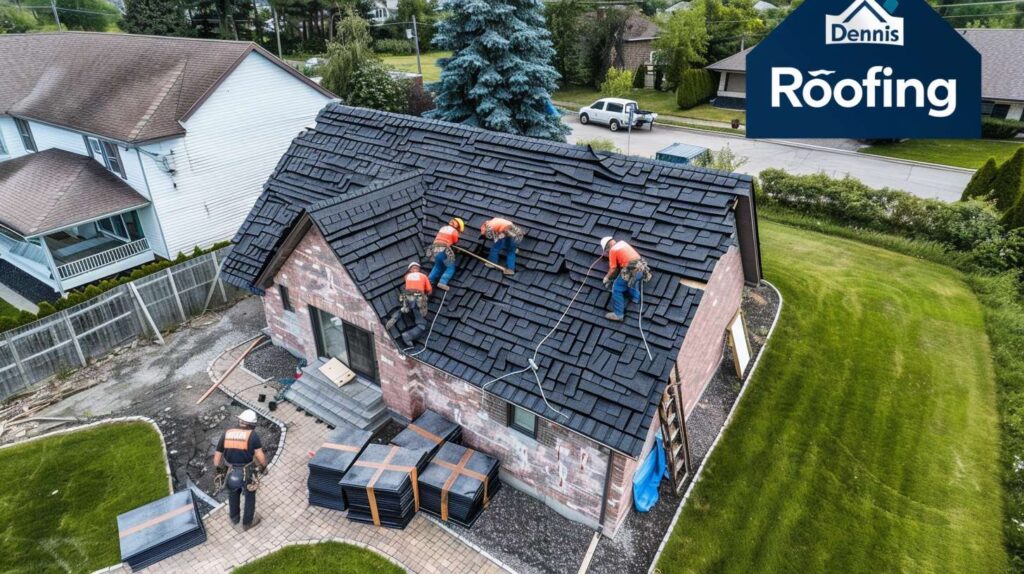
Seventeen years in, here’s the part people still get backwards: owners call about a leak and classify the whole job as routine roofing. But the real issue is disturbance, compliance, and containment – and one wrong action leads to a method change, which leads to a compliance question, which leads to a completely different contractor decision and a much larger bill. That chain reaction is why asbestos roof repair services exist as their own category. A competent contractor on this type of roof is not just deciding where to patch – they’re deciding whether the roof should be left intact, stabilized, encapsulated, or handed off into a regulated abatement pathway before any standard roofing scope even begins. And honestly, shortcuts here aren’t efficient. They are expensive rework in disguise, every single time.
| Myth | Real Answer |
|---|---|
| “If the roof is wet, the work is safe enough for a handyman.” | Moisture does not neutralize disturbance risk. Wet debris can suppress airborne fibers temporarily, but it does not change the material’s regulated status or make casual removal appropriate. |
| “A small patch is the same no matter what the roof is made of.” | The method, not just the size, determines whether a repair is safe. Patching asbestos cement panels can require cutting or drilling – both of which are disturbance events that need specialist evaluation first. |
| “Only full tear-offs need special handling.” | Any work that fractures, cuts, or dislodges asbestos-containing material – regardless of scale – can trigger the same handling requirements as a larger removal scope. |
| “Cutting one new vent opening is minor work.” | Cutting a penetration through an asbestos cement panel is a direct disturbance event. The scope may be small, but the material response is not. This requires specialist decision-making before any tool touches the roof. |
| “If it’s not friable, any roofer can disturb it.” | Non-friable material can become friable through cutting, grinding, or prying. The condition of the material at the start of work does not predict its condition after an ordinary roofer’s standard methods are applied. |
⚠️ The problem usually starts when someone treats asbestos roofing like standard repair work.
Drilling, sawing, prying off panels, grinding fasteners, or applying a patch that requires unnecessary disturbance – before the material has been properly evaluated – is where the job stops being a repair and starts being a liability. None of those actions are minor on this category of roof. The damage is not always visible right away, but the cost of responding to it always shows up eventually.
Which situations need a specialist before anyone touches the roof
Visible damage that changes the scope
On a roof in Brooklyn, the first question is never just “Where’s the leak?” The first question is what condition the material is in and whether the planned repair will disturb it – and that requires someone who knows how to read the difference. Brooklyn property patterns make this especially common in places people don’t always think to check: detached garages behind older churches along Flatbush Avenue, warehouse roofs in East New York, and accessory structures on corner lots where asbestos cement panels are still in place under layers of coating or tar. I’m Carla Ndukwe, and with 17 years translating roofing and restoration intake into plain-English guidance for Brooklyn property owners – especially around asbestos roof repair services – the single most consistent pattern I’ve seen is owners assuming the scope is ordinary until someone actually looks at the material condition up close.
One August afternoon, right before a thunderstorm rolled into Flatbush, I stood with a church board president who wanted “just a patch” over an aging garage roof behind the building. From the sidewalk, the surface looked stable enough. But once we got close, there was hairline cracking around old fastener points and prior repair material failing in strips along the seams. That changed everything. The method mattered as much as the result – and standard leak repair was the wrong category entirely. The board didn’t know that going in. That’s not a criticism; it’s exactly why the evaluation has to happen before any scope is approved.
Planned modifications that sound small but are not
I once dealt with a small warehouse owner in East New York who told me at 5:30 p.m. on a Friday that he had found the “best price” from a general handyman willing to cut new vent openings through an asbestos cement roof by the weekend. He thought he was being efficient. I walked him through the chain reaction: wrong contractor, unnecessary disturbance, possible contamination concerns, work stoppage, and then higher cleanup and compliance costs on Monday than the original specialist quote would have ever been. The job didn’t get cheaper by going faster – it got more expensive by skipping the right order. Here’s the insider rule worth keeping: if the planned work changes the roof’s openings, penetrations, panel layout, or equipment loads in any way, pause the job before you price the patch. The pricing conversation is meaningless if the method hasn’t been confirmed first.
Do You Need Asbestos Roof Repair Services, an Assessment First, or a Different Regulated Path?
NO →
Stop guessing and document the material before authorizing any invasive repair. Material confirmation comes first – not after the first tool is on site.
YES → Next question:
Is the issue only surface weathering, with no planned cutting or removal?
YES →
Ask specifically about stabilization or limited repair methods that minimize disturbance. Not all surface issues require cutting or removal.
NO → Next question:
Does the work require cutting, drilling, removing panels, new penetrations, or a tear-off?
YES →
Specialist evaluation must happen before any standard roofing scope begins. The disturbance question changes the contractor category.
Has anyone already disturbed the roof?
YES → The response changes immediately. Contain the decision-making and do not continue casual work. Prior disturbance is a separate issue that has to be addressed before repair scope is set.
How the right contractor thinks through the job in the correct order
What do I ask before anything else? What is the current condition of the material? What exact work is being proposed? What will that work actually disturb? And what changes once disturbance becomes likely? That last question is the one most estimates skip entirely. The condition of the material leads to a disturbance assessment, which leads to a method decision, which changes the contractor category – and that chain of decisions has to happen in that order, not backwards from a price.
I remember a gray Tuesday just after 7:00 a.m. in Bensonhurst when a landlord called saying his maintenance guy had already started pulling off brittle corrugated roofing panels with a pry bar. It had rained overnight, and the landlord genuinely believed the wet debris made the situation safer – that moisture had somehow converted the job into a normal tear-off. What I had to explain quickly was that the moisture didn’t change the material’s regulated status at all, and more critically, the unplanned disturbance had already changed how the next contractor needed to respond. The job that morning wasn’t about finishing the repair. It was about containing the decision-making that someone had already complicated.
Once the wrong tool touches this roof, the job is no longer ordinary roofing.
Correct Order for Handling an Asbestos Roofing Problem
Questions to ask before you approve any estimate in Brooklyn
What a useful estimate should clarify
I think this is where owners get talked into trouble. An estimate becomes risky the moment it skips the method and jumps straight to patching, coating, cutting, or replacing – as if those are just line items and the roof material doesn’t change what any of them mean. The goal here isn’t to turn you into a regulator. It’s to help you catch when a bid is treating a specialized roof like a generic one, because that gap between the estimate and the actual job is exactly where the unexpected costs come from.
| Question to Ask | Why It Matters | Competent Answer Includes | Red-Flag Answer Sounds Like |
|---|---|---|---|
| Will your repair require cutting, drilling, or panel removal? | These are disturbance events that change the required method and contractor type. | A specific yes or no, with explanation of what method avoids unnecessary disturbance. | “We’ll see what we need to do once we’re up there.” |
| How are you determining whether the material can stay intact? | Leaving intact material in place is often the right call – but it needs to be a deliberate decision, not a default. | Description of a visual inspection or assessment process before method selection. | “We always try to save as much as we can.” |
| If prior damage is found, how does that change scope? | Existing damage can mean the repair category changes entirely – and the owner needs to know that before work starts. | A clear process for stopping, documenting, and communicating before continuing. | “We just handle it as we go.” |
| Who handles documentation and site decisions if disturbance has already happened? | Prior disturbance changes what the next contractor is responsible for – someone has to own that decision. | Named process or person responsible for documentation and scope adjustment. | “That’s not really our problem if it happened before we arrived.” |
| Does your estimate include temporary stabilization if full work can’t proceed immediately? | Active leaks or exposed material can’t always wait for full scope confirmation – a responsible contractor accounts for this gap. | Specific temporary measures, separately listed, with a defined trigger for when they apply. | “We’ll just tarp it and come back.” |
| What is specifically excluded from this estimate? | Exclusions tell you where the risk is being transferred back to you – and whether the bid is artificially low. | Written list of what is not covered and what triggers an additional cost conversation. | “Everything should be covered – call us if anything comes up.” |
Before You Call About Asbestos Roof Repair Services – Gather These First
-
Roof photos taken from the ground, and closer range if safely accessible without disturbing the surface -
Full property address and building type (garage, warehouse, accessory structure, main roof) -
Description of the leak location or damage area – note whether the problem is a specific spot or a broader section -
Whether anyone has already disturbed the roof – pried panels, cut openings, applied adhesive, or removed fasteners -
Any planned penetrations, new equipment, vents, skylights, or HVAC changes that involve the roof surface -
Any prior repair history, inspection reports, or lab results related to the roof material – even if they’re years old
Answers owners usually want before making the call
Picture a cracked panel around one rusted fastener. It looks minor. But the right next move depends less on how big that crack is and more on what fixing it would disturb – because that’s where the problem stops being ordinary roofing and starts being a decision with consequences. Dennis Roofing approaches these calls with that exact question first, every time.
Common Questions About Asbestos Roof Repair Services in Brooklyn