
Seasonal Roofing Guide
Your Roof Has a Different Job Every Season - Here's How to Stay Ahead of It
Brooklyn’s climate doesn’t give roofs a break. Four genuine seasons, each with its own way of exposing what’s weak, what’s been neglected, and what’s quietly getting worse. This guide breaks down what to watch for and what to act on, season by season, before a pattern becomes a repair call.
- Home
- /
- Seasonal Roofing Guide
A Roof That Lasts Doesn't Happen by Accident - It Happens in March, June, October, and December
Most property owners think about their roof twice: when they buy the building and when something goes wrong. The roofs that hold longest – on Crown Heights rowhouses, Red Hook commercial buildings, Flatbush two-families – tend to belong to the owners who check in at the right times of year and catch small problems before freeze-thaw cycles, summer heat, and hard rains turn them into large ones. This guide is written for those owners. It covers what each season actually does to a Brooklyn roof and what a licensed crew should be looking at before and after each one.
Spring: The Season That Tells You What Winter Did
What winter leaves behind isn't always obvious from the street.
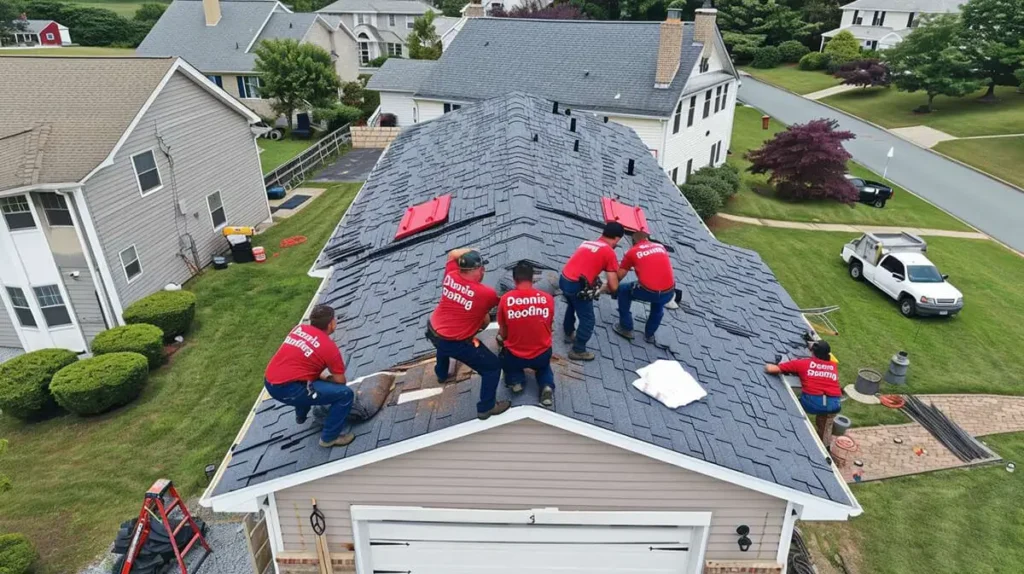
After the freeze-thaw cycles work through February and March, the damage shows up in specific, predictable places – if you know where to look. Ice that formed and expanded under shingle edges can lift them just enough to break the adhesive seal. On flat membrane roofs, thermal movement through cold months stresses seams and pulls at penetration collars. Parapet wall flashing that was barely holding in November may have opened enough by April to let water in during the first spring rain.
A post-winter inspection covers the whole picture: flashing condition at every chimney, skylight, and parapet transition, seam integrity on flat sections, granule accumulation in gutters that signals winter abrasion, and any soft spots in the deck that weren’t there before the cold hit. Gutter installation problems – improper pitch, loose hangers – also surface in spring, when melt and rain start running in volume. This is also the right time to address any chimney repair work before summer heat expands the problem further.
Spring is the repair window. The issues are fresh, the weather is cooperative, and fixing what winter opened now costs significantly less than letting it run through another season.
Summer: Heat Is Harder on Roofing Than Most People Expect
The damage from a Brooklyn summer is mostly invisible - until it isn't.
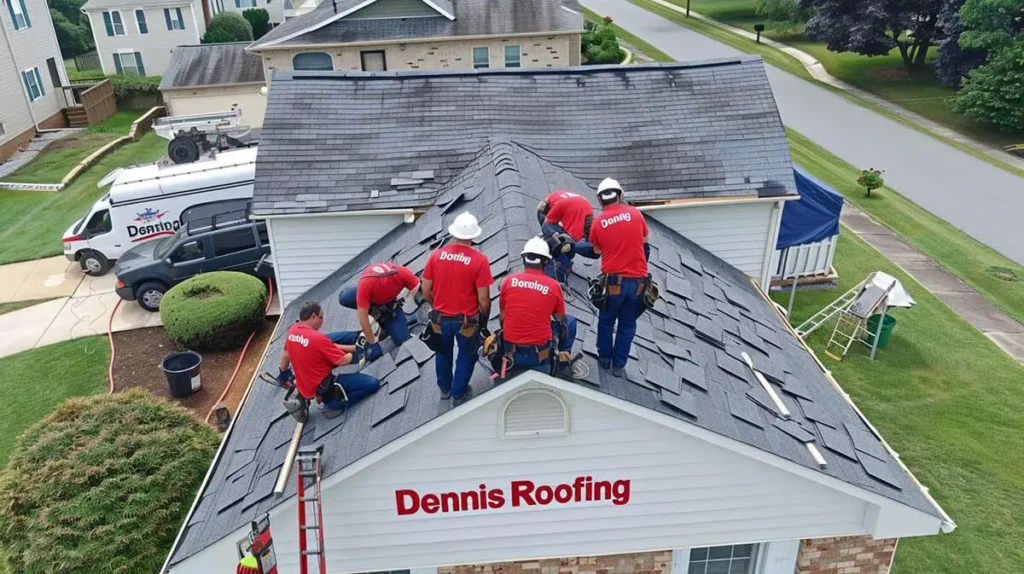
Asphalt shingle roofing takes the worst of it. Surface temperatures on a pitched roof in July and August can push well above 150°F, which accelerates granule loss, dries out the asphalt layer, and shortens the shingle field’s useful life from underneath as much as from the top. Poor roof ventilation makes this significantly worse – an attic that can’t exhaust heat traps it against the deck, aging the system from the inside at a rate no amount of quality shingles can offset.
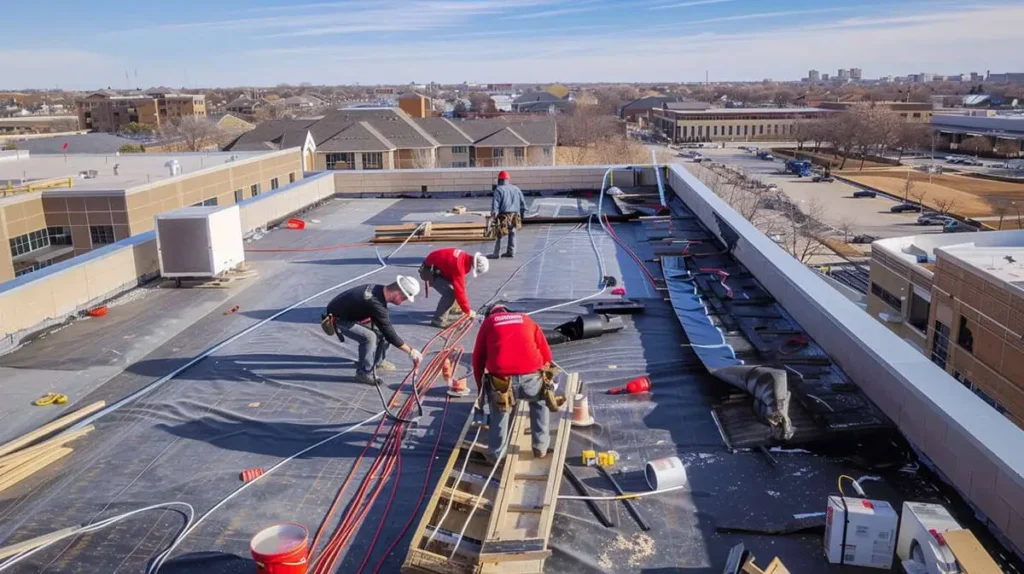
For commercial flat roofs, summer means thermal expansion stress on TPO and modified bitumen seams, and standing water from summer storms that weren’t draining properly before. An HVAC unit or rooftop equipment that shifted slightly over winter sits on a curb that may have lost its seal – and under summer sun and rain, that gap widens fast.
Summer is also storm season. A hard squall can lift shingle tabs, displace flashing, and move enough water across a flat membrane to find any seam that wasn’t fully adhered. Storm damage roof repair calls that come after August storms frequently reveal problems that existed before the storm – the storm just finished what was already underway. A mid-summer inspection, especially after a significant weather event, catches that before it carries into fall.
Fall: The Most Important Maintenance Window of the Year
What you do in October determines what you deal with in February.
Fall is when roofing maintenance actually matters most. The work done before the first hard freeze – cleaned gutters, reseated flashing, repaired membrane seams, checked penetration collars – is the work that decides whether winter creates new damage or just passes over a sound roof. A blocked gutter in November backs water against the fascia by December, then works under the bottom shingle courses by January. A flat roof seam with marginal adhesion that might have held through another summer will not hold under freeze-thaw expansion.
Every roof type has a fall checklist that fits its specific failure profile. On shingle roofs: gutter clearing, granule-loss assessment, and a close look at flashing at every vertical intersection. On flat membrane systems: seam inspection, drain clearance, and a check of every penetration collar before the first freeze. Metal roofing needs fastener and seam checks, particularly on older installations. Tile roofing warrants a look at individual units and at the underlayment condition, since a cracked tile that sat unnoticed through summer won’t announce itself until a cold rain finds it.
Roof inspection in fall isn’t optional if you’re trying to avoid emergency calls in December. The cost of a pre-winter inspection is a small fraction of what emergency roof repair runs in the middle of a winter storm. Fall is when the math is simplest.
Winter: Limited Window, High Stakes
A Brooklyn winter doesn't wait for a convenient time to expose a weak roof.
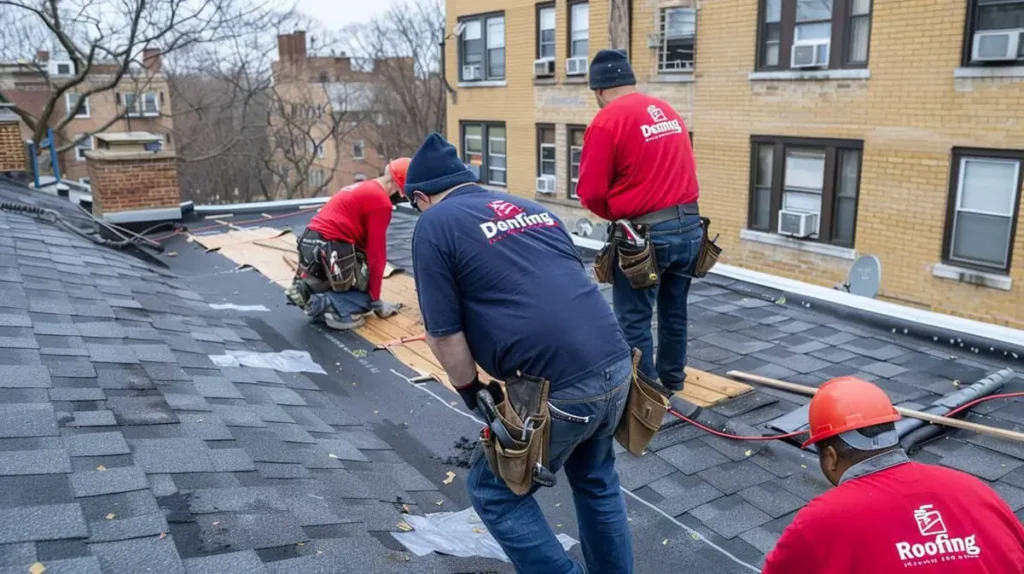
Below-freezing temperatures, ice, and snow create a specific set of roofing problems that are harder and more expensive to address mid-season than before it starts. Ice damming – when heat escaping from a poorly ventilated attic melts snow at the upper roof, which then refreezes at the cold eaves – can force water back under shingles faster than any rain event. On flat roofs, standing water from a poor drainage design freezes against membrane seams and parapet walls, and the expansion opens gaps that were invisible in October.
Emergency calls in winter almost always trace back to something that could have been caught in fall. That’s not always the case – a February nor’easter can take a sound roof and blow off flashing, displace tile, or delaminate a seam that was fine before 60mph wind hit it. Those situations are what the 24-hour emergency line is for. A crew can be dispatched regardless of the time or the temperature, because water moving through an open penetration in January doesn’t slow down while you wait for Monday morning.
What winter mostly requires is honesty about what your roof came into the season carrying. A shingle field that was marginal in October is a liability by February. A flat membrane with a soft seam near a drain is a repair call waiting for the right storm. The goal isn’t to spend winter worrying about your roof – it’s to have done the work in fall so you don’t have to.
Every Season Has a Right Move - The First One Is Knowing Where Your Roof Stands
A seasonal inspection isn’t about selling you something. It’s about knowing what you’re working with before a season changes what your options are. The difference between a fall inspection and a February emergency call is usually a few hundred dollars – and sometimes several thousand. Our crew handles the full scope across every roof type and building category: asphalt shingle, flat membrane, metal, tile, residential and commercial.
Free inspections. Written reports with specific findings, not verbal summaries. Emergency line running around the clock for situations that can’t wait for a scheduled visit. Licensed, insured, and ready for whatever season Brooklyn is currently running through.