
Brooklyn Repairing Slate Roof Cost: What You Need to Know
Repairing a slate roof in Brooklyn runs between $475-$1,850 for minor repairs (5-15 tiles, simple access), $2,200-$6,800 for moderate repairs (25-50 tiles, multiple sections, or flashing work), and $8,500-$18,000+ for large-scale repairs or restoration projects that involve significant underlayment replacement or structural work. A minor repair might be fixing a leak from a few cracked tiles around a dormer on a Park Slope brownstone, moderate work typically covers storm damage across several roof sections with valley flashing issues, and large repairs are what you’re looking at when decades of deferred maintenance have left rotting deck boards and failing underlayment across a Carroll Gardens rowhouse.
The hardest part about slate repair isn’t the work itself-it’s that most Brooklyn homeowners have no idea which category they’re in until someone climbs up there with a ladder and actually looks. You see water spots on your third-floor ceiling, call three roofers, and get quotes ranging from $800 to $22,000 with zero explanation of why. That spread exists because slate problems hide. What looks like “a few broken tiles” from the street can be 40 slipped slates and soaked felt paper once you’re up on the ridge.
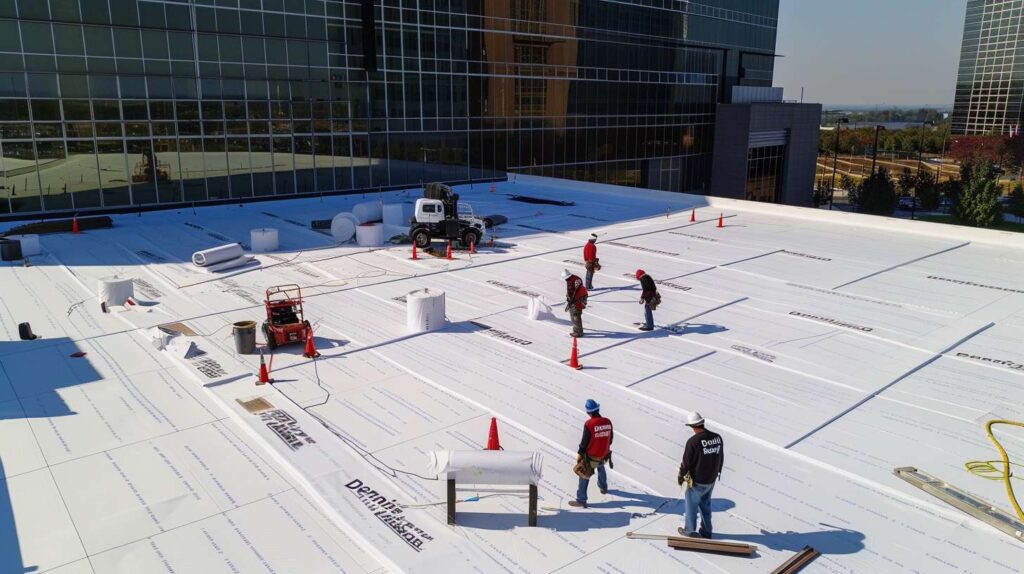
What Actually Determines How Much to Repair a Slate Roof
Four factors control your repair bill more than anything else: how many tiles need work, what condition your underlayment is in, how difficult your roof is to access, and whether you need new flashing or structural repairs alongside the slate work. I’ve replaced twelve tiles on a simple two-story Ditmas Park house for $520 and charged $4,200 for fifteen tiles on a four-story Clinton Hill building with a 10/12 pitch and scaffolding requirements. Same number of slates, completely different jobs.
Slate tile replacement itself runs $45-$85 per tile installed for standard rectangles (18×10 or 16×8), jumping to $95-$140 for oversized slate, graduated patterns, or rare colors that need special sourcing. That price includes pulling the old tile, installing the replacement, and securing it properly with copper hooks or nails-never roofing cement, which is what hacks use because they don’t know better or don’t care. On a straightforward job in Bay Ridge last month where a homeowner had eight cracked tiles from a fallen branch, we were in and out for $680. Simple access, good underlayment visible around the damaged area, matching Pennsylvania black slate still available from my supplier.
But that same branch damage on a Prospect Heights townhouse with a mansard section cost $2,100 because we needed scaffolding for safe access, discovered the felt paper underneath had deteriorated into dust, and had to source thicker Vermont slate to match the existing 3/8-inch thick tiles instead of the standard 1/4-inch stock. The branch broke seven tiles-one fewer than the Bay Ridge job-but the surrounding conditions changed everything.
Minor Slate Roof Repairs: The $475-$1,850 Range
This is your basic slate maintenance work. You’re looking at 3-15 damaged or missing tiles in an accessible location, underlying structure in decent shape, and no major flashing or underlayment issues. A roofer can typically handle this in 2-4 hours with a two-person crew, ladder access, and materials pulled from their truck stock.
Common scenarios in this bracket include storm damage to a small section, a few tiles that cracked during winter freeze-thaw cycles, or slates that slipped because the original copper nails finally gave out after 80 years. I replaced eleven slates on a Windsor Terrace bungalow last fall for $745-straightforward work on a 6/12 pitch roof where I could set up ladders in the driveway and didn’t need scaffolding or special staging. The homeowner caught it early after spotting one tile in their yard after a windy night, so we found the problem cluster before water got through the felt and caused interior damage.
What pushes minor repairs toward the upper end of this range: roof pitch over 8/12 requiring extra safety equipment, color-matching challenges with unusual slate (red, purple, mottled green), needing to special-order thicker tiles, or working around obstacles like solar panels or skylights that complicate access. A $475 repair might be five standard black slates on an easy-access two-story colonial. An $1,850 repair could be the same five tiles on a steep Victorian with decorative coursing patterns where we need to pull and reset surrounding tiles to maintain the design.
Moderate Repairs: When Costs Jump to $2,200-$6,800
You’re in moderate repair territory when the problem spreads beyond isolated tile replacement. This typically means 25-50 tiles across multiple roof sections, valley or ridge cap work, chimney flashing replacement alongside slate work, or situations where we’re finding deteriorated underlayment in the repair areas and need to address it before closing up.
The job that taught me the most about this cost range was a Kensington two-family from 2022. The homeowner called about a leak in the second-floor bathroom during heavy rain. From the street, I could see maybe a dozen obviously damaged slates on the rear slope. Once up there, I found 35 cracked or delaminating tiles, two sections where the old tar paper had completely rotted away (water was hitting bare wood sheathing), and step flashing at the sidewall that had separated from the masonry. Final cost: $4,350 for slate replacement, localized underlayment repair with ice-and-water shield in the compromised sections, and new step flashing. Not a full roof restoration, but well beyond simple tile swaps.
Flashing work significantly impacts costs in this range because you can’t just fix slate and ignore failing metal. New chimney flashing runs $850-$1,950 depending on chimney size and whether we’re doing base flashing only or complete counter-flashing with new masonry reglets. Valley replacement (removing slate, installing new copper or lead-coated valley metal, reinstalling and adding slate) costs $125-$195 per linear foot. These numbers add up fast when you’re addressing multiple problem areas.
Moderate repairs also cover situations where access becomes complex but isn’t extreme. Setting up roof jacks and planks for safety on steeper pitches, working around tight Brooklyn backyards where we can’t get a dumpster close to the house, or coordinating with neighbors for access in attached rowhouse situations-these logistical factors push labor costs up even when the actual repair scope stays contained.
Large-Scale Repairs and Partial Restoration: The $8,500-$18,000+ Reality
This is where repair crosses into restoration territory. You’re not just replacing damaged tiles anymore-you’re addressing systemic failures that affect large portions of the roof. Common triggers: 75+ slates needing replacement, underlayment failure across entire slopes, rotted roof deck sections requiring carpentry, or major flashing overhauls at multiple penetrations and transitions.
I’ll be straight with you: this is also the range where you need to seriously consider whether repair makes financial sense or if you’re looking at a full replacement situation. I spent three hours on a Boerum Hill brownstone last spring explaining to the owner that his $14,000 repair estimate was buying him maybe 8-10 more years, while a $32,000 full tear-off and new slate installation would last 75+ years. He had 40% of his tiles damaged or deteriorating, every valley was failing, and the underlayment was shot. We did the repair because he needed time to save for the full job, but that conversation matters.
Large-scale repairs involve serious labor. A crew of 3-4 for 4-7 days, equipment rentals, disposal of old materials, potentially scaffolding for multi-story buildings. On a Clinton Hill townhouse project in 2023, we repaired two complete slopes (front and rear), replaced all valleys and step flashing, addressed underlayment in damaged sections, and restored the copper ridge cap. Total: $16,800. The homeowner had gotten quotes for full replacement ranging from $55,000-$78,000, so repair made sense-the existing 1920s slate was Vermont gray-green that’s no longer available, and he wanted to preserve the original roof character.
| Repair Scope | Typical Cost Range | Timeline | What’s Included |
|---|---|---|---|
| Minor (3-15 tiles) | $475-$1,850 | 2-6 hours | Tile replacement, copper fasteners, basic access |
| Moderate (25-50 tiles) | $2,200-$6,800 | 1-2 days | Multiple sections, localized underlayment, flashing repairs |
| Large/Restoration (75+ tiles) | $8,500-$18,000+ | 4-7 days | Extensive slate, underlayment sections, major flashing, structural repairs |
| Emergency/After Hours | Add 30-50% | Same day | Immediate response, temporary weatherproofing, priority scheduling |
Brooklyn-Specific Cost Factors You Can’t Ignore
Working in Brooklyn adds specific costs that don’t exist in suburban or rural areas. Parking permits for work trucks run $50-$100 per day in most neighborhoods-not optional when you’re setting up scaffolding or need street access for material delivery. Disposal fees hit harder because you can’t just throw old slate in a pickup and drive to a dump; you need proper containers and NYC disposal, which runs $380-$650 for a typical repair project’s debris.
Attached rowhouse situations create their own complications. If your roof is part of a continuous row, accessing your section might require temporary staging that spans multiple properties or coordination with neighbors for access routes. I’ve had jobs where we needed written permission from three adjacent property owners just to set up safe working platforms. This coordination takes time and sometimes requires additional equipment that wouldn’t be necessary on a detached house.
Building codes and permits matter more than most homeowners realize. In Brooklyn, any roofing work over $5,000 typically requires a permit, and any work on landmarked buildings (common in Brooklyn Heights, Park Slope Historic District, Fort Greene) requires Landmarks Preservation Commission approval. Permit costs run $300-$800 depending on scope, and LPC work adds architect or expediter fees of $1,200-$2,500 for filing and approval. These aren’t padding-they’re legal requirements that protect you from fines and complications when you eventually sell.
What Drives Costs Down vs. What Pushes Them Through the Roof
The single best way to control slate repair costs is catching problems early. A $680 repair for eight tiles becomes a $3,400 repair when those eight tiles let water through for two years, rot the deck boards underneath, and damage the plaster ceiling below. I’ve watched this cycle dozens of times: homeowner sees one cracked tile, figures it’s not urgent, waits until they see ceiling stains, then discovers the “one tile” problem has turned into structural work.
Material choices create significant cost swings. Standard Pennsylvania black slate (most common in Brooklyn) costs $8-$12 per tile for my supplier, and I can usually source it same-week. Vermont colored slate-the gray-green, purple, or mottled tiles you see on older Park Slope and Prospect Heights buildings-runs $18-$28 per tile and often requires 2-3 week lead times. Salvaged slate for perfect matching on historic buildings can hit $35-$50 per tile. Using standard black to replace a few damaged colored tiles saves money but looks mismatched; sourcing exact replacements costs more but maintains the roof’s appearance and your property value.
Access equipment dramatically affects costs. Simple ladder access is included in base pricing. Roof jacks and staging planks add $180-$280 to a job. Scaffolding starts around $1,200 for basic setups and runs to $3,500+ for complex multi-story installations. The difference between a two-story Midwood colonial where we work off ladders and a four-story Cobble Hill townhouse requiring full front scaffolding can be $2,000-$3,000 in setup costs alone before we touch a single slate.
Red Flags That Should Make You Walk Away
If a contractor suggests using roofing cement, tar, or silicone to “seal” cracked slate tiles instead of replacing them, end the conversation. These patches trap moisture, accelerate deterioration, look terrible, and fail within months. Proper slate repair means removing damaged tiles and installing new ones with copper fasteners. Period.
Watch out for roofers who recommend full replacement without walking your entire roof and providing a detailed assessment of what’s actually damaged versus what’s still functional. I’ve seen too many homeowners told they need $60,000 complete tear-offs when they actually needed $4,500 in repairs. A legitimate slate roofer will explain exactly which sections are failing, show you photos of problem areas, and give you honest guidance about repair versus replacement economics.
Be suspicious of quotes that don’t break down costs by category-slate materials, labor, flashing, underlayment work, access equipment, disposal, permits. A line that just says “slate roof repair: $8,500” tells you nothing about what you’re actually paying for and makes it impossible to compare quotes meaningfully. At Dennis Roofing, every estimate includes detailed line items because you deserve to understand where your money goes.
Anyone who won’t explain their fastening method is hiding something. We use copper hooks for side-hung replacement tiles and stainless steel or copper nails (never galvanized or aluminum) for tiles we can nail through. If a contractor can’t or won’t discuss this level of detail, they’re probably not slate specialists-they’re general roofers who occasionally work on slate and don’t really know the craft.
When Repair Makes Sense and When It Doesn’t
Repair makes strong financial sense when damage is localized (under 35-40% of total roof area), the underlying structure is sound, and your slate still has significant life expectancy. Quality slate lasts 75-150 years depending on type and installation. If your roof is 60 years old, properly installed, and you’re just addressing storm damage or normal aging issues, repair can buy you another 20-40 years for a fraction of replacement cost.
The math changes when you’re looking at systemic failure. If 50%+ of your slate is damaged, delaminating, or at the end of its service life, if your underlayment is deteriorated across large sections, or if you’re discovering rotted deck boards in multiple areas, repair costs approach replacement costs without getting you replacement longevity. That Boerum Hill project I mentioned-the $14,000 repair versus $32,000 replacement decision-came down to the homeowner needing 8-10 years to plan financially for the full job. We were honest about what he was buying.
Age matters too. Vermont slate from 1920s installation might have another 50+ years left. Pennsylvania black slate from a 1970s roof might be showing its age at 50-55 years. Chinese slate from 1990s-2000s construction often fails at 25-35 years. Understanding what slate you actually have-not just that it’s “slate”-determines whether repair is a smart long-term investment or throwing money at a roof that needs replacement anyway.
Getting Real Numbers for Your Specific Brooklyn Roof
Every slate roof repair estimate should start with an actual roof inspection, not a street-level guess. I won’t quote slate work without getting up on the roof with a ladder, walking the entire surface, checking underlayment condition in a few test areas, examining flashing, and documenting what I find with photos. That inspection typically takes 45-90 minutes depending on roof size and complexity.
Expect detailed written estimates that break down material costs, labor by task (tile replacement, flashing work, carpentry, underlayment repair), equipment needs, and timeline. Be wary of same-day pressure quotes after five-minute inspections-they’re either inflated to cover unknowns or underpriced to win the job with change orders coming later.
Spring and fall are typically better times for pricing and scheduling. Summer demand drives prices up 10-15% and books quality crews out 4-6 weeks. Winter work is possible (slate doesn’t care about cold, though we can’t work on snow or ice) but slower and potentially more expensive because of temperature-related precautions. Planning your repair during shoulder seasons often saves money and gets faster scheduling.
The real question isn’t just how much to repair your slate roof-it’s whether you’re working with someone who can explain exactly what you’re paying for, why it costs what it does, and what results you should expect. That transparency is what separates legitimate slate specialists from roofers who see your Brooklyn brownstone as a payday. Understanding these costs and factors means you can have informed conversations with contractors and make decisions that protect both your roof and your budget.