
That Old Skylight Has Probably Caused More Damage Than You Realize – It’s Time to Replace It
Why the Drip You See Is Usually the Least Important Part
If you’re on the fence, here’s the counterintuitive thing I’ve learned after nearly two decades on Brooklyn rooftops: the drip you’re watching is almost never where the real damage lives. Water finds the path of least resistance, and by the time it shows up on your ceiling, it’s already traveled – through decking, along insulation batts, between framing bays – and the surrounding roof system has usually been quietly compromised for longer than anyone wants to admit.
Seventeen years in, the first thing I look at isn’t the stain. I’m looking at how water moves, because it rarely falls straight down. It travels sideways along decking, soaks into insulation, runs a framing bay all the way to a joist pocket before it drips through drywall. I’m Lamar Boudreau, 17 years inspecting Brooklyn roofs, with a specialty in catching quiet leaks around aging skylights that other crews walk right past – and what I’ve found is that the skylight may still look serviceable from the room below while the surrounding roof assembly is already drifting out of tune. By the time you notice the stain, the instrument has usually been off-key for a while.
| Myth | Real Answer |
|---|---|
| “If the stain is small, the damage is small.” | Stain size reflects where water exits, not where it entered or how long it’s been traveling. A half-dollar stain on the ceiling can represent months of slow migration through decking and insulation. |
| “If water drips away from the skylight, the skylight is innocent.” | Water almost never drips directly below the entry point. Failed skylight flashing can feed water laterally three to eight feet before it appears indoors – the skylight is frequently guilty even when the drip is far away. |
| “Fresh caulk means the problem is solved.” | Sealant is a surface fix. It can’t address a failed flashing sequence, a rotted curb, or a compromised seal between the glazing and frame. Multiple caulk layers are a sign that the underlying problem was never corrected. |
| “No fogging means the unit is still healthy.” | Fogging applies to insulated glass units. Older acrylic dome skylights don’t fog – they crack, craze, and allow water intrusion through hairline fractures that are invisible at a distance. A clear dome is not a clean bill of health. |
| “A leak that only happens in wind can wait.” | Wind-driven intrusion means the unit is failing under directional load – and every storm that hits it worsens the entry point. Waiting doesn’t buy time; it expands the damage zone into surrounding roofing materials. |
⚠️ Quiet Leak Warning
Repeated small leaks around an old skylight don’t stay small. Each cycle of water infiltration softens the wood curb, saturates insulation, and weakens the roof decking around the opening. By the time a ceiling shows serious staining or a major drip appears, the rot and moisture damage have typically already spread well beyond the skylight footprint – and the repair scope grows accordingly. Don’t wait for a dramatic failure to take the quiet ones seriously.
Where Brooklyn Skylights Start Failing Before Homeowners Notice
Signs on the roof surface
Here’s my plain opinion: old skylights age louder than people think, but only if you know what to listen for. Brooklyn’s freeze-thaw cycles are brutal on flashing details – water gets under a lapped edge, freezes, expands, and lifts that edge a hair more each January. Throw in the patched rowhouse roofs you see across Bed-Stuy, where tar transitions have been layered over old repairs, and you’ve got a situation where the existing skylight curb is sitting in a patchwork of incompatible materials. Brownstones near Prospect Park West tend to have flat or very low-slope sections where water pools longer, and Bay Ridge’s wind exposure off the harbor means rain isn’t always falling – sometimes it’s arriving sideways at 25 miles an hour. All of those conditions change how a skylight fails and how far the damage travels before you find it.
I remember being on a brownstone off Prospect Park West at 7:15 in the morning after a night of hard April rain, and the owner kept apologizing because the leak only showed up “a little.” The skylight looked fine from the room below, but once I got up top, the old frame had been feeding water sideways under the surrounding roofing for years. By the time we opened it up, the wood curb felt like wet cork in my hand. The stain on the ceiling below was maybe the size of a dinner plate. The damage underneath was three times that.
What that looks like on a Brooklyn roof is a skylight that seems merely old while the field around it is already failing with it.
Signs inside the upper floor
| Area | What You Notice | What It Often Indicates |
|---|---|---|
| Roof surface | Tar smeared over flashing edges | Prior repair attempts that bypassed correct flashing – water is likely still entering underneath |
| Roof surface | Soft, spongy decking within 12-18 inches of skylight | Long-term moisture saturation – the curb or step flashing has been leaking sideways for an extended period |
| Roof surface | Rusted flashing fasteners or lifted counter-flashing | Flashing system has failed or is failing – water entry is active or imminent during rain |
| Roof surface | Cracked, crazed, or yellowed acrylic dome | UV degradation is advanced; hairline fractures allow wind-driven water intrusion even when the dome appears intact from below |
| Interior ceiling | Stain that appears several feet from the skylight opening | Water is traveling horizontally along a framing bay or insulation surface before exiting – skylight is often the source despite the distance |
| Interior ceiling | Bubbling or peeling paint around the shaft or curb trim | Moisture is wicking through the interior framing or drywall – the leak has been active long enough to affect finish surfaces |
| Interior shaft | Soft or spongy trim around the shaft frame | Wood framing or blocking around the interior curb has absorbed moisture – structural integrity of the curb may be compromised |
| Upper floor | Persistent musty smell near the skylight area, even without visible staining | Moisture has been present in insulation or framing cavities long enough to promote mold growth – damage is active even without a visible drip |
Fast Visual Checkpoints for an Aging Skylight
- 🔍 Cracked or crazed acrylic dome – yellowing or visible fractures in the dome surface, even hairline ones
- 🔧 Brittle or missing gasket – the rubber seal between the glazing and frame has shrunk, cracked, or pulled away
- 🖤 Loose or tar-smeared flashing – visible sealant layering or lifted metal edges at the skylight perimeter
- 🔩 Rusted or missing fasteners – corroded screws or nails at the curb or flashing attachment points
- 🎨 Bubbling or peeling interior paint – finish degradation around the shaft, trim, or ceiling near the opening
- 🪵 Soft or spongy trim at the curb – press the interior wood surround; any give suggests moisture in the framing
- 👃 Musty smell near the shaft – persistent odor without visible staining often means hidden moisture in insulation or framing cavities
- 🌧️ Leaks that only happen during wind-driven rain – directional water entry points to dome cracks, failed gaskets, or compromised step flashing
When Repair Still Makes Sense and When Replacement Stops the Drift
What do I ask a homeowner before anything else? How old is the unit, and how many times has it been patched? Those two questions tell me most of what I need to know before I even get on the roof. A single isolated flashing issue on a unit that’s eight years old with no prior repairs is a very different conversation than a 20-year-old skylight that’s had sealant applied twice and still finds a way in every spring. The surrounding roof matters too – if the whole field is within a few years of needing replacement, replacing just the skylight now and tearing up that same area again in two years is a waste of everyone’s time and money.
Blunt truth – caulk is not a retirement plan for a skylight. Once the flashing sequence has failed, the glazing seals have fatigued, or the wood curb has started to soften, you’re past the point where surface repairs hold. Each layer of sealant somebody adds is a signal that the previous fix didn’t work, and stacking those signals on top of each other doesn’t solve anything – it just delays the day you open up the roof and find the damage has spread. Replacement at that stage isn’t an upsell. It’s the cleaner, cheaper long-term move compared with writing a new check every eighteen months to slow down the same leak.
🌳 Should You Replace That Old Skylight Now?
START: Is the skylight over 15 years old?
YES →
Has it leaked more than once or been patched before?
YES → Replacement. Repeated failure on an aging unit means the whole assembly is compromised.
NO → Are there signs of fogging, cracking, soft trim, or is roof replacement due soon?
YES → Replacement during roofing work (most cost-efficient timing).
NO → Professional inspection to confirm condition before deciding.
NO (Under 15 years) →
Is the problem isolated to flashing and caught early, with no prior repairs?
YES → Repair evaluation. A targeted fix may fully resolve the issue.
NO → Replacement evaluation. Multiple issues on a newer unit still point toward a system failure.
How a Replacement Visit Should Uncover More Than the Unit Itself
What a proper inspection includes
I was on a ladder in Bay Ridge when this clicked for me. A retired saxophone player – sharp guy, very precise about when the leak happened – told me it only came in when the rain arrived sideways off the water. He was right. The skylight had an old acrylic dome with hairline cracks you could only see if you knew to look for them, and the wind was pushing water through those spots on a calm day in a way you’d never catch if you weren’t looking for it. I stood up there with him in the upper room while the glass made that faint ticking sound in the cold, the kind of sound a piano key makes when the damper felt is starting to go. I told him the unit wasn’t leaking once in a while – it was failing on a schedule. Every cold front, every hard nor’easter, it was getting worse by a small degree. Not dramatic. Just consistently drifting further off.
A failing skylight is a lot like a piano string slipping out of pitch – small at first, then suddenly the whole room feels wrong. That’s the insider move when you’re calling for a replacement visit: you don’t want someone who shows up, pulls the old unit, drops in a new one, and calls it done. What that looks like on a Brooklyn roof is peeling back the whole story – checking the surrounding membrane or shingles for softness, inspecting the flashing sequence step by step, tracing the interior moisture path, looking at whether the curb needs a rebuild, and figuring out if the roof age makes a coordinated replacement the smarter move. Swapping a unit without reading the system around it just means you’re setting the clock again on the same problem.
What Roof Skylight Replacement Services Should Include – Step by Step
-
1
Exterior Roof Assessment Around the Skylight
Walk the field surrounding the opening – press for soft decking, check shingle or membrane condition, look for prior patch work, and identify how far moisture may have migrated beyond the curb. -
2
Interior Moisture-Path Check
Trace where water has traveled indoors – along framing bays, through insulation, into drywall or trim – to understand the full damage scope before the unit is removed. -
3
Age and Type Confirmation of Existing Unit
Confirm whether the existing skylight is a fixed or venting unit, acrylic or glass, curb-mounted or deck-mounted – this determines the correct replacement product and flashing kit. -
4
Removal of Failed Unit and Compromised Flashing
Remove the old unit completely – don’t leave any portion of failed flashing in place. Strip back to sound material so the new installation starts clean. -
5
Repair or Rebuild of Damaged Curb and Decking
If the curb wood is soft or the decking around the opening is saturated, those materials need to be replaced before the new unit goes in – skipping this step means the new skylight is sitting on a compromised base. -
6
Install New Skylight with Manufacturer-Correct Flashing and Roof Tie-In
Install the new unit using the manufacturer’s flashing kit and integrate it properly with the surrounding roofing – not caulk over the seam, but a correct step-flashing and counter-flashing sequence that sheds water the way the whole roof system is designed to.
Questions Brooklyn Homeowners Ask About Skylight Replacement
Can a skylight leak somewhere other than directly below it?
Yes – and this is the most common way skylight damage gets misread. Water entering at the flashing or curb doesn’t fall straight down. It travels along roof decking, wicks through insulation, and runs framing bays until it finds an exit point. A drip in a hallway or ten feet from the opening is still very likely a skylight problem.
Is replacing the skylight enough if the roof around it is old?
Not always. If the surrounding membrane or shingles are also aging, you’re cutting into an old roof for the skylight install and potentially leaving the new unit exposed to a failing field around it. The best approach is to coordinate the skylight replacement with any upcoming roof work so the new unit gets a proper tie-in to a sound, functional roof system.
Do acrylic dome skylights fail differently than newer glass units?
They do. Acrylic degrades under UV exposure over time – it yellows, crazes, and develops hairline fractures that aren’t obvious from inside the room. Those cracks allow wind-driven water intrusion that wouldn’t appear on a calm, vertical rain day. Glass units with failed insulated seals tend to fog or show condensation. Both fail, just differently, and acrylic failures are often harder to spot.
How do I know if repeated patching has already caused hidden rot?
A few signs: press on the interior wood trim around the shaft – any softness or give is a red flag. Look for paint that bubbles or peels at the ceiling near the opening. A musty smell without visible staining is a strong indicator of moisture in framing or insulation. If the exterior flashing has visible sealant layers stacked on top of each other, water has been getting through long enough for a crew to have patched it at least once before.
What the Last Shortcut Usually Costs You
One August afternoon in Bed-Stuy, I was inspecting a house where the customer swore the skylight wasn’t the issue because the drip was landing ten feet away in the hallway. That’s the kind of job people remember me for, because I traced the path through insulation, along a framing bay, and back to a skylight flashing setup somebody had patched with three different sealants. It was 92 degrees, the roof was soft under my boots, and every shortcut from the last repair guy was still sitting there like a confession. Three different sealant colors, each one a record of a decision someone made instead of dealing with the real problem. The homeowner had paid for three separate repairs over eight years, and the total of those bills was creeping toward what a proper replacement – with curb work – would have cost the first time. If the skylight is old and the leak pattern is strange, stop treating symptoms and replace the source. That’s what roof skylight replacement services in Brooklyn, NY are actually for – not a patch and a prayer, but a real fix that closes the chapter.
Typical Replacement Scenarios – What to Expect in Brooklyn
Ranges reflect common Brooklyn conditions. Final cost depends on roof access, interior finish work, and hidden damage discovered during removal. These are estimates, not quotes.
| Scenario | Typical Scope | Estimated Range |
|---|---|---|
| Basic fixed skylight swap | Remove old unit, install same-size fixed replacement on accessible flat or low-slope roof, no curb or decking damage | $800 – $1,400 |
| Replacement with new flashing kit | New unit plus manufacturer-matched step and counter-flashing, integration with surrounding shingles or membrane | $1,200 – $2,200 |
| Acrylic dome to modern glass upgrade | Remove old dome unit, adapt or rebuild curb as needed for glass unit sizing, new flashing, clean install | $1,800 – $3,200 |
| Replacement with curb repair | New unit plus partial or full rebuild of deteriorated wood curb before installation; common in older Brooklyn rowhouses | $2,000 – $3,800 |
| Replacement with decking repair and interior touch-up | New unit, curb work, decking board replacement around opening, and basic interior drywall/paint repair after moisture damage | $3,000 – $6,000+ |
📋 Before You Call – Note These Things First
The more you can tell a roofer upfront, the faster they can diagnose what’s actually going on.
- ☐ Age of the skylight – even an approximate year helps narrow the failure mode
- ☐ When the leak happens – heavy rain, light rain, only during wind, or after temperature swings
- ☐ Whether wind direction affects it – directional leaks point to specific failure locations
- ☐ Any prior patching or repairs – who did it, when, and what they said
- ☐ Ceiling staining pattern – note whether it’s directly below the skylight or offset in any direction
- ☐ Approximate age of the roof – if you know it; helpful for deciding whether to coordinate replacement
- ☐ Photos taken after a rain event – even a phone shot of the stain while it’s fresh is useful
- ☐ Any fogging, cracking, or yellowing in the dome or glazing – visible from inside or noted during a ladder check
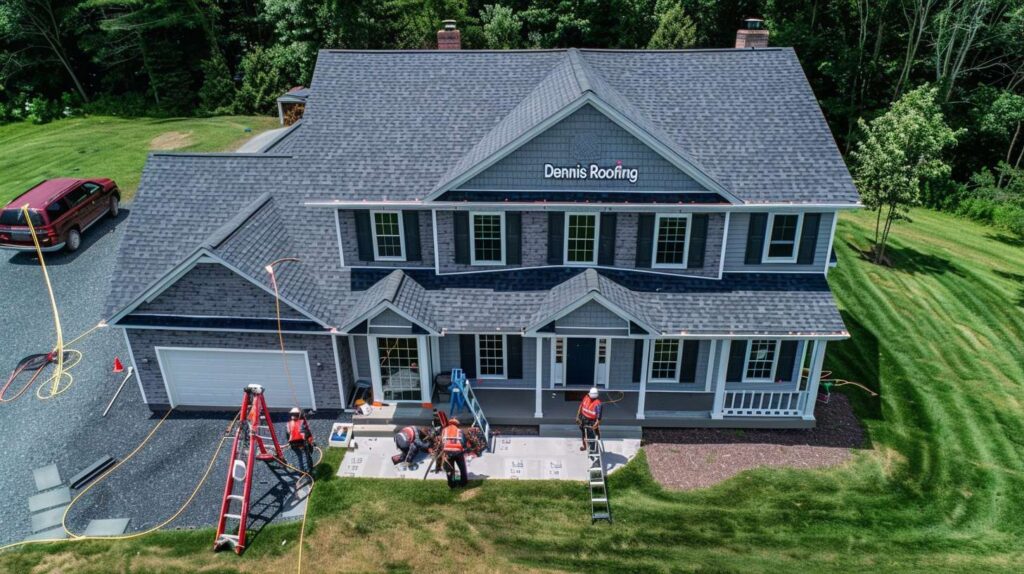
If any of that checklist sounds familiar, the skylight probably has more to say than the ceiling stain is telling you. The team at Dennis Roofing inspects the skylight, the flashing, and the surrounding roof together – because that’s the only way to actually close the problem instead of just quieting it for a season. Give us a call and let’s take a proper look before the next rain makes the decision for you.