What’s the Average Asphalt Shingle Roofing Service Cost in Brooklyn?

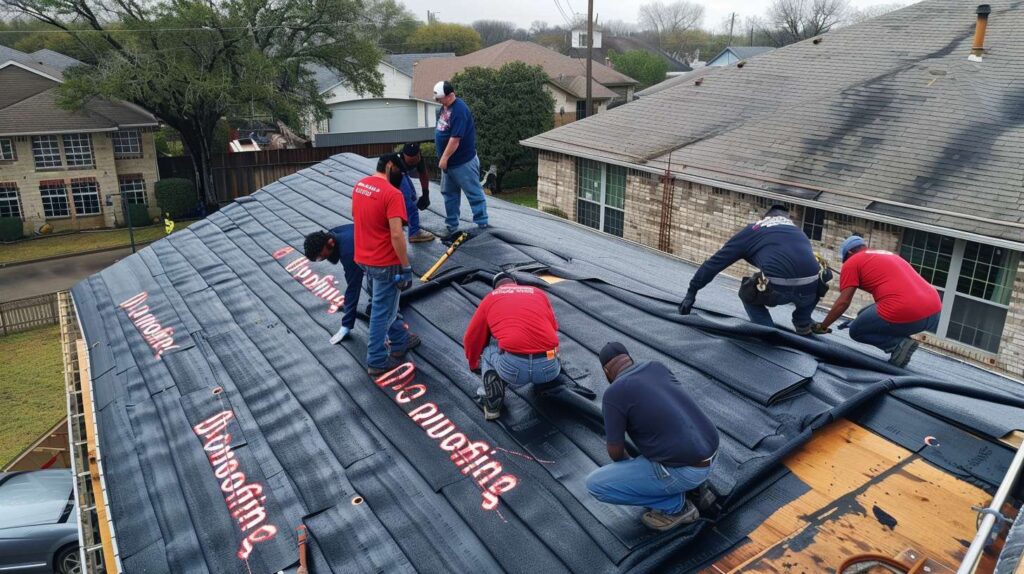
A complete asphalt shingle roof replacement in Brooklyn typically runs between $8,200 and $18,500 for most single-family homes, with the median landing around $12,800 for a 1,600-square-foot roof using mid-grade architectural shingles. Here’s what that usually includes, what it doesn’t include, and why your neighbor’s roof might have cost more or less than yours will. That range assumes you’re getting full tear-off (removing the old layer), new underlayment, ice-and-water shield at critical zones, proper flashing work, a ridge vent for ventilation, and disposal of all tear-off debris. What it typically doesn’t include: replacing rotted decking beyond a couple of sheets, upgrading gutters, or structural repairs if your rafters have issues. The spread is wide because Brooklyn homes vary wildly-a compact Park Slope two-story with straightforward gable ends will cost less than a sprawling Midwood colonial with dormers, valleys, and three layers of old shingles that need removing.

Roofing Estimate Calculator | Dennis Roofing

🏠 Free Roofing Estimate

1
2
3
4
5

What service do you need?

🔧
Roof Repair
🔄
Replacement
🏗️
New Install
🔍
Inspection

What type of roof?

Flat Roof
Shingle
🔩
Metal
🧱
Tile / Slate
Not Sure

Roof size?

ft
ft
sq ft
0
square feet

Additional details

Timeline?

ASAP
1-2 Weeks
Flexible

Calculating your estimate...

Project Summary

Service -
Roof Type -
Size -
Timeline -
Estimated Price Range
$0 - $0
*Final price after inspection
Licensed
5-Star
Fast

Breaking Down Your Asphalt Shingle Roofing Service Cost: The Four Main Buckets

When I hand someone an estimate, I divide asphalt shingle roofing services into four clear buckets so they can see exactly where the money flows. Labor is usually your biggest single chunk-around 40 to 50 percent of the total on most Brooklyn jobs-because asphalt shingle installation, tear-off, and detail work like flashing valleys and sealing penetrations take skilled hands and time. Materials come next at roughly 30 to 35 percent, covering the shingles themselves, underlayment, starter strips, ridge caps, nails, and ventilation components. Removal and disposal accounts for another 10 to 15 percent; Brooklyn disposal fees are higher than surrounding counties, and hauling three dumpster loads of old shingles off a Flatbush rowhouse costs real money. The final bucket-extras like decking repairs, chimney reflashing, skylight work, or upgrading attic ventilation-can add anywhere from $800 to $4,000 depending on what we find once the old roof comes off.

Here’s why understanding these buckets matters: if you’re comparing quotes and one comes in at $10,500 while another hits $14,200 for the same square footage, the difference usually lives in what’s included in each bucket. The lower bid might assume your decking is perfect (it rarely is once you peel back forty-year-old shingles), skip the ice-and-water shield on the eaves, use thinner underlayment, or plan to install over the existing layer instead of tearing off. None of those shortcuts are illegal, but they will affect how long your new asphalt shingle roofing services hold up through Brooklyn winters.

Alphanumeric code 1Y6Er9YJQRTR8oJaG00ydwWB3qHg0NUOe displayed as page title

What a “Square” Means and Why It Drives Your Price

Roofing contractors measure in “squares”-one square equals 100 square feet of roof surface. A typical Brooklyn brownstone might have 18 to 22 squares; a detached single-family in Bay Ridge might run 14 to 18 squares. Per-square pricing for complete asphalt shingle roofing services (tear-off, install, disposal) usually ranges from $425 to $850 per square in Brooklyn, depending on shingle grade, roof complexity, and access. Simple gable roofs with wide-open sections and easy ladder access land toward the lower end; complex roofs with multiple valleys, dormers, steep pitches (anything over 7/12), or tight side-yard access push toward the upper end because crew efficiency drops and safety equipment costs rise.

I tracked fifteen jobs we completed in Sunset Park and Bensonhurst last fall-straightforward two-story homes, all between 1,400 and 1,800 square feet of roof, all mid-grade architectural shingles, all single tear-off. The per-square cost averaged $538, and the total project costs ran from $9,150 to $12,100. The variance came down to decking repairs (three homes needed six to eight sheets of plywood replaced), one house had an old brick chimney that required full reflashing, and two had outdated roof vents we swapped for a continuous ridge vent system. That real-world snapshot gives you a much better planning number than generic “national average” figures you’ll find online, which don’t account for Brooklyn labor rates, disposal fees, or the prevalence of older housing stock with hidden issues.

Shingle Grade and Material Choices That Move the Needle

Asphalt shingles come in three main tiers, and your choice here directly impacts both upfront cost and long-term value. Three-tab shingles-the flat, uniform style-are the budget option at $90 to $125 per square for materials alone, but almost nobody in Brooklyn installs them on primary residences anymore because they look dated, carry shorter warranties (20 to 25 years), and perform poorly in high winds. Architectural shingles (also called dimensional or laminate shingles) are the current standard, running $145 to $210 per square for materials, offering better curb appeal with their layered, dimensional look, and backed by 30- to 50-year warranties. Premium or designer shingles-thicker, heavier, often mimicking slate or wood shake-cost $275 to $450 per square and make sense if you’re in a high-visibility neighborhood like Brooklyn Heights or Park Slope where resale value justifies the investment.

Here’s a cost-saving insight from my supplier relationships: if you’re flexible on color and can accept whatever’s in stock or recently discontinued, some of the major shingle manufacturers offer “contractor select” or overstock architectural shingles at 15 to 25 percent below standard pricing. I’ve saved clients in Williamsburg and Crown Heights $1,200 to $1,800 on material costs by going this route-same warranty, same performance, just last year’s color palette or a shade the manufacturer is phasing out. The shingles perform identically; you’re just not getting the trendy new “weathered driftwood” everyone wants this season.

Shingle Type Material Cost per Square Typical Warranty Best For
Three-Tab $90-$125 20-25 years Rentals, budget projects
Architectural (Standard) $145-$210 30-50 years Most Brooklyn homes
Architectural (Premium) $210-$290 50 years, limited lifetime Higher-end neighborhoods, complex roofs
Designer/Specialty $275-$450 Lifetime limited Historic districts, luxury resale focus

Tear-Off vs. Overlay: A Decision That Affects Cost and Longevity

Tear-off means we strip your roof down to the wood decking, haul away all the old shingles, inspect and repair the deck, then build back up with fresh underlayment and new shingles. An overlay (sometimes called a “recover” or “roof-over”) means we install new shingles directly on top of your existing layer, skipping the removal step. Overlay cuts your cost by roughly $2,200 to $3,800 on an average Brooklyn home because you’re eliminating disposal fees (usually $800 to $1,400 for a typical dumpster and dump fees), cutting labor hours (tear-off is physically demanding and time-intensive), and using less underlayment since you’re not covering bare wood.

Here’s my honest take after pricing hundreds of these jobs: overlay can make sense in narrow circumstances-your existing roof is one layer of relatively flat shingles, the decking underneath is sound with no soft spots or sags, you’re planning to sell within five to seven years, and your budget genuinely can’t stretch to a full tear-off. But in Brooklyn’s older housing stock, I rarely recommend it. Most homes built before 1980 already have two layers (the original and one overlay from decades ago), which means code won’t let you add a third. Even if you’re sitting on a single layer, overlay hides problems-we can’t inspect or repair rotted decking, water-damaged sheathing, or inadequate ventilation that’s been shortening shingle life. Plus, stacking new shingles on old creates a lumpy, uneven surface that telegraphs every buckle and curl from below, and it traps heat, which cooks your new shingles from underneath and voids many manufacturers’ warranties.

I worked with a client in Ditmas Park two summers ago who got overlay quotes from three contractors that came in around $7,200 versus our tear-off quote at $11,400. He went with the overlay to save money. Eighteen months later, he called me back-shingles were lifting along the edges where the old roof had curled, three spots were showing moisture stains on his second-floor ceiling, and he needed a full tear-off anyway. Total cost: the original $7,200 plus another $12,800 for the tear-off and decking repairs we found (which were hidden under the first overlay). He paid $20,000 total when he could have paid $11,400 once and been done. That’s not a scare tactic; it’s the math on a choice I see backfire regularly.

Underlayment, Ice-and-Water Shield, and the Components You Don’t See

The materials under your shingles matter as much as the shingles themselves for long-term performance, but they’re easy to shortchange because homeowners can’t see them once the job’s done. Underlayment is the water-resistant barrier installed over your decking before shingles go on. Basic 15-pound felt paper is the old-school choice and the cheapest at around $18 to $25 per square, but synthetic underlayment-brands like Titanium, RhinoRoof, or GAF FeltBuster-costs $35 to $55 per square and offers better tear resistance, longer UV exposure windows if weather delays your project, and superior water-shedding. On Brooklyn roofs, where we deal with ice damming in winter and occasional hurricane-force winds, I spec synthetic on every estimate unless a client explicitly asks me to cut costs.

Ice-and-water shield is a self-adhering rubberized membrane we install at vulnerable zones-eaves, valleys, around chimneys and skylights, and along any wall where the roof meets vertical siding. It costs $65 to $90 per roll (covers about one square), and Brooklyn building code requires it at eaves for the first three feet (six feet in some jurisdictions). I extend it further-usually four to six feet up from the eave edge-because ice dams are real here, and when meltwater backs up under your shingles during a freeze-thaw cycle, ice-and-water shield is the only thing preventing leaks into your walls and ceilings. Adding an extra $300 to $600 for extended coverage pays for itself the first time it stops a winter leak that would’ve cost $2,500 in drywall and insulation repairs.

Flashing Work, Valleys, and Penetrations: Hidden Complexity Drivers

Flashing is the metal (usually aluminum or galvanized steel) we install wherever your roof plane meets a vertical surface-chimneys, walls, vent pipes, skylights-to channel water away from the seam. Good flashing work is fussy, detail-oriented, and time-consuming, which is why it’s a common corner-cutting zone on low-ball bids. Step flashing along a chimney or dormer wall requires individual pieces woven into each shingle course; a proper install might take a skilled roofer ninety minutes, while a sloppy one can slap up a single long piece of flashing in twenty minutes that looks fine but will leak within two seasons. Chimney reflashing alone typically adds $650 to $1,200 to a Brooklyn roof job, depending on chimney size and whether the masonry needs repointing first.

Valleys-where two roof planes meet and form an inside angle-are another detail that separates lasting asphalt shingle roofing services from callback generators. We install valleys one of two ways: open valley with metal flashing (aluminum or copper) running the length of the valley with shingles cut to meet the metal, or woven/closed valley where shingles from each plane interweave or overlap without visible metal. Open metal valleys cost more upfront ($180 to $240 per valley for materials and labor versus $80 to $120 for woven) but handle high water volume better, last longer, and are easier to clear of debris. On Brooklyn homes with mature trees-think Prospect Park-adjacent or tree-lined streets in Kensington-I always push open valleys because leaves and twigs accumulate, and a clogged woven valley will back water up under the shingles and into your attic faster than almost any other failure point.

Decking Repairs: The Wild Card in Every Estimate

Most estimates include an allowance for minor decking repairs-usually two to four sheets of plywood or OSB at $75 to $110 per sheet installed-because it’s almost guaranteed we’ll find some rot or soft spots once we pull off shingles that have been up for twenty-five or thirty years. But decking repairs are the single biggest wild card that can push your final asphalt shingle roofing service cost above the estimate. A sheet of ½-inch CDX plywood runs about $38 to $48 in Brooklyn right now; add cutting, fitting, nailing, and disposal of the rotted section, and you’re at $75 to $110 per sheet in labor and materials. If we uncover fifteen or twenty bad sheets-not uncommon on older Brooklyn homes with chronic gutter overflow or ice dam issues-that’s an additional $1,500 to $2,200 right there.

Here’s how I handle this in estimates: I note the decking allowance clearly (e.g., “Estimate includes replacement of up to 4 sheets of roof decking; additional sheets billed at $95 each”), and I offer an optional pre-tear-off inspection if the homeowner wants more certainty. For $350 to $500, we’ll pull up shingles in a few key areas-typically along the eaves, around chimneys, and in valleys where water concentrates-check the decking, take photos, and give you a realistic repair estimate before we commit to the full tear-off. About half my clients take me up on it, especially if they’re financing the project and need to know the upper limit of costs before signing contracts.

Ventilation Upgrades That Actually Pay for Themselves

Proper attic ventilation isn’t glamorous, but it’s one of the smartest investments you can make during asphalt shingle roofing services because it directly affects shingle lifespan. Inadequate ventilation traps heat in your attic-summer temps can hit 150 to 160 degrees up there-which cooks your shingles from below, dries out the asphalt binder, and causes premature cracking and granule loss. Brooklyn’s older homes often have minimal or outdated ventilation: a couple of gable vents, maybe some old metal turtle vents scattered along the ridge, and no real intake ventilation at the soffits.

The gold standard is a balanced system with continuous ridge vent running the peak of your roof for exhaust and soffit vents or drip-edge intake vents at the eaves for fresh air intake. A ridge vent install adds $8 to $14 per linear foot; a typical Brooklyn gable roof might have 35 to 45 feet of ridge, so you’re looking at $420 to $630 for materials and labor. If your soffits are blocked or nonexistent-common on older aluminum-sided homes-we can install drip-edge intake vents for about $6 to $9 per linear foot. Total ventilation upgrade cost: $800 to $1,400 on most homes. The payoff: shingles that reach their rated lifespan instead of failing at year eighteen of a thirty-year warranty, plus lower summer cooling costs because your attic isn’t radiating stored heat into your living space all evening.

I worked on a two-family in Bensonhurst last spring where the owner had replaced his roof twice in twenty-three years-both times with decent architectural shingles that should’ve lasted thirty-plus years. We pulled the old roof and immediately saw why: zero ridge ventilation, blocked soffits, and an attic that was basically an oven. We added a full ridge vent, cleared and reopened the soffit vents, and installed baffles to maintain airflow in the rafter bays. His shingles are eighteen months old now and still look factory-fresh, and he told me his second-floor air conditioning bills dropped noticeably that first summer because the attic wasn’t dumping heat down through the ceiling anymore.

Timing Your Project to Save Money Without Sacrificing Quality

Asphalt shingle roofing service costs in Brooklyn follow predictable seasonal patterns, and if your roof isn’t actively leaking, timing your project strategically can save you 10 to 18 percent. Peak season-late April through early October-is when demand is highest, crews are booked out four to eight weeks, and contractors have zero incentive to discount. Shoulder season-late March, early April, and November-offers moderate savings (typically 8 to 12 percent off peak pricing) because weather is still workable but demand drops as homeowners wait for “better” weather that’s mostly psychological. Winter-December through February-is when you’ll find the deepest discounts (15 to 20 percent), but there are real trade-offs: shingle sealant strips don’t activate properly below 40 degrees, so you’re relying on manual sealing and warm spring weather to finish the adhesion; crews work slower in cold conditions; and weather delays are common, which can stretch a three-day job into three weeks of on-and-off work.

My recommendation: aim for late October through mid-November if you can swing it. Demand has dropped off, we’re motivated to keep crews working before winter, but temperatures are still mild enough (usually mid-40s to mid-50s in Brooklyn) for shingles to seal properly within a week or two once spring warmth hits. I’ve saved clients $1,400 to $2,600 by scheduling in this window versus waiting until May when everyone suddenly remembers they need a roof.

What About Partial Roof Replacement or Repairs?

Not every roofing service requires a full replacement. If storm damage is isolated-say, wind lifted shingles on one section, or a tree branch damaged a small area-partial replacement or targeted repairs might make sense. Minimum service call for asphalt shingle repair work typically runs $450 to $750 in Brooklyn, covering a couple of hours of labor, basic materials, and mobilization (getting a crew and ladder truck to your location). Small repairs-replacing ten to twenty shingles, resealing a lifted section, or replacing a few pieces of step flashing-usually fall in the $650 to $1,200 range.

Here’s the tricky math: once repair scope crosses about 6 to 8 squares (600 to 800 square feet), you’re approaching 40 to 50 percent of full replacement cost but only addressing part of the roof. At that point, most homeowners are better off doing the full job because you’re paying for mobilization, disposal, and setup anyway, plus you’re left with a roof that’s part new, part old, with different weathering patterns and mismatched shingle lots that look obvious from the street. I’m honest about this in estimates-if your roof is twenty-two years old and you need to replace 8 squares on the back, I’ll tell you that patching it will cost about $4,800, but replacing the whole thing will run $11,200, and for the extra $6,400 you’re getting another twenty-five to thirty years of lifespan instead of limping along on a roof that’s still 60 percent expired.

Insurance Claims and How They Affect Your Out-of-Pocket Cost

Wind and hail damage can significantly reduce your asphalt shingle roofing service cost if your homeowner’s insurance approves the claim. A typical Brooklyn claim pays for full tear-off and replacement when damage is widespread-insurance adjusters look for a certain percentage of damaged shingles (usually 8 to 12 squares on a 20-square roof qualifies) or specific types of damage like hail bruising or wind-lifted shingles across multiple roof planes. Your out-of-pocket cost becomes your deductible-commonly $1,000 to $2,500 on Brooklyn policies-plus any upgrades you choose beyond what insurance covers.

Here’s where homeowners get tripped up: insurance pays for “like kind and quality” replacement, which usually means basic three-tab or entry-level architectural shingles. If you want to upgrade to premium architectural shingles, add a ridge vent system, or replace rotted decking beyond what the adjuster attributed to the storm, you’ll pay the difference. On a recent claim project in Midwood, the insurance company approved $9,800 for storm damage replacement with standard architectural shingles. The homeowner wanted upgraded impact-resistant shingles (which also earned him a small insurance discount going forward) and a full ventilation system; the upgrades added $2,400, so his total out-of-pocket was his $1,500 deductible plus $2,400 in upgrades-$3,900 total for a $12,200 roof job.

One cost-saving insight: if you’re filing a claim and the adjuster’s initial estimate seems low, you can request a supplement once we start the tear-off and document hidden damage-rotted decking, damaged flashing, or compromised underlayment that wasn’t visible during the inspection. Probably 60 percent of our insurance jobs generate at least one supplement for an additional $800 to $2,400, which the insurance covers (minus any deductible already met). We document everything with photos, tag the damaged materials, and coordinate directly with the adjuster to get the supplement approved before we proceed.

Real Brooklyn Project Examples: What Clients Actually Paid

Numbers in context help more than ranges, so here are three real projects from the past eighteen months with identifying details changed but costs accurate. Project one: 1,720-square-foot Cape Cod in Bay Ridge, straightforward gable roof, one layer of twenty-eight-year-old architectural shingles, good decking with only three sheets needing replacement. Client chose mid-grade Owens Corning Duration shingles in Estate Gray, full tear-off, synthetic underlayment, ice-and-water shield extended six feet at eaves, open metal valleys, new ridge vent system. Total cost: $11,850. Completed in four days last October. Project two: 2,100-square-foot Colonial in Flatbush, complex roof with two dormers, multiple valleys, steep 9/12 pitch on the main roof, two layers of old shingles. We found fourteen sheets of rotted decking along the eaves (chronic gutter overflow), reflashed the brick chimney, and replaced an old skylight curb. Client went with GAF Timberline HDZ shingles, same underlayment and ventilation upgrades as project one. Total cost: $16,400. Job took six days in May. Project three: 1,450-square-foot rowhouse in Park Slope, simple shed roof over the rear addition, gable roof over the main house, one layer of shingles in decent shape. Client wanted basic architectural shingles and skipped the ridge vent upgrade to save money (against my advice). Minimal decking repairs, standard underlayment and flashing work. Total cost: $8,950. Done in three days last November.

The pattern you’ll see across those projects: cost tracks roof complexity and hidden repairs more than square footage. The Bay Ridge Cape was larger than the Park Slope rowhouse but simpler and cheaper per square. The Flatbush Colonial’s steep pitch, dormers, and extensive decking repairs pushed it well above the simple per-square average. When I’m estimating your asphalt shingle roofing services, I’m pricing the actual work your roof requires, not plugging square footage into a formula.

Dennis Roofing’s Approach: Transparent Estimates and No-Surprise Pricing

After two decades of walking homeowners through this process, I’ve learned that cost anxiety usually comes from not knowing what’s included, what’s extra, and where surprises might pop up. Every estimate I write breaks down the four buckets I mentioned earlier, specifies shingle brand and grade, notes underlayment type, lists the decking repair allowance, and includes photos of your current roof with annotations pointing out concerns-lifted shingles, worn valleys, questionable flashing. If I see something during the estimate that’s likely to require extra work once we tear off, I note it and give a cost range so you’re prepared.

We also build in contingency communication: once tear-off starts and we can see your decking and structure, I take photos and send them to you (or walk you through them on-site if you’re home) before we proceed with any extra work beyond the estimate allowance. You approve additional decking, flashing, or structural repairs before we do them, and you get a clear per-item cost. No surprise bills at the end for work you didn’t authorize. That approach might slow us down by a few hours on some jobs, but it eliminates the trust issues and bill disputes that poison so many contractor-homeowner relationships in this industry.

Asphalt shingle roofing services represent a significant investment-for most Brooklyn homeowners, it’s the second or third largest home maintenance expense they’ll face after HVAC replacement or major plumbing work. Understanding where your money goes, what drives cost variations, and which choices offer real value versus marketing fluff gives you the confidence to make smart decisions and avoid the low-ball traps that cost more in the long run. The “average” cost matters less than the right cost for your specific roof, done correctly, with materials and details that’ll hold up through Brooklyn weather for the next three decades.