
Your Roof Shingles Are Failing – Here’s How We Figure Out What They Need
Spring hits different when you’re standing on a Brooklyn roof at 7 a.m. and the shingles under your boots are already telling you things the homeowner hasn’t noticed yet. Most failing shingles don’t announce themselves with a dramatic ceiling stain – they start with small changes in texture, curl, and granule loss that, if you know how to read them, tell you exactly what kind of repair the roof will actually respond to. This is a walkthrough of how that diagnostic process works, and why getting it right before touching anything matters more than the repair itself.
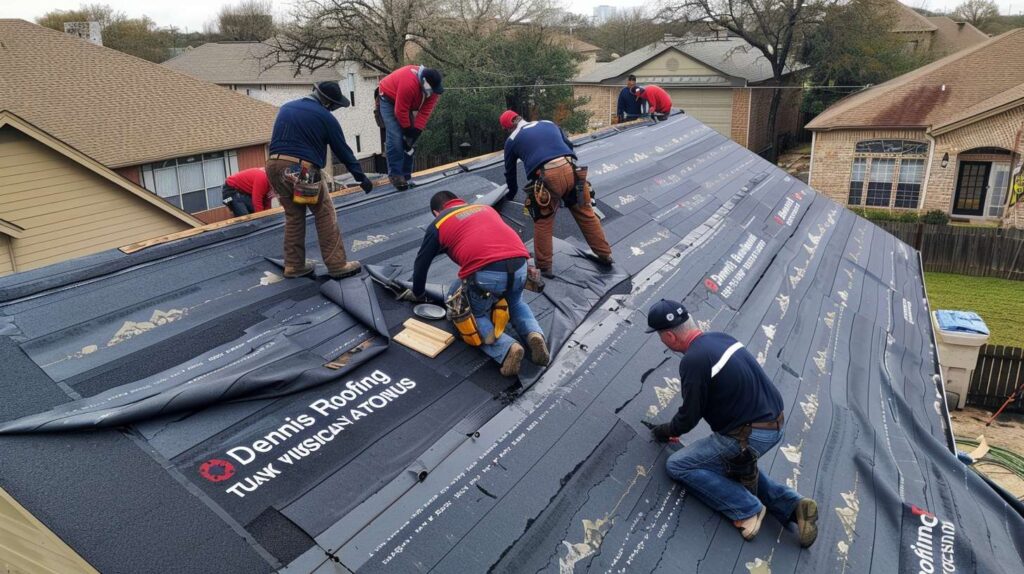
What Early Shingle Failure Actually Looks Like on Brooklyn Roofs
Here’s the blunt version: shingles almost never fail “out of nowhere.” What looks sudden has usually been building for a season or two – showing up first as slight texture roughness, tabs that don’t lay flat anymore, or a line of granule residue collecting in the gutter between Ocean Parkway and the side drain. By the time a homeowner notices something’s off, the surface has already been signaling it for a while. It’s not dramatic. That’s actually what makes it easy to dismiss.
What makes it worth paying attention to is that a few damaged shingles on one slope can be a sign of a pattern spreading across the whole face – and on a Brooklyn roof, one bad corner can change the whole block. I’ve seen people walk past three curled tabs for an entire summer because nothing was leaking inside. And honestly, that’s one of the most expensive lies a roof tells. “Cosmetic” shingle damage is rarely just cosmetic for long. The surface is the first layer of protection, and once that layer starts signaling, the clock’s running.
| Myth | What it usually means in real life |
|---|---|
| “Curling is just age and can wait.” | Curling tabs have lost their seal and are actively letting water migrate underneath. Waiting turns a repair into a replacement conversation faster than most people expect. |
| “Granules in gutters are normal forever.” | Some granule loss is normal on new shingles. When it accelerates on an older roof, it means the asphalt layer is exposed – and UV degradation is moving fast. That’s a spread indicator, not background noise. |
| “If there’s no leak inside, the roof is fine.” | Interior leaks show up well after the roof deck has been taking moisture. No stain on the ceiling doesn’t mean the underlayment is intact – it just means you haven’t hit the threshold yet. |
| “Only storm damage causes missing tabs.” | Chronic heat buildup and inadequate attic ventilation can lift and separate tabs just as effectively as wind. If the missing pieces follow a pattern on one slope, the cause is usually underneath, not overhead. |
| “A patch always solves the problem.” | A patch solves the problem when the surrounding field is still healthy. When it isn’t – when the root cause is heat, ventilation, or a prior bad repair – a patch can actually trap conditions that age neighboring shingles faster. |
What Gets Checked First on a Shingle Failure Visit
First Clues
Texture, curl pattern, granule volume in gutters, and seal strip condition – in that order.
Most Telling Area
One roof plane, not the whole roof at once. Slope-specific failure is usually a diagnostic signal, not a fluke.
Common Hidden Factor
Attic airflow. Poor ventilation is behind more shingle failures than any single weather event.
Goal of the Visit
Decide whether the failure is repairable and contained – or already spreading to the surrounding field.
Where We Look Before We Talk About Roof Shingle Repair Services
Three missing tabs on a Brooklyn rowhouse usually tell me more than a whole paragraph from a home inspector. Diagnosis starts with pattern reading – same slope, same exposure, same edge, same sun angle, same ventilation path. Because as Brett Callahan, with 14 years of roofing experience and a habit of catching shingle failure before the leak shows up inside, I’ve found that where the damage concentrates is almost always more revealing than the damage itself. One slope in full afternoon sun on a south-facing attached house is a completely different conversation than scattered loss across multiple planes.
If I’m talking to a homeowner at the ladder, the first thing I ask is: when did you first notice the change? That timing tells me whether I’m looking at storm event damage, gradual thermal aging, heat buildup from below, a prior patch job someone didn’t mention, or chronic ventilation trouble that’s been silently cooking the shingles for years. Brooklyn housing stock makes this more layered than it sounds – a rowhouse attached on both sides traps heat differently than a semi-detached two-family where one wall gets direct afternoon exposure. On some blocks, the south-facing slope ages a full shingle generation faster than the shaded north side of the same roof. Now, that sounds like the main problem, but it usually isn’t – the visible aging on the surface is often just where the deeper issue has found its exit.
Pattern Damage Tells More Than Isolated Damage
The 5-Step Inspection Sequence for Failing Shingles
Ground-level scan. Check for missing tabs, sag lines along the eaves, and granule buildup at the base of downspouts. This tells you where to focus before you’re on a ladder.
Ladder-edge check. Inspect seal strip condition and test shingle flexibility along the bottom course. Stiff, brittle edges at the perimeter are an early sign that heat or age has already moved through the field.
Slope-by-slope pattern mapping. Walk each plane and chalk-mark damaged shingles as you go. The pattern – clustered, edge-heavy, ridge-heavy, or random – narrows the cause significantly.
Flashing, patch, and nail review. Old flashing lifts, previous patch work, and high-riding nails all create stress points that accelerate shingle failure in their immediate zone.
Attic or ventilation check. This is where the real answer often lives. If the shingles are failing because of what’s happening below the deck, fixing only what’s on top won’t hold.
| Visible Symptom | What It Often Signals | Typical Repair Response | Urgency |
|---|---|---|---|
| Curling tabs (cupping or clawing) | Moisture imbalance, ventilation problem, or end-of-life thermal cycling | Section repair if localized; slope evaluation if widespread | High |
| Heavy granule loss in gutters | Accelerated UV degradation; asphalt layer now exposed | Roof age assessment; targeted repair may only delay replacement | High |
| Missing tabs after wind event | Seal strip failure, often tied to heat or prior patch compromise | Replace affected shingles; inspect seal strip on adjacent rows | Medium |
| Lifted or separated edges | Failed adhesive bond; wind and heat cycling creating entry points | Re-seal if shingle is still flexible; replace if brittle | Medium |
| Cracking or surface alligatoring | Chronic heat exposure, likely poor attic ventilation beneath | Full slope evaluation; ventilation fix needed before surface repair | High |
Why the Obvious Damage Usually Isn’t the Whole Story
Last April, I stepped onto a roof in Midwood and heard that dry crunch before I even reached the ridge. That sound – brittle asphalt giving under my weight – tells you more in half a second than a visual scan from the ground ever could. The shingles hadn’t failed visually everywhere yet, but the heat had been trapped under that deck long enough to make them fragile across the whole upper half. The homeowner had been focused on a small area near the front edge. That wasn’t wrong, but it was incomplete. The loudest clue was underfoot, not overhead – and the prior patch near the ridge had actually sealed in the heat problem instead of addressing it, aging the surrounding field faster than the untouched sections on either side.
⚠ Before You Approve a Surface-Only Repair
Replacing a few shingles without diagnosing the heat, airflow, or prior patch problem underneath is a common way to spend money twice. New shingles installed onto a field with trapped heat or poor ventilation will degrade faster than the manufacturer’s timeline – sometimes within a single summer.
For Brooklyn homeowners heading into storm season, a neat-looking patch over a failing system creates a false sense of security. The surface looks addressed. The cause is still running.
When a Repair Makes Sense and When the Roof Is Telling on Itself
Repairable Section or Failing System?
A pry bar, a chalk line, and five quiet minutes will tell the truth faster than guesswork ever will. The difference between a repairable section and a failing system comes down to what the surrounding shingles do when you test them gently. If the tabs near the damaged area still flex without resistance, and the seal strip on adjacent rows is still holding, you’ve got a real repair candidate. But here’s the insider read on that: if surrounding shingles crack or snap during a careful lift – not a forced one, just a gentle check – the roof has already narrowed your options. That brittleness means the heat or age has moved through the field, and patching the obvious damage leaves you with a ticking clock on everything around it.
I remember a gray Tuesday around 7:15 in the morning in Bensonhurst, coffee still too hot to drink, when a homeowner pointed at three curled shingles and said, “It’s just cosmetic, right?” I lifted one edge and the granules came off in my glove like wet sugar. That was the moment I knew the whole slope had aged faster than the back half of the roof. The south-facing side had been baking under full afternoon exposure while the rear stayed in decent shape – a split you see often on the rowhouses and semi-detacheds sitting on certain blocks near the Belt Parkway service road. One slope ages like it’s been through two more winters than the other side of the same roof. That’s not cosmetic. That’s the roof telling you which conversation you’re actually having.
I look at a tired roof the same way I look at a rough block in the city – one neglected section starts dragging down the rest. I was on a two-family in Bay Ridge right after a windy spring storm, maybe 6:40 p.m., when the owner handed me a grocery bag full of shingle pieces she’d picked up from the driveway. What stuck with me was that the missing pieces weren’t random – they all came from the same roof plane where the attic ventilation was weakest. That’s not a coincidence; that’s a pattern. And at Dennis Roofing, that pattern is exactly what changes the repair recommendation. If I’m seeing slope-specific failure tied to airflow, the shingles aren’t the whole fix. They’re the symptom.
Decision Guide: Repair, Section Fix, or Replacement Evaluation?
YES →
Do nearby shingles still flex without cracking?
YES →
Is the seal strip holding in surrounding rows?
YES → Targeted repair likely makes sense. Address visible damage and monitor surrounding field.
NO → Sectional repair or broader correction needed. Seal strip failure is spreading.
NO →
Brittleness detected. Sectional repair at minimum; full slope evaluation recommended before committing to patch work.
NO →
Is granule loss widespread across one or more slopes?
YES →
Roof is signaling broader failure. Replacement evaluation recommended – targeted repair is unlikely to hold meaningfully.
| Pros of Targeted Repair (Healthy Surrounding Field) | Cons Worth Knowing Before You Commit |
|---|---|
| Controls cost by preserving shingles that are still doing their job | New shingles rarely match the weathered color of the existing field |
| Stops failure from spreading while the surrounding shingles are still viable | Lifespan of the repair is limited if the surrounding field is already aging fast |
| Faster turnaround – usually one visit when the scope is genuinely contained | Poor value if the root cause – heat, ventilation, old patch – is left unaddressed |
| Buys legitimate time on a roof with several good years still in the field | Can give a false sense of completion when the inspection was surface-only |
Questions Homeowners Should Ask Before Approving the Fix
Want to know if you’re paying for a repair – or just postponing the same problem?
Before signing off on any roof shingle repair services in Brooklyn, it’s worth asking four straight questions: What specifically failed? Why did it fail in that location and not elsewhere? What did the surrounding shingles look like during inspection? And is ventilation or a prior patch part of what’s going on? Those four questions separate a real diagnosis from a surface fix dressed up as one. One August afternoon in Flatbush, heat bouncing off the blacktop, I was called out for what the customer thought was one leak over the nursery. Turned out a rushed patch from years earlier had trapped heat so badly the surrounding tabs turned brittle before the rest of the roof did – and I ended up showing that homeowner six separate failure points that all traced back to one bad decision made by whoever did the original patch. Asking those four questions up front at Dennis Roofing isn’t us being difficult. It’s the difference between solving the problem and scheduling the same call for next spring.
Before You Call for Roof Shingle Repair in Brooklyn – Have This Ready
-
✓
When you first noticed the change – whether it happened after a storm, gradually over a season, or appeared suddenly after a hot stretch. -
✓
Whether you found pieces on the ground – and if so, approximately where on the house they landed. -
✓
Any interior stain location – ceiling, wall, or attic. Even a small historic stain tells us something about water travel path. -
✓
Approximate roof age if you know it – or when the last replacement or major work was done. -
✓
Prior patch history – if any previous work was done, even informally or by a prior owner, that’s useful context before we’re on the ladder. -
✓
Whether the issue appears on one roof plane or several – this single detail shapes the entire inspection approach before we arrive.
Common Questions About Diagnosing and Repairing Failing Shingles