Expert Leaky Metal Roof Repair Services in Brooklyn, NY

Why is your metal roof still leaking after two different “repairs”? If you’ve watched contractors come and go, each one promising they’ve “fixed it,” only to see water stains reappear after the next heavy rain, you’re experiencing what I see on about half the leaky metal roof repair jobs we take in Brooklyn. The problem isn’t that metal roofs can’t be fixed-it’s that most repairs target the wrong spot. With metal roofing, water travels. A leak showing up in your living room corner might actually be entering through a chimney flashing joint twenty feet upslope, running along a seam, then dripping down at the first gap it finds. The stain inside is never directly under the entry point, and that’s where most quick repairs go wrong.

Metal roof leak repair in Brooklyn typically costs $385-$950 for targeted repairs (fastener replacement, seam resealing, single flashing section), $1,200-$2,800 for moderate repairs (multiple seams, valley work, or extensive fastener replacement), and $3,200-$6,500 for comprehensive repairs that address multiple leak sources, rusted panel sections, and full perimeter flashing. These numbers assume standing seam, corrugated, or coated steel systems on typical Brooklyn rowhouses, two- or three-family homes, and small commercial buildings. Your actual cost depends on roof access, panel type, how many leak sources we find, and whether we’re working with concealed-fastener or exposed-fastener systems.

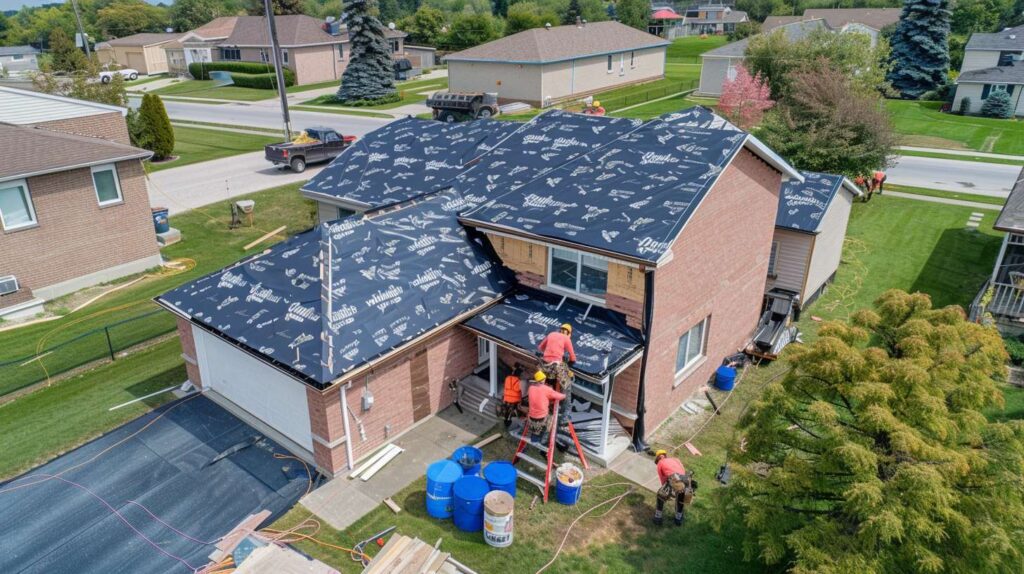
Professional roofer repairing a leaky metal roof on a Brooklyn building

How Water Actually Travels on Metal Roofs (And Why Most Repairs Miss the Real Problem)

Metal roofing panels are designed to shed water fast-when everything’s tight. But Brooklyn weather tests every weak point. Wind-driven rain doesn’t just fall straight down; during nor’easters and summer thunderstorms, it gets pushed sideways, forced up under ridge caps, drawn into the tiniest fastener gaps by capillary action, and funneled along seams that are separated by just a sixteenth of an inch. I’ve traced leaks that traveled fourteen feet from entry point to drip location, following the underside of a standing seam panel, crossing a roof beam, then dropping through a small rust hole that had nothing to do with the original breach.

The single biggest mistake I see from other contractors? They stand inside, look at the ceiling stain, go outside and seal “that area,” then call it fixed. On a Prospect Heights three-family building last November, the owner had paid for three separate patch jobs over eighteen months-all targeting the same ten-square-foot section above the third-floor bathroom. When we pulled up for a full inspection, I found the actual entry point at a chimney cricket twelve feet upslope where the counterflashing had separated from the masonry by about three-eighths of an inch. Water was running under the metal, following the roof deck slope, then hitting a seam clip and dripping right where everyone kept sealing. All those previous “repairs” were just smearing sealant on dry metal while the real gap kept letting water in.

Proper leaky metal roof repair starts with diagnosis, not caulk. We ladder up, walk the roof (safely), and start at the highest point above the leak. We’re looking for:

  • Backed-out or missing fasteners-especially common on exposed-fastener corrugated and R-panel systems where thermal movement loosens screws over time
  • Separated seams on standing seam roofs where clips have failed or panels weren’t fully locked during installation
  • Rust bloom or pinhole corrosion from trapped moisture, salt air near the waterfront, or dissimilar metal contact
  • Flashing gaps at chimneys, skylights, vent pipes, and parapet walls where caulk has shrunk or metal has shifted
  • Valley issues where two roof planes meet and fasteners penetrate the valley trough
  • Ridge and hip cap movement from wind uplift that creates nail-hole elongation

We also check the interior if accessible-attic spaces, top-floor ceilings-to see the water path on the underside. Stains, rust marks, and moisture trails on rafters tell the story of where water has been traveling, and that map guides us to the real source outside.

The Most Common Metal Roof Leak Sources in Brooklyn Buildings

Fourteen years of tracking down leaks has shown me clear patterns. Some leak types show up constantly; others are roof-specific. Here’s what I find most often on Brooklyn’s mix of older retrofit metal roofs and newer installations:

Fastener Failure (40% of leaks we diagnose): Exposed-fastener metal roofs-corrugated, R-panel, PBR panel-rely on screws with rubber washers driven through the panels into the roof deck. Over five to ten years, those washers harden from UV exposure and temperature cycling, the rubber cracks, and the tiny gap around each screw becomes a water entry point. I’ve pulled screws on Red Hook warehouse roofs where the washer was so brittle it crumbled when I touched it. The fix isn’t adding more screws randomly (which I see contractors do all the time-just making more future leak points). The proper leaky metal roof repair is removing the old fasteners, inspecting the holes, sealing oversized holes with butyl patches, and installing new fasteners with fresh neoprene washers in the correct location: high on the rib, never in the flat, and never over-torqued.

Seam Separation (25% of leaks): Standing seam roofs have interlocking panel edges that create a raised “seam” running vertically. These seams are supposed to be crimped tight or snapped together with hidden clips. But I routinely find seams on Williamsburg loft buildings and Park Slope brownstone additions where the interlock was never fully closed during installation, or where thermal expansion has worked the connection loose over time. Water gets pulled into the gap by wind pressure and capillary action. You can’t see it from the ground-the seam looks fine-but when you run your hand along it, you feel the separation. Repair involves manually reclosing the seam with a seaming tool (not just caulking it, which fails fast) or installing concealed seam clamps that pull the edges back together and hold them mechanically.

Chimney and Penetration Flashing (20% of leaks): Every hole through a metal roof-chimneys, vent pipes, exhaust fans, skylights-requires custom flashing that bridges the metal panels and the penetration. This flashing is often installed by the mason or the HVAC contractor, not the roofer, and I see mistakes constantly. Missing or undersized crickets behind chimneys, counterflashing that isn’t embedded into masonry joints, pipe boots that are cracked or improperly sealed. On a Carroll Gardens two-family last spring, we found a bathroom exhaust vent where the installer had simply cut a hole in the metal panel, stuck the vent through, and gooped it with silicone. No metal sleeve, no proper boot. Water was running straight down the vent duct into the wall cavity. Proper leaky roof repair at penetrations means removing the bad flashing, fabricating correct metal components (often custom bent from matching material), and integrating them into the panel system with proper overlap and sealed seams.

Rust-Through and Corrosion (10% of primary leaks, but higher on older roofs): Metal roofs in Brooklyn face salt air if you’re near the waterfront, trapped moisture if there’s poor attic ventilation, and galvanic corrosion if dissimilar metals touch (aluminum flashing against steel panels, for example). I see rust-through most often at fastener locations, valley centers where water concentrates, and anywhere raw cut edges weren’t sealed after panel trimming. A small rust spot isn’t a leak yet, but it will be. Repair depends on severity: minor surface rust gets wire-brushed, primed with cold galvanizing compound, and topcoated; rust holes get cut out and patched with matching metal and butyl seam tape; extensive rust damage sometimes requires panel replacement.

Leak Source Common Symptoms Inside Typical Repair Method Cost Range (Brooklyn)
Failed Fasteners Multiple small stains in a pattern, worse after wind-driven rain Remove old screws, patch oversized holes, install new fasteners with fresh washers $385-$825
Separated Standing Seams Linear water trail on ceiling, often running parallel to panel direction Re-crimp seam with seaming tool or install concealed clamps $520-$1,150
Chimney Flashing Gap Large stain near chimney, heaviest on upslope side, worsens with heavy rain Remove old flashing, fabricate and install new counterflashing and base, embed in masonry $750-$1,650
Valley Leak Concentrated stain where two roof sections meet, often travels far from entry point Reseal valley fasteners, add cleat covers, or replace valley section if badly corroded $680-$1,950
Rusted Panel Section Persistent drip even in light rain, rust stains visible on ceiling Cut out damaged section, weld or mechanically fasten matching patch panel $425-$975 per panel section

What Proper Metal Roof Leak Repair Actually Looks Like

When Dennis Roofing tackles a leaky metal roof repair project in Brooklyn, the process is methodical. We don’t show up with a caulk gun and a prayer. Here’s the real workflow:

Step One-Comprehensive Inspection: We access the roof safely and inspect every potential leak source within twenty feet upslope and to the sides of the reported interior leak location. We photograph problem areas-I’ll show you close-ups of the separated seam, the backed-out screw, the gap in the chimney flashing-so you can see exactly what’s happening. We also check the roof’s overall condition: remaining coating life, panel integrity, fastener patterns, and any areas that might become problems soon.

Step Two-Interior Correlation: If we can access the attic or ceiling space, we trace the water path from the underside. This step catches 90% of the “mystery leaks” where outside inspection alone would have led to the wrong spot. I’ve stood in attic spaces on Clinton Hill brownstones with a flashlight, following rust trails and water stains across six rafters until I could pinpoint exactly which exterior seam was the culprit.

Step Three-Repair Plan and Material Match: Metal roofs aren’t generic. A standing seam galvalume roof needs different repair materials and methods than a painted corrugated steel roof or a coated aluminum panel system. We identify your specific panel profile, gauge, and finish, then source matching materials. For fasteners, that means getting the right length, thread type, and washer material. For sealant, it means using butyl tape or high-grade polyurethane that’s compatible with the metal coating-not the cheap silicone or asphalt-based “roof cement” that causes more problems than it solves. I’ve seen contractors smear black roofing tar on white standing seam panels, essentially ruining the appearance while providing a “fix” that’ll fail within six months because tar doesn’t bond to painted metal and breaks down in UV.

Step Four-Methodical Repair Execution: We fix the diagnosed problem with the right technique. For fastener replacement: carefully remove the old screws without enlarging the holes or distorting the panel, seal any oversized penetrations with butyl patches, and drive new fasteners with proper torque-tight enough to compress the washer but not so tight that you deform the metal or squeeze all the rubber out from under the screw head. For seam work: use hand seamers to re-engage the panel locks, add seam clamps where necessary, and seal the seam mechanically-not just with a bead of caulk. For flashing repairs: remove the failed component completely, fabricate the replacement from compatible metal (never mix aluminum and steel without isolation), and integrate it into the roof with proper overlap sequence and sealed joints.

Step Five-Water Testing and Verification: On complex leak repairs or when we’ve addressed multiple potential sources, we test before we leave. That might mean running a hose on the repair area for fifteen minutes while someone watches inside, or in some cases, scheduling a follow-up inspection after the next significant rain. I’d rather come back and adjust a repair under warranty than leave a job without knowing we’ve actually stopped the leak.

Red Flags: Metal Roof Repair Approaches That Don’t Last

You’ll save yourself money and frustration by recognizing bad repair methods before you pay for them. Here’s what I see contractors do wrong, consistently, on leaky metal roof repair jobs around Brooklyn:

Sealant-Only “Repairs”: Walking around with a caulk gun, running beads of sealant along seams, around fasteners, over rust spots-this is the most common lazy fix. Sealant has a role in metal roof repair, but it’s always secondary to mechanical fastening or proper flashing. Exposed sealant on a metal roof breaks down fast from UV and thermal cycling. Within a year, it’s shrunk, cracked, and peeling, and you’re leaking again. Proper repair means fixing the underlying problem-tightening the fastener, reclosing the seam, replacing the flashing-then adding compatible sealant as a backup, not as the primary defense.

Random Additional Fasteners: When a roof is leaking, some contractors just add more screws, figuring “more is better.” This is backwards. Every new screw is a new penetration and a future potential leak point. If the existing fasteners have failed, adding more failing fasteners doesn’t help. The right approach is removing and replacing the problem fasteners with new hardware in the correct locations, not peppering the roof with extra holes.

Grinding or Cutting Metal Without Protection: When contractors need to remove a rusted section or cut a panel for a patch, I sometimes see them use angle grinders or circular saws with abrasive blades. This creates sparks, burns the protective coating off surrounding metal, creates sharp edges that promote rust, and throws hot metal shavings that embed in the roof finish. Proper metal work uses shears, nibblers, or metal-cutting saw blades, and all cut edges get deburred, primed, and sealed.

“Flat” Repair Guarantees Without Inspection: Be skeptical of any contractor who gives you a firm price and promises “we’ll fix your leak” without first getting on the roof and doing a real inspection. Metal roof leaks can’t be accurately quoted from the ground or over the phone. The repair might be a $400 fastener job or a $2,200 flashing reconstruction-you don’t know until you find the source. On a Boerum Hill townhouse two years ago, the owner called saying “there’s a leak above the kitchen, probably just needs some caulk.” We found a failed cricket behind the chimney, two separated seam sections, and a rusted valley trough. The repair ran $2,850-because that’s what it took to fix the actual problems, not what the homeowner hoped it would cost.

When to Repair vs. When to Replace a Leaking Metal Roof

Not every leaky metal roof needs replacement, but some do. Here’s how I make the call after fourteen years of Brooklyn leaky metal roof repair work:

Repair makes sense when: The leak sources are localized (specific fasteners, a seam section, flashing at one or two penetrations), the majority of the roof system is sound (panels aren’t widespread rusted, coating still has life, structure is solid), and the cost of comprehensive repair is under 40% of replacement cost. Most metal roofs I see are repairable. A standing seam roof with three separated seam sections and some chimney flashing issues might need $1,800 in repairs, but replacement would be $18,000-$24,000. That’s an obvious repair situation.

Replacement makes sense when: You have widespread panel rust (not just surface oxidation but actual holes or severe thinning across multiple panels), the fastener pattern is shot (we’re talking 60+ failed fasteners across the roof), the substrate is rotted from years of unaddressed leaks, or the existing metal roof was installed improperly and can’t be made right with repairs. I’ve evaluated corrugated roofs on older Brooklyn warehouses where every other fastener was backed out, valleys were rusted through, and panels had been “repaired” so many times with incompatible materials that the whole assembly was compromised. At that point, replacement is the honest recommendation.

The gray area is a metal roof that needs significant repair but isn’t completely shot. Maybe it needs $4,200 in work: full fastener replacement, multiple seam sections addressed, new chimney flashing, valley reconstruction. That’s substantial money, but if the roof is only twelve years old and has potential for another fifteen years after repair, it’s often the right move. I walk clients through the math: repair cost divided by expected additional roof life versus replacement cost divided by new roof life expectancy. Usually repair wins on cost-per-year, and you avoid the disruption of a full tear-off and replacement.

Why Brooklyn Metal Roofs Leak-And Why Location Matters

Brooklyn’s specific conditions create leak patterns I wouldn’t see in other climates. Wind off the harbor and up the Gowanus-especially during nor’easters-drives rain horizontally, testing every seam and fastener. Salt air near Red Hook, Sunset Park, and waterfront neighborhoods accelerates corrosion on any exposed metal. Freeze-thaw cycles work fasteners loose and crack sealants. And Brooklyn’s building stock-narrow rowhouses with limited roof access, older industrial conversions with complex roof planes, flat roofs with metal standing seam retrofits over old built-up roofing-creates unique leak challenges.

I see more fastener failures on exposed roofs in high-wind areas: the Slope near Prospect Park, anything with harbor exposure in Red Hook or Brooklyn Heights. I see more rust issues on buildings near the BQE (salt spray from winter road treatment) and in areas with poor attic ventilation where condensation forms on the metal underside. Brownstone additions with metal roofs often have flashing problems where the new metal meets old masonry-thermal movement from century-old brick behaves differently than modern framing, and flashings separate.

Access challenges also affect repair approach. A fourth-floor metal roof on a Williamsburg loft with no interior attic access and no neighboring buildings close enough for scaffolding? We’re doing all diagnosis and repair from outside, working from ladders or roof jacks, which takes more time and sometimes limits the detail of interior verification we can do. A two-story rowhouse in Ditmas Park with a full attic and good access? We can trace every water trail, verify every repair from both sides, and work much more efficiently. These Brooklyn-specific factors shape both the leak causes and the repair strategy.

What to Expect When You Call Dennis Roofing for Metal Roof Leak Repair

We start with a phone conversation about what you’re seeing: Where’s the interior leak? How long has it been happening? Has anyone looked at it before? That gives me a preliminary sense of whether we’re dealing with a straightforward fastener issue or something more complex. We schedule an inspection-usually within three to five days, faster if you’re dealing with active water intrusion.

The inspection takes 45 minutes to 90 minutes depending on roof size and complexity. I’ll access the roof, document what I find with photos, check the interior if possible, and then walk you through the diagnosis. You’ll see the actual problem areas-I’ll show you the photos on my phone or tablet right there, zoomed in on the separated seam or the rusted fastener. We discuss repair options and I provide a detailed written estimate, usually within 24 hours, breaking down what we’ll do, what materials we’ll use, and what the timeline looks like.

Most leaky metal roof repair jobs in Brooklyn schedule within one to three weeks. Actual repair time ranges from a few hours for simple fastener replacement to two or three days for complex flashing reconstruction, panel replacement, and multiple leak sources. We work in dry weather-never trying to seal metal in the rain-and we clean up completely, including magnetic sweeps for any dropped fasteners.

We warranty our leak repair work: one year on fastener and sealant repairs, three years on seam work and minor flashing, five years on major flashing reconstruction and panel replacement. If the repair leaks again during the warranty period, we come back and make it right at no charge. That’s only happened twice in the past three years, both times because we’d fixed the reported leak but a separate, unrelated leak source showed up afterward-and we still honored the callback because the customer was dealing with water intrusion and we want it solved.

Bottom line: If you’ve got a leaking metal roof in Brooklyn and you’re tired of patch jobs that don’t last, the issue is probably that no one’s found the real entry point yet. Water travels on metal, wind changes the rules, and the stain inside is almost never right under the source outside. Proper diagnosis first, targeted repair second, and verification third. That’s how leaky metal roof repair actually works when it’s done right. Call Dennis Roofing, and I’ll personally walk your roof, trace your leak, and show you exactly what’s happening and what it’ll take to stop it permanently.