
Metal Roof Repair – Here’s an Honest Breakdown of What It’s Going to Cost You
Five minutes from now, you’ll know that most metal roof repairs in Brooklyn fall somewhere between $450 and $3,500+ – depending entirely on whether the problem is isolated and sitting right where you can see it, or hiding inside a seam, a flashing tie-in, or someone else’s bad patch from two winters ago. The spread exists because what you see from the living room and what’s actually failing on the roof are often two very different things, and the gap between them is where the price lives.
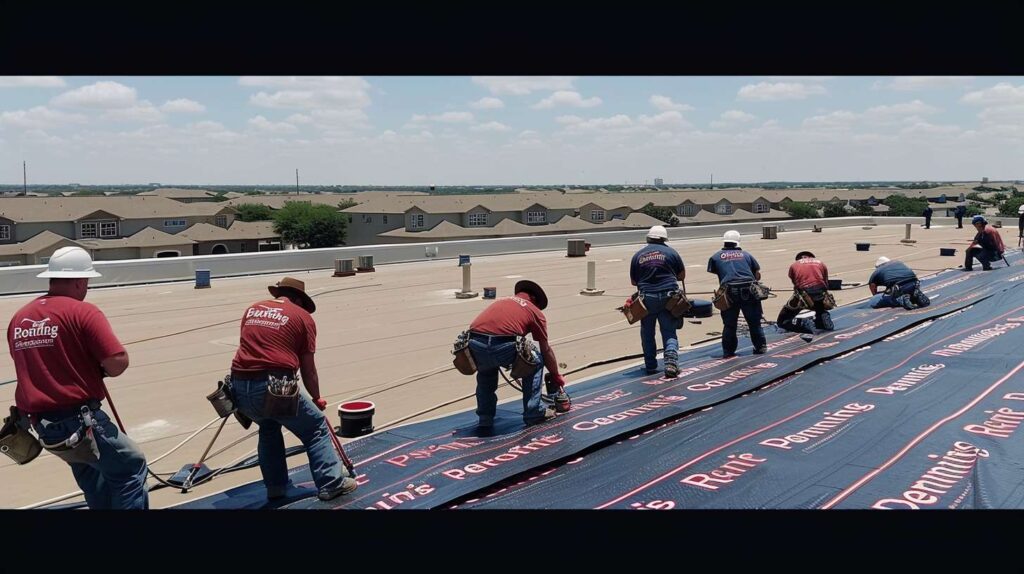
What Metal Roof Repair Usually Costs in Brooklyn
“$450 is where I usually start paying attention, because below that we’re often talking about one clean, isolated fix.” Simple repairs – one exposed fastener, a clear sealant failure at an accessible edge – tend to land around $450-$900. Moderate metal repairs, where flashing or a seam needs corrective work, commonly run $900-$1,800. And more involved situations – leak tracing, panel or seam work with hidden water travel, or a repair that keeps hitting layers of prior patching – push into the $1,800-$3,500+ range. A job stays small when the failure is obvious and the roofer can reach it in twenty minutes. It climbs when diagnosis, access, and hidden water movement add serious labor before a single piece of metal gets touched.
Here’s the framing I always come back to: following the water’s commute. The stain on your ceiling isn’t the story – it’s the last stop on a route that may have started three feet away or fifteen. Where water enters, where it travels along panels or framing before it drips, and how much work it takes to verify the actual entry point – that’s where pricing is really built. The visible stain is often the least useful clue on the whole roof.
Why Two Leaks That Look Identical Can Price Miles Apart
Diagnosis Versus Repair Labor
“What I ask first is simple: are we fixing damage, or are we paying to find it?” Homeowners almost always assume the repair itself is the whole bill. On metal roofs, the investigative work can be a real and substantial part of the cost – and that’s not padding. I’m Tyrone Hicks, and with 17 years in roofing and a specialty in tracing strange leak paths on standing seam and coated metal systems, I can tell you that the search for entry is frequently longer than the repair once you’ve found it. The honest part of any good metal roof quote is acknowledging which one you’re mostly paying for.
I remember a drizzly Tuesday around 7:10 in the morning in Windsor Terrace when a customer met me on the stoop already holding three contractor quotes like they were parking tickets. The stain was over a hallway light, and the other quotes were all priced around that stain. The actual issue was a loose clip and seam separation near a chimney saddle on the rear slope – not visible from the front, not obvious from the attic. She thought she needed a whole new roof section. Once I followed the water’s commute instead of staring at the ceiling spot, the price changed completely – and actually came in lower than two of those three quotes because the source was specific and the correction was clean.
Access, Slope, and Roof Obstacles
Brooklyn adds its own layer to all of this. Rowhouse rear slopes, narrow side yards barely wide enough for a ladder base, parapet walls that need deliberate staging to work around safely, porch roof tie-ins, chimney density on blocks like those near Prospect Park West or down into Kensington – these conditions increase setup time and require more careful movement on the roof, not necessarily more materials. The labor cost on a rear slope job in a tight Brooklyn backyard isn’t the same as the same repair on an open suburban roof, and any honest quote reflects that.
| Cost Driver | What It Looks Like From Inside | What’s Actually Happening on the Roof | Typical Effect on Price |
|---|---|---|---|
| Hidden water travel | Stain appears far from any roof feature | Water entered at a seam or flashing and ran along decking before dripping | Adds diagnostic labor; bumps into mid or upper tier |
| Prior patching | Homeowner mentions “someone already looked at it” | Old sealant or roofing cement is masking – or trapping – the actual failure point | Removal and cleanup before real repair begins; moderate to high |
| Difficult access | Rear-of-building location or no yard access | Setup takes longer; staging or interior access required for safety | Increases labor even on simple repairs; $150-$400 added |
| Wind-only leak pattern | Leak only happens in storms, not steady rain | Water is being driven into a gap that wouldn’t let gravity flow through – usually flashing geometry or seam direction | Diagnostic-heavy; often mid to upper tier |
| Multiple failed points | Leak appears in two places or keeps coming back | System-level failure at transitions or aging fasteners across an area, not a single breach | Upper tier; repair scope expands once roof is opened |
If the quote only mentions the stain you can see, it probably hasn’t followed the leak far enough.
Mistakes That Turn a Modest Repair Into a Bigger Bill
“Here’s the blunt part – metal roofs are forgiving until somebody guesses wrong.” I was on a metal porch roof in Bay Ridge during one of those cold, bright January afternoons where every fastener feels welded in place by the weather. The homeowner had tried to save money with tube sealant from a hardware store, and by the time I got there the patch had trapped moisture under a panel edge and turned what was genuinely a small repair into a significantly larger one. That job sticks with me because the invoice I wrote was actually two invoices: one to undo what the tube did, and one to fix what the tube was trying to cover. The first wrong fix often gets billed twice.
And honestly – I’d rather tell someone a repair can wait three weeks than charge them for a panic I don’t think is real. But once a DIY patch starts interfering with drainage channels, seam movement, or panel edges, you’ve lost the easy version of the repair. Metal systems need to move slightly with temperature changes. Anything that locks a seam in place with the wrong product doesn’t just fail – it sets up the next failure. That’s the part that makes guessed patches expensive over time.
| Myth | Real Answer |
|---|---|
| If the stain is small, the repair is small. | Stain size reflects where water stopped, not where it entered. A small drip stain can sit at the end of a three-foot travel path originating at a chimney saddle or parapet joint. |
| Any caulk is better than waiting. | Wrong caulk on a metal seam creates a moisture trap and a cleanup problem. Waiting a few days for the right repair is almost always cheaper than undoing a bad patch. |
| A few loose screws are always the full problem. | Loose fasteners are a common starting point, but they often indicate panel movement or seam stress that needs to be addressed at the source – not just retightened at the symptom. |
| If it only leaks in wind, the roof just needs more sealant. | Wind-driven leaks almost always mean a flashing geometry problem or a seam that’s oriented wrong for the prevailing wind direction. Sealant won’t fix that – correct metal detailing will. |
Where the Money Goes on Common Brooklyn Metal Repairs
Small Hardware and Seam Fixes
“A seam opener, a screw gun, and twenty extra minutes can change the invoice more than people expect.” The labor on a metal roof repair breaks down into real categories: locating the actual source (not just the stain), carefully opening or releasing components without creating new damage, replacing or resetting fasteners and clips with the right hardware, correcting flashing geometry where needed, sealing with a product matched to the metal system being worked on, and water-testing the repair before calling it done. Each one of those steps has a time cost. A job that skips the last two is usually the job someone else gets called to re-examine in six months.
Flashing and Tie-in Corrections
One Saturday near sunset in Bedford-Stuyvesant, I got a call to a three-family where the top-floor tenant was convinced the roof was failing – but only when wind came from one specific direction. We found the problem at a parapet tie-in where the metal flashing had been bent slightly wrong during a previous repair, angling just enough to let wind-driven rain sneak sideways underneath it during gusts. The repair itself wasn’t outrageous. What was frustrating for the owner was that he’d already paid two different contractors who looked at the stain and guessed – neither of them followed the water’s commute far enough to reach the parapet. The expensive part wasn’t the fix. It was paying for the misses first.
Leaks That Only Show Up With Wind
Questions to Settle Before You Approve the Repair
“A metal roof leak is a subway map: where it shows up is rarely where it started.” Before you sign off on any repair, slow down and ask the roofer what specifically failed, how they verified the source (not just located the stain), what gets removed or reset as part of the repair, and whether the estimate includes any post-repair water test. Those four questions separate a real diagnosis from a guess dressed up as a quote. And the smartest estimate you’ll receive is the one that follows the water’s commute all the way back to entry – because that’s the only way to know you’re paying to fix the right thing.
If your repair quote still feels like it’s priced around the stain and not the source, Dennis Roofing is worth a call. We give estimates that identify what actually failed before we price what it takes to fix it. Reach out to Dennis Roofing in Brooklyn for a metal roof repair estimate that starts on the roof – not at the ceiling.