
A Metal Roof Installed Right Will Outlast Almost Everything Else You Could Put Up
Longevity Comes Down to Installation, Not the Sales Pitch
The difference between a patch and a fix. If longevity is the question, a properly installed metal roof beats nearly every common roofing option without much debate – and a well-installed one doesn’t just hold water, it goes quiet, holds its tune in harbor wind, and stops chattering the way a bad clip pattern announces itself at 7 a.m. on a cold February morning. The second sentence matters as much as the first: installation quality, not the brochure language, is what decides whether that roof is still performing in thirty years or starting to come apart in seven.
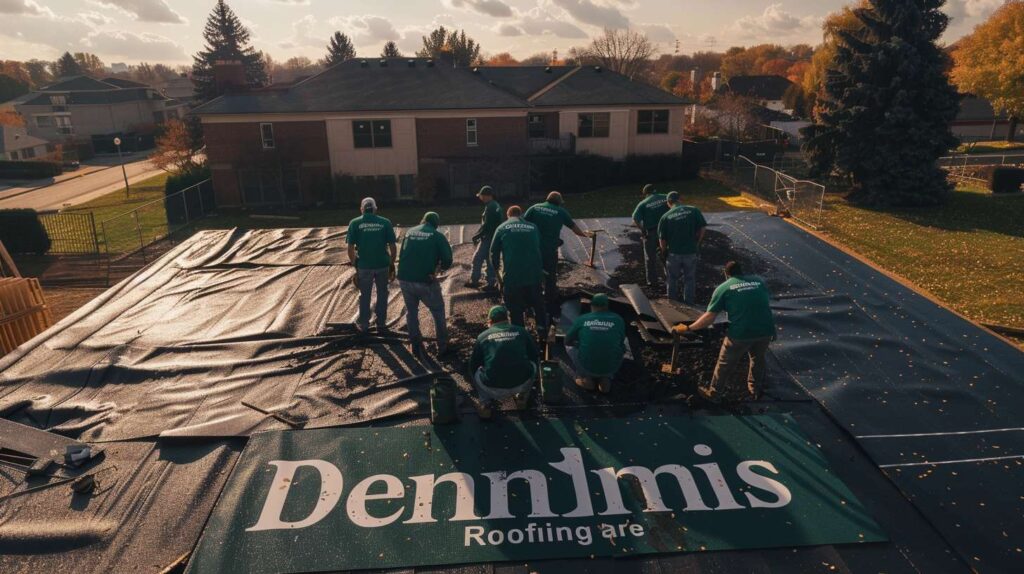
Nineteen years in, here’s the part people still underestimate. The metal panel itself is not the full story – clips, fastener pattern, substrate condition, edge details, and penetrations are what decide whether a roof reaches its expected lifespan or starts telling on itself early. Mike Donahue, nineteen years into commercial roof troubleshooting around Brooklyn loading docks and old walk-ups, will tell you flat out that he’d rather see a simpler standing-seam system installed correctly than a premium coated panel package installed lazily. The material sets the ceiling. The installation decides whether you ever get anywhere near it.
| Roof Type | Typical Longevity Range | What Usually Ends Its Life | How Installation Quality Affects Outcome |
|---|---|---|---|
| Metal (standing seam or exposed fastener) | 40-70 years | Poor clip spacing, dissimilar metal contact, failed edge details | High impact – movement management and penetration detailing are non-negotiable |
| EPDM (rubber membrane) | 20-30 years | Seam failure, punctures, poor perimeter adhesion | Moderate-to-high – seam technique and termination bars decide edge performance |
| Modified Bitumen | 15-25 years | Lap failures, blister formation, UV degradation | High – torching technique and lap sealing directly control lifespan |
| TPO / PVC (single-ply) | 20-35 years | Heat-welded seam failures, membrane shrinkage, flashing voids | High – weld quality and detail work at drains and curbs are make-or-break |
| Asphalt Shingle (commercial low-slope use) | 15-25 years | Granule loss, poor nailing pattern, inadequate underlayment | Moderate – fastener placement and starter course detailing have outsize impact |
| Note: Poor installation shortens every system listed here. Metal is especially unforgiving of bad detailing because thermal movement has to be managed correctly from day one – skip that and the roof will announce its problems before it fails. | |||
| Myth | Real Answer |
|---|---|
| “Metal roofs never leak.” | Metal panels themselves resist water well. Leaks happen at penetrations, trim lines, and parapet flashings – exactly where panel movement and detailing are hardest to get right. A poorly planned penetration retrofit can produce a steady drip on an otherwise sound roof. |
| “Thicker metal alone guarantees a longer life.” | Gauge matters for dent resistance and spanning, not for longevity by itself. A thicker panel installed with wrong clip spacing will still work-harden, crack at fastener holes, and fail early. The spec sheet doesn’t compensate for bad installation. |
| “Rust means the whole roof system failed.” | Surface rust staining at one detail – especially around drainage points where dissimilar metals were allowed to contact – doesn’t mean the field panels are compromised. Isolating the actual source first is the only productive move; the stain is a symptom, not a verdict. |
| “Any roofer can handle metal if they can shingle a house.” | Metal roofing requires understanding thermal movement, concealed clip systems, and system-specific sequencing. A crew experienced only in asphalt will treat expansion gaps, edge restraint, and penetration coordination the same way – which is the wrong way. Specialized installation skill isn’t optional here. |
Where Brooklyn Roofs Start Telling on a Bad Install
Wind at Parapets, Corners, and Open Exposures
On a roof off Third Avenue, I learned this the loud way. It was a February morning in Sunset Park, just after 7 a.m., and a warehouse owner was telling me his new metal roof was “bulletproof” because it had only been on three years. The wind was pushing off the harbor, hard and steady the way it gets when it has nothing to slow it down between the Upper Bay and the building face, and before I even got my ladder set, I could hear the panels chattering near the parapet like loose piano strings. The metal itself was fine. The problem was bad clip spacing – a sloppy install that left too much unsupported panel length where the parapet transition changed the wind load. That job stuck with me because the owner had paid for longevity and got noise as the early warning sign, and Brooklyn’s waterfront exposures, broad warehouse spans, and parapet-heavy buildings mean that kind of mistake doesn’t stay quiet for long.
Heat, Drainage, and Mixed-Metal Trouble Spots
Sounds nice, but here’s the real part – Ask yourself one plain question: what exactly is holding that panel where it belongs? On a long panel run, thermal expansion and contraction are working against every fastener and every clip every single day. Concealed clip systems are designed to let the panel float while the clip holds position – but that only works when the clip spacing follows the system spec and the edge restraint is properly anchored. Skip either, and the movement gets forced into the wrong location. That means enlarged fastener holes, trim that starts to lift, and eventually paths for water that weren’t there on day one.
It’s a little like tuning an old upright: if one section is off, the whole thing announces it. One August afternoon on a church annex in Flatbush, I was up on the roof with a facilities manager who kept pointing at rust stains and asking whether metal had been oversold to him. It was 92 degrees, the roof was cooking, and the staining wasn’t coming from the field panels at all – it was coming from dissimilar metals in contact at a drainage detail that a previous contractor had rushed through years earlier. Galvanic corrosion at one point, localized to one drain area, was producing staining across a wider surface. The rest of the roof was sound. Metal lasts a very long time, but only when the installer respects every small connection – and drainage details with mixed metals are exactly where that respect tends to disappear first.
A metal roof that suddenly chatters, clicks hard in the wind, or starts rattling at the edges is not “just being metal.” That sound usually means thermal movement is being forced into the wrong location – and that leads to enlarged fastener holes, trim that starts pulling away, and eventually leaks at penetrations that weren’t a problem when the roof was first installed. Noise is the warning sign. Waiting on it is how a manageable detail problem becomes a full repair scope.
Small Connection Errors Age a Good Roof Fast
Three loose fasteners can tell you more than a glossy brochure ever will. I had a call during a cold spring rain in Borough Park from a building owner who was convinced the leak soaking through his top-floor office ceiling meant the entire roof system had quit on him. I traced it back to one penetration retrofit around an old vent – somebody had come in after the original install, done a field improvisation around a vent that should have been re-curbed, and left a path for water that activated every time rain came in from the northwest. The main roof panels were still performing exactly as they should. The shortcut was the problem. One bad modification can impersonate total roof failure, and that’s a lousy way to learn how unforgiving metal can be when the details are sloppy.
Blunt truth – good metal roofing is less forgiving of lazy hands than people think. Here’s the insider question worth asking before any crew starts laying panels: how are penetrations being planned before panel layout is set, and who owns that coordination if another trade touches the roof later? Too many installs treat penetration flashing as something to solve after the panels are down, which means it gets improvised around whatever’s already there. Don’t let that happen. Details fail before panels do.
-
✔
Clip spacing set to system spec – not estimated, not “close enough.” The manufacturer’s clip schedule exists because movement tolerance is calculated, not guessed. -
✔
Substrate checked for flatness before panels go down – oil-canning and fastener pull-through both trace back to what was underneath from the start. -
✔
Expansion allowance built into panel runs – especially on long spans common in Brooklyn warehouses and flat commercial roofs. -
⚠
Dissimilar metals isolated from each other – aluminum panels against steel fasteners, copper flashing near galvanized trim. Every contact point is a potential corrosion start. -
✔
Penetrations properly flashed and coordinated with panel layout – planned before panels are set, not retrofitted around them afterward. -
⚠
Edge metal anchored to wind-load spec – trim that’s undersecured at parapets and corners will start moving, and movement at the edge means water paths open up fast. -
✔
Panel layout coordinated with drain locations and equipment curbs – not laid out independently and then forced to work around them in the field. -
⚠
Post-install walk-through for loose or overdriven fasteners – an overdriven fastener compresses the washer past its seal point; a loose one never sealed at all. Both are problems that show up later as leaks.
Fastener Pattern
Penetration Planning
Drainage Detailing
Movement Allowance
How to Judge Metal Roof Installation Services Before You Sign
Questions That Reveal Actual Competence
If the proposal talks plenty about panel finish but barely mentions clips, trim, penetrations, and movement, what exactly are you paying for?
Evaluating metal roof installation services in Brooklyn means looking at scope clarity, not product photography. A well-written scope sequences the work – substrate review, panel layout, edge detailing, penetration coordination – and names who is responsible for each phase. On older Brooklyn buildings with parapets, tight rooftop access, rooftop HVAC units that can’t be moved, and deck irregularities built up over decades of layered repairs, a crew that hasn’t planned for those conditions before they arrive isn’t going to handle them gracefully on the fly. Ask how they approach parapet transitions. Ask what happens if a drain location conflicts with the panel layout they’ve planned. If the answers are vague, the execution will be too.
What a Serious Scope Should Include
Will a metal roof really outlast EPDM or asphalt on a Brooklyn commercial building?
Does noise mean the roof is failing?
Can an existing leak be caused by one bad detail instead of the whole roof?
Are penetrations the weak point on metal roofs?
What should be in a proposal for metal roof installation services?
A metal roof installed correctly is one of the most durable investments a Brooklyn property owner can make – but the installation is where that promise is either kept or broken. If you want metal roof installation services planned around movement, detailing, and long-term performance instead of shortcuts, call Dennis Roofing.