
Professional Roof and Gutter Replacement Services in Brooklyn
Complete roof and gutter replacement in Brooklyn typically runs $9,500-$32,000 depending on building size, roofing material, and gutter system, but here’s what catches most homeowners by surprise: I see at least three or four jobs every year where someone just spent $15,000 on a beautiful new asphalt roof-then kept their fifteen-year-old, sagging, undersized gutters “to save a thousand bucks.” Six months later they’re back on the phone because water’s still running down the brick, the basement’s damp, and the new fascia boards are already showing water stains. The roof is fine. The gutters can’t handle the volume. And now we’re back at square one.
I’m Mack Donahue, senior project manager at Dennis Roofing, and for twenty-two years I’ve coordinated roof and gutter replacement projects across Brooklyn-Dyker Heights, Bay Ridge, Park Slope, Bensonhurst, Crown Heights, everywhere. The single most important thing I tell homeowners is this: your roof and gutters aren’t two separate systems you can mix and match. They’re one integrated water-shedding machine, and when you replace the roof, that’s the perfect moment to size, slope, and install gutters that actually match the new water flow, the building’s footprint, and Brooklyn’s weather patterns.
Why Roof and Gutter Replacement Should Happen Together
Water moves in one direction: from the roof surface into the gutter channel, through downspouts, and away from your foundation. When you install a new roof, you’re changing how much water hits the gutters and how fast. A brand-new architectural shingle roof sheds water faster than old, worn-out three-tabs because the surface is smoother and the granules are intact. Flat roofs with EPDM or TPO membrane have specific drainage slopes that funnel water to scuppers or edge details. If your gutters were barely handling the old roof, they’ll be overwhelmed by the new one.
Here’s a real example: we did a roof and gutter replacement on a brick two-family in Dyker Heights last fall. The homeowner had installed a new asphalt roof three years earlier with another contractor and kept the existing 5-inch K-style gutters because “they looked fine.” By the time we showed up, the fascia behind those gutters was rotted through in four spots, the front walkway had settled two inches from water pooling at the foundation, and every rainstorm sent a sheet of water over the gutter edge onto the stoop. The gutters weren’t damaged-they were just too small. That roof had 1,800 square feet of surface area draining into a 35-foot gutter run. We pulled everything, replaced the fascia, installed 6-inch gutters with proper pitch, added a second downspout, and the system finally worked. But it cost $3,200 to fix what could’ve been done right the first time for $1,400 more during the original roof replacement.
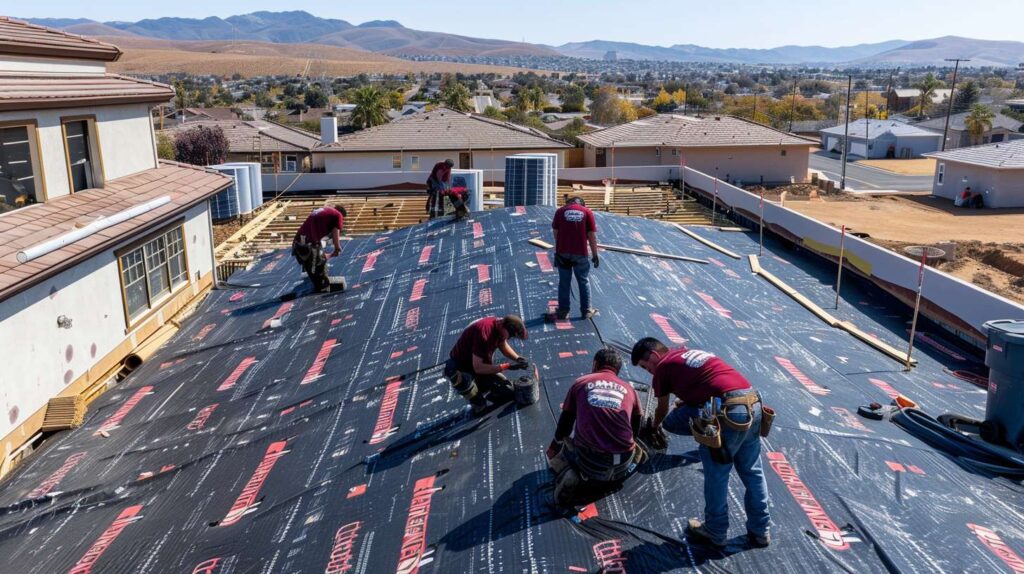
When you combine roof and gutter replacement, we can plan the whole system before the first shingle goes down. That means installing drip edge that properly overhangs into the gutter channel, positioning fascia boards so gutters have solid backing and correct slope, coordinating soffit and ventilation details, and selecting gutter size, downspout placement, and material that matches your roof’s water volume. It’s not just about saving a trip-it’s about engineering the system so every piece works with every other piece.
Planning an Integrated Roof and Gutter Replacement
The first step is understanding what you actually have. Most Brooklyn rowhouses, two-families, and small multifamily buildings have one of three roof types: pitched asphalt shingle roofs, flat EPDM or TPO membrane roofs, or a combination (flat main roof with a pitched front or rear section). Each type drains differently. Pitched roofs concentrate water at the eaves, so gutter capacity and downspout placement are critical. Flat roofs use internal drains or scuppers at the parapet edge, and the gutter system has to tie into those discharge points without creating backup or overflow.
During the planning visit, I measure the roof area, count slopes and valleys, check the current fascia condition, and calculate how many gallons per minute the gutters will need to handle during a two-inch-per-hour rainstorm-that’s the benchmark for Brooklyn. Then we look at the existing gutter setup: size, pitch, number of downspouts, end caps, and whether they’re hung with spikes (old method, pulls loose over time) or hidden hangers (modern, much stronger). If the fascia is soft, spongy, or visibly rotted, we add fascia replacement to the estimate. If you skip that step and hang new gutters on bad wood, you’re just buying yourself another repair in three years.
On a Crown Heights limestone two-family we did in 2022, the homeowner originally called for just a gutter replacement. When I got up on the ladder, I could see the asphalt shingles were cupped, brittle, and missing granules across the back slope. The fascia behind the gutters was gray and soft in two sections. I walked him through the options: spend $2,400 on new gutters hung on failing fascia under a failing roof, knowing he’d need a roof replacement within eighteen months and we’d have to pull the new gutters to access the fascia again-or spend $14,800 now for roof, fascia, and gutters done together, with a ten-year labor warranty covering everything. He went with the combined project, and when we stripped the old roof, we found three spots where water had been running behind the fascia and into the soffit. If he’d just done gutters, those leaks would’ve continued unchecked until the interior ceilings started showing damage.
Material Selection for Coordinated Roof and Gutter Systems
Roofing materials and gutter materials need to match in durability and expected lifespan. If you’re installing a thirty-year architectural asphalt roof, aluminum or copper gutters make sense-they’ll last as long as the roof. If you’re putting down a fifteen-year three-tab budget roof, vinyl or standard aluminum gutters are a better economic match. Mixing a premium roof with cheap gutters, or vice versa, creates maintenance mismatches where one system outlives the other by a decade.
For asphalt shingle roofs-the most common in Brooklyn residential-we typically use architectural shingles (also called dimensional or laminate shingles) rated for 30-50 years, with a proper underlayment layer (synthetic felt or ice-and-water shield in valleys and eaves), drip edge along all edges, and ridge venting for attic airflow. The gutter system is usually seamless aluminum, 5-inch or 6-inch K-style, with hidden hangers every 24 inches and at least one downspout per 35 feet of gutter run. Larger homes or roofs with multiple valleys often need 6-inch gutters to handle the concentrated flow.
Flat membrane roofs-common on Brooklyn rowhouse main sections and garage roofs-use EPDM rubber, TPO, or modified bitumen. These roofs have a slight slope (usually 1/4 inch per foot minimum) draining to scuppers, internal drains, or edge gutters. If you’re replacing a flat roof, the gutter system needs to tie directly into the scupper outlets or parapet edge flashings. On a Bensonhurst three-story multifamily we worked on, the old built-up tar roof drained through two scuppers into box gutters hidden behind the parapet. When we installed the new TPO membrane, we fabricated custom aluminum scupper pans that funneled into 3×4-inch rectangular downspouts, much larger than standard residential because the roof area was 3,200 square feet. Standard 2×3 downspouts would’ve backed up during heavy rain.
Copper gutters and roofing are rare in Brooklyn outside of historic brownstones and high-end renovations, but when they make sense, they’re coordinated from the start. Copper standing-seam roofs pair with half-round copper gutters and round copper downspouts. The labor and material cost is roughly triple that of asphalt and aluminum, but the lifespan is 70-100 years with proper maintenance. We did a partial copper roof and gutter replacement on a Park Slope brownstone cornice two years ago-just the front bay section-and that 400-square-foot area cost $18,000. Beautiful work, and it’ll outlast the building’s next three owners, but not a fit for every budget.
Brooklyn-Specific Challenges in Roof and Gutter Replacement
Brooklyn buildings have specific quirks that affect how we approach combined roof and gutter replacement. Attached rowhouses and semi-detached homes share parapet walls and roof edges with neighbors, so we often coordinate with adjacent properties or work within tight property line restrictions. Older buildings-anything built before 1950-frequently have undersized or no soffit venting, which means adding proper intake vents during the roof replacement to prevent moisture and heat buildup that shortens shingle life.
Access is another challenge. Many Brooklyn properties have narrow side alleys, no driveway, and street parking restrictions that make material delivery and debris removal a logistics puzzle. For roof and gutter replacement, we typically use a truck-mounted conveyor or hoist to get shingle bundles onto the roof, and a rooftop dumpster chute to send old materials directly into a dumpsite container on the street. The New York City Department of Transportation requires permits for any container or staging that blocks a traffic lane, and those permits specify days and hours. A poorly planned job can lose two days waiting for permits or rescheduling around street-cleaning regulations.
Winter weather is a real consideration. We can install asphalt shingles down to about 40°F if we use cold-weather adhesive and hand-seal each shingle, but below that, the self-sealing strips won’t activate and the shingles become brittle. Gutter installation is less temperature-sensitive, but if we’re replacing fascia, we need dry conditions to properly seal and prime the new wood. I generally recommend scheduling roof and gutter replacement between April and November in Brooklyn. December through March, we’ll do emergency repairs and small sections, but full replacements wait for better weather unless the building is actively leaking.
| Roof Type | Typical Cost Range (Brooklyn) | Recommended Gutter System | Combined Project Timeline |
|---|---|---|---|
| Asphalt Shingle (1,200-1,800 sq ft) | $7,500-$13,000 | 5″ or 6″ seamless aluminum K-style | 3-5 days |
| Flat EPDM/TPO (1,000-1,500 sq ft) | $8,000-$15,000 | Box gutter or scupper-fed downspouts | 4-6 days |
| Combination Pitched + Flat | $12,000-$24,000 | Mixed K-style + box gutter system | 5-8 days |
| Copper Standing Seam (per 100 sq ft) | $4,000-$6,000 | Half-round copper gutters | Varies by scope |
The Roof and Gutter Replacement Process at Dennis Roofing
Once we finalize the contract, I schedule the job based on material lead times (usually 5-10 days for shingles and custom-fabricated gutters) and weather forecasts. You’ll get a specific start date, and I’ll confirm the day before. On day one, the crew arrives between 7:00 and 7:30 a.m.-early start times are standard in roofing because you want maximum daylight hours and cooler morning temperatures for the crew.
Step one is protecting your property. We lay tarps over landscaping near the building, set up debris chutes or ground-level dumpsite containers, and cover any AC condensers, basement window wells, or ground-level vents. Then we start the tear-off. For an asphalt shingle roof, that means pulling off the old shingles, underlayment, and any damaged plywood sheathing down to the bare roof deck. Gutter removal happens at the same time-we pull the old gutters, inspect the fascia, and mark any sections that need replacement. All debris goes straight into the container, and we use rolling magnets to pick up stray nails in the yard and driveway at the end of each day.
Fascia replacement happens before we install the new roof. Rotted or damaged fascia boards get replaced with primed pine or PVC trim boards (PVC costs about 40% more but never rots). We secure the fascia to the rafter tails with galvanized nails or screws, prime any raw wood, and let it dry before moving forward. Skipping fascia work is one of the biggest red flags you can see from a contractor-if they try to hang new gutters on visibly soft, gray, or water-stained fascia, walk away.
The new roof goes on next: underlayment, drip edge along eaves and rakes, starter shingles, field shingles working up from bottom to top, ridge vent installation, and ridge cap shingles. We use proper nailing patterns (four or six nails per shingle depending on wind rating), hand-seal shingles in high-wind areas, and install ice-and-water shield in valleys and around any roof penetrations like chimneys or vent pipes. On a typical 1,500-square-foot pitched roof, this takes two to three days with a three-person crew.
Once the roof is complete and the drip edge is in place, the gutter crew takes over. Seamless gutters are fabricated on-site using a truck-mounted machine that forms continuous aluminum coil into gutter profile-no seams except at corners and end caps, which means far fewer potential leak points. We measure, cut, and hang the gutters with hidden hangers every 24 inches, pitched at 1/4 inch per ten feet toward the downspouts. Downspouts get installed with straps every six feet, and we add gutter guards or screens if that’s part of the contract. Final gutter installation usually takes one full day.
On the last day, we do a full site cleanup: haul away the dumpsite container, return any moved patio furniture or grills, run magnets one more time, and walk the property with you to review the work. I’ll show you the new roof vents, explain how to check gutter flow during the next rainstorm, and leave you with care instructions and warranty documents. For roof and gutter replacement, Dennis Roofing provides a ten-year labor warranty on the installation and passes through the manufacturer’s material warranty (typically 30-50 years for shingles, lifetime for certain gutter materials).
What to Watch Out For: Red Flags in Roof and Gutter Replacement Bids
Not every roofing contractor approaches roof and gutter replacement the same way, and some of the cost differences between estimates come down to corners being cut. Here are the warning signs I’d flag if I were reviewing bids for my own house:
Vague material specifications. If the estimate says “architectural shingles” without listing the brand, product line, and warranty length, you don’t know what you’re buying. GAF Timberline HDZ and Owens Corning Duration are both architectural shingles, but they have different wind ratings, warranties, and costs. Same with gutters-“seamless aluminum gutters” could be .027-inch thin-wall or .032-inch heavy-gauge. Thicker is stronger and costs about $1 per linear foot more, but it won’t dent as easily.
No fascia inspection or replacement allowance. Any legitimate roof and gutter replacement estimate should include a line item for fascia replacement or at least note “fascia inspected and sound.” If the estimate doesn’t mention fascia at all, the contractor either didn’t look or doesn’t care. On Brooklyn buildings older than thirty years, I’d estimate 40-50% need at least partial fascia replacement, especially on the shaded north side where moisture lingers.
Installing new gutters before the roof. The correct sequence is roof first, then gutters. If a contractor suggests doing gutters first “to save time,” they’re doing it backwards. You can’t properly install drip edge and flashing details if the gutters are already in place, and you risk damaging new gutters during the roof tear-off.
“Lifetime” gutter or roof claims without specifics. I’ve seen estimates promising “lifetime warranty on gutters” when what they really mean is the aluminum coil has a lifetime finish warranty against peeling-but the labor, hangers, and installation have zero warranty. Read the fine print. A legitimate warranty specifies what’s covered (materials, labor, or both), for how long, and who backs it (manufacturer, contractor, or both).
Extremely low bids. If one estimate is 30-40% below the others, that contractor is either desperate for work, cutting major corners, or planning to upcharge you later with change orders. Roof and gutter replacement has pretty stable material costs-shingles run $95-$140 per square (100 square feet), seamless aluminum gutters cost $8-$14 per linear foot installed, and labor rates in Brooklyn are fairly consistent. A legitimate bid won’t vary wildly unless the scope is different.
Maintenance After Your Roof and Gutter Replacement
Once your new roof and gutter system is installed, you’ve got a 30-50 year roof and a 20-30 year gutter system if you take care of them. That doesn’t mean “maintenance-free”-it means low-maintenance with a few annual checks.
Gutters need cleaning at least twice a year, spring and fall, to remove leaves, twigs, and the asphalt granules that wash off new shingles during the first year. Clogged gutters lead to overflow, ice dams in winter, and water backing up under the shingles at the roof edge. If you’ve got large trees overhanging the roof-common in brownstone blocks with mature London planes or maples-you might need cleaning three or four times a year, or consider installing gutter guards during the replacement.
Walk around the building after heavy rainstorms and check for proper water flow. You should see steady streams from each downspout, no overflows at the gutter edges, and no pooling at the foundation. If you notice water spilling over in one section, the gutter might need a pitch adjustment or an additional downspout. That’s a quick service call, usually under $300.
Asphalt shingle roofs need annual visual inspections from the ground. Look for lifted shingles, missing granules in large patches, or any flashing that’s pulled loose around chimneys or vents. Brooklyn’s freeze-thaw cycles-especially the swings we’ve been seeing between 15°F and 50°F within a week-cause expansion and contraction that can loosen nails and flashing over time. Catching those issues early, during year five or ten, prevents leaks that damage sheathing and interior ceilings.
Flat EPDM or TPO roofs need a professional inspection every three to five years. We check seam integrity, look for punctures or tears, inspect flashing at parapet walls, and make sure the drainage system is flowing freely. Membrane roofs can last 20-30 years, but ponding water (standing water that doesn’t drain within 48 hours) will degrade the membrane and cut that lifespan in half.
Cost Breakdown: What You’re Actually Paying For
When homeowners see a $16,000 estimate for roof and gutter replacement, the natural question is “where does that money go?” Here’s the breakdown on a typical 1,500-square-foot pitched asphalt roof with 120 linear feet of new gutters on a Brooklyn two-family:
Materials account for roughly 40% of the total. That’s $6,400 for shingles ($1,800), underlayment and ice-and-water shield ($600), drip edge and flashing ($300), ridge vent and caps ($400), nails and adhesives ($200), seamless aluminum gutters ($1,200), downspouts and elbows ($400), hidden hangers and screws ($300), fascia boards and trim ($600), and miscellaneous supplies ($600). These are retail-plus-contractor-discount prices-you’re not getting Home Depot shelf pricing, but you’re also not paying contractor markups of 50-100% like some companies charge.
Labor is 35-40% of the total, or about $5,600-$6,400. That covers the removal crew, installation crew, gutter fabrication and installation crew, site cleanup, and project management. Roofing is physically demanding, skilled work with significant safety risks. A three-person crew doing a full tear-off and replacement in Brooklyn summer heat earns their pay, and experienced installers who know how to flash valleys properly and slope gutters correctly are worth every dollar.
The remaining 20-25% ($3,200-$4,000) covers permits, dumpsite container rental ($600-$800 in Brooklyn with tight drop-off and pickup scheduling), DOT permits if we’re blocking a lane ($300-$500), insurance and bonding, truck and equipment costs, and company overhead. Those aren’t optional costs-they’re part of running a legitimate, licensed, insured roofing company in New York City.
When to Replace Your Roof and Gutters
The ideal time is before you have active leaks, but that’s not always how it works. Most homeowners call us because they noticed water stains on a ceiling, the gutters are sagging away from the fascia, or a home inspector flagged the roof during a sale. Here’s what actually warrants a full replacement versus a repair:
Asphalt roofs should be replaced when you’ve got widespread shingle damage-curling, cupping, or granule loss across more than 30% of the roof surface-or when the roof is 20-25 years old and you’re starting to see isolated leaks. Replacing a few shingles costs $300-$600, but if you’re doing that twice a year, you’re better off replacing the whole roof. Same logic applies if you’re planning to sell within the next five years-a new roof adds value and removes a negotiating point for buyers.
Gutters need replacement when they’re pulling away from the fascia in multiple spots, you’ve got visible rust-through or cracks, or they’re undersized for the roof (that 5-inch gutter problem I mentioned earlier). Sagging gutters or gutters that overflow during moderate rain aren’t always damaged-they might just need re-pitching or an extra downspout-but if the hangers are loose and the fascia is soft, you’re looking at a full replacement to do it right.
The best scenario is coordinating both when the roof reaches end-of-life. That way you get the integrated system designed from scratch, you avoid tearing out fairly new gutters to access the roof three years later, and you maximize the value of the labor and disruption. On a Bay Ridge single-family we did last summer, the homeowner’s asphalt roof was twenty-eight years old, and the gutters were original to a 1994 renovation-also twenty-eight years. Everything came off, we replaced twelve feet of fascia on the back section, installed a new thirty-year architectural roof with ridge venting, and hung 6-inch seamless gutters with gutter guards and four downspouts draining to underground drywells. That’s a system that’ll protect the house for the next thirty years with minimal maintenance.
Choosing the Right Contractor for Combined Roof and Gutter Replacement
Here’s what I’d check if I were hiring a roofing company for my own house: active New York State Home Improvement Contractor license, general liability and workers’ compensation insurance (ask for certificates and verify them directly with the insurer), references from jobs completed in the last twelve months, and a written contract that specifies materials by brand and model, payment schedule tied to milestones, start and end dates with weather delay provisions, and warranty terms for labor and materials.
Interview at least three contractors and ask specific questions: Will you replace damaged fascia or just note it and move on? How do you calculate gutter size and downspout placement? What underlayment and ventilation system will you use? How do you handle permits and DOT approvals? What happens if it rains mid-project? A contractor who gives clear, detailed answers-and doesn’t pressure you to sign same-day-is worth considering. One who hand-waves details or offers a “special price if you sign today” should raise red flags.
At Dennis Roofing, we schedule a site visit, measure everything, take photos, and provide a written estimate within three to five days. The estimate breaks down materials, labor, permits, and timeline, and we walk you through the plan step by step. We don’t do high-pressure sales, and we don’t offer magical discounts that expire at midnight. The price is the price based on the work required, and if you want to move forward, we schedule you into the production calendar with a clear start date.
Your roof and gutters are your home’s first defense against water damage-the single biggest threat to buildings in Brooklyn’s wet, freeze-thaw climate. Done right, a coordinated roof and gutter replacement protects your foundation, walls, ceilings, and mechanical systems for decades. Done wrong, or done piecemeal, it’s a recurring expense and a constant source of worry. The difference is planning, materials, and skilled installation, and that’s what we focus on every day.