
That Asphalt Flat Roof Has Some Years Left – Here’s How We Buy Them Back
Why a Leak Is Not the Same Thing as a Dead Roof
I don’t blame you for assuming otherwise. A leaking asphalt flat roof has a way of triggering panic – and where there’s panic, there are full replacement quotes showing up before anyone’s actually walked the roof and proved the field is shot. I hate seeing that happen, honestly, because a lot of these roofs still have serviceable life left, and the only thing standing between a targeted repair and a five-figure bill is one honest inspection.
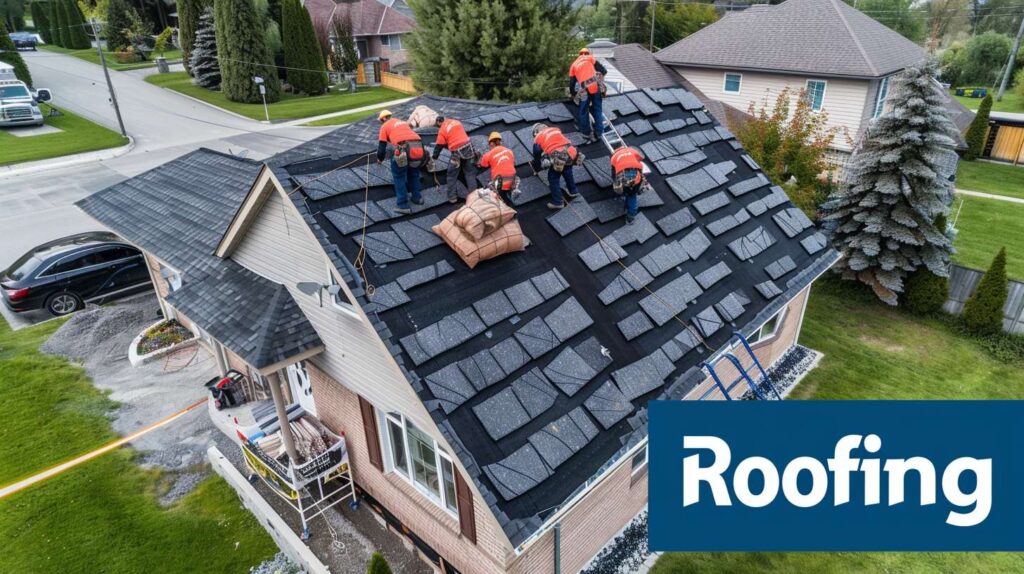
Five minutes with a probe and a pair of dry knees tells me more than a dramatic estimate ever will. A quiet walk across a Brooklyn flat roof tells you whether the membrane is still holding in the field or just sore around the edges – whether you’ve got isolated moisture or a slow soaking that’s worked its way into the insulation. There’s a big difference between a roof that’s tired, a roof that’s wounded, and a roof that’s actually finished. Sore knees and shot knees are not the same thing, and you don’t replace the whole leg just because one joint is giving you trouble.
| Myth | Field Reality |
|---|---|
| Any interior ceiling stain means you need a full roof replacement. | A single exterior entry point – bad flashing, a split, a clogged drain – can create multiple interior stains while the field membrane stays dry and bonded. |
| Ponding water means the whole roof has failed. | Ponding usually points to a drainage problem – a clogged or low drain bowl, a bad slope transition – not total membrane failure. Drain correction often resolves the abuse on the problem section. |
| A blister anywhere on the roof means there’s hidden saturation everywhere underneath. | Blisters form from trapped moisture or gas between layers and are often localized. Opening one and finding dry, bonded field material underneath is more common than people expect. |
| Multiple top-floor apartments with ceiling stains always means the whole roof field has failed. | Lateral water travel across decking and masonry is real. One failed flashing point can show up in three different apartments. Interior stain count is not a measure of how much roof is actually compromised. |
| A roof that’s already been patched once is past saving – it’s done. | Prior repairs don’t condemn a roof. A well-executed patch at the right location extends life. A sloppy one just creates a new failure point – which is a repair problem, not an end-of-life signal. |
Quick Reference: Asphalt Flat Roof Repair Signals
Usually Repairable
Roofs where the field membrane is still largely firm and bonded, with problems concentrated at flashings, drains, seams, splits, blisters, or previous patch edges.
Often Misdiagnosed
Flashing failure at bulkheads and parapet corners, clogged interior drain bowls, splits at old patch edges, and cap sheet lifting at perimeter transitions – all commonly mistaken for full field failure.
Replacement Trigger
Widespread wet insulation confirmed by multiple test cuts across the field, large-scale delamination, structural deck damage, or severely compromised membrane across more than 40-50% of the roof surface.
First Inspection Focus
Map the boundary between dry bonded field and wet or failing areas. Establish whether moisture is isolated or widespread before any repair or replacement conversation begins.
What We Actually Check Before We Even Say the Word Replacement
Field membrane condition
Here’s the blunt version: repair decisions come from what we find physically on the roof, not from how old the permit is. I’m Joe Santangelo, and I’ve spent 17 years in roofing – a big part of that work has been reading moisture behavior and telling the difference between isolated asphalt flat roof failures and true end-of-life conditions on Brooklyn buildings. Age is a data point, not a verdict. A 20-year-old roof with well-bonded field material and a few bad flashing spots is a very different animal than a 12-year-old roof that’s been drowning at the drain every storm.
Drainage and water travel
If I asked you where the water sits after a hard Brooklyn rain, could you answer me? Most people can’t – and that gap is where misdiagnosis lives. Flat roofs aren’t actually flat; they’re supposed to shed water toward interior drains or edge outlets through built-in slope. When drains clog, depressions form, or slope transitions fail, water starts moving sideways across the deck before finding a way inside. The ceiling stain you see Thursday morning might be ten feet away from where the water actually entered Sunday night.
Perimeter and penetration weak spots
Bad patching is louder than age. When someone’s been slopping mastic onto the same split for three seasons, or stacking unreinforced patches over old repairs without proper prep, the failure signature you get looks enormous – but the underlying field is often still intact. I remember one August morning in Bensonhurst, around 8:15, the sun was already baking the black top layer and the owner met me with that defeated look people get when they think “leak” means “new roof.” I cut one small test section near a blister that had opened by the drain, and underneath, most of the field was still dry and bonded. We repaired the bad pocket, reset the drainage around it, and bought that roof another four years. Not a band-aid – a focused fix on a roof that wasn’t done, just wounded in one place.
Our Inspection Sequence: Repair vs. Replacement
| What You See | What It Usually Points To | Typical Service Response |
|---|---|---|
| Brown ceiling stains, top floor only | Flashing failure at bulkhead, parapet corner, or penetration – not necessarily field membrane | Reflash the identified entry point; confirm field is dry with probe or test cut |
| Standing water 48+ hours after rain | Clogged or undersized drain, low spot from deck deflection, or failed slope transition | Drain cleaning or drain reset; rebuild depressed area if insulation beneath is saturated |
| Bubbles or blisters across the surface | Trapped moisture or gas between ply layers; often localized to one zone | Open, dry, and patch blistered area; check field around it for additional moisture |
| Cracking or alligatoring at the field surface | Surface oxidation and age-related brittleness; surface layer may be fatigued while plies below hold | Evaluate depth; surface coating or reinforced patch may extend life if substrate is still intact |
| Leak follows every rain, not just heavy storms | Open split, failed lap seam, or lifted flashing with a direct path to the interior | Locate and seal the open seam or split; evaluate surrounding area for additional weak points |
| Old patch area leaking again | Previous repair used unsupported mastic or missed the full failure boundary; patch edge is now the failure point | Remove and properly redo the original repair with reinforced material; address why the first patch failed |
Brooklyn Leak Patterns That Fool People Every Time
I had a superintendent in Midwood say to me once, “Three apartments have rings, the roof’s done” – and I had to talk him down off the ledge before I’d even put on my boots. That’s not how water works. I was on a Flatbush job during a light cold rain, the kind that shouldn’t shake anyone’s confidence, and the super was certain the whole asphalt flat roof was finished because tenants on the top floor had brown ceiling rings in three separate apartments. Turned out two of those leaks were coming from failed counterflashing at a bulkhead corner – a corner that had been parged over twice and was barely holding – and the third was tracking from a split near a patch that someone had spread on like peanut butter on white bread. Ugly, yes. Unprofessional, absolutely. But the field beneath all of it? Dry. Bonded. Not going anywhere for years. Brooklyn roofs have specific failure personalities: bulkheads that shed flashing faster than expected, parapet corners on old brownstone additions where the masonry and the roof membrane are arguing with each other, multifamily tops with interior drains that collect every leaf and wrapper the wind sends up from the street, and transition points where an old addition meets original structure and nothing lines up cleanly. One entry point in any of those locations can create interior damage that looks, from the inside, like the whole roof is failing.
Open the Usual Suspects
▶ Bulkhead Corners and Counterflashing
▶ Clogged or Depressed Drain Bowls
▶ Old Patch Edges Opening Up
▶ Parapet Transitions and Cap Sheet Lifting
⚠ Don’t Count Stains to Judge a Roof
One exterior water entry point can branch across roof decking, travel along masonry, and appear as multiple separate ceiling stains in different apartments or rooms. The number of interior stains does not measure the extent of roof failure. You need a trained eye on the exterior to find where water actually gets in – then the repair scope becomes clear. Counting rings on the ceiling is not a field inspection.
Use This Repair-or-Replace Shortcut Before You Panic
Sounds right, but that’s not the real problem.
Before You Call: What to Have Ready
For Brooklyn owners and building supers calling about asphalt flat roof repair services
Where the stain first appeared inside – which room, which floor, how close to an exterior wall, bulkhead, or skylight.
Whether the leak follows heavy rain or shows up in light rain too – frequency and rain intensity tells us how open the entry point is.
Whether there’s standing water somewhere on the roof 24 hours after rain – if yes, note roughly where on the roof it pools.
Whether the roof drains have been cleaned recently – or whether you honestly don’t know the last time anyone touched them.
Whether the leak location is near a bulkhead, skylight, parapet corner, or pipe penetration – these are the first places we look regardless.
Whether there are visible old patch areas on the roof – dark blotches of mastic, raised fabric sections, or areas that look different from the rest of the field.
Decision Path: Repair First or Replace?
YES ↓
NO ↓
YES ↓
NO ↓
YES (widespread)
NO (isolated sections)
Repeated ponding at one location? → Drainage correction + localized membrane repair. Don’t just patch over a section that’s going to keep absorbing water – fix why it’s sitting there first.
A flat roof is like a guy walking down 86th Street with one good boot and one soaked sock. The whole person isn’t broken – one side is taking all the damage. I was on a brownstone in Park Slope just before sunset, one of those windy evenings where every loose wrapper on the block ends up on a rooftop, and the homeowner had already gotten a replacement quote loaded with dramatic language. I walked the roof, checked the seams, probed the soft spots, and found the real problem was ponding near a clogged interior drain that had been quietly cooking the same section every single storm. We rebuilt the trouble area, corrected the drainage, and I told him the roof wasn’t “finished” – it was just being asked to swim for a living. Here’s the insider tip worth writing down: ask where water still sits 24 hours after rain, and ask whether the same roof area has been patched more than once. Repeat trouble zones matter more than roof age. A 15-year-old roof with one consistently abused section is not the same situation as a 15-year-old roof with problems scattered across the entire field.
Questions Brooklyn Owners Ask When They’re Trying Not to Get Sold a Whole New Roof
These are fair questions, and they deserve straight answers – not soft language designed to keep the estimate moving. The goal at Dennis Roofing is to buy back honest service life where it genuinely exists, not to stretch a dead roof past reason, and not to push a replacement on a building that doesn’t need one yet.
▶ How do you know if my asphalt flat roof is repairable?
▶ Can one leak mean more hidden damage than we see?
▶ Does ponding automatically mean replacement?
▶ Will a repair just be a temporary band-aid?
▶ When should I stop repairing and replace the whole roof instead?
If you want an honest read on whether your roof is tired, wounded, or actually finished – before anyone sells you a full replacement – call Dennis Roofing and let us do a real inspection first. We’re in Brooklyn, and we know these roofs. Let’s find out what you’re actually working with.