
Your Flat Roof Needs to Be Properly Waterproofed – Here’s What That Actually Means
Why interior drips tell the story late
Let’s get into the part nobody explains. A flat roof usually does not fail where the water finally shows up inside – and that gap between entry point and ceiling stain is exactly where a lot of property owners get misled into thinking they fixed something when they didn’t. Water on a flat roof behaves like a hesitant trespasser: it waits at seams, doubles back at edges, lingers under membrane laps, and chooses the least obvious route before it ever shows itself indoors. Flat roof waterproofing services that don’t account for that travel path aren’t really solving the problem.
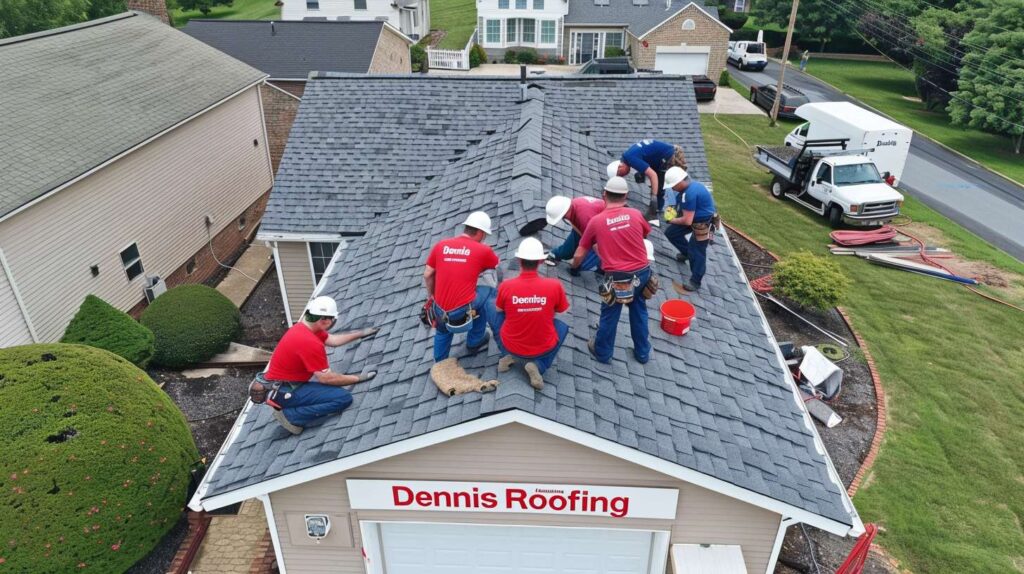
Here’s the blunt version: waterproofing means locating where water entered, tracing where it traveled, and identifying which roof components let it stay long enough to cause damage. I remember a July call just after 6:10 in the morning from a bakery owner in Sunset Park who said the ceiling over the prep table “sweated” overnight. It hadn’t – water had worked through a seam on the flat roof, traveled farther than anyone expected, and showed up nowhere near the actual failure point. That was one of those jobs where I had to explain that waterproofing is not the same as “putting something on top that looks sealed from the street.” The ceiling stain is the ending. Waterproofing work finds the beginning.
What a waterproofing crew is actually checking up there
Surface clues that matter
At 7 a.m. on a Brooklyn roof, the first thing I look for is where water lingered after everyone else went home. You can see it in the staining patterns, the debris lines, the spots where granules or gravel have shifted. Brooklyn roofs – older masonry buildings off Atlantic Avenue, mixed-use walk-ups in Crown Heights, buildings where someone added an HVAC unit three owners ago and sealed the curb with whatever was on hand – carry years of layered decisions, and the water knows exactly where each one was made poorly. The roof tells the story if you’re reading the right details.
Details that usually decide the outcome
The inspection points that actually matter are the ones most people walk past: seams where two membrane sections overlap, blisters that signal trapped moisture below the surface, drain bowls with years of debris restricting flow, scuppers that have been repainted over without checking the liner, flashing edges pulling away from parapet walls, coping caps that have cracked at their joints, pitch pockets around conduit, curb edges on rooftop equipment, and spots where the substrate feels soft underfoot. I’m Latasha Monroe, and after 17 years coordinating Brooklyn leak calls and flat roof waterproofing conversations, the pattern I keep seeing is that the visible damage is rarely what’s doing the most harm.
The mistake people make is thinking a flat roof is flat in the way a kitchen table is flat. It isn’t. A properly designed flat roof has intentional slope – usually a quarter-inch per foot minimum – moving water toward drains or scuppers. Settlement, added weight, blocked drains, and decades of repairs can all compromise that slope. When water can’t drain predictably, every low spot becomes a test of whatever detail sits nearest to it. And the details that are a few years past their useful life don’t pass that test quietly.
| Roof Area | What Gets Checked | Why Water Pauses There |
|---|---|---|
| Field Seams | Lap adhesion, seam width, lifting edges, previous repair tape | Seams are the lowest-resistance entry point when adhesive degrades or thermal cycling separates the overlap |
| Drain Bowls | Strainer condition, clamping ring seal, membrane termination at drain flange | Water concentrates here; a loose clamping ring lets it bypass the drain and work under the membrane |
| Scuppers | Liner integrity, parapet opening seal, debris blockage | Backed-up scuppers redirect water along the parapet wall base – one of the quieter entry routes on Brooklyn rooftops |
| Parapet Walls | Base flashing height, masonry cracks, coping joint sealant | Parapets take weather from above and below; cracked coping lets water down the wall face and into the roof assembly |
| Flashing Transitions | Edge termination, counter-flashing condition, gap between base and wall | Where different materials meet, movement and age pull joints open – flashing edges are where most undetected entry happens |
| Penetrations / HVAC Curbs | Curb height, membrane wrap, pitch pocket fill, pipe boot condition | Every penetration is an interruption in the membrane – and equipment added after the original install rarely gets properly integrated |
| Old Patch Zones | Edge adhesion of prior repairs, moisture trapped beneath, compatibility with current membrane | Old patches create elevation changes and edge lines where water hesitates and eventually works underneath |
| Ponding Areas | Duration of standing water, nearby detail condition, substrate softness underfoot | Prolonged ponding accelerates membrane degradation and exerts hydrostatic pressure on any nearby seam or detail |
| Roof Edges | Drip edge integrity, metal termination bar, membrane rollback at perimeter | Edge details are where wind-driven rain and ice work against the membrane; a lifted edge can channel water back into the building wall |
Most roofs don’t confess at the stain; they confess at the detail everybody walked past.
Where Brooklyn flat roofs usually start negotiating with water
I’ve watched this happen on more than one old mixed-use building – the kind with a ground-floor bodega and four apartments above, a rooftop that’s had three different contractors and two different patch products on it over twenty years. One November afternoon, during that cold mist Brooklyn gets when the sidewalks never seem fully dry, I stood with a landlord in Flatbush who kept pointing to one obvious pond on the roof like it was the whole issue. What I noticed was three separate places where water had been pausing along old patch lines and around a curb detail, basically choosing the slow route into the building. In Sunset Park, Bedford-Stuyvesant, and neighborhoods like them, freeze-thaw cycling hits parapet joints and old patch edges hard every winter, and each year adds one more place where water is willing to be patient. It rarely forces its way in. It just waits.
- 🔩 Around drain strainers – especially where the clamping ring has never been re-torqued
- 🩹 Along old patch edges – where the patch material has shrunk or debonded at the perimeter
- 🧱 Base flashing at parapets – where masonry movement has cracked the seal over time
- 📦 HVAC curb corners – particularly on units added after the original membrane installation
- 🔧 Pipe penetrations – where pitch pockets have dried out or were never properly filled
- 🕳️ Scupper mouths – where the liner has separated from the parapet face
- 🏗️ Wall-to-roof transitions – especially on buildings where roof height changed during renovations
- 💧 Low spots with repeat ponding – where the membrane sits in water after every significant storm
Why Recurring Spot-Sealing Can Make the Real Problem Harder to Find
Repeated spot sealing over the same area creates a few practical problems. It can trap moisture in the substrate below, preventing it from drying and accelerating the degradation underneath. Each new layer of sealant also hides seam movement and membrane behavior from the next inspector. Water that was draining toward one spot often gets redirected by a raised patch edge and finds a new path – sometimes one that’s harder to trace.
The bigger concern is the false confidence it creates. A fresh bead of sealant looks like a solution. It stops the drip – for now. But if the substrate is already wet and the seam has been moving, that sealant is holding a conversation with a problem that isn’t going anywhere. Don’t let repeated small seals become a substitute for an actual inspection.
How to tell whether you need a repair approach or a bigger reset
Questions that narrow it down
If you were standing next to me, I’d ask you one question first: are we dealing with one failed detail on an otherwise serviceable roof, or a roof that has been letting water hesitate in ten places for years? That distinction drives everything – scope, cost, timeline, and what you’re actually buying. I once got a call after a Sunday storm from a small church near Bedford-Stuyvesant where the custodian had set out six different buckets, and not one of them was under the real entry point. The leak had started at a failed flashing edge, moved under the membrane, and appeared along an interior beam hours later. That building didn’t need a patch at six spots. It needed someone to read where the water had been.
A seam knife, a drain, and one soft spot can tell you more than a fresh coat of anything shiny. One soft area near a seam or drain often means there’s trapped moisture and substrate decline directly below the surface – even when the membrane looks cosmetically reasonable from above. That’s the kind of finding that changes the scope of a job. Inspection results determine whether flat roof waterproofing means targeted repairs, seam reinforcement, drainage correction, a full restoration, or a frank conversation about replacement planning. Anyone quoting you before they’ve done that inspection is guessing.
Questions worth asking before you hire anyone for it
Personally, I don’t trust any waterproofing recommendation that skips a conversation about drainage, flashing condition, and substrate. That sounds like a reasonable minimum, and honestly it is – but you’d be surprised how often a property owner gets a quote that goes straight to “we’ll apply a coating” without any mention of what the drains look like or whether the flashing edges are still holding. That sounds convenient, but here’s where it turns: coating a roof with unresolved flashing gaps and clogged scuppers doesn’t waterproof anything. It just changes what the next repair call looks like. Worth asking any contractor, before you book: what did you find at the drains, the seams, and the flashing? If they can’t answer that, they didn’t look.
A flat roof that’s been letting water find its own way around for a year doesn’t give up that information easily – it takes someone willing to look at the right places, not just the wet ceiling below. If you want Dennis Roofing to come out and trace how water is actually moving across your flat roof – instead of guessing from the stain – give us a call and we’ll start with the roof, not the ceiling.