
Replacing a Flat Roof Isn’t Cheap – Here’s What It Actually Costs Before You Plan
Delay it and it spreads. Most full flat roof replacements in Brooklyn land somewhere between $14,000 and $28,000, with larger buildings or ugly multi-layer tear-offs climbing well past that – and the reason that number swings so hard isn’t the membrane you can see from the hatch, it’s the stack hiding underneath it: insulation, decking, edge metal, drainage, access routes, and disposal logistics.
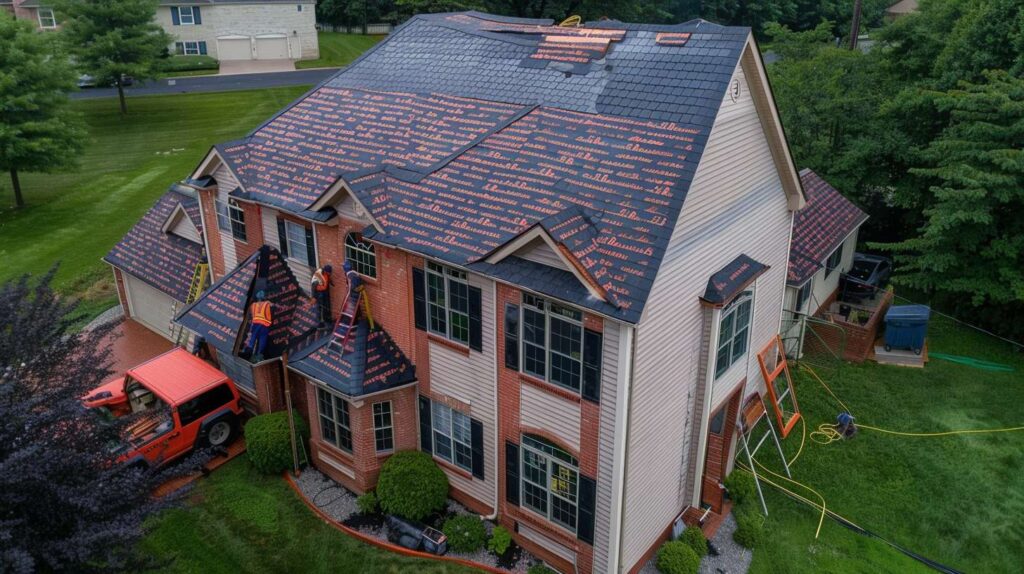
What a Brooklyn Flat Roof Replacement Usually Runs
On a 1,200-square-foot roof in Brooklyn, here’s where the money actually goes. The membrane itself – whether that’s TPO, modified bitumen, or EPDM – is a real cost, but it’s rarely the one that surprises people. What surprises people is the tear-off labor, the wet insulation that has to come out by the yard, the decking boards that turn to crumble once you pry the layers back, the edge metal that’s been rusting under a cap sheet for twenty years, the drain clamping that nobody touched in two roofing cycles, and the simple fact that getting debris off a six-family in Flatbush is not the same as getting it off a ranch in the suburbs. That’s the stack. That’s the price.
I don’t trust a neat number given too early. A clean round figure delivered before anyone’s pulled a single layer usually means something was skipped – not discovered efficiently. I’m Derek Faulkner, 17 years in roofing and now Safety & Compliance Officer at Dennis Roofing, and locally I’m known as the person who can break down flat roof replacement pricing without the change-order games – which only works if I account for the whole stack before the first bid goes out.
Brooklyn Flat Roof Replacement – Pricing Scenarios
| Scenario | Typical Size | Price Range | What’s Driving the Cost |
|---|---|---|---|
| Straightforward single-layer tear-off | 800 sq ft | $9,000-$14,000 | Clean one-layer pull, accessible building, no deck damage found |
| Typical residential replacement | 1,200 sq ft | $14,000-$20,000 | Standard two-layer tear-off, new insulation, edge metal, and drain reset |
| Same size with wet insulation and partial deck repair | 1,200 sq ft | $19,000-$26,000 | Wet insulation removal adds labor and material; deck board replacement adds per-sq-ft cost |
| Larger roof with difficult debris route | 1,800 sq ft | $22,000-$32,000 | Extra labor for narrow carry path, multiple haul trips, occupied units slowing removal window |
| Small commercial with drain and edge rebuild | Varies | $26,000-$45,000+ | Drain body replacement, edge coping, parapet flashing, and code-compliant insulation R-value requirements |
Typical Brooklyn Range
$14,000-$28,000 for most residential replacements; larger or complex jobs go higher
Biggest Hidden Cost
Wet insulation and deck repair – discovered after tear-off, not before, unless the contractor looks hard
Access Impact
Tight rear-yard carry paths and occupied buildings can add $1,500-$4,000+ in labor alone
Best Way to Compare Estimates
Line up scope, not totals – make sure tear-off depth, insulation plan, and deck allowance are spelled out in each bid
Where Estimates Go Off the Rails
What Looks Simple from the Hatch
I’ve had mornings where the first pry-bar lift changed the whole estimate. I remember standing on a six-family building off Ocean Parkway at 7:10 in the morning, coffee still too hot to drink, while the owner told me he’d been quoted a “simple patch” by the previous contractor. The membrane looked tired but passable from the hatch. Then the first cut opened up a dark wet layer that smelled like an old basement radiator room – soaked insulation running across almost the whole field. That quote wasn’t wrong by accident. It just stopped looking at the cost stack before it hit the layer that cost real money.
Why Access Changes Labor Fast
Before you compare quotes, ask where they think the bad wood is hiding. Brooklyn buildings have constraints that don’t show up on a simple measurement: rear-yard carry paths that are four feet wide between fences, side passages that don’t clear a full sheet of plywood, parapet heights that make drop-down harder, occupied units whose schedules control the work window, and sanitation rules that shape how and when a debris pile can go out to the street. A contractor who hasn’t thought through the logistics isn’t pricing a Brooklyn job – they’re pricing a hypothetical one.
Here’s the blunt truth: the membrane is only part of the bill. One August afternoon I was on a low-slope rear section in Bensonhurst, heat coming off the cap sheet hard enough to blur the air, and the homeowner kept asking why two flat roofs on the same block were priced thousands apart. The answer was right under our feet. One building had a clean tear-off path and one layer down. The other had three layers, rotten edge wood, and no easy debris route. That sounds reasonable until you look underneath – because once you do, the labor gap alone explains several thousand dollars before materials are even discussed.
Decoding the Estimate: What Common Line Items Actually Mean
| Line Item | What It Covers | Often Missing From Cheap Quotes | Why It Matters to Final Cost |
|---|---|---|---|
| Membrane System | The top waterproofing layer – TPO, EPDM, or modified bitumen | Manufacturer, thickness, and attachment method rarely specified | Different systems carry different labor and material costs; warranty eligibility varies |
| Tear-Off | Removal of existing roofing layer(s) down to the deck | Number of layers being removed is frequently absent from cheap bids | Each additional layer adds labor hours and disposal weight – a big cost lever |
| Wet Insulation Replacement | Removal and replacement of saturated insulation board | Often listed as “if needed” with no unit price – the most common change-order trigger | Wet insulation adds disposal cost, material cost, and hours; can double a section’s price |
| Deck Repair Allowance | Replacement of rotted or unstable decking boards found after tear-off | Left out entirely – shows up as a surprise line item after demolition | Even a modest allowance (e.g., 10% of deck area) prevents sticker shock mid-job |
| Edge Metal / Base Flashing | Drip edge, gravel stop, and base flashing at walls and parapets | Frequently excluded from low bids or noted as “reuse existing” without inspection | Corroded or improperly detailed edge metal is one of the most common sources of re-entry leaks |
| Drain Work | Drain body inspection, clamping ring replacement, or full drain replacement | Commonly excluded – contractor assumes existing drains are serviceable | A failed drain under a new membrane is a system failure; costs more to fix after the fact |
| Debris Removal | Haul-out of old roofing material, insulation, and packaging waste | Disposal weight and route are rarely itemized in low bids | Brooklyn access constraints make this a real cost variable – not a flat fee |
| Permit / Logistics | NYC DOB filing if applicable; sidewalk protection; street placement permits | Listed as “owner’s responsibility” or ignored entirely in some bids | Stop-work orders cost more than permits; skipping this step is a gamble on the owner’s dime |
| Warranty | Manufacturer and workmanship coverage terms | Term length, transferability, and what voids it rarely spelled out | A 10-year warranty that voids on HVAC penetration damage is not the same as a real 10-year warranty |
⚠ A Note on Low Flat Roof Bids
A bid that doesn’t specify the number of tear-off layers, doesn’t mention insulation replacement, carries no deck repair allowance, skips drain detail, and lumps disposal into a vague “cleanup” line isn’t a lean quote – it’s an incomplete one. That missing scope doesn’t disappear; it comes back as a change order once demolition starts and the problems are now your problem to fund.
A cautious read before signing costs nothing. A change-order dispute mid-job costs a lot more than the money.
Questions That Expose Contractor Math
Want to know whether a quote is honest before anyone touches the roof? The right questions force the hidden stack into daylight – and if a contractor can’t answer them without hesitation, the number they gave you was built on assumptions, not your actual building.
7 Questions to Ask Before You Accept a Flat Roof Estimate
- How many layers are included in the tear-off? – Make them give you a number, not “however many are there.”
- What square footage was measured? – Ask for the actual measurement, not a round estimate. Discrepancies here show up in material shortfalls.
- What allowance is included for bad decking? – If the answer is “we’ll see when we get there,” that’s a change order waiting to happen.
- How are drains and edge details priced? – Are they included, excluded, or assumed to be reused? Get clarity before, not after tear-off.
- Is insulation replacement unit-priced or assumed? – Unit pricing (per square foot or per board) is honest. “Assumed good” is a setup.
- How is debris removed from this specific building? – They should be able to describe your actual access route. If they can’t, they haven’t thought it through.
- What triggers a change order and what proof is required? – Any honest contractor can answer this. Photos of deck damage, wet insulation, or failed drains should be required before a change order is authorized.
How Hidden Conditions Move the Final Number
Drainage and Decking
A flat roof estimate is like looking at a building façade – you’d better know what’s behind it. A rainy Thursday in late October sticks with me because I got called in after another crew had already torn into part of a small commercial flat roof and then stopped when they found unstable decking near the drains. I was there just before dusk with a flashlight, looking at stained ceiling tiles inside and a tenant asking me for one final number “with no surprises.” I told him the honest thing: if someone gives you a flat roof replacement price before they’ve accounted for drainage condition, deck stability, and disposal logistics, that number is wearing a disguise. Those three variables – drainage, decking, and how you get the material out – are where the stack gets expensive, and any bid that glosses over them is pricing a cleaner version of your roof than the one that actually exists.
Disposal and Logistics
Here’s the insider move that’ll protect your budget: before the job starts, ask for unit pricing on deck board replacement and wet insulation replacement, in writing. Get a per-square-foot figure for each. That’s where the surprise math usually appears – not in the base contract, but in the change-order conversation at 8 a.m. on day two when the deck is exposed. If a contractor won’t unit-price those two items upfront, that tells you something about how they handle unexpected findings. And on a Brooklyn flat roof, unexpected findings are not the exception.
Flat Roof Replacement Pricing – Myth vs. Reality
| Myth | Real Answer |
|---|---|
| Same square footage means roughly the same price. | Tear-off depth, insulation condition, deck state, and access logistics can separate two same-size roofs by $8,000 or more. |
| The membrane brand decides most of the bill. | Membrane is a real cost, but labor, tear-off, insulation, deck repair, and disposal routinely represent the majority of the total on a Brooklyn replacement. |
| A patch quote can be compared to a full replacement quote. | They’re different scopes entirely. A patch doesn’t address the underlying insulation or deck condition. Comparing the two numbers produces a false savings figure. |
| Access is a minor factor that gets worked out on the day. | Access logistics on a Brooklyn row building can add thousands in labor. Narrow passages, parapets, occupied units, and debris removal routes are real cost inputs, not day-of inconveniences. |
| A firm number before inspection is a sign of contractor confidence. | It’s a sign that something in the stack wasn’t priced. Confidence before inspection usually means assumptions were made – and those assumptions become your change orders. |
What to Ask For Before You Plan the Job
The useful estimate isn’t the one with the prettiest total. It’s the one that shows what’s hiding in the stack – the insulation condition, the deck allowance, the drain scope, the actual access plan – before demolition starts and everything becomes a negotiation. A low number that glosses over those layers isn’t saving you anything; it’s just moving the cost downstream where you have less leverage. If you want a flat roof replacement quote that spells out the stack instead of smoothing it over, call Dennis Roofing – we’d rather give you an honest number on paper than explain a bigger one after the tear-off.
Questions Brooklyn Property Owners Ask About Flat Roof Replacement Pricing