
Flat Roof Problems Are More Common Than They Should Be – Here’s What We Do About Them
Why ‘flat’ does not mean forgiving
Take a breath. Flat roofs are not simple roofs – and treating them that way is exactly how property owners end up calling for the same repair three seasons in a row. These are systems where drainage, seam integrity, flashing transitions, and surface wear all talk to each other, and when one part starts failing, the others feel it before you do. The real story is almost always about what’s happening overhead versus what’s showing up below, and those two things are rarely in the same place.
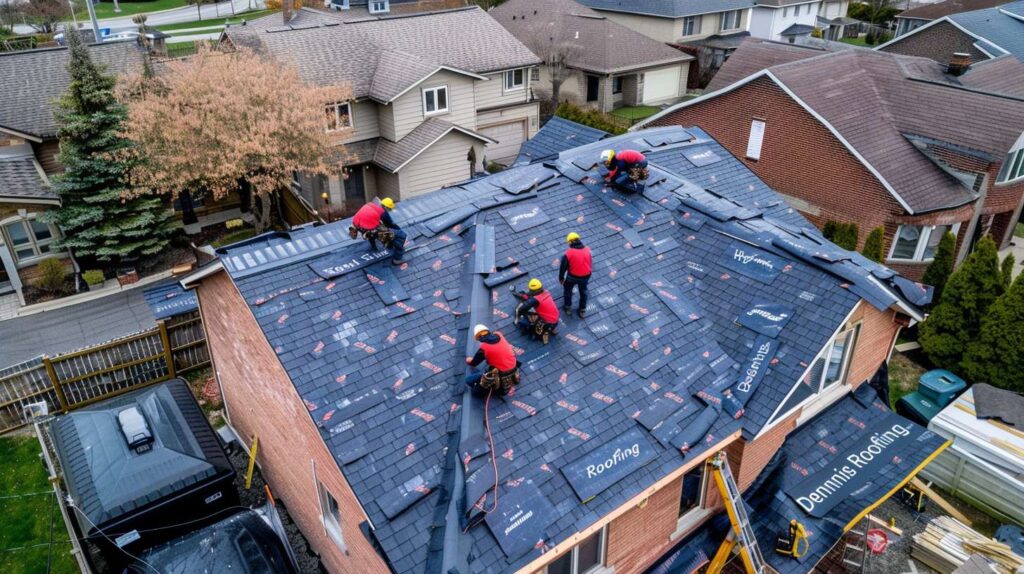
Three puddles by the drain tells me more than a ceiling stain ever will. Interior evidence is late-stage information – by the time water marks your ceiling, the roof has already been working against you for a while. Rooftop water behavior gives you earlier clues: where it sits, how long it lingers, which direction it moves toward a seam. I’m Stephanie Chu, with 11 years around buildings and a specialty in translating leak patterns into practical next steps for Brooklyn owners, and the first thing I look at isn’t the stain downstairs – it’s the drainage picture up top.
| Myth | What actually happens on a flat roof |
|---|---|
| Flat roofs are simpler than pitched roofs | Flat roofs have more seams, more transitions, and zero gravity assist for drainage – making them more failure-sensitive, not less. |
| If the drip is under the skylight, the skylight is the problem | Water travels horizontally through insulation layers and ceiling assemblies before it drips. The entry point is often feet away from where it shows up indoors. |
| A small blister only needs a dab of sealant | Blisters mean the membrane has already separated from the substrate. Sealant applied over a pressurized or wet surface traps moisture and accelerates deterioration. |
| If the leak stopped, the roof dried out | A dry spell indoors doesn’t mean a dry roof above. Insulation retains moisture long after a drip stops, silently accelerating membrane and deck deterioration. |
| Ponding is cosmetic unless water gets inside | Sustained ponding adds structural load, accelerates membrane breakdown at the waterline, and signals drainage failure that will eventually force water somewhere it shouldn’t go. |
Quick Facts: Flat Roof Repair Services
Most revealing clue: Standing water on the roof 48+ hours after rain – it exposes both drainage failure and membrane stress before anything shows inside.
Common hidden source: Flashing and seam failure located away from the interior stain – water travels, and the entry point is rarely directly above the drip.
Typical first action: Rooftop inspection paired with moisture tracing – not patching based on interior evidence alone.
Local note: Parapets and roof drains are recurring problem points on Brooklyn buildings – particularly on rowhouses and mixed-use buildings where flat extensions meet older masonry walls.
Signals on the roof that matter more than the stain downstairs
What surface clues usually point to trapped moisture
Here’s the blunt version: flat roofs rarely fail all at once. The failure spreads – through seams, along edges, under drains, across transitions – and the building doesn’t tell on itself until moisture has already moved through several layers. I remember being on a call just after 7 in the morning in Bay Ridge after a night of steady rain, and the owner kept saying, “It’s only a little bubbling.” Then we got up there and the membrane felt like a waterbed under my boot. That’s one of those moments that stays with you. Brooklyn rowhouses, low-slope additions on mixed-use buildings, older apartments with layered ceiling finishes – they all have the same problem: by the time you see the stain, the moisture has already done a lot of quiet traveling overhead.
Once you’re on the roof, you’re looking for specific things. Recurring ponding in low spots or near drains. Bubbles and blisters where the membrane has lifted off the substrate. Open laps at seam edges. Granule loss or surface wear that exposes the base layer. Cracked or separated flashing at parapets. Soft spots near drain collars or pipe penetrations. Those are the clues worth prioritizing – and they’re the ones that tell you what’s happening overhead long before the ceiling downstairs catches up.
| What you notice | What may be happening overhead | How urgent it is |
|---|---|---|
| Bubbling membrane | Membrane has separated from insulation; trapped moisture or gas is pressurizing from below | Urgent inspection |
| Repeated ponding near drain | Clogged or undersized drain; water load stressing membrane at edges and seams | Schedule soon |
| Interior stain with no active drip | Moisture may be stored in insulation; entry point is likely a seam or flashing detail, not directly above | Schedule soon |
| Split at seam | Open water entry; moisture actively working into insulation and deck with each rainfall | Same-day if active leak |
| Leak appearing near skylight | Often flashing failure at a nearby parapet or curb transition – skylight is frequently a misdirection | Urgent inspection |
| Wet insulation feel under membrane | Moisture has already saturated the insulation layer; repair scope is now larger than surface patching can address | Urgent inspection |
📸 Before the Crew Arrives: What to Photograph
-
📷
Water ring around the drain – shows how long water sat and whether the drain is the problem or just nearby -
🔍
Close-up of any seam split – even a hairline gap tells a repair crew a lot about where to start tracing -
📷
Wide shot of the ponding area – helps identify slope failure and the general drainage problem zone -
⚠️
Parapet and flashing corners – these transitions fail quietly and water uses them as a highway before anything drips indoors -
✅
Any blistering or surface bubbling – a photo from ground level or a safe rooftop edge gives the crew a head start on scope
Start with drainage, not guesswork
If you called me out today, the first thing I’d ask is: where does the water sit after a storm? Drainage patterns often expose the real source before any patch does – because water under a flat membrane follows the path of least resistance, and that path usually has nothing to do with where the ceiling finally stains. One August afternoon in Bushwick, I watched a property manager point at a seam along the roofline and say, “Can’t you just patch that strip and be done?” The roof was hot enough to shimmer. Once we traced the moisture, the real issue turned out to be ponding around a clogged drain six feet away – the seam looked guilty because it was wet, but it wasn’t the cause. And that’s the part most people don’t see: the roof often points away from the place where the building finally leaks.
Do You Need Immediate Repair or Scheduled Diagnosis?
Start here: After rain, is water still sitting on the roof after 48 hours?
YES →
Any active interior leak or soft ceiling?
YES
Call for urgent inspection and repair – don’t wait for the next storm.
NO
Schedule prompt inspection focused on drainage mapping and moisture tracing.
NO →
Do you see open seams, bubbles, or flashing gaps?
YES
Schedule repair before the next storm – open details won’t hold.
NO
Book a maintenance check and monitor conditions after the next rainfall.
⚠️ Why Random Patching Can Make Things Worse
- Smearing sealant over a wet or pressurized membrane traps moisture underneath and speeds up deterioration – it doesn’t seal it out.
- Blocking a low spot or drainage path during a patch job redirects water toward seams or transitions that weren’t the original problem.
- Treating the stain location as the source without tracing the roof means the actual entry point stays open through the next storm.
What a repair visit should uncover before anyone quotes a fix
Questions worth asking before you approve the work
The frustrating part is this – what looks like a tiny split is often the end of a much longer story. Proper flat roof repair services should diagnose wet insulation, drain performance, seam integrity, flashing transitions, membrane age, and whether the failure is isolated or systemic before anyone quotes a scope of work. Think of a flat roof like overhead rigging: one failed connection up there can stress everything below it, and patching only the visible point without understanding what’s loaded against it is how the same job comes back around in six months.
A patch is a method, not a diagnosis.
I still think about that Bay Ridge roof after the overnight rain. The owner was ready to approve a one-spot fix and call it done. What made that job go right was that we walked the whole roof first – showed him the moisture travel, identified how far from the patch point the water had actually moved, and told him plainly what the next heavy rain would test. That’s what a trustworthy repair visit looks like: the contractor tells you whether the damage is localized or has traveled, shows you the wet areas versus the dry margins, and gives you an honest read on what’s still at risk. And here’s the insider move worth remembering – ask the roofer to show you the likely water path across the roof, not just point at the damaged spot. If they can’t walk that path with you, they haven’t diagnosed it yet.
How a Professional Flat Roof Repair Appointment Should Proceed
Exterior symptom review
Ground-level walkround plus review of interior notes, ceiling stain location, and any photos taken by the owner before arrival.
Rooftop inspection of drains, seams, and flashing
Full rooftop walk covering drain collars, seam laps, parapet flashing, penetrations, and surface wear – not just the area above the interior stain.
Moisture tracing and soft-spot check
Manual probing and moisture scanning to identify where insulation is saturated and how far the problem has traveled from the visible damage point.
Recommendation: temporary stabilization vs. permanent repair
Honest scope discussion – what can be addressed immediately, what needs staged work, and what a storm before the scheduled repair date would mean for the building.
Documentation of scope and watch-points after completion
Written record of what was repaired, where moisture was found, and what to monitor after the next rainfall – so you’re not starting from scratch the next time.
Questions Worth Asking Before You Approve the Work
When to call now and when a short wait is reasonable
A flat roof is a lot like backstage rigging: the audience only notices it when something overhead goes wrong. I once spoke with a brownstone owner in Park Slope during a windy spring evening who was absolutely convinced the leak had to be coming from the skylight – that’s where the drip was, that’s what it had to be. When the crew got up there, the actual problem was flashing failure at a parapet transition about four feet away, with water traveling through the assembly before it showed itself indoors. I bring that story up a lot because it captures something very specific about how flat roofs behave on Brooklyn buildings – they use the building’s own layers to misdirect you, and the gap between what’s happening overhead and what’s showing up below can be wide enough to send a repair in completely the wrong direction.
Here’s the practical read on urgency. If there’s active dripping, a ceiling that feels soft or is visibly sagging, standing water that hasn’t moved 48 hours after rain, an open seam before a forecasted storm, or water appearing anywhere near electrical runs – call now, don’t schedule for next week. On the other hand, an old stain with no fresh moisture after recent rain, minor surface wear without any open areas, or a one-time condensation question during a dry stretch – those are real, they’re worth addressing, but they give you room to book a proper inspection without emergency pricing. The goal isn’t to alarm you. It’s to make sure the right kind of attention gets there at the right time.
Questions Brooklyn Owners Ask About Flat Roof Repair
✅ Before You Call: What to Have Ready
-
☐
When the leak started – approximate date and whether it was sudden or gradual helps narrow the cause -
☐
Whether rain or wind preceded it – wind-driven rain behaves differently on parapet transitions than vertical rain on seams -
☐
Where water sits on the roof – note any areas you’ve seen hold water, even briefly, after a storm -
☐
Photos of the ceiling stain and roof surface – if the roof is safely visible from a window, rooftop door, or ladder, a few clear shots go a long way -
☐
Whether drains or scuppers appear blocked – visible debris around drain openings is worth noting before the crew arrives
Water sitting on your roof? Leak showing up in the wrong place?
Dennis Roofing handles flat roof repair services across Brooklyn – and we start with the roof, not the ceiling stain. If something’s not adding up about where the leak is coming from, that’s exactly the conversation we’re built for.