
Your Commercial Roof Has a Problem – Here’s How We Handle It Without Disrupting Your Business
Keeping the business running comes before opening the repair
Two cheaper attempts often cost more than one correct one – and honestly, that’s true of most things, but it’s especially true of commercial roofing in a city where the building below the roof never stops working. The hardest part of commercial roof repair services isn’t laying down membrane or sealing a seam. It’s sequencing the work so the deli, the warehouse floor, the clothing rack, or the office printer keeps moving while we’re up top. Think of it this way: a tarp thrown over a wet spot is a snack – it stops the bleeding for now. A properly diagnosed, root-cause repair is the meal. And the bill nobody likes at the end? That’s what happens when you keep ordering snacks and calling it dinner.
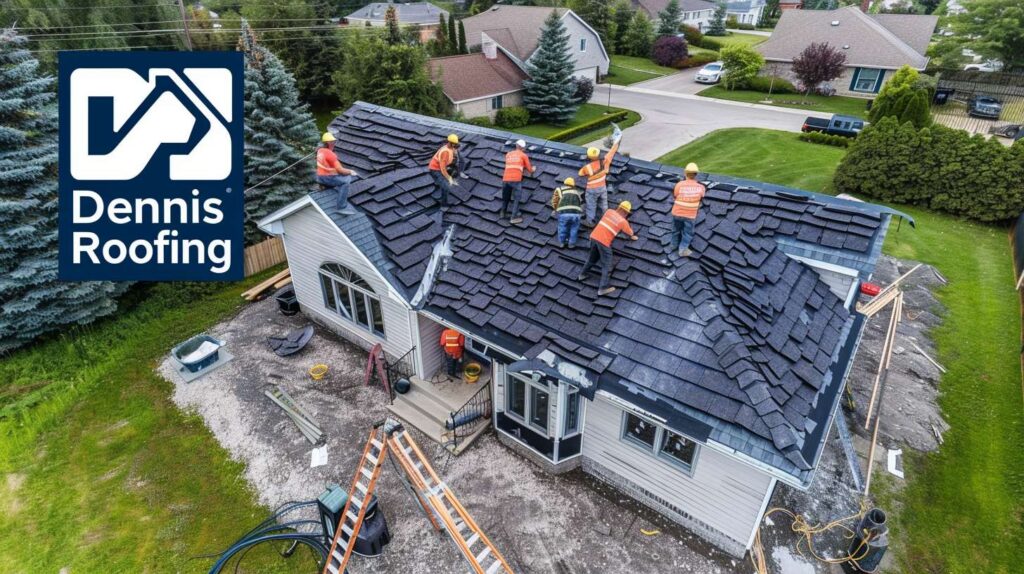
At 7:00 a.m., before your first delivery hits the curb, I want to know where people walk, where they plug in, and what absolutely cannot stop. That first conversation isn’t about roof specs – it’s operational. Where are your entrances? When do deliveries arrive? What equipment can’t go offline? Where do customers walk in? When does noise become a real problem for your business? Getting those answers before a single ladder goes up is the difference between a repair that works around you and one that works against you. Most disruptions happen because somebody treated the roof like an island when it’s really the ceiling of your operation.
What the First Commercial Roof Response in Brooklyn Should Establish
First Priority
Keep occupants and operations safe before anything else moves forward.
Initial Goal
Stop water spread immediately – before discussing full repair scope.
Scheduling Focus
Quiet hours, delivery windows, and access routes – mapped first, tools second.
Service Area
Mixed-use buildings, storefronts, warehouses, and offices throughout Brooklyn, NY.
Operational Questions Asked Before Repair Planning
- 🚶 Where staff walk – so we route crew access away from active foot traffic zones.
- ⚡ What equipment cannot shut down – refrigeration, mixers, servers, point-of-sale systems.
- 🔇 What hour noise hurts most – early morning retail open, lunch service, or customer-facing peak hours.
- 🚪 Where customers enter – storefronts, lobby access, and loading areas that can’t be blocked.
- 📦 What areas need protection – inventory, registers, open shelving, and production surfaces below the work zone.
- 🛤️ Which access route avoids disrupting business – rear stair, side yard, or separate building entrance.
Tracing the leak path instead of chasing the stain
Here’s the blunt part: a leak stain is a witness, not the criminal. Interior staining tells you water arrived – it doesn’t tell you where the water started, which path it took, or how long it’s been traveling inside your roof assembly before it found your ceiling tile. I’m Chris Tobin, and I spent six years as a city building inspector before switching to roofing fourteen years ago, partly because I got tired of writing violation notices that nobody fully explained to the building owner. That background, especially diagnosing leak sources on older Brooklyn mixed-use buildings that have to stay open during any repair, is exactly the kind of work Dennis Roofing was built around. The stain is where you start looking. It’s rarely where you stop.
One August afternoon near Fulton Street, I got called to a three-story commercial building where a clothing shop had already paid for two patch jobs on what looked like an obvious seam failure. By 2:30 p.m., during one of those fast summer storms Brooklyn does in August, the ceiling tile above the register sagged again. The owner looked at me and said, “Please don’t close me down.” I traced the water path past that seam – which was failing, yes, but was not the source – to a badly flashed HVAC curb sitting a few feet uphill on the roof slope. The curb flashing had never been addressed. That’s how two snacks turned into an expensive meal, and how the real repair finally ended a cycle that had been going on for two seasons.
Brooklyn makes this kind of tracing harder than it looks on paper. Older parapets that have been repointed more than once, rooftop units added years after the original membrane went down, penetrations that got patched and re-patched with three different materials, and heavy traffic vibration along corridors like Atlantic Avenue or near the BQE – all of it creates leak pathways that don’t announce themselves politely. Not this seam. Not this drain collar. Not this corner flashing either. Here’s what matters: the point where the system was compromised and water found its entry, which is often nowhere near the stain that finally got your attention.
Want the short version? We do not repair the spot that is loudest; we repair the path that is guilty.
Decision Tree: Containment, Tracing, or Full Repair?
✅ YES →
Protect interior and contain immediately. Tarp, drainage diversion, and interior coverage before any diagnosis continues.
❌ NO →
Is the stain growing after rain or wind events?
✅ YES →
Moisture mapping and source tracing needed. The water path is active but not currently flowing – find origin before any repair starts.
❌ NO →
Inspect deferred damage: flashing, seams, drains, and rooftop units. Old damage that hasn’t activated yet still warrants a full inspection.
⚠️ DID ANOTHER PATCH ALREADY FAIL? →
Assume the root cause was missed. Plan a diagnostic inspection – not another blind patch. Repeated patching without source identification is how a small problem becomes a structural one.
| What You See Inside | What It Often Gets Blamed On | What We Actually Check Outside | Why the Source May Be Elsewhere |
|---|---|---|---|
| Ceiling tile stain near center of room | Seam directly above | HVAC curbs, pipe penetrations, and drain collars upslope | Water travels along joists and insulation before dropping – stain can be 6-12 feet from the entry point |
| Drip at interior wall near window | Window seal or frame failure | Parapet cap, counter-flashing, and reglet detail at roof edge | Parapet leaks run down the inner wall and appear at window height – older Brooklyn parapets are common culprits |
| Water appears only during heavy wind-driven rain | Roof membrane failure | Edge metal terminations, parapet cap joints, and coping stone lap joints | Gravity-only leaks and wind-driven leaks come from different failure points – wind pushes water uphill into open laps |
| Bubbling or soft drywall around rooftop unit | Condensation from the unit | Curb flashing, pitch pocket, and membrane termination at HVAC base | HVAC units added after original install often have undersized curbs or missing counter-flashing – common in older Brooklyn commercial buildings |
| Leak appears only days after rainfall stops | Slow seam failure | Insulation saturation, ponding areas, and drain overflow zones | Saturated insulation holds moisture for days and releases it gradually – delayed drips almost always indicate wet insulation, not an active open seam |
| Multiple stains along one wall or corner | Wide membrane failure or multiple cracks | Single corner termination, scupper flashing, or coping end joint | One failed corner detail can spread water to multiple interior points – it looks like several problems but is often one origination |
Staging the work so your day does not fall apart
I learned this on a bakery roof in South Brooklyn, with steam rolling out of the vents and a nervous owner watching the clock. I remember standing on a flat roof off Avenue U at 6:10 in the morning in a light freezing drizzle, and the owner told me straight out: “I don’t care if the roof leaks, I care if my mixers shut down at 8.” That job stayed with me for exactly that reason. We staged the work in half-roof sections – one section contained and tarped while the other was open – and we kept the exhaust vents clear the entire time and protected his delivery path from the street to the basement hatch. The repair itself wasn’t complicated. Keeping the bake happening underneath it was the whole job.
If I ask you what hour your business can least afford noise, I’m not making small talk – that answer determines when the grinders run and when they don’t. Sequencing a commercial repair means containment comes first, safe access routes come second, noisy demolition or cutting gets scheduled in the business dead zone (early morning for retail, mid-afternoon for food service, weekend morning for offices), and material loading gets coordinated so nobody’s storefront visibility or receiving dock gets blocked by a pallet of TPO rolls. Personally – and I’ll say this plainly – the best commercial roof repair services I’ve seen, and the standard I hold Dennis Roofing to, are judged as much by what they prevent downstairs as by what they install upstairs. Fast material on a roof that shuts down a business for three days isn’t a good repair. It’s just loud work in the wrong order.
How a Low-Disruption Commercial Roof Repair Visit Is Sequenced
Before crews arrive, decide what is urgent and what can wait a day
Questions worth answering before you call
Not every roof issue is a same-hour emergency – but active interior water near power panels, cash registers, production equipment, or open inventory absolutely is. Don’t wait on those. For everything else, here’s an insider move worth doing before you pick up the phone: note exactly when the leak appears. Is it during steady rain? Wind-driven rain from a specific direction? Only after the storm stops and water ponds? Snowmelt on a warm afternoon? That timing narrows the suspect area faster than any photo can, because gravity leaks, wind-driven leaks, and ponding leaks all come from different failure types. Telling us “it only drips when it rains from the northeast” is more useful than a ceiling photo. Bring both if you can.
Before You Call for Commercial Roof Repair Services – Confirm These 6 Things
-
☐
Active leak or old stain? Is there current water movement or a historic mark from a past event? -
☐
Exact interior location. Which room, which corner, which wall – the more precise, the faster the trace. -
☐
When it happens. During rain, after rain, only wind-driven, during freeze-thaw – note the conditions, not just the symptoms. -
☐
Power or equipment nearby. Is the affected area within reach of panels, production equipment, refrigeration, or registers? -
☐
Access restrictions. Any locked gates, alarm schedules, parking constraints, or neighboring tenant concerns that affect roof entry? -
☐
Photos if safely available. Ceiling stain, bubbling, and any rooftop area you can photograph without climbing – a ground-level shot of lifted edge metal is more useful than you’d think.
⚠️ Warning: Repeated Patching Without Diagnosis Gets Expensive
Every blind patch applied over an undiagnosed leak does something worse than fail – it hides the water pathway. The sealant covers the stain, the owner feels relief for a few weeks, and the water keeps moving somewhere nobody can see it. By the time it shows up again, the insulation below is saturated, the decking may have started to soften, and the interior finish work has been compromised. Three patches on the same leak usually costs more than one correct repair would have at the start. Don’t let a contractor sell you a fourth snack when what you actually need is a meal and a diagnosis.
Brooklyn roof calls usually end in one of four lanes
A commercial roof problem is a lot like a bad order at a diner – if you only fix what showed up on the plate, you miss what went wrong in the kitchen. I had a weekend emergency visit in Red Hook after a windy Friday night, dealing with a small warehouse tenant whose inventory was stacked tighter than a subway car at rush hour. When I got up there, the stain and the problem were not roommates. Loose edge metal near the loading side had let wind-driven water travel a solid twelve feet before it dropped. We set up containment that same day, mapped how far the moisture had moved into the insulation, and then – because this was a warehouse with Monday receiving hours that could not be touched – we scheduled the actual permanent repair for Saturday morning of the following weekend. The tenant didn’t lose a workday. That’s how it should go when the sequencing is right: same-day containment, targeted diagnosis, and a repair window that fits the business, not just the crew’s calendar. Some calls end there. Others land in phased work over multiple sections, and a few – not gonna lie – reach the point where more snacks just run up the bill nobody likes at the end.
| Likely Scenario | What Triggers It | How Business Disruption Is Minimized | What Happens Next |
|---|---|---|---|
| Same-Day Containment | Active water entry, equipment or inventory at immediate risk, or wind-lifted edge metal | Interior protection first; roof access timed around open hours; no extended tear-out | Diagnostic inspection scheduled within the next dry-weather window; permanent repair scoped |
| Targeted Permanent Repair | Clear source identified, isolated failure (flashing, curb, drain collar, seam section), rest of roof serviceable | Work staged in one section; timed to business dead zone; no full-roof disruption | Post-repair check, watertightness confirmed, 12-month monitoring recommendation if surrounding membrane is aging |
| Phased Repair Plan | Multiple failure areas, larger roof section affected, or budget needs to be spread across visits | Each phase scheduled independently around business hours; only the active phase is open at any time | Written scope with phase order, timing windows, and priority ranking so the most critical areas go first |
| Replacement Planning | Repeated patch failures, widespread membrane degradation, saturated insulation across large area, or structural deck concern | Containment holds the building while the replacement plan is built; work scheduled to minimize total operational impact | Full inspection report, replacement scope, and timing recommendation – honest conversation about why another patch isn’t the answer here |
If your building in Brooklyn has an active leak, a patch that’s already failed once, or a repair that needs to happen without shutting down what’s going on below – call Dennis Roofing. We’ll map the problem, protect the operation, and handle the repair in the right order.