
How Much Does Cedar Shingle Roofing Actually Cost? Here’s the Honest Answer
Check the range first: cedar shingle roof pricing in Brooklyn runs roughly $18,000 to $55,000+ installed, depending on the house, the access, and what’s underneath. That range moves sharply because the shingles are only one part of the job-tear-off layers, decking condition, flashing complexity, and the neighborhood logistics of working on a Brooklyn block are what really stretch the number from one end to the other.
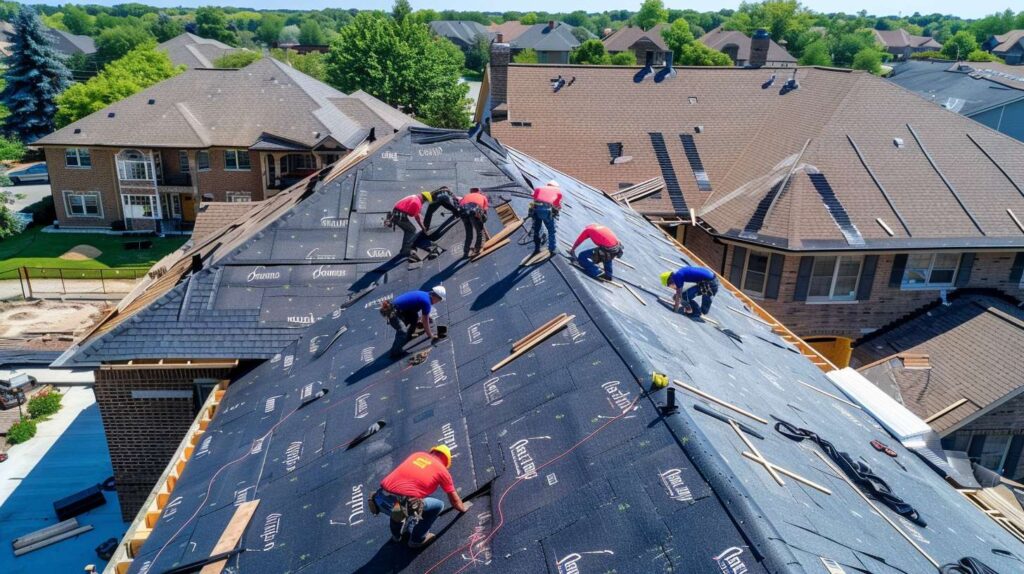
What Brooklyn homeowners usually pay for cedar shingles
In Brooklyn, I’ve seen cedar numbers start around $18,000 for a small, straightforward roof with good access and no surprises underneath-and climb past $55,000 on larger homes with dormers, multiple old layers, or the kind of chimney work that takes two days by itself. That’s not a national average pulled from a database. That’s what jobs in this borough actually look like when the estimate is complete. Small, simple jobs tend to sit in the mid-five figures. Anything with complexity-rowhouse geometry, tight streets, staging, bad decking-pushes well beyond that, and it’s not the cedar doing the pushing.
Here’s the framing I use with every customer: there’s a roof price and there’s a regret price. Roof price is what you pay upfront when the estimate includes everything-labor, underlayment, flashing, disposal, permits, decking contingency. Regret price is what you pay later when a low bid left half of that out. Cedar is a premium system, and low bids on cedar jobs almost always hide something: skipped underlayment, recycled flashing, vague decking language, or labor that doesn’t account for Brooklyn access. I’m Darnell Reyes, and I’ve been doing roofing in Brooklyn for 17 years with a specialty in finding the leak detail other crews skipped over-so when I break down cedar costs, it’s coming from job sites, not spreadsheets. My honest opinion? Cedar is not overpriced when the quote is complete. Incomplete cedar bids are the real danger.
Quick Local Cedar Roofing Facts – Brooklyn, NY
Typical Range
$18,000 – $55,000+
Installed, Brooklyn conditions
Main Price Driver
Access + Tear-Off Layers
Not the shingle material itself
Most-Missed Line Item
Decking Repair / Replacement
Often left as a vague “if needed”
Best Fit
Long-Term Owners
Curb appeal + architectural character priority
Where the estimate gets expensive fast
Here’s the part people usually don’t enjoy hearing. A cedar shingle estimate isn’t one number-it’s a stack of buckets: cedar material, tear-off labor, disposal, standard labor, underlayment, flashing, ridge work, permits, delivery logistics, and possible decking replacement. Every one of those has a Brooklyn tax on it. Narrow blocks, no parking, scaffold placement on a street where alternate-side rules kick in at 8 a.m., dumpster permits from the city, rowhouse access where your only way up is a fire escape ladder-those aren’t optional extras, they’re the job. I remember one damp Tuesday around 7:10 in the morning in Park Slope, standing on a scaffold with a brownstone owner who thought cedar shingles would cost “maybe a little more” than asphalt. The old roof had three layers under it, the chimney flashing was cooked, and the delivery truck couldn’t even park on the block without circling twice. By the time I showed him how much of the estimate was labor, tear-off, and Brooklyn access headaches-not just the shingles-he stopped looking at cedar like it was a catalog photo and started looking at it like a construction project.
On paper, cedar looks like a material upgrade. On the roof, different story. It’s a systems job-each component depends on the one beneath it, and skimping on any layer creates a failure point that eventually becomes a ceiling stain, a soft spot, or a full redecking conversation. The shingle is the face. Everything under it is the structure that decides whether that face lasts 30 years or 12.
Material grade is only one slice of the bill
Choosing between #1 Blue Label and lower-grade cedar does affect your cost-but not as dramatically as people expect. A premium cedar upgrade might add $3,000 to $5,000 on a mid-sized roof. The labor complexity around a rooftop bulkhead, a multi-plane chimney, or a difficult ridge line can add twice that without touching the shingle spec at all. Grade matters. It’s just rarely the number that moves the estimate the most.
⚠ Jobsite Realities That Drive Cedar Shingle Roof Pricing Up
-
LAYERS
Multiple old roof layers – each layer means more tear-off labor, heavier disposal weight, and longer days on a Brooklyn block where every hour of staging costs something.
-
DECKING
Soft or rotted decking – can’t be diagnosed from the ground. When the old roof comes off and the deck is spongy near the eaves or rear edge, the job scope changes immediately.
-
CHIMNEY
Chimney and flashing complexity – old Brooklyn chimneys often need full step flashing rebuilds, not patches. Reusing failed flashing under new cedar is a regret price waiting to happen.
-
OBSTRUCTIONS
Bulkheads, dormers, and rooftop structures – every penetration or plane change requires custom cuts, step flashing, and extra time. Quotes that ignore these are not quoting your roof.
-
ACCESS
Tight street access and parking constraints – on a block like Prospect Place or a rowhouse stretch in Crown Heights, a delivery truck may not get within half a block of the job. That’s a cost.
-
PERMITS
Permit and disposal coordination – NYC DOB permits, dumpster placard fees, and sidewalk shed requirements aren’t optional. Low bids that skip them leave you holding the liability.
Why one bid can be $11,000 apart from another
A few summers back in Bed-Stuy, I had a customer ask me why two cedar estimates he’d received were nearly $11,000 apart. Same square footage on paper-but that’s where the similarity stopped. One quote ignored custom cuts around a rooftop bulkhead entirely, hadn’t included dumpster permits, and didn’t acknowledge that roughly half the decking near the rear edge of the roof had gone soft. I still remember him squinting at me in that August heat, with the smell of neighboring rowhouses baking off the pavement, saying, “So the cheaper one is only cheaper if nothing real happens?” And I told him that was exactly it. Equal square footage does not equal equal scope. One contractor priced the roof they hoped to find. The other priced the roof that was actually there.
That story converts to a straightforward test you can run on any estimate: line up scope, not totals. Here’s the insider move-ask every roofer to tell you in writing what happens if they uncover bad decking. Ask whether flashing is full replacement or patch-and-pray. Ask what cedar grade and nail spacing are actually specified. If those answers are vague in the contract, that’s not a flexible contractor-that’s an unpriced assumption dressed up as a low number. Cheap bids are often just incomplete bids. The savings are real right up until the roof is open.
⚠ Red Flags in a Low Cedar Bid – Walk Away or Ask Hard Questions
- Contract says “cedar or equal” – that’s not a specification, that’s a blank check for substitution
- Flashing scope is vague: “replace where required” with no definition of what that means or who decides
- No language about deck condition – if the contract doesn’t address what happens when bad boards are found, you’ll find out at the worst time
- Disposal, permits, and dumpster logistics are not itemized – often added as extras once work has started and you have no leverage
- No ventilation specification – cedar needs proper airflow underneath; a bid that ignores this is pricing for failure
- No written staging or access plan – on a Brooklyn rowhouse block, “we’ll figure it out” is a real cost getting passed to you later
Questions to press before you sign anything
If I’m standing in front of your house, the first question I’m asking is this: “What exactly are we buying-the visible cedar, or the whole roof system under it?” That question separates a real estimate from a catalog price. Every other detail-underlayment type, flashing scope, decking contingency, permit responsibility-flows from how honestly that one question gets answered. If a contractor talks around it, or says “don’t worry, we’ll handle it,” that’s not reassurance. That’s the part of the conversation where the regret price starts forming. Get the answer in writing, or the answer doesn’t count.
If the contract is vague where roofs usually fail, the number is not low – it’s unfinished.
The contract should answer these, not dodge them
Don’t compare bid totals-compare contract language. Two quotes can be the same number and wildly different jobs, or $8,000 apart and actually covering identical scope. Read the line items side by side. A contractor who hands you a one-page total with a handshake is not giving you a price-they’re giving you the start of a negotiation that happens after your roof is open and you have no options.
Vague Terms That Need Translation
The honest answer on whether cedar is worth it here
Blunt truth-cedar is not the roof you choose because you want the cheapest line on the estimate. It makes sense when curb appeal is a priority, when you’re planning to stay in the house long enough to get value from a 25-to-30-year material, when you’re willing to do periodic maintenance (cleaning, treating, minor repairs), and when the architectural character of your house actually benefits from natural wood over asphalt. Those things line up for a lot of Brooklyn homeowners-but the math only works when the quote reflects the whole system, not just the shingles. I once got called in to look at a Dyker Heights cedar job that had gone sideways fast. A weekend crew from another company had underbid it, and once the work started and it began raining, they quietly swapped in lower-grade material. I was there on a gray Monday around 4:30 in the afternoon, and the homeowner had the original contract in one hand and photos of wet insulation in the other. That job ended up requiring partial redecking, corrected nail spacing, new underlayment throughout, and a full redo of ridge details that should have been right the first time. The “deal” price became one of the most expensive roofs on that block by the time all the rework was done.
Think of it like buying a classic car body and then discovering the frame underneath has opinions. Cedar can be genuinely beautiful and perform for decades-but only when the system underneath is priced honestly. The shingles are visible. The underlayment, the flashing, the decking, and the ventilation are not. And on a Brooklyn house with some age on it, those invisible layers are the ones that decide whether you’re talking about your roof again in three years or in thirty. That’s the whole point of separating roof price from regret price before anyone picks up a nail gun.
Cedar Shingle Pricing – Common Questions
Is cedar always more expensive than asphalt in Brooklyn?
On a complete apples-to-apples installed comparison, yes-cedar runs higher than a standard architectural asphalt shingle by a meaningful amount. The material costs more, installation takes more precision and time, and the underlayment and flashing requirements are more exacting. On a Brooklyn rowhouse with access complications, that gap widens. The flip side is lifespan: a properly installed and maintained cedar roof can outlast two asphalt roofs, which changes the cost-per-year math for long-term owners.
How much of the price is labor versus materials?
Roughly 55-65% of a complete cedar roof estimate on a Brooklyn house is labor, disposal, and logistics. Materials-including the cedar itself-are closer to 35-45%. That ratio surprises people. It means that squeezing the material budget to save money is less impactful than it looks, and that low bids usually cut labor scope, not material cost.
Does old decking usually need replacement?
Not always-but it’s common enough in Brooklyn’s older housing stock that every estimate should account for it. Decking under roofs that have had moisture intrusion, multiple overlay layers, or flashing failures can go soft in patches without showing any signs from below. A good contractor walks the deck after tear-off before nailing anything down. Any bid that doesn’t address what happens if bad boards are found is leaving you exposed.
Why do brownstones and rowhouses cost more?
Access is the short answer. A rowhouse on a narrow Brooklyn block may need scaffold to comply with NYC safety regulations, a dumpster that requires a city placard and takes days to get approved, and a delivery truck that can’t get anywhere near the job. That’s before you account for party walls, shared flashing details, and the added complexity of rooftop bulkheads and mechanicals that have been modified over decades. None of that is a contractor markup-it’s the actual cost of working in a dense urban neighborhood.
Can a very low bid still be legit?
Possible, but rare. A lower bid can be legitimate if the roof genuinely has easy access, a single layer tear-off, solid decking, and minimal flashing complexity. Worth asking if you got one: go line by line through the scope. If every item is there-tear-off, underlayment spec, flashing scope, decking contingency, permits, disposal-and the number is still lower, ask how. Sometimes a contractor has a lighter overhead structure. More often, something’s been left out. The contract tells you which it is.
If you want someone to separate roof price from regret price on your cedar estimate-line by line, before you sign anything-Dennis Roofing is the call to make. We work Brooklyn, we know the blocks, and we don’t price what we hope to find.