
Replacing an Asbestos Roof Costs More Than Standard Work – Here’s Why
I stopped counting how many calls. A property owner picks up a quote for asbestos roof replacement pricing in Brooklyn, puts it next to a standard tear-off estimate, and suddenly I’m on the phone explaining why one number is $8,000 and the other is $22,000. The gap isn’t padding. It’s procedure – regulated removal, containment, licensed disposal, and a paper trail that has to exist before a single new layer of material ever touches the deck. That’s the part nobody sees, and it’s what drives every dollar of difference.
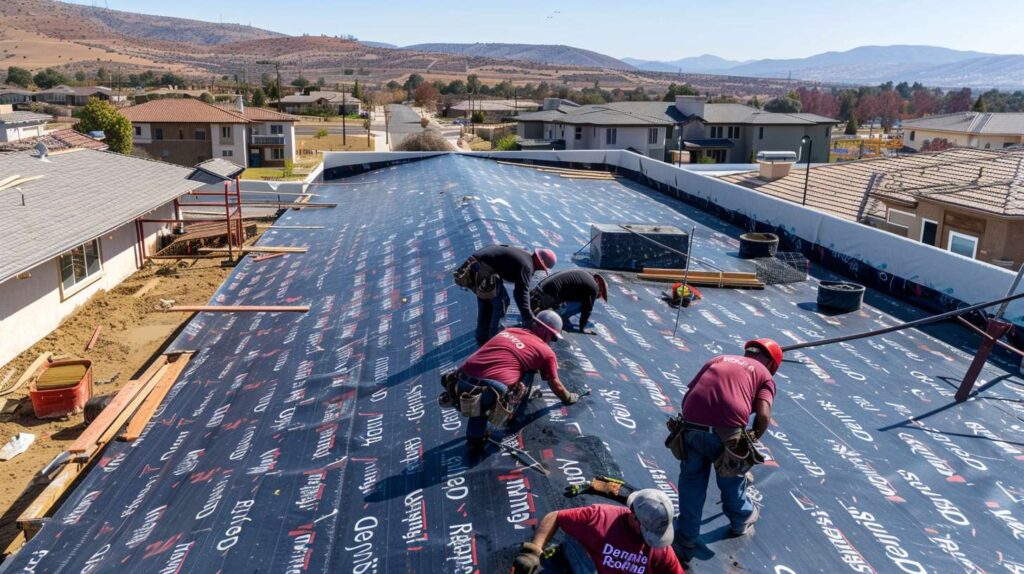
Why the First Quote Shock Happens So Fast
Here’s the number that usually makes people put the paper down. A standard low-slope tear-off and replacement on a Brooklyn rowhouse roof – roughly 2,000 square feet – might run somewhere between $8,000 and $14,000 depending on membrane choice, substrate condition, and access. Confirm asbestos in that same roof system, and you’re often looking at $18,000 to $30,000 or more before anyone argues about shingles. That difference doesn’t come from the new roof. It comes from everything that has to happen before the new roof starts – and most of that is invisible on the finished product.
I remember a gray Tuesday just after 7 a.m. in Midwood when a landlord called furious because his asbestos roof replacement quote was nearly double what his cousin paid for a regular tear-off in Queens. By 8:15, I had the lab report, the containment requirements, and the disposal paperwork spread across a folding table in the shop, and when I walked him through it line by line, he went from angry to quiet. What changed his mind wasn’t the total – it was seeing that asbestos pricing comes from procedure, not padding. And honestly, that’s my read on every lowball asbestos quote I’ve ever seen: if a number looks almost as cheap as standard tear-off work, something required is probably missing. Now take that line and follow it one step further – the disposal manifest alone tells you whether a contractor is doing the job legally or cutting corners you’ll pay for later.
What Changes the Bill Before Installation Starts
- Testing confirmation required before pricing is final – Estimates based on suspected asbestos aren’t real numbers until the lab report is in hand.
- Licensed handling affects labor rates – Certified abatement labor costs more per hour than standard roofing crew, and the rules limit how fast material can come off.
- Disposal is tracked with manifests – Every bag is documented, signed, and routed to an approved facility. That paperwork has a cost built in.
- Weather can increase handling time and cost – Wet hazardous material requires tighter packaging protocols and can force rescheduling with all the crew and compliance costs that follow.
Where the Money Goes Before a New Membrane Ever Arrives
Ask yourself what you’re actually paying for before you look at the total. Break the invoice into its real parts: testing coordination, containment barriers, specialized PPE, a removal pace that’s slower by design, bagging in rated containers, monitored load-out, hauling to a licensed facility, disposal fees, and post-removal deck prep before the first sheet of new material goes down. As Annette Russo – who spent 17 years on the office side of roofing and several years handling intake for a North Brooklyn environmental testing company – can tell you, the testing and paperwork sections of an asbestos invoice are where most property owners underestimate the cost, because those line items don’t look like roofing work. They look like administration. They’re not. They’re compliance.
Bluntly, asbestos is not expensive because contractors feel like charging more. Standard tear-off assumptions – a fast crew, open debris drop, direct haul to a general construction facility – don’t apply when the material is hazardous. Every shortcut that’s normal on a clean job becomes a regulatory violation on an asbestos job. And in Brooklyn, the physical reality makes it worse: rowhouse spacing means you’re working inches from a neighbor’s building, parked cars on Eastern Parkway and side streets in Flatbush cut off staging lanes that a Queens or Staten Island job might take for granted, sidewalk sheds add cost and permit time, and narrow drive lanes sometimes mean smaller trucks and more trips. That’s not a Brooklyn tax – that’s just what the job actually takes in a dense borough.
Every line on that invoice exists because a rule or a risk forced it there.
| Charge Category | Standard Roof Work | Asbestos Roof Work | Why the Asbestos Line Is Higher |
|---|---|---|---|
| Labor pace | Standard tear-off speed | Regulated slow removal | Fiber-release rules limit how fast material can come off |
| Crew type | Roofing laborers | Certified abatement crew | Licensing requirements raise the hourly rate |
| Protective setup | Basic safety gear | Full containment, rated PPE, barriers | Containment is required by law, not optional |
| Debris handling | Open-bin disposal | Double-bagged, sealed, labeled containers | Regulated packaging per EPA and NYC DEP standards |
| Transport | Standard dump truck | Licensed hazardous-material hauler | Only specific carriers can legally transport asbestos waste |
| Disposal method | General C&D facility | Approved asbestos landfill only | Limited approved facilities, often farther away |
| Paperwork | Basic permit only | Manifests, notifications, compliance docs | NYC DEP notification, manifest chain, signed documentation |
| Schedule risk | Weather delay only | Weather + regulatory timing + disposal coordination | Multiple dependencies can stack delays and added cost |
The Part Nobody Sees in Asbestos Roof Replacement Pricing
- ✅ Lab confirmation – A written positive test result that locks in the handling protocol
- ✅ Containment setup – Physical barriers, drop zones, and regulated work area preparation before removal begins
- ✅ Regulated removal pace – Slower-than-standard work to limit fiber disturbance throughout the process
- ✅ Sealed packaging – Double-bagged, labeled containers that meet federal and city disposal standards
- ✅ Manifest tracking – A paper chain that documents every bag from the roof to the approved disposal site
- ✅ Licensed disposal route – Transport and final placement at a facility approved to accept asbestos waste
When Weather, Access, and Timing Turn an Estimate Into a Bigger Bill
On a roof in Bensonhurst last fall, I had this exact conversation. The crew was scheduled for a Monday, access through the rear yard looked manageable on paper, and the disposal run was timed with the facility’s acceptance window. Then the building turned out to be partially occupied, the rear lane was blocked by a neighbor’s renovation dumpster, and the co-op board – yes, it was that kind of job – wanted walk-through confirmation before material moved through the common stairwell exit. I once had to explain a rain-delayed version of this same situation to a different co-op board after a Thursday storm pushed a planned removal into the weekend and drove up the cost. The roof was an older low-slope system, the test results had already come back positive, and once wet material entered the equation, the handling rules became even tighter and slower. I can still picture one board member tapping a pen like we were inventing charges, and me saying, “No, this is what happens when hazardous material meets bad weather and city timing.”
Three signatures, two sealed manifests, and one missed shortcut – that’s the difference between a job that finishes on budget and one that doesn’t. Delays stack costs: the retained crew needs to stay available, containment has to hold through rescheduled days, and disposal windows at licensed facilities don’t always flex on short notice. Here’s the insider tip I give every property owner before they collect bids: ask whether the quote assumes dry removal conditions and an unrestricted debris path. That question alone separates bids that will hold from ones that will hit you with a change order at the worst possible moment. Most lowball quotes skip both assumptions entirely.
⚠️ What a Suspiciously Cheap Asbestos Quote May Be Missing
A low number can become an expensive problem if required procedures were never built into the estimate. Watch for these red flags:
- No mention of whether testing has been done or is assumed positive – pricing without lab confirmation isn’t real pricing
- Nothing about containment setup or protective barriers in the scope of work
- No named disposal facility or disposal cost listed as a line item
- Permit and paperwork language completely absent from the proposal
- A total that looks almost identical to a standard tear-off – if no asbestos-specific charges are visible, they may have been quietly left out
A quote that skips regulated steps doesn’t save you money. It transfers the liability to you.
✅ Straightforward Conditions
- Dry material – no fiber-release complications from moisture
- Clean, unrestricted access for crew and haul vehicle
- Disposal timing coordinated with facility availability
- Predictable labor hours – crew finishes on schedule
- Paperwork and manifests processed without delay
⚠️ Complicated Conditions
- Rain exposure tightens packaging requirements and slows pace
- Blocked staging lanes force smaller loads and more trips
- Wet material handling adds PPE time and protocol steps
- Rescheduling creates crew-retention costs and disposal delays
- More administrative coordination – board approvals, re-notification
Questions Worth Asking Before You Compare Bids
How to Read a Realistic Asbestos Proposal
It’s a little like paying for surgery and thinking the bill should only cover the bandage. I met a brownstone owner in Park Slope near dusk after the crew had wrapped, and he was genuinely surprised that his most expensive line items had nothing to do with the new roof. I showed him why the sealed bags, the specialized labor, the monitored removal area, and the licensed disposal route were eating the budget long before fresh material ever touched the deck. He laughed and said, “So I’m paying for the part nobody sees,” and I told him that’s exactly how asbestos roof replacement pricing works. The new membrane is the last thing that happens. Everything before it is what costs.
So here’s how to compare bids without losing the thread. Look for these specifically – not just the bottom line: Does the proposal state what it assumes about testing, or is it silent? Is containment scope described or just implied? Is there a named disposal facility and a separate disposal fee, or is it bundled invisibly? What does the quote say about weather contingencies – or does it say nothing at all? Are substrate repairs excluded, and if so, by how much? And critically: does the proposal separate the abatement scope from the new installation scope, or is it one number with no line items? A realistic proposal answers those questions. A risky one doesn’t mention them.
If you want asbestos roof replacement pricing explained line by line – not guessed at, not buried in a lump sum – call Dennis Roofing. We’ve been doing this work in Brooklyn long enough to know that a number without a breakdown isn’t a quote, it’s a starting point for a bigger argument later.