
Time to Replace Your Aluminum Roof – Here’s What a Proper Replacement Involves
Most aluminum roofs don’t fail with a dramatic panel collapse or an obvious hole you can spot from the sidewalk – they fail quietly at seams, fasteners, and transition points while the visible surface still looks like it has years left. This article is a straight explanation of what proper aluminum roof replacement services actually involve in Brooklyn, NY, and how to tell when you’re past the point of patching.
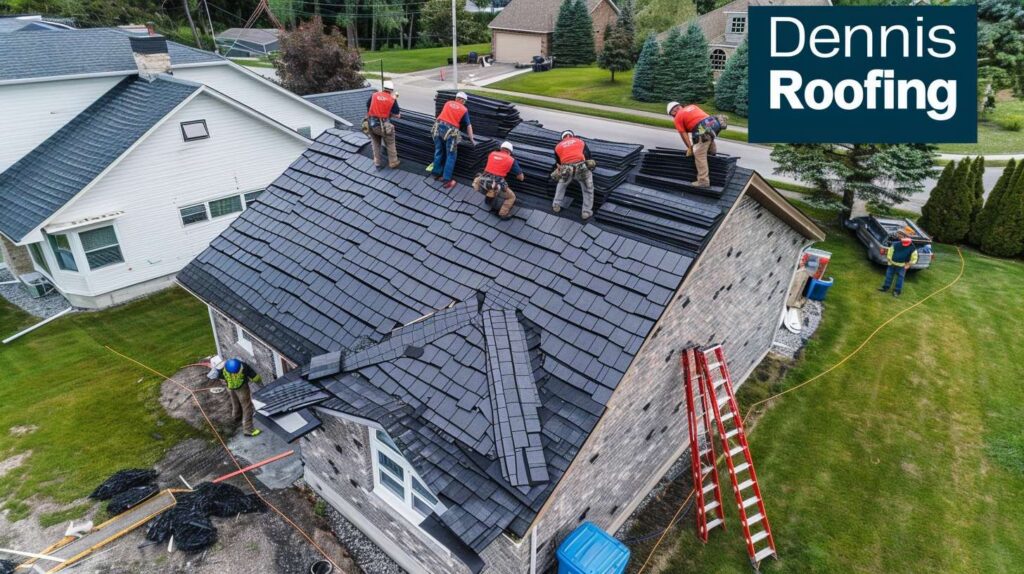
Why Aluminum Roofs Usually Fail Out of Sight First
Most people walk out, look up at their aluminum roof, see intact panels, and decide the roof is fine. Here’s the thing – aluminum as a system has a sound and a behavior, not just a surface. Step onto one that’s been expanding and contracting against bad fasteners for a few seasons and you’ll hear it: a low, slightly hollow resonance under your boot that a solid, well-attached roof doesn’t make. That’s the part people notice; now here’s the part that actually decides the job. The panels are just the face. What’s behind them – the clips, the fastening strips, the seam engagement, the underlayment – that’s what’s either holding or quietly giving up.
At 7 a.m., metal tells the truth faster than people do. One February morning in Bay Ridge, right around 7:10, I stepped onto an aluminum roof off 68th Street that looked completely decent from the sidewalk. Decent color, no obvious buckling. But the panels near the rear gutter gave off that soft tinny sound I don’t like – the kind that means the attachment underneath isn’t doing its job anymore. The homeowner kept saying, “We just need a patch,” and I understood why he thought that. But once we pulled two sections, the fastening strip was so corroded it came apart in my glove like wet cardboard. No ceiling stain had told him that story yet. And that’s my honest read on these jobs: replacement is often decided by what the seams are hiding, not what the ceiling has confessed to yet. When the attachments and seams are that far gone, patching often just delays a replacement the roof has already chosen for you.
| Myth | Real Answer |
|---|---|
| “If the panels look fine, the roof is fine.” | Seam failure, clip corrosion, and fastener backing-out happen beneath the surface. A panel can look serviceable for a year or more while the attachment system underneath has already failed. |
| “A leak stain shows the exact failure point.” | Water on an aluminum roof travels laterally under lifted seams, sometimes moving several feet before it drops. The stain on your ceiling can be well away from where the roof is actually open. |
| “New sealant buys years.” | Sealant covers a surface. It doesn’t re-engage a lifted seam, re-seat a corroded fastener, or stop water already moving under the panel. On a system with structural seam failure, fresh sealant is temporary at best. |
| “Only rusting metal needs replacement.” | Aluminum doesn’t rust, but it suffers galvanic corrosion when it contacts incompatible metals – steel screws, copper flashing, zinc coatings. And fastener pull-through and seam failure happen without any visible rust at all. |
| “Noise from an aluminum roof is normal and harmless.” | Some thermal movement noise is expected, but persistent clicking, popping, or creaking under afternoon heat usually means panels are expanding against improperly placed fasteners – a sign the system is working against itself. |
What a Crew Should Inspect Before Calling It Replacement
The hidden parts that actually settle the decision
If you were standing next to me on the ladder, this is the first question I’d ask you: where is the roof actually failing? Not where the stain is. Where the failure path starts. A competent inspection doesn’t just look at panels – it tracks the problem through seams, fastener patterns, edge metal, underlayment condition, flashing transitions, decking firmness, and how far moisture has already spread. As Ray Okonkwo, Dennis Roofing’s Field Supervisor with 17 years of tracking metal fatigue and bad fastening patterns, I’ve learned that the failure path is almost never a straight line. Brooklyn rowhouses especially – with their rear additions, party-wall transitions, chimney tie-ins, and low-slope sections over kitchen extensions – hide water migration in ways a detached home simply doesn’t. Water finds the seam at a chimney flashing, gets under the aluminum, and travels the slope until it finds a low point nobody thought to check.
I remember one roof in Bensonhurst where the seam looked innocent until we touched it. A light rain had started just after lunch, and the customer wanted to know why I was recommending full aluminum roof replacement services when only one interior corner was showing a stain. I walked him through it slowly. Water had been moving sideways under lifted seams, then down along the decking where it’s invisible until the structure starts complaining. We opened a small section near the chimney – and the plywood was dark, swollen, and smelled like a wet basement shelf. That smell changes the conversation fast. What looked like a corner problem was a system problem, and the deck was already holding moisture it had no business holding.
Before You Call
What to Gather Before Requesting an Aluminum Roof Evaluation in Brooklyn
- Age of the current roof, if you know it – even an approximate decade helps.
- Number of prior repairs, and whether the same area has been patched more than once.
- Where interior staining appears – room, ceiling location, and whether it’s spread or moved.
- Whether you hear clicking or popping sounds on hot afternoons or after a cold night.
- Photos of the rear gutter area and chimney base, taken from ground level if possible.
- Any known spots where water pools or drains slowly after rain.
- Attic or ceiling observations – soft spots, discoloration, any musty smell.
- Whether a previous contractor applied sealant, caulk, or any mixed-metal patch repairs.
▸ Seams and Clips
A proper inspection physically tests seam engagement – not just looks at it. Seams that lift even slightly under hand pressure have already lost their water-shedding function. Clip corrosion is checked separately because a seam can look seated while the clip below it is gone.
▸ Fastener Pattern and Condition
Fasteners that are backing out, over-driven, or spaced incorrectly allow panels to shift under thermal movement. An inspector should check for consistent spacing, correct fastener type, and whether any fasteners have already pulled through the panel material.
▸ Flashing at Walls and Chimneys
Wall and chimney flashing transitions are where Brooklyn roofs fail disproportionately, especially on rowhouses with rear additions. Flashing should be inspected for separation, improper lap, sealant-only terminations, and incompatible metal contact.
▸ Underlayment Condition
The underlayment is the last line of defense before moisture reaches the deck. On older aluminum roofs, it’s often dried out, torn, or was never installed to current standards. Its condition is a major factor in whether a partial repair can hold.
▸ Decking and Substrate Probing
The deck gets probed – not just visually checked. Soft spots, flex under foot pressure, and discoloration all indicate moisture damage that must be corrected before any new material goes down. Skipping this step means installing a new roof over a compromised foundation.
▸ Signs of Galvanic Reaction from Mixed Metals
When aluminum contacts steel fasteners, copper, or certain zinc-coated materials without proper separation, galvanic corrosion accelerates at the contact point. An inspection should identify any mixed-metal conditions that have already caused deterioration or will continue to do so after repair.
Inside the Replacement: Removal, Repair, and Rebuild
Here’s the blunt part nobody likes hearing. A proper aluminum roof replacement isn’t “take off the old panels, put on new ones.” It’s a controlled tear-off followed by a real look at what’s underneath – the substrate, the decking condition, the fastening layout that was used before, and whether the flashing was ever installed correctly in the first place. Damaged decking gets replaced. Uneven substrate areas get corrected before anything new goes over them. A compatible underlayment package goes down, then flashing that’s actually spec’d for the transitions on your specific roof. Then the aluminum panels are set with a fastening method that accounts for expansion and contraction – because aluminum moves, and a system that doesn’t allow for that movement will loosen itself apart within a few seasons. And honestly, here’s the insider piece worth keeping: when you’re reviewing an estimate, scan the line items carefully. If decking repair allowance, flashing replacement, and fastening method aren’t called out separately, the scope is probably hiding labor the roof still needs. That’s not a small omission – that’s how jobs come in low and go sideways after tear-off.
Proper Aluminum Roof Replacement: Step by Step
| Roof Component | Proper Replacement Includes | Shortcut Version Often Does |
|---|---|---|
| Decking / Substrate | Probed and inspected after tear-off; damaged sections replaced before new material is installed | Assumed to be fine; new panels installed directly over potentially compromised wood |
| Underlayment | Fully replaced with compatible material rated for slope and exposure conditions | Reused or skipped; new panels placed over dry, brittle underlayment from the original install |
| Flashing | Removed and replaced at all wall, chimney, and transition points with compatible metal | Left in place and re-caulked; new panels lapped over old flashing that may already be failing |
| Fastening System | Specified fastener type and pattern installed with correct expansion allowance for aluminum movement | Whatever fasteners are on hand; over-driven or wrong-metal screws that will cause problems within a few seasons |
| Edge Metal and Trim | Replaced and aligned to close the water path at eaves, rakes, and low-slope terminations | Reused if it looks okay from the ground; open edges sealed with caulk instead of properly terminated metal |
| Seam and Clip System | New clips and seam engagement throughout; designed to allow thermal movement without loosening | Old clips reused where accessible; seams sealed with roofing cement that will crack as aluminum moves |
⚠ Red Flags in Aluminum Roof Replacement Estimates
- The proposal mentions only “new panels and sealant” with no detail on what’s underneath
- Flashing replacement is not listed as a line item – just “flashing work” or nothing at all
- No deck inspection or decking repair allowance is included in the scope
- Fastener type and method aren’t specified anywhere in the written estimate
- Aluminum panels are proposed to be installed alongside steel screws or other incompatible metals without a galvanic barrier
- The price is dramatically lower than competing quotes – and the scope doesn’t explain why
Signals Your Current Roof Is Already Past the Patch Stage
The noises, movement, and repeat repair pattern that matter
A box of loose fasteners can ruin a whole aluminum system faster than a storm sometimes. The signs that point toward full replacement aren’t always dramatic – they’re a pattern. You’ve had sealant applied and the leak came back in the same area within a season. The seam near the rear gutter has a visible lift when you look at it from the right angle. On hot afternoons in July, you hear clicking or popping from the roof – not one or two pops, but a steady creaking as the sun moves. There’s a slight waviness in the panel surface around fastener points where the metal has been working against tight attachment. And maybe the stain in the back bedroom reappeared, but in a slightly different spot than before. That last one matters. When water changes its entry path while the roof hasn’t been touched, the system underneath is moving on you. I read a roof by its noise and behavior as much as its appearance – a roof that sounds wrong usually is wrong, well before it looks it.
An aluminum roof is a little like a boat hull – once the joints stop cooperating, the surface stops mattering. I came up doing aluminum hull repair at a marine yard near Staten Island before I got into roofing, so this analogy isn’t just a figure of speech. During a humid August afternoon in Brooklyn Heights, I was called to look at an aluminum roof another crew had “repaired” six months earlier. They’d used mixed metals – steel fasteners into aluminum clips – and the wrong sealant for the movement characteristics of the panels. By 3:30 p.m., the panels were hot enough that every expansion cycle was audible. The owner was standing on the fire escape with an iced coffee asking me, genuinely puzzled, why the roof sounded like it was alive. I had to explain that what he was hearing was the roof working against itself – the aluminum trying to move and the wrong fasteners holding it just tight enough to create friction, not tight enough to hold water out. Aluminum punishes shortcuts in slow motion. The original crew was probably four boroughs away when the damage really started showing.
Decision Guide
Patch Again – or Move to Full Aluminum Roof Replacement?
→ Request full replacement evaluation
Is the deck confirmed dry and solid?
→ Replacement assessment recommended
| 🔴 Urgent Situations – Call Now | 🟡 Can-Wait Situations – Schedule an Estimate |
|---|---|
| Active leak near an electrical fixture, panel, or attic wiring | Cosmetic oxidation or surface dulling with no active leak or seam movement |
| Visibly lifted seams after wind or temperature drop | Isolated noise with no interior leak and a relatively recent installation |
| Soft or spongy decking feel near chimney or rear gutter area | One dented or slightly damaged panel with intact surrounding seams and no moisture inside |
| Repeated interior staining in the same area after a repair was completed within the last year | Aging roof nearing end of expected service life with no active water entry – book an evaluation, don’t rush |
Questions Worth Asking Before You Sign Anything in Brooklyn
Are you being sold a shiny new surface, or an actual roof system?
That question is worth sitting with before you sign anything. A legitimate estimate for aluminum roof replacement services should spell out the substrate review process, what happens if concealed deck damage turns up after tear-off, what flashing materials are being used and where, how the fastening system accounts for thermal movement, how the crew will protect your property during the job, and what cleanup looks like at the end. Dense Brooklyn lots – shared driveways, close neighbor setbacks, ground-level AC units, satellite lines – make the access and protection plan more important than most proposals bother to address. If the estimate you’re holding doesn’t answer those questions in writing, push back before the job starts, not after.
Brooklyn Homeowner Questions – Answered Straight
Before You Hire Anyone
Four Credibility Signals Worth Confirming in Any Brooklyn Roofing Contractor
Licensed and Insured
Verify current NY contractor license and general liability / workers’ comp coverage. Get the certificate, not just the claim.
Written Scope with Specifics
The proposal should detail flashing, fasteners, deck contingency, and what triggers additional cost. Vague language protects the contractor, not you.
Brooklyn Metal Roofing Experience
Rowhouses, party walls, rear additions, and chimney tie-ins are specific conditions. Ask for examples of similar Brooklyn work, not just general references.
Documented Property Protection Plan
Tight lots, ground-level units, and shared driveways make debris containment and access planning non-negotiable. It should be in writing before anyone climbs up.
If you want a straight answer on whether your roof needs a targeted repair or a full system replacement, call Dennis Roofing and ask for an aluminum roof evaluation – no pressure, no assumptions before we’ve actually seen it. We work in Brooklyn, we know what these roofs hide, and we’ll tell you what we find.