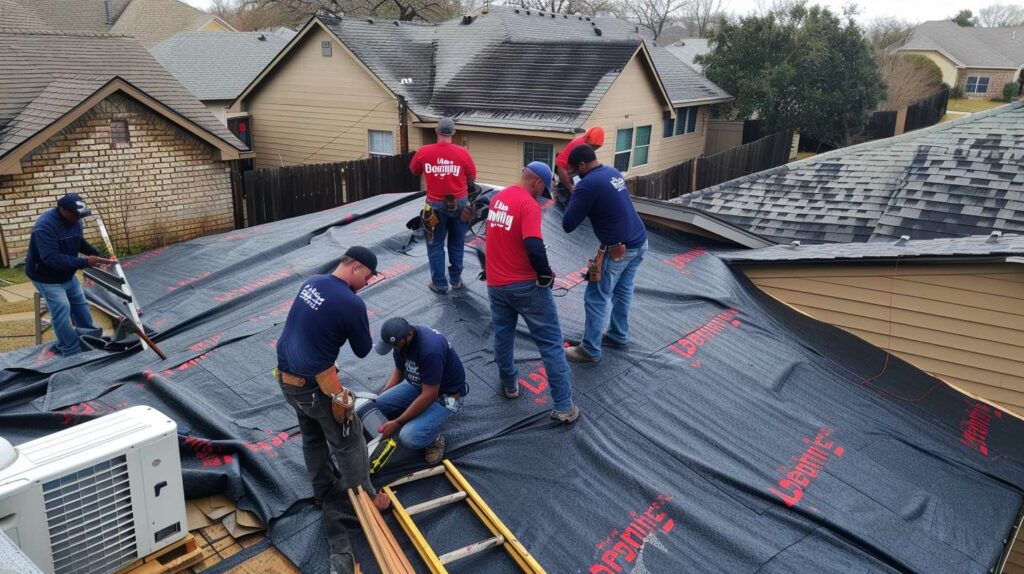
Expert Aluminum Roof Repair Services in Brooklyn, NY
Here’s the problem most Brooklyn homeowners face: they’ve had three different contractors “fix” the same aluminum roof leak, each one sealing it with a different caulk or roofing cement, and when the next hard rain rolls through, water still drips through the ceiling exactly where it did before. That’s because aluminum roof repair isn’t about slapping sealant over a hole-it’s about understanding how aluminum moves, how panels and seams work together, and why the techniques that patch an asphalt shingle or rubber membrane will fail every single time on metal.
Aluminum roof repair in Brooklyn typically costs $650-$2,400 for most residential repairs, depending on the size of the damaged area, accessibility, and whether you’re fixing a seam failure, punctured panel, or corrosion issue. But here’s what homeowners need to understand first: aluminum roofs behave nothing like the asphalt or rubber systems most roofers work on daily, and if your contractor doesn’t know the difference between expansion joints, standing seam details, and proper fastener spacing, you’re not getting a repair-you’re getting an expensive countdown to the next leak.
Why Aluminum Roof Repair Is Different From Every Other Roofing Fix
I spent my first four years as a welder in a small fabrication shop under the Brooklyn-Queens Expressway before I started working on roofs, and that metalworking background taught me something most roofers never learn: aluminum expands and contracts more than almost any other roofing material. When the sun hits a dark aluminum panel on a July afternoon in Bed-Stuy, that metal can reach 160°F and expand nearly a full inch over a 20-foot run. By 3 a.m., it’s contracted back. This happens every single day, and it’s why repairs that don’t account for movement fail within months.
Last summer I repaired an aluminum roof in Greenpoint where the previous contractor had screwed replacement panels directly through the face without any clips or gaskets-just drove screws straight into the plywood deck like he was installing vinyl siding. Three months later, every single penetration leaked because the panels moved around those rigid screws and tore the metal. That’s the fundamental mistake: treating aluminum like it’s a static material instead of a dynamic one.
The other critical difference is galvanic corrosion. When you put dissimilar metals in contact-say, a steel screw touching an aluminum panel in the presence of moisture-you create a battery that literally eats the aluminum. I’ve seen aluminum panels with perfect holes corroded completely through around steel fasteners, while the steel itself looks brand new. Any repair that uses incompatible metals or sealants will accelerate failure, not prevent it.
The Four Main Types of Aluminum Roof Damage We Repair in Brooklyn
After seventeen years tracking leaks across Brooklyn’s aluminum roofs, I can tell you that most damage falls into four categories, and each one requires a completely different repair approach.
Seam failures are the most common. Standing seam aluminum roofs rely on crimped or folded joints that lock panels together and shed water. When those seams open-usually from improper installation, thermal stress, or deteriorated sealant-water runs sideways under the panels instead of down and off. I worked on a Coney Island roof last fall where the original installer had used too few clips to secure the seams, so when wind got under the panels during storms, it peeled them open at the seams. The repair required disassembling six panels, installing proper clip spacing (every 16 inches instead of every 30), and re-seaming with a hand seamer to get the geometry right.
Punctured or dented panels happen from falling branches, HVAC work, or someone walking on the roof without proper foot placement. A small puncture in aluminum can’t just be patched with sealant-the metal around the hole is usually work-hardened and cracked from the impact, so the patch has to extend beyond the damaged zone. For punctures under about 3 inches, I’ll often cut a diamond-shaped patch from matching aluminum, round all corners to prevent stress concentration, coat both surfaces with butyl tape, rivet it in place with aluminum rivets, and seal the perimeter with a polyether sealant that stays flexible. For larger damage, panel replacement makes more sense.
Corrosion around fasteners and penetrations is sneaky because it starts small and hidden. You’ll see white powder (aluminum oxide) around screw heads or vent pipe flashings, and by the time it’s visible, the metal underneath is already compromised. This happens when installers used steel screws, didn’t use gaskets, or positioned fasteners where water pools. Repair means removing the corroded fastener, enlarging the hole slightly, installing a proper aluminum or stainless steel screw with an EPDM gasket, and sometimes patching the enlarged hole with a two-part epoxy designed for metal roofing before reinstalling the fastener.
Failed coatings and surface degradation affect older aluminum roofs, especially those that were painted or have a factory coating that’s breaking down. Brooklyn’s weather-salt air near the coast, pollution, temperature swings-accelerates coating failure. Once the protective layer is gone, the bare aluminum oxidizes and eventually corrodes. Sometimes we can spot-repair small areas by cleaning to bare metal, applying an aluminum-compatible primer, and topcoating with an elastomeric coating. But if more than 30% of the roof surface shows coating failure, you’re usually better off recoating the entire roof or considering replacement.
Red Flags That Tell You Your Contractor Doesn’t Understand Aluminum
The fastest way to waste money on aluminum roof repair is hiring someone who treats it like every other roof. Here’s what to watch for, and the exact questions to ask.
If a contractor says they’ll “just seal it” without identifying why it’s leaking or what’s moving where, that’s a red flag. Ask them: “Will you show me exactly where the water is entering and explain what’s causing the seal to fail?” A competent aluminum repair specialist will climb up, trace the leak to its source-which is often several feet uphill from where water appears inside-and explain whether it’s a seam problem, a fastener issue, or panel damage.
If they pull out roofing cement or asphalt-based products, stop them immediately. Asphalt and aluminum are incompatible-the petroleum distillates in roofing cement actually degrade aluminum over time. Ask them: “What sealant are you using, and is it specifically rated for aluminum-to-aluminum or aluminum-to-dissimilar-material contact?” The answer should include products like polyether sealants (Geocel 2300, Chemlink M-1, or similar), butyl tape, or two-part epoxies formulated for metal. If they can’t name the product, they’re guessing.
If they plan to mix metals-using steel screws on aluminum panels or copper flashings against aluminum-you’re looking at guaranteed corrosion. Ask them: “Are all your fasteners and flashings compatible with aluminum, or will you be using isolation materials to prevent galvanic corrosion?” Proper answers include aluminum or stainless steel fasteners, plastic or rubber isolation washers, and careful attention to the galvanic series of metals. If they look confused, find someone else.
And if they won’t discuss thermal movement or how the repair will accommodate expansion and contraction, that repair will fail. Ask them: “How are you accounting for the aluminum’s expansion and contraction in your repair design?” They should talk about slotted holes, flexible sealants, clip systems, or panel overlap-anything that shows they understand the roof moves. If they say “it’s just a patch, it doesn’t matter,” you’re talking to the wrong person.
What Professional Aluminum Roof Repair Actually Looks Like
Here’s what happens when we repair an aluminum roof the right way. I’ll walk you through a typical standing seam repair I did last month in Park Slope, because it shows the process clearly.
The homeowner called because water was appearing on their top-floor ceiling near a corner every time it rained hard. Two previous contractors had sealed the seam where they saw water inside, but the leak persisted. When I got up there, I found the actual entry point was about eight feet uphill from where water appeared-wind-driven rain was getting under a seam that had pulled open, running sideways beneath the panels along the roof deck, then dropping through at the first penetration it found (an old nail hole).
The repair required disassembling two 16-foot panels completely. I unfolded the seam using a seam ripper and hand tools, carefully so I didn’t work-harden or crack the metal. Once the panels were separated, I could see the problem: the clips that hold the seam together were spaced 28 inches apart instead of the 16 inches maximum for proper wind resistance in Brooklyn (we’re in a high wind zone near the water). Between clips, the panels had enough play to flex open under wind pressure.
I added six new fixed clips, properly fastened to the roof deck with aluminum pancake-head screws and EPDM washers. Each clip location required precise placement-too close to the panel edge and you risk splitting; too far and the panel won’t seat properly. Then I applied a thin bead of butyl tape along the male leg of the seam before re-folding. The re-seaming took about forty minutes with a hand seamer, working in 2-foot sections, making sure each fold was tight and uniform. I finished with a bead of polyether sealant at the top and bottom termination points where the seam ends, and where water could potentially enter from above or wick up from below.
That repair has held through seven months of Brooklyn weather including two nor’easters. The difference wasn’t the sealant-it was understanding that the seam had failed mechanically and needed structural correction, not just another bead of caulk.
Aluminum Roof Repair Costs and What Affects the Price
Most aluminum roof repairs in Brooklyn fall into these ranges, based on actual jobs we’ve completed over the past two years:
| Repair Type | Typical Cost Range | Main Price Factors |
|---|---|---|
| Single seam repair (8-15 feet) | $650-$1,100 | Seam length, number of clips needed, accessibility |
| Small puncture or hole patch (under 6 inches) | $425-$750 | Patch size, metal thickness, roof pitch |
| Panel replacement (one full panel) | $1,200-$2,400 | Panel length, matching existing profile and coating, interlocking with adjacent panels |
| Fastener corrosion repair (multiple locations) | $800-$1,600 | Number of fasteners, extent of surrounding damage, re-sealing required |
| Flashing repair or replacement | $550-$1,350 | Flashing type (wall, chimney, vent), custom fabrication needed |
| Extensive seam system repair (multiple panels) | $2,200-$4,800 | Number of panels affected, structural issues, full re-seaming requirements |
Three things drive aluminum repair costs higher than homeowners expect. First is access-if we’re working on a steep-pitch roof in Brownsville or need special scaffolding to reach a fourth-floor addition in Brooklyn Heights, you’ll pay more for safety equipment and time. Second is matching existing materials. If your aluminum roof is fifteen years old with a specific ribbed profile and a Kynar coating that’s been discontinued, finding matching panels means either custom fabrication or accepting a visible patch. Third is underlying damage. What looks like a simple seam leak often reveals rotted decking, failed underlayment, or structural issues once we open it up, and those repairs add cost but can’t be skipped if you want the roof to last.
One money-saving insight: if you’re facing multiple small repairs-say, three seam issues and some fastener corrosion-having them all done in one visit usually saves 20-30% compared to separate service calls. The mobilization costs (truck, tools, safety equipment, labor to get on and off the roof) are the same whether we’re there for one hour or four.
When Repair Makes Sense vs. When You Should Consider Replacement
I tell homeowners this: if your repair costs are approaching 35-40% of a new aluminum roof installation, and your roof is already past two-thirds of its expected lifespan, replacement often makes better financial sense. Here’s how I evaluate it.
An aluminum roof in Brooklyn typically lasts 30-40 years depending on installation quality, coating type, and maintenance. If your roof is 12 years old and needs a $1,800 seam repair, that’s a clear repair decision-you’re getting another 18-28 years from a relatively small investment. But if your roof is 28 years old, has multiple failing seams, coating breakdown on 40% of the surface, and widespread fastener corrosion, you’re looking at $8,000-$12,000 in repairs on a roof that might last another 5-8 years. A new aluminum roof installation runs $14,000-$22,000 for a typical Brooklyn row house, and gives you another 30-40 years. The math isn’t hard.
I repaired an aluminum roof in Ditmas Park two years ago where the homeowner was adamant they wanted to patch and not replace. The roof was 32 years old, and we did $6,200 in repairs-re-seaming, panel replacements, new fasteners, recoating. Eighteen months later I got called back because new leaks had developed in areas we hadn’t touched. At that point we replaced the roof, and the homeowner admitted they’d spent nearly $7,000 to extend the old roof by less than two years. Sometimes pushing repair too far costs more than being realistic about replacement timing.
But aluminum roofs also repair better than almost any other material when they’re young to middle-aged and the damage is localized. Unlike asphalt shingles where one damaged area often indicates broader deterioration, an aluminum roof can have a single problem-one bad seam from an installation mistake, one puncture from a branch-while the rest of the roof is perfect. In those cases, targeted repair makes complete sense and can give you decades more service.
How to Maintain Your Aluminum Roof Between Repairs
Most aluminum roof problems we fix could have been prevented or caught earlier with basic maintenance. You don’t need to be up there every month, but twice a year-spring and fall-you or a professional should check a few critical things.
Walk the roof if it’s safe to do so (low pitch, good footing), or use binoculars from the ground or a ladder at eave level. Look for seams that are pulling apart, visible gaps where panels meet, and areas where sealant has cracked or pulled away. Any opening wider than 1/8 inch needs attention before the next heavy rain. Check all penetrations: vent pipes, chimneys, skylights, HVAC equipment. The flashings around these should be tight, with no gaps, rust stains, or white powder (aluminum oxide). If you see corrosion starting, addressing it early costs $200-$400; waiting until the flashing fails completely costs $800-$1,500.
Clean debris out of valleys and around chimneys at least twice a year. Leaves and dirt hold moisture against aluminum, accelerating corrosion. Brooklyn’s oak and maple trees drop heavy loads in October and November, and if that sits wet against your aluminum panels all winter, you’ll see coating damage by spring. A simple broom or leaf blower takes fifteen minutes and prevents problems.
If your aluminum roof has a coating-most do-watch for any areas where it’s chalking heavily, peeling, or exposing bare metal. Catch coating failure when it’s just starting (a 4×4 foot area) and you can spot-repair it for $300-$500. Let it spread to half the roof and you’re looking at $4,000-$7,000 to recoat everything, or worse, panel replacement where corrosion has taken hold.
And here’s one most homeowners miss: check your attic or top floor ceiling for any signs of moisture, staining, or daylight showing through. Aluminum roofs don’t always leak obviously. Sometimes water intrusion is slow and small, causing mold or rot for months before you see a drip. Catching it at the first small stain means a $600 repair; catching it when ceiling joists are rotted means $3,000+ in structural and roofing work.
Why Dennis Roofing Specializes in the Details That Other Contractors Skip
Most Brooklyn roofing contractors handle one or two aluminum roof repairs a year, between hundreds of asphalt and rubber jobs. We’re the ones they call when that aluminum repair keeps failing, because we’ve built our approach entirely around understanding what makes metal roofs different. I’ve spent seventeen years diagnosing problems that other contractors couldn’t find, repairing jobs that others patched three times, and explaining to frustrated homeowners why this time will actually work.
We don’t carry roofing cement on our aluminum repair trucks-can’t use it if it’s not there. Every fastener, every sealant, every piece of flashing material is selected specifically for aluminum compatibility and thermal movement. We document every repair with photos before, during, and after, so you can see exactly what failed, what we did, and why it won’t fail the same way again.
If you’ve got an aluminum roof leak in Brooklyn that won’t stay fixed, a seam that’s opening, panels showing corrosion, or you just want someone to tell you honestly whether repair makes sense or if you’re better off planning for replacement, that’s what we do. Call Dennis Roofing at (718) 555-ROOF, and we’ll get someone out to actually trace the problem to its source and explain your options without the guesswork.