
Aluminum Roofing Needs a Contractor Who’s Worked With the Material – Here’s Why
Every aluminum roof that fails tells the same story: the material was fine, and the installer wasn’t. That’s the part most people don’t hear until the repair estimate lands in their inbox. People assume any metal roofer can handle aluminum roofing contractor services – and that assumption is exactly what turns a solid roof into a problem roof inside of two seasons.
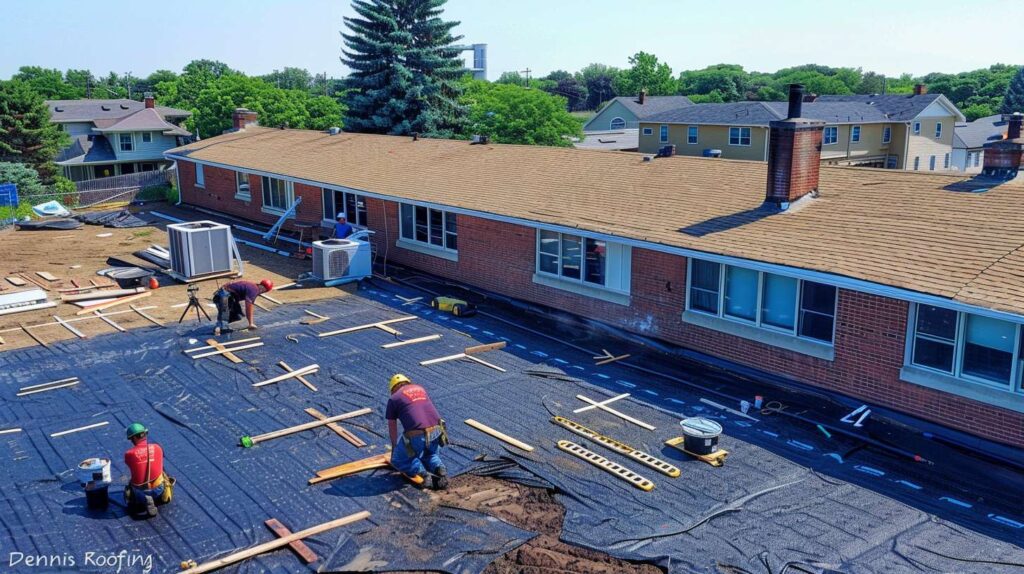
Why Aluminum Roofs Fail in Skilled-Looking Hands
Every time I put my hand on a seam that shouldn’t be moving, I already know what I’m going to find. Aluminum talks – through pops, through the way seams lift at certain hours, through surface marks that show up where fastener pressure got away from someone. A qualified contractor listens to those signals before the roof turns a warning into an invoice. The material didn’t fail. It just told you exactly what was done to it.
People think metal is metal. What happens is aluminum reacts faster when a crew installs it like steel or like shingles. Galvanized steel forgives a little. Aluminum does not. It moves more, it reacts to mixed metals, and it remembers overdriven fasteners for as long as the roof is on the building. Not gonna lie – I’ve seen work that looked impressive from the street and was completely wrong at every detail point.
| Myth | What actually happens on an aluminum roof |
|---|---|
| Any metal roofer can handle aluminum | Aluminum expands and contracts at a different rate than steel. Crews trained on steel often don’t leave the seam clearance aluminum needs, which causes panels to buckle, pop, and stress-crack at fastener points. |
| Popping noises mean the panel is defective | Popping is almost always a movement problem, not a material defect. When panels can’t expand freely because of overdriven fasteners or inadequate clip spacing, they release tension as audible pops – especially during morning warm-up. |
| Tighter fasteners always mean better hold | Overdriven fasteners distort the washer, compromise the seal, and pin the panel so it can’t move with temperature. The result is stress at every fastener hole – which becomes a leak path well before the panel itself wears out. |
| If it looks clean from the street, the details are fine | Field panels are easy to lay flat. The real work is at curbs, parapets, penetrations, and perimeter edges. Those are the areas where installation shortcuts hide for one or two seasons before wind-driven rain finds them. |
| Leaks around rooftop penetrations are always a flashing product issue | The product is usually fine. The problem is that a contractor used a flashing metal that reacts with aluminum – copper, bare steel, or certain galvanized grades – and galvanic corrosion opened the path. That’s a contractor decision, not a product failure. |
⚠ What Goes Wrong When Aluminum Is Treated Like a Generic Metal Roof
- Overdriven fasteners: Pinning the panel kills movement allowance and destroys the washer seal – the leak starts at the fastener hole, not the seam.
- Mixed metals causing galvanic corrosion: Installing copper or bare steel flashing against aluminum creates an electrochemical reaction that eats through the aluminum from the contact point outward, often hidden under the flashing lip.
- Trapped movement at seams: Seams locked too tight have nowhere to go when the panel expands. The panel deforms, the seam opens, and wind-driven rain finds the gap.
- Low-slope details that look acceptable until it rains sideways: On a 1:12 or 2:12 slope, gravity alone won’t push water away from a bad curb detail or an underlapped penetration. It takes a 30-mph rainstorm to show the mistake – usually months after the crew has been paid.
What a Brooklyn Contractor Notices Before Touching a Panel
Movement comes first on low-slope aluminum
At 8 a.m. on a Brooklyn roof, aluminum already tells you what kind of installer touched it. I was on a rowhouse in Bensonhurst at 7:10 in the morning, coffee still too hot to drink, and the sun had just started hitting the panels from one side. The homeowner thought the roof was warping overnight. What I was seeing was a bad install – no room left for movement – so the panels were popping back as soon as they warmed up. I put my hand on one seam and felt it shift under my palm, and right there I told him: this is a contractor problem, not a material problem. As Darnell Reyes, with 17 years in roofing and a specialty in problem metal roofs on Brooklyn low-slope buildings, the first thing I check isn’t whether the panel looks straight – it’s whether the install left the panel anywhere to go.
A qualified aluminum contractor checks seam allowance before anything else – specifically whether clips or fasteners were set to allow lateral movement or were driven to hold the panel rigid. Panel length strategy matters too, because longer runs need more planned expansion distance. Curb detailing and perimeter terminations are checked for clearance and compatible sealants. None of that shows up in a photo of the finished roof. It only shows up when the temperature swings.
Brooklyn buildings create conditions that amplify every one of those details. Rowhouses share walls but not rooflines, so one plane heats up an hour before the adjacent one – which means your panels are in a constant tug on the shared parapet side. Small warehouses in neighborhoods like Sunset Park or Red Hook have low-slope decks and rooftop equipment that interrupts panel runs and creates detail complexity most crews aren’t ready for. Wind corridors off the harbor hit certain blocks hard enough that anything not properly edge-terminated gets tested every winter. And a building that runs east-west gets full morning sun on one face while the other side is still cold – aluminum feels that faster than any other roof material I’ve worked with.
Detail work matters more than the field panels
| Roof area checked | What a qualified aluminum contractor looks for | What an unqualified crew often misses | Why it matters on Brooklyn buildings |
|---|---|---|---|
| Panel movement clearance | Clip type and spacing appropriate for panel length and local temperature range | Fixed fasteners used where floating clips are required | Brooklyn’s summer-to-winter swing means panels need real room to move |
| Seam condition | Seam profile fully engaged, no stress marks, no lifted edges along the run | Seams crimped unevenly or not fully seated at terminations | Low-slope roofs on rowhouses don’t drain seam gaps the way steep slopes do |
| Fastener pressure | Washer seated flush without deformation; torque appropriate for aluminum gauge | Overdriven fasteners with distorted washers – creates leak paths at the screw point | Older buildings often have uneven decking that tempts crews to overdrive for flush fit |
| Flashing material compatibility | Aluminum or coated aluminum flashing confirmed at all transitions; no bare copper or steel contact | Generic galvanized or copper flashing installed against aluminum panels | Galvanic corrosion accelerates in wet urban environments – Brooklyn qualifies |
| Curb and parapet details | Counterflashing lapped correctly with movement clearance; coping and termination bars compatible | Caulk-only terminations at curbs with no mechanical hold or movement allowance | Warehouse and commercial buildings in Brooklyn have high curb traffic that stresses terminations |
| Low-slope drainage paths | Drain locations, slope direction, and panel run orientation confirmed before installation begins | Panels installed without accounting for ponding risk or cross-slope drainage | Flat and near-flat roofs throughout Brooklyn are unforgiving when water has nowhere to move |
Local conditions that affect aluminum roofs
Rowhouse roofs with uneven heat exposure
Warehouse curbs and parapet transitions
Wind-driven rain near open industrial corridors
Mixed-age rooftop equipment on older buildings
Where Generic Metal Crews Usually Get Caught
Here’s my blunt opinion: metal experience is not the same thing as aluminum experience. I got called to a small warehouse near Sunset Park during a windy November drizzle – another company had mixed aluminum panels with the wrong flashing metals around a curb. The super kept saying it only leaks when the rain comes sideways, which is almost always the sentence that leads me to a detail error, not a mystery leak. When we opened it up, corrosion had already started exactly where the materials were in contact. From ten feet away the job looked clean. From ten inches away, it was wrong at every seam edge and curb transition. That’s what generic metal crew work looks like up close – acceptable from a distance, failing at the details.
If a contractor says aluminum goes on just like any other metal, that’s the moment to stop the conversation.
Generic metal crew
- Plans panel layout for aesthetics; expansion is addressed as-needed on site
- Uses whatever flashing metal is on the truck – often galvanized or copper
- Drives fasteners to feel tight; no torque reference for aluminum gauge
- Folds seams to visual standard; doesn’t verify movement clearance
- Caulks curb flashings without mechanical termination or movement allowance
- Hears popping complaints and suggests it’s the material settling
Aluminum-specific contractor
- Plans panel run length and clip type around the local temperature range before cutting anything
- Confirms all flashing metals are aluminum-compatible before ordering materials
- Sets fastener torque to aluminum spec; inspects washer compression on every penetration
- Verifies seam engagement and checks for stress marks along full panel length
- Mechanically terminates curb flashings with proper lap and movement gap
- Diagnoses popping by time-of-day pattern to identify whether it’s movement or fastener stress
Red Flags in Aluminum Roofing Contractor Services
- ❌ Says aluminum installs “basically the same” as other metal – that’s the tell right there. It doesn’t.
- ❌ Cannot explain thermal movement or how they account for it – if they pause on that question, the install will show it.
- ❌ Vague about which flashing metals they’re using – “standard flashing” is not an answer when you’re dealing with aluminum panels.
- ❌ No plan for low-slope penetrations – a shrug or a caulk reference is not a penetration strategy.
- ❌ Dismisses popping or noise complaints – those noises are the roof explaining what’s wrong. A contractor who waves them off has never listened to one.
- ❌ Focuses only on the lowest bid – the lowest number usually means someone skipped the detail work, and detail work is exactly what aluminum requires.
Listen for These Signs Before the Repair Bill Gets Bigger
What homeowners can notice without climbing the roof
I remember one seam in Flatbush that sounded like a soda can when I pressed it. One August afternoon I was meeting a landlord who was proud he’d found a cheap “metal roof guy” online. By 3:30 p.m. the roof was hot enough you could feel the expansion through your boots, and when I got to the fastener points I saw washers distorted like bottle caps run over by a dolly. The landlord got quiet when I explained the aluminum wasn’t failing – it was doing exactly what aluminum does when somebody drives fasteners like they’re nailing down shingles from a weekend tutorial. The material doesn’t lie. It just keeps a record of every shortcut until someone comes back to read it.
Here’s the insider part: when you call about an aluminum roof problem, the details you give upfront cut the diagnostic time in half. Tell whoever picks up when the noise happens – morning warm-up or afternoon peak heat points to a movement issue, while rain-only noise is usually a seam or detail gap. Let them know if the leak only shows up when rain is coming sideways, not straight down, because that almost always points to a perimeter or penetration detail rather than the field panels. And if the problem changes noticeably between cold mornings and warm afternoons, say that – temperature-dependent behavior tells a contractor more about what went wrong than a photo does. Don’t hold back details because you think they’re irrelevant. On an aluminum roof, timing and temperature are the diagnosis.
✅ Before You Call for Aluminum Roofing Contractor Services – Note These First
- When does the noise happen? Morning warm-up, afternoon heat peak, or only during rain – each pattern means something different.
- Exact leak location. Curb area, penetration edge, seam line, or perimeter flashing – get as specific as you can without getting on the roof.
- Does the problem change with sun or cold? Temperature-dependent behavior points directly to movement issues versus water entry.
- Any rooftop equipment nearby? HVAC units, old curbs, drains, or duct collars near the problem area are often the real source.
- Are different metals visible at flashing points? Rust streaks, greenish staining, or dark discoloration near a seam or curb edge can mean incompatible materials are in contact.
- Age of the roof and any known repair history. A patch job from three years ago is often the actual source of today’s problem.
- Were any prior repairs patch jobs? Patches on aluminum using incompatible materials or without addressing movement can make the original issue worse over time.
📞 Call Now
- Active leak at a curb or seam
- Visible corrosion or staining around flashing contact points
- Lifted or separated perimeter/edge detail
- Fasteners backing out or visible from inside
- Water entry that happens specifically during wind-driven rain
🗓 Can Schedule Soon
- Cosmetic oil-canning with no active leak
- Isolated popping or noise without water entry – but don’t wait too long
- Surface marks or scuffs after a recent install
- Questions about preventative maintenance before a problem develops
Questions Brooklyn Property Owners Ask About Aluminum Roofing Contractor Services
Is aluminum a bad roofing material for Brooklyn?
Can a leaking aluminum roof be repaired without full replacement?
Why does my aluminum roof make noise in the morning or late afternoon?
How do I know if mixed metals are part of the problem?
If your aluminum roof in Brooklyn is popping, leaking, shifting, or showing detail trouble, call Dennis Roofing – the team that handles aluminum roofing contractor services the way the material actually demands, not the way it’s assumed to work.