
You’ve Got a Few Options in Front of You – Here’s How to Actually Choose the Right One
We’ve dealt with the fallout of bad advice. And here’s the thing – if one contractor is talking about shingles, another is talking about ventilation, and a third is talking about plywood, you’re not comparing prices. You’re comparing three completely different diagnoses. The roof is the same. The problem being solved is not.
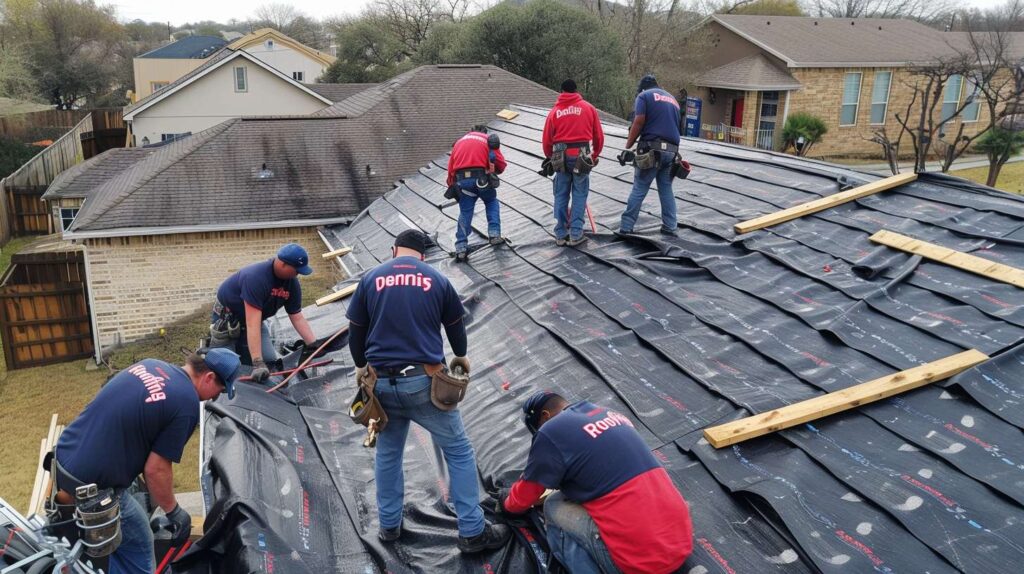
When Estimates Aren’t Comparable, Stop Shopping by Price
Three estimates on one Brooklyn brownstone can sound like they’re describing three different roofs. That’s because they usually are – not the physical roof, but the problem each contractor decided to solve before they ever put numbers on paper. Lamar reads the building backwards, starting from the leak itself, then tracing the path to the mistake that let water in. Shingles versus ventilation versus plywood isn’t a pricing disagreement. It’s a diagnostic disagreement, and if you pick the lowest number without resolving which diagnosis is actually correct, you’re gambling with your ceiling.
Here’s my blunt opinion: if they can’t explain the problem in plain words, don’t let them price the solution. Lamar Boudreau, with 17 years in roofing and early experience tracing failures on prewar Brooklyn buildings, has seen what happens when a homeowner chooses a bid they can’t understand – the repair fails, the second contractor finds the real problem, and the first check was money spent on confidence instead of craft. Line up scope before you line up totals. Know what problem each bid is actually solving before you compare what it costs.
| Issue on the House | Bidder #1 Diagnosis | Bidder #2 Diagnosis | Bidder #3 Diagnosis | Question You Ask Next |
|---|---|---|---|---|
| Interior ceiling stain near party wall | Replace shingles only | Improve ventilation | Seal skylight curb | What exact evidence on the roof supports this diagnosis? |
| Water entry after wind-driven rain | Patch exposed area | Replace plywood decking | Coat full roof surface | What was actually lifted or tested to reach this conclusion? |
| Rear slope damp decking | Replace bad areas (unspecified) | Partial tear-off | Rebuild flashing transition | What area footage is included, and how was it measured? |
| Recurring leak around skylight | Seal skylight with caulk | Full skylight re-flash | Full roof coating | What happens if hidden damage appears once work starts? |
Decision Tree
Are You Comparing Prices – or Comparing Diagnoses?
START: Do all estimates name the same failing component?
✓ YES
Compare warranty, scope, materials, cleanup, and exclusions. Now you’re looking at the same problem priced differently – that comparison is fair.
✗ NO
Ask each contractor to show where the failure starts – on the roof, not in the estimate sheet.
Did they lift, probe, or physically measure the area in question?
✓ YES
Request written scope matched to tested areas. If they touched it, they should be able to document it.
✗ NO
Treat that estimate as a guess. A price without a measurement is not a bid – it’s a number.
Proof on the Roof Matters More Than Pitch in the Living Room
What They Should Have Touched, Lifted, or Tested
Before I say anything else, I ask the homeowner one question: what did this contractor actually touch, lift, or test? I remember standing on a row house off Ocean Parkway at 7:10 in the morning, frost still hanging on the TV cables, while a homeowner waved three estimates at me that ranged from $4,800 to $19,600. The cheapest guy had written “replace bad areas” on a single sheet of paper and never even measured the rear slope. That’s not a bid – that’s a guess wearing a price tag. And honestly, it’s a recurring reality on Brooklyn jobs: rear additions with low-slope membranes butting up against vertical brick, patched flashing around skylights that were added long after the original build, old decking hidden under two layers of quick fixes nobody wanted to pay to tear off properly. A contractor who never got on that rear slope had no idea what they were pricing. Neither did the homeowner who almost hired them.
Now trace that back.
Field Checklist
8 Things a Serious Contractor Does Before Quoting a Number
-
✔
Measure each slope individually – rear, front, and any addition roofs get their own numbers, not a rough guess from the ground -
✔
Inspect all flashing transitions – where the roof meets walls, chimneys, parapet edges, and any vertical surface is where most Brooklyn roof failures actually start -
✔
Lift shingle or membrane edges where safe – what’s visible on top tells part of the story; what’s underneath tells the rest -
✔
Probe soft decking anywhere staining suggests saturation – a thumb or a probe tool tells you more than looking ever will -
✔
Inspect every penetration – vents, skylights, pipe boots, HVAC curbs; if something pokes through the roof, it needs individual attention -
✔
Document the drainage pattern – flat and low-slope roofs trap water in predictable spots; knowing where water sits tells you where to look for hidden damage -
✔
Photograph problem areas – not one wide shot of the whole roof; close images of the specific transitions, seams, and material conditions that drove the diagnosis -
✔
Distinguish active leak from old damage – a stain from three years ago and a leak from last Tuesday require different urgency and sometimes different repairs entirely
⚠ Watch For This
Sales Behavior That Usually Signals Guesswork
- Price quoted from the sidewalk – they never got on the roof
- Vague phrases like “replace bad areas” with no square footage or material spec
- Pressure to sign before the next rain event – urgency that benefits them, not your roof
- No photos, no sketches, no documentation of what was observed
- No measurement – no tape, no wheel, nothing written down while they were up there
- No explanation of what actually caused the leak – just what they plan to replace
By Roof Type
Open to See What Should Be Checked by Roof Type
Plain-Language Questions That Expose a Bad Bid Fast
The truth is, a neat folder and a confident voice have sold a lot of bad roofing in this city. One August afternoon in Flatbush, right before one of those loud summer downpours, I watched a contractor tell an elderly couple they needed a full tear-off “immediately” because granules in the gutter meant the roof was finished. I got up there and found the actual problem was a sloppy tie-in around a newer skylight and one stretch of baked flashing that had lost all its flex. They were thirty minutes away from signing a contract for work they did not need – and the coming rain would’ve made that panic sale even easier to close. Ask for three things: what caused it, what area is actually affected, and why the proposed repair specifically addresses that cause. If a contractor can’t connect those three points clearly, the folder doesn’t matter.
I was on a ladder in Midwood once when this exact mistake showed up. The contractor on the job couldn’t explain how water was getting past the membrane to the decking below. He had a confident explanation – he just couldn’t connect it to anything on the roof. A contractor who can’t trace symptom to source is filling gaps with certainty, and that confidence costs you money. Here’s the insider question worth asking every bidder: “If we do only your recommended repair, what specific failure are we eliminating – and what signs would tell us your diagnosis was wrong?” A contractor who’s done the work can answer that. One who hasn’t been on the roof or hasn’t thought it through will stumble. That stumble tells you everything.
Side by Side
Useful Contractor Answers vs. Slippery Contractor Answers
Before You Call
7 Things to Have Ready When You Follow Up With a Contractor
- When the leak appears – after every rain, only wind-driven rain, or seasonally
- Where the interior stain starts – which room, which wall, how far from the exterior
- Age of the current roof, or the most recent layer if it’s been re-roofed over
- Any previous repairs, patches, or coatings – and who did them
- Whether there are skylights, chimneys, HVAC curbs, or any other penetrations on the roof
- Whether the contractor provided photos from their time on the roof – not just a written proposal
- Whether the estimate separates repair options from replacement options, or only offers one path
Reading the Building Backwards Gives You the Right Final Choice
Pick the Contractor Whose Scope Follows the Evidence
Choosing a roofer is a little like following a water stain through plaster – you don’t start where it looks dramatic, you start where it begins. A landlord in Bed-Stuy once called me at dusk because two tenants were arguing over who “caused” a top-floor leak with an air conditioner install. I traced the stain line, checked the membrane seams, and found an old patch under silver coating that looked perfectly fine until I pressed it with my thumb and felt it give way like damp cardboard. Three bidders had looked at that roof. Only one had actually tested the weak spot instead of reading the surface. Now trace that back: the symptom was a ceiling stain; the material condition was a failed hidden patch; the workmanship failure was a sloppy repair sealed over instead of replaced; the right scope was excavating that patch and rebuilding the membrane tie-in correctly. Every step in that chain was on the roof, documented, and testable. The contractor who found it got the job. The other two were guessing.
The final selection framework is actually straightforward once you drop the idea that price is the primary variable. Choose the contractor who can state the specific failure in plain language, show you the physical evidence they found, define the exact repair boundary with square footage or linear footage attached, list what the estimate excludes and why, and explain what conditions would change the price before work starts – not after. Dennis Roofing operates this way because vague scope hurts everyone, including us. A well-documented bid protects the homeowner from scope creep and protects the crew from being blamed for pre-existing damage we never agreed to touch. That clarity is the job before the job.
Bid Comparison
Lowest Bid vs. Highest Bid vs. Best-Documented Bid
| Option | Pros | Cons |
|---|---|---|
| Lowest Bid | Lowest upfront cost; can work if the scope is clearly defined and matched to actual findings | Frequently excludes critical work; vague scope means change orders once demo starts; the roof you paid to fix may not be the roof that’s actually fixed |
| Highest Bid | May include better materials, longer warranty, or more thorough scope – worth investigating | Price alone doesn’t confirm quality; a high number from a contractor who guessed from the sidewalk is still a guess – just an expensive one |
| Best-Documented Bid | Scope is tied to observed evidence; exclusions are written; you know exactly what you’re buying and what’s not included | May not be the cheapest option; requires the homeowner to actually read and compare the written scope – which takes a little more time upfront |
Documentation quality beats price extremes. A well-scoped mid-range bid consistently outperforms both a vague bargain and an inflated premium when you’re measuring actual outcomes.
FAQ
Common Questions When Choosing a Roofing Contractor in Brooklyn
Final Checklist
What Your Hiring Decision Should Rest On
Diagnosis Shown, Not Just Stated
Photos, measurements, and a plain-language explanation of what failed and why – not just a line on an invoice
Measured Scope With Materials Named
Square footage, linear footage, product type – the estimate describes what’s being installed, not just that “roofing work” will occur
Repair vs. Replacement Distinction Written Clearly
If both options exist, both are spelled out – including expected lifespan and what would push a repair toward replacement
Exclusions and Change-Order Triggers Explained Before Work Starts
You know upfront what’s not included and what discovery during demo could change the price – no surprises once the tear-off begins
If you’ve got estimates sitting in front of you and you’re not sure whether they’re solving the same problem or three completely different ones, call Dennis Roofing. We’ll walk the estimates line by line, get on the roof, show you what it’s actually doing, and help you make a choice based on evidence – not pressure.